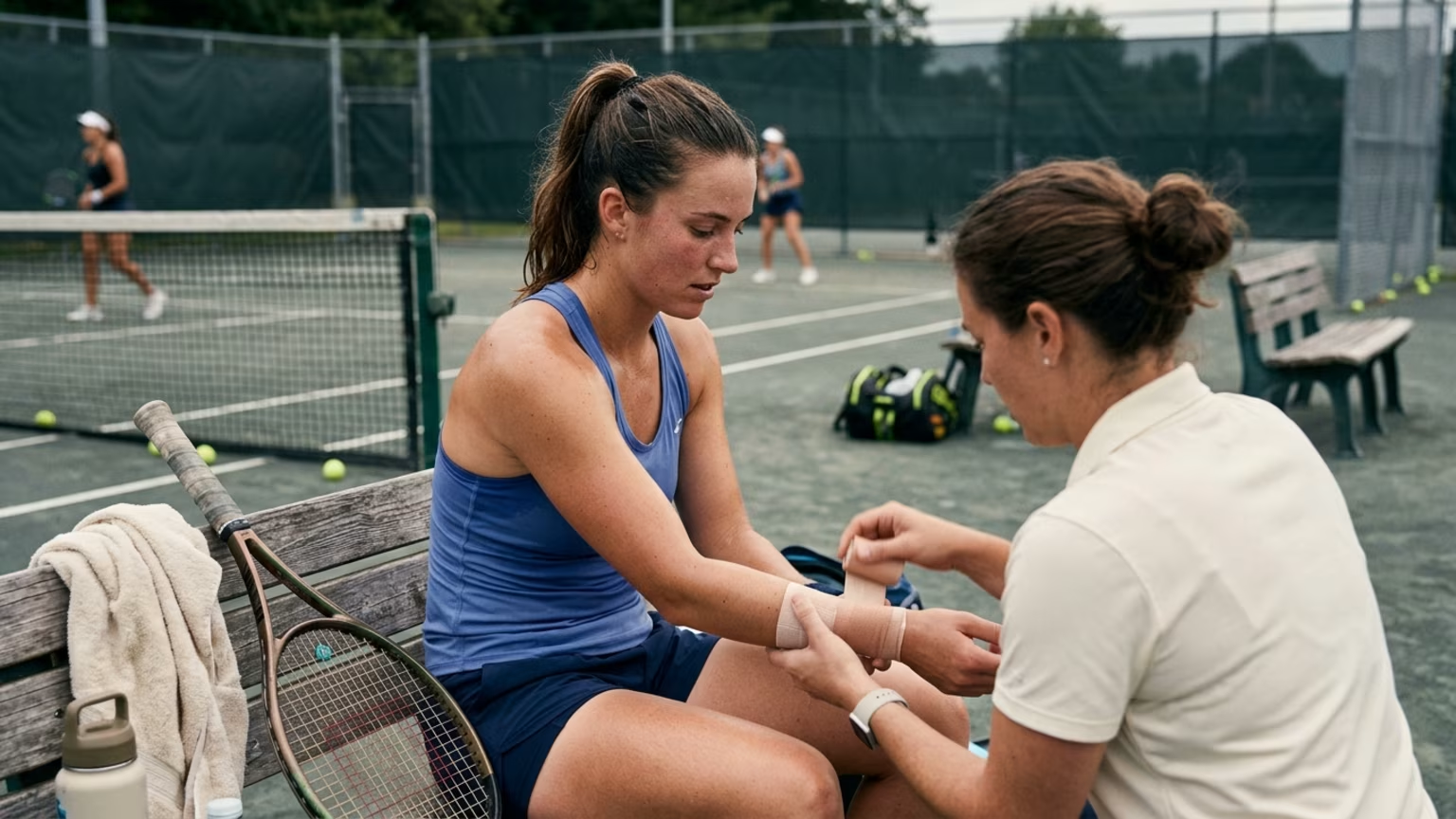

New PTPA data reveals a sharp rise in upper-body and arm injuries. Learn why planned recovery and deliberate scheduling are essential for athletic longevity.




You have heard it a million times: playing more matches is the only way to build true court fitness. Here is why that is outdated. The Professional Tennis Players Association has released new data showing how an unrelenting tournament schedule actually accelerates physical breakdown. Pushing through daily matches without scheduled recovery limits your athletic longevity and increases your risk of chronic arm issues.
This misconception stems from traditional coaching models that praised endless repetition above all else. For decades, players were taught that stamina only improves by pushing through fatigue during long sessions. It is easy to understand why ambitious amateurs still believe this logic today. When you love the sport, stepping away feels like you are losing your competitive edge.
We naturally assume that more court time directly equals better performance and improved fitness. Many adult players watch professional matches and try to replicate that relentless weekly intensity. We forget that those touring athletes have dedicated physiotherapists and structured off-seasons to manage their bodies. Emulating their match volume without their recovery resources is a direct path to physical breakdown.
Historically, club culture also rewarded the players who were always on the court. Missing a weekend round-robin was seen as a lack of dedication rather than a smart physical choice. This outdated mindset ignores the cumulative toll that repetitive rotational movements take on the shoulders and elbows. True athletic longevity requires breaking free from this purely volume-based approach to training.
The reality of human biomechanics tells a very different story under heavy scheduling. The Sydney Morning Herald reports that the Professional Tennis Players Association identified substantial increases in injury categories across recent professional seasons. Upper-body injuries rose 42%, and arm injuries increased by more than 100%. Furthermore, injuries that ended matches rose 53%. These figures highlight a serious structural issue regarding how athletes are currently managing their physical limits.
The association argues that an increasingly long season and shrinking recovery windows contribute to these earlier and more severe injuries. Male players must compete in at least four 500-level events annually, while female players must enter six 500-level events. Financial incentives keep pushing the calendar forward, as the 2026 US Open distributed a $108 million prize pool. This represented a 20% increase from the previous year, while players received a 44% salary increase over two years.
These escalating demands have visible consequences on physical readiness before major tournaments. The report appeared as the 2026 US Open was beginning, noting that 20 male and female players opted out. World No. 1 Jannik Sinner was among those withdrawals, and Felix Auger-Aliassime withdrew late with a back injury. Victoria Mboko was also noted in a series of withdrawals surrounding the National Bank Open in Canada.
Independent coverage also listed physical concerns for Alexei Popyrin, Thanasi Kokkinakis, Corentin Moutet and Tallon Griekspoor. Defending champion Carlos Alcaraz was returning to competition after a lengthy wrist injury that sidelined him before the French Open. Elena Rybakina was also recovering from a leg injury sustained at the Cincinnati Open. These narrow transitions between consecutive tournaments leave minimal time for tissue repair.
Professional tennis organizers are currently debating how to restructure this demanding calendar. The National Bank Open recently moved to a 12-day format to give players longer intervals between matches. Three of the four Grand Slam tournaments have added an extra day by beginning on a Sunday. However, a longer tournament format might inadvertently increase the time occupied by the overall calendar.
The proposed future calendar changes described in the article include an internal redesign referred to as Product 28. There is also a Saudi Arabia-based Masters 1000-level event planned for 2028. As tournament director Karl Hale pointed out, major sports are simply taking up more calendar space. The sport clearly needs to find a better balance between tournament demand and physical availability.
While adult recreational competitors face different match volumes, this professional debate offers crucial lessons for our own schedules. We must prioritize deliberate recovery blocks instead of waiting for pain to force a break. Alex de Minaur has advocated a shorter schedule, warning that the effects of repeated seasons can compound physically over time. He recently took 13 days away from tennis to marry fellow player Katie Boulter, noting it was his longest break without a racquet.
Recreational athletes must be equally proactive about their physical readiness before stepping onto the court. When I first started playing pickleball, I noticed how many people skipped warming up entirely. They would jump straight out of their cars and right up to the kitchen line. I tried doing that and immediately pulled a calf muscle.
Pickleball requires just as much explosive lateral movement as tennis, just in a tighter space. Since then, I always spend five minutes doing dynamic lunges and ankle rolls. It changes everything about how confident I feel pushing off the baseline. This small adjustment reflects the broader need for intentional physical management across all racquet sports.
Adult players should actively schedule deload weeks and separate their most important seasonal goals. Roger Federer famously aimed for a balanced schedule with ample breaks, while acknowledging that he sometimes entered more tournaments than he should have. Be cautious about stacking several competitive matches or long practices without a lower-load day. Building a manageable court workload to prevent injuries ensures you can keep enjoying the sport.
It is essential to put complete days off into the calendar before a busy league or tournament begins. This proactive rest allows your tissues to adapt to the stress of heavy competition. If you are playing frequently, upgrading worn court equipment and monitoring warning signs can help reduce unnecessary arm strain. You should also consider cross-training across courts to vary your movement patterns.
Persistent pain, declining serve speed or altered technique should prompt a reduction in load. You must seek an assessment by a professional if these warning signs persist. A comeback is always a process, much like how Alcaraz rebuilt his competitive intensity progressively after his wrist absence. Rebuilding your hitting, serving and match play requires patience rather than attempting to resume your previous workload immediately.
You need to account for sleep, work and travel when designing a playing schedule that supports healthy aging. A routine that is manageable for a touring professional might not be appropriate for a recreational adult. This strategy aligns perfectly with the players association arguing that protecting health safeguards the future of the sport. Every individual injury history requires personalized adjustments from a qualified coach or clinician.
The New Golden Rule: True court fitness requires scheduling your recovery blocks before you book your competitive matches. Protecting your body is the only way to safeguard your future participation in racquet sports. The most successful competitors know that longevity relies on listening to physical limits rather than ignoring them. Sometimes the quietest move you can make for your game is simply leaving your racquets in the bag.
Follow Evercourts for practical insights on tennis, pickleball and padel performance, movement, recovery and healthy ageing. Stay connected for new articles, research-led guidance and ideas to help you play well and keep playing for years.


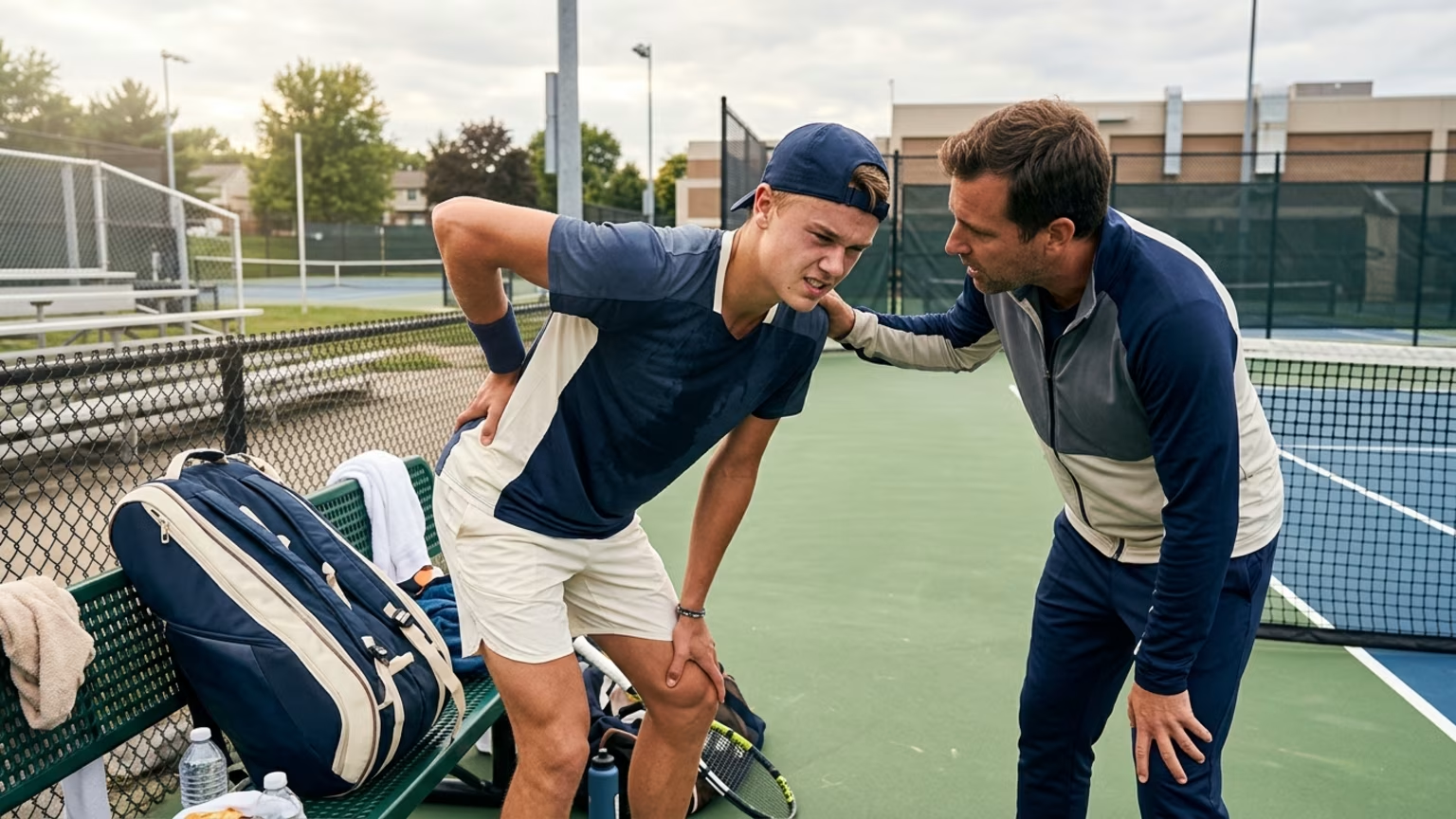
Holger Rune withdrew from the European Open with a back problem. The facts behind his decision and a grounded perspective for recreational players.

The Dink’s October 17 guide emphasizes deep returns, ball-height decisions and positioning against faster pickleball opponents.

A new report outlines padel and tennis gear trends. Learn how to assess adjustable rackets, sensor feedback and smart-court claims.
Read practical guidance for better movement, smarter preparation and a game that keeps working for you.
explore the Blog
