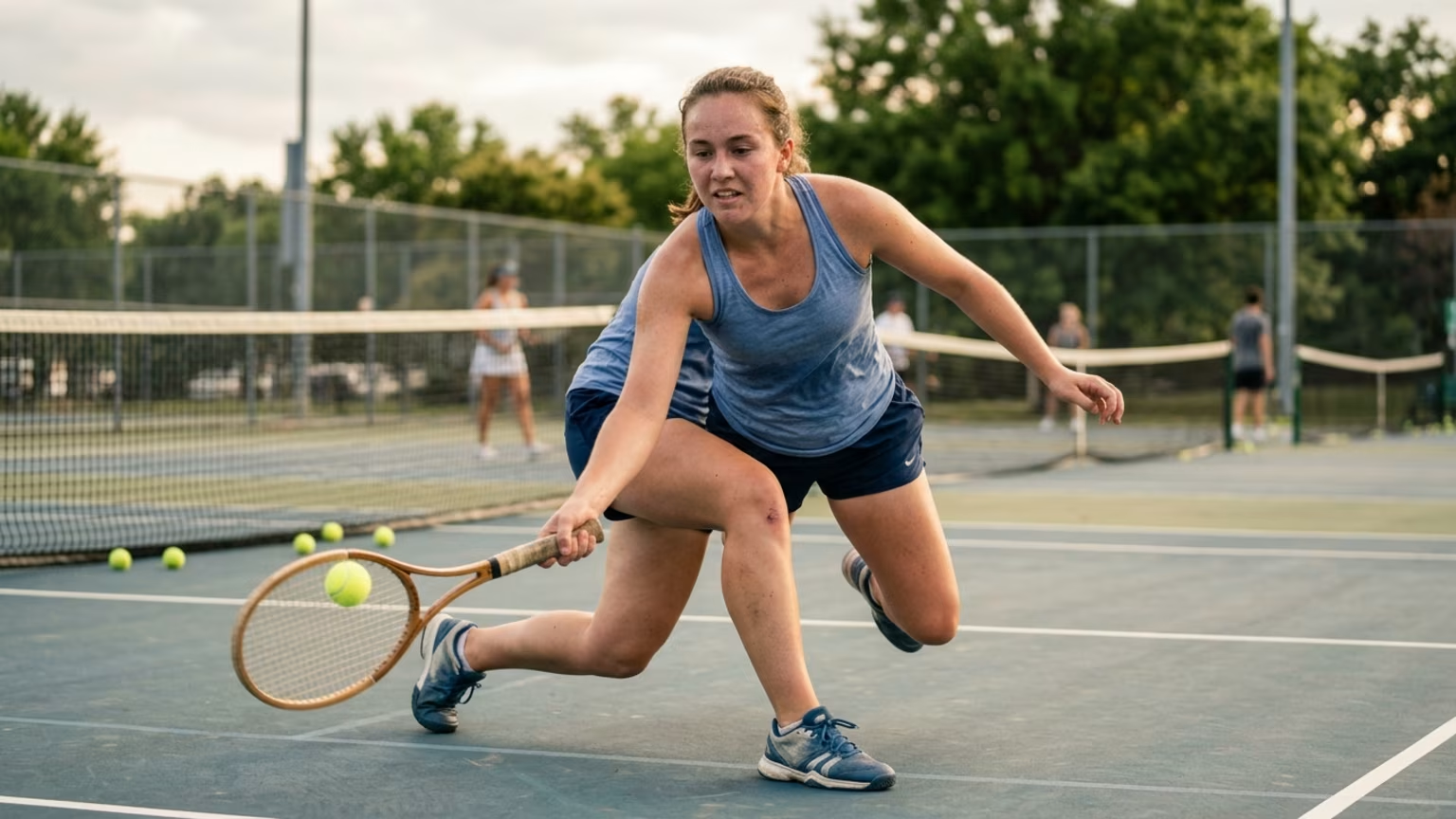

Discover a court-specific mobility map for tennis, pickleball, and padel. Learn how to properly warm up ankles, hips, and shoulders for athletic longevity.




Court mobility is the specific ability to control your joints through the exact ranges of motion required to sprint, brake, and hit efficiently. In our experience, skipping proper preparation often leads to frustrating stiffness. I remember finishing a tough two hour padel match on a cold Tuesday night and waking up the next morning feeling like my lower back was locked in concrete. For a long time, I just accepted this as the price of playing hard in my forties.
But once I started spending just ten minutes on targeted hip mobility before heading to the club, the stiffness almost completely vanished. It taught me that we do not have to accept pain as a default state of aging. Developing a proper mobility routine is essential for long-term enjoyment of the game. Replacing generic stretches with a structured movement framework makes a significant difference in how you feel.
Tennis, pickleball, and padel require constant transitions between explosive speed and sudden stops. A recent review of padel rehabilitation reports that the sport's frequent lateral displacements and reactive movements may increase injury susceptibility during landings and changes of direction. Pickleball specifically involves rapid directional changes and repeated lunging. The sport also requires jumping, acceleration, deceleration, and lateral movement.
These repeated patterns continually load the lower extremities. To manage this load, players must focus on the specific body areas that handle the most stress. Repetitive gripping and paddle contact can load the forearm and wrist. Meanwhile, short stop-start movements place substantial demands on the ankle and Achilles region.
Repeated overhead and reaching actions place recurring demands on the shoulder. This happens frequently when playing volume increases faster than a player's recent exposure or conditioning. A sensible mobility map replaces a generic sequence of held stretches with a short movement audit. Players should assess their ankles and hips alongside their thoracic mobility.
Checking shoulder and wrist control before picking up a racquet is also highly recommended. Using 5, 10, and 20 minute mobility routines helps players address these exact joint requirements systematically. Testing these areas ensures that your body is genuinely ready for the physical demands of your upcoming match. A structured routine bridges the gap between daily life and competitive play.
Ankles help players absorb and redirect force during split steps, lateral pushes, braking, and lunges. Players can check this by driving their knee toward a wall while keeping their heel down. This motion helps observe whether the foot collapses or the knee fails to track forward comfortably. Targeted preparation like calf raises, ankle rocks, and low hops effectively readies the lower leg for ankle and foot mobility demands.
Hips contribute to the loading and recovery positions used in lateral changes of direction, open-stance hitting, and repeated lunges. You can check your hip control with a supported single-leg squat. Observe whether your pelvis stays level and you can lower your body under control. Proper hip strength and mobility warm-ups include marching knee drives, lateral lunges, and controlled split-stance rotations.
Thoracic rotation helps the trunk turn for serves, groundstrokes, and recovery movements. Racquet sports involve repeated bending, reaching, and rotation. These actions are identified as key contributors to back-loading demands in pickleball and tennis. Open-book rotations and walking lunges with controlled trunk rotation are great ways to prepare the spine for hitting.
The repeated overhead movements required to hit a serve or an overhead smash heavily challenge the shoulder. This is especially true when a player is simply not accustomed to the workload. A basic wall slide can help check if your arms elevate smoothly without pain or obvious side-to-side restriction. Arm circles, scapular wall slides, and gradual overhead shadow swings prepare the joints effectively.
Repetitive paddle contact and gripping are highly relevant to wrist and elbow complaints in pickleball. Players can gently move their wrists through flexion, extension, and rotation while supporting the forearm. Checking these loaded positions helps identify marked asymmetry or discomfort before stepping onto the court. Easy racquet swings, wrist circles, and progressive rally-speed practice are sensible ways to warm up the forearms.
The most defensible expert message is not that passive stretching is bad, but that generic stretching alone is incomplete. A clinical review of common shoulder problems reports that prevention programs may include stretching, mobility, and balance exercises. However, the available research does not establish that any single mobility routine prevents injury in tennis, pickleball, or padel. Instead, players need a targeted warm-up that successfully raises tissue temperature and rehearses court movement.
Dynamic preparation is more appropriate than treating long, static stretching as the entire pre-match routine. Relevant court actions require players to move through sport-specific ranges while gradually increasing speed and force. Dynamic warm-up guidance from Baylor College of Medicine emphasizes that players should not rush preparation. Their guidance reports expert advice for a warm-up lasting approximately 15 minutes before stepping onto the court.
A brief warm-up may prepare movement effectively, while balance, conditioning, and gradual workload progression address broader injury risk factors. There is no universally validated screening battery covering exactly the five proposed regions in these specific sports. Therefore, the primary goal is not to perform a clinical diagnostic test at the courtside. The actual goal is to notice movement restrictions and adequately rehearse the specific demands of your sport.
Players should compare their left and right sides during preparation, but they should not chase perfect symmetry. A small difference without pain may be less important than an abrupt change from the player's normal baseline. The safer approach focuses on controlled, pain-free movement that progresses gradually up to match speed. Practicing sport-specific footwork and shadow swings naturally completes the transition from physical preparation to actual gameplay.
Understanding this concept helps adult players maintain their physical capabilities and stay on the court for years. A practical framework allows recreational athletes to notice physical restrictions before they escalate into persistent problems. As we get older, prioritizing healthy aging for racquet players means respecting how our tissues respond to stress. Consistently performing targeted movement checks ensures your body remains capable of rapid directional changes.
This proactive approach helps older or returning players handle the specific forces of the game over time. Mobility work cannot compensate for excessive increases in playing volume, inadequate recovery, or unsuitable equipment. However, gradually progressing from low-intensity movement to court speed builds a resilient foundation. Tracking how your body responds later that day provides valuable feedback for adjusting future training.
By systematically addressing the ankles and hips, players create a strong foundation. Adding thoracic spine, shoulder, and wrist preparation completes a reliable pre-match routine. This method directly supports athletic longevity by rehearsing the exact movements needed for serves and lateral slides. Improving your lateral mobility preserves your joints when reaching for wide shots.
A structured warm-up ensures that you are truly ready for the demands of a competitive match. This process bridges the gap between arriving at the court and hitting your first full-speed serve. Preparing properly reduces the initial stiffness that often hinders the first few games of a match. Ultimately, better preparation translates to better movement quality, more efficient hitting, and a much more enjoyable experience.
A movement restriction is not automatically a problem, and a small asymmetry without pain is often perfectly normal. However, persistent pain, swelling, and joint instability warrant immediate professional assessment. Numbness or a sudden loss of motion should also be taken seriously. Players should never use warm-up screens to self-diagnose an injury or try to push through sharp discomfort.
If a routine feels comfortable but is followed by escalating pain the next day, you need expert advice. Qualified physiotherapists and healthcare providers can properly evaluate recurring aches and design a tailored rehabilitation plan. Mobility exercises cannot replace a proper clinical diagnosis when a joint fails to function correctly. Recognizing these warning signs early allows you to address underlying issues before they keep you off the court completely.
Taking these steps responsibly ensures that minor irritations do not develop into long-term limitations. Evercourts encourages all players to listen to their bodies and prioritize their long-term well-being over a single match. Understanding when to rest or seek medical attention is a crucial part of mature athletic participation. Keep your preparation consistent, address pain promptly, and enjoy your time on the court safely.
Follow Evercourts for practical insights on tennis, pickleball and padel performance, movement, recovery and healthy ageing. Stay connected for new articles, research-led guidance and ideas to help you play well and keep playing for years.


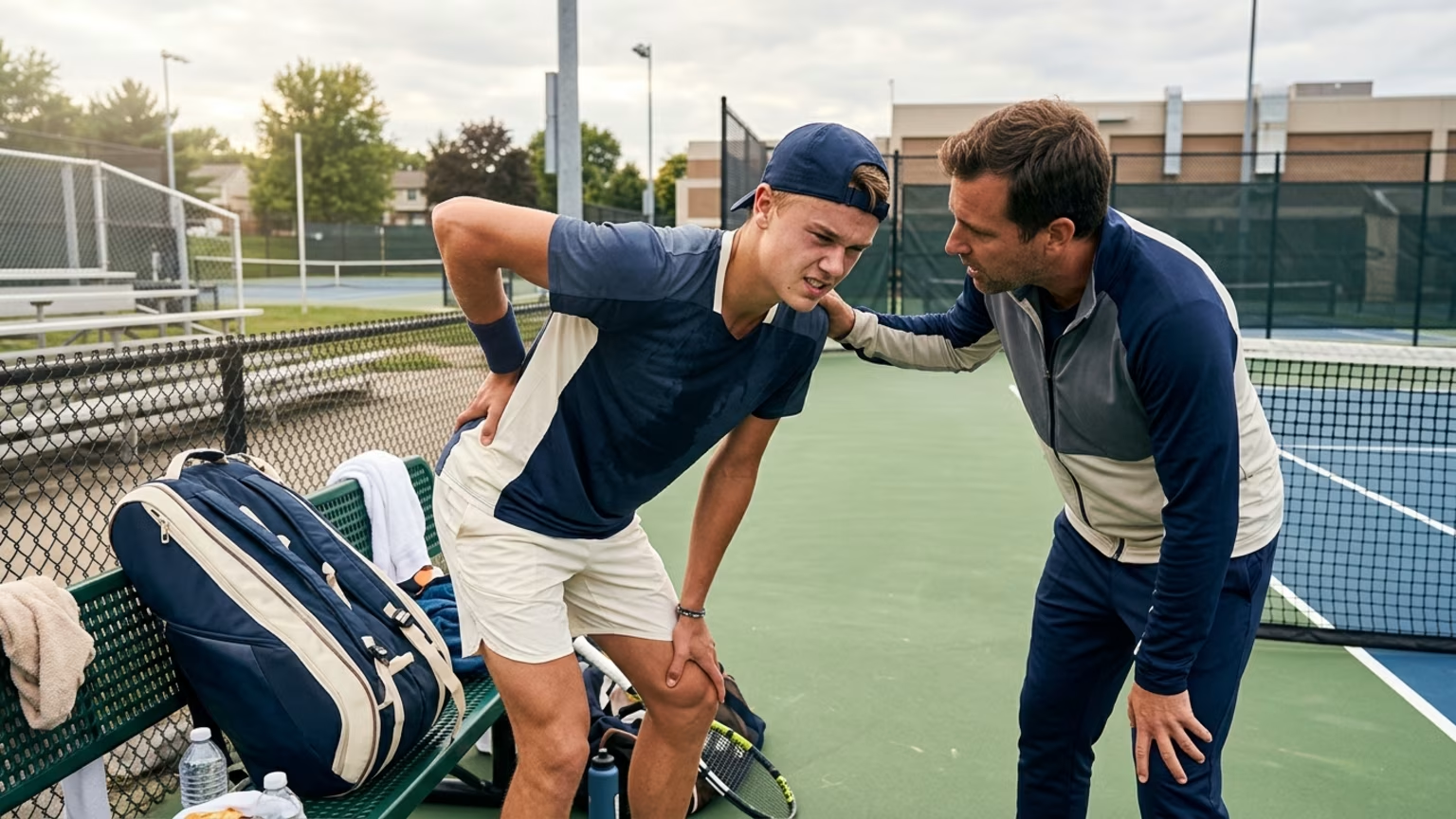
Holger Rune withdrew from the European Open with a back problem. The facts behind his decision and a grounded perspective for recreational players.

The Dink’s October 17 guide emphasizes deep returns, ball-height decisions and positioning against faster pickleball opponents.

A new report outlines padel and tennis gear trends. Learn how to assess adjustable rackets, sensor feedback and smart-court claims.
Read practical guidance for better movement, smarter preparation and a game that keeps working for you.
explore the Blog
