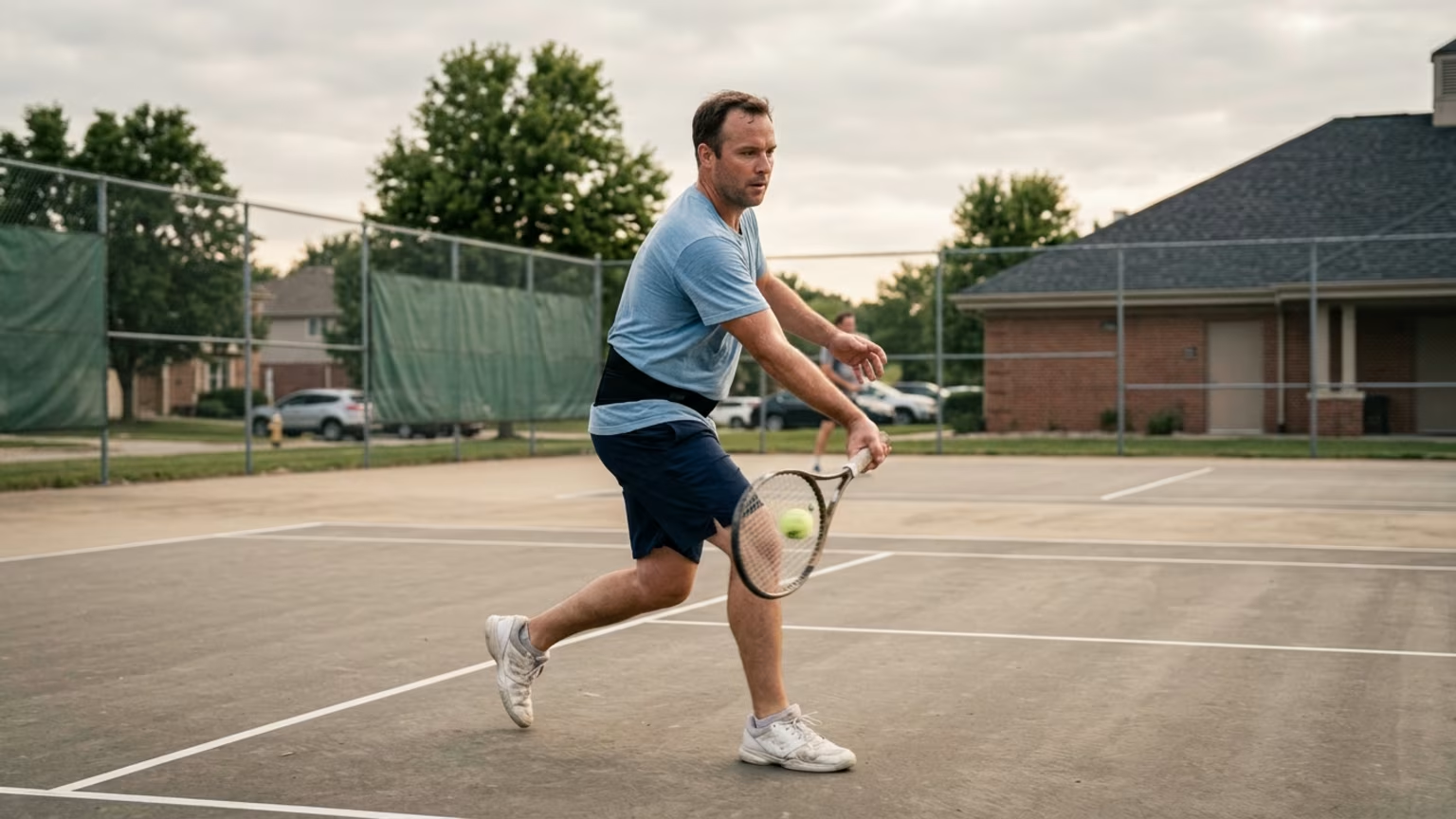

On September 7, 2026, a Yokosuka sports clinic published practical return-to-play guidance to help adult tennis players safely manage lower back pain.




On September 7, 2026, the Yokosuka-based sports clinic 鍼灸整骨院ひまわり published a stepwise return-to-play framework for tennis players managing lower back pain. The clinic outlines a specific, staged progression to help athletes carefully rebuild their tolerance to tennis loads over time. It advises players against interpreting a modest reduction in physical pain as immediate clearance to compete in full matches. Rather than relying on simple pain scales, the practitioner guidance focuses heavily on functional tolerance.
The proposed return sequence begins with ordinary activities like walking, taking the stairs, attending school, or going to work. Once these daily functions are comfortable, players can advance to light jogging and shadow swings on the court. The next stage moves to short, low-intensity rallies that keep players relatively stationary near the baseline. Finally, the protocol adds harder strokes, change-of-direction movements, and a gradually increasing number of serves.
The clinic page provides clear rules for managing symptoms during this staged progression. It specifically warns against repeatedly testing a painful serve, deep lunge, or sprint merely to see whether it still hurts. For players who can rally comfortably but experience pain while serving, the clinic suggests temporarily removing serves from practice. Modifying a session with a coach is highly preferable to repeatedly hitting full-power serves through significant discomfort.
The physical demands of different tennis strokes require distinct considerations during the recovery process. The article attributes the potential stress of serving to the combined extension and rotation involved in the motion. It links groundstrokes and change-of-direction movements to lunging, single-leg loading, rapid deceleration and reacceleration. Because these movements load the body differently, the clinic recommends increasing stroke intensity, lateral work, and serve volume separately.
Symptom tracking is a critical part of implementing this clinical guidance effectively. The article suggests logging the location of pain, the specific provocative movement, and the approximate ball count when symptoms appeared. Players should record precise examples, such as pain during serving in the second set or tightness during an open-stance forehand. A numerical pain score from zero to ten should be accompanied by practical notes on how symptoms affect daily activities.
The clinic emphasizes that players should check their symptoms after practice and the following morning. If pain returns during a session or the next day, the article recommends returning to the previous loading stage. Treating a flare-up as useful information rather than a failure helps players adjust their workload safely. Players can even use existing practice video to help a professional understand an episode without recreating the painful movement.
Certain warning signs indicate that players should stop practice and seek medical assessment immediately. The article identifies radiating leg pain, numbness, weakness, and saddle-area sensory loss as major concerns. Bladder or bowel changes are also clear reasons to stop practice immediately. Fever, severe night pain, resting pain, and substantial pain after a fall or collision also require a professional diagnosis.
The clinic emphasizes that the apparent source of pain cannot be reliably inferred from a single physical factor. Practitioners must consider pain location, specific tennis movements, training volume, and age together. The practitioner guidance gives particular caution to developing athletes experiencing repeated back pain during extension or rotation. While the clinic references the Japanese Orthopaedic Association regarding lumbar spondylolysis, it does not report controlled treatment outcome data.
For the adult recreational player, this stepwise approach challenges the common habit of returning to a full match immediately. Recreational athletes often mistake a pain-free warmup for full court readiness. However, an absence of pain during light hitting does not guarantee tolerance for the aggressive lunges required in competition. Players interested in rebuilding court readiness safely must respect the significant gap between basic movement and full match intensity.
Professional players manage their return through strict daily load monitoring, medical oversight, and constant coaching feedback. Amateurs, by contrast, must take personal responsibility for tracking their own workload and physical responses between sessions. The clinic suggests keeping a brief training log to track ball counts, practice duration, and symptom location over time. This simple process helps identify an individual player's tolerable loading threshold without simply chasing a perfect zero pain score.
Other tennis-specific guidance published in August 2026 similarly emphasizes progressive return and monitoring the next-day response. This August documentation also recommends tracking playing time and serve counts when rebuilding practice after a layoff. If serving hurts but cooperative rallying feels fine, recreational players should play practice points without hitting serves. Adjusting your practice parameters is a highly reliable strategy for keeping active while safely managing structural symptoms.
Tennis biomechanical commentary notes that excessive extension and rotation during the serve can concentrate motion in the lower back. Modifying these specific motions is a sensible way of reducing strain on the lower back during matches while maintaining basic movement. You can restore one variable at a time, such as expanding your rally duration before increasing your rally intensity. This controlled environment makes it much easier to interpret a physical flare-up if one occurs.
General daily function should not be confused with full tennis readiness under competitive tournament conditions. Avoiding all movement indefinitely is not the recommended approach for adult players seeking athletic longevity. The objective is reducing provocative loads while progressively restoring tolerable activity levels over several weeks. When symptoms worsen and interfere with daily life, self-guided practice modifications must be replaced by professional medical assessment.
Adult recreational players should remember that this guidance is a conservative way to rebuild tennis exposure. The article does not prescribe a universal pain threshold, maximum serve count, or fixed return-to-match timetable. A player may tolerate walking while still being completely unable to tolerate the repeated rotation required on the court. For older players, understanding how recovery capabilities change over time is essential when separating technical workload issues from medical concerns.
As more recreational players focus on athletic longevity, structured load management will likely replace informal return strategies. Clinics and coaching professionals are increasingly shifting away from passive rest toward active, staged exposure protocols. Over the coming seasons, expect adult racquet sports programs to adopt similar graded-return models for their members. These structured pathways help players maintain conditioning without prematurely exposing recovering tissues to match intensity.
The future of amateur racquet sports recovery will center on sensible workload adjustments rather than complete physical inactivity. The focus will remain on modifying provocative movements and tracking next-day symptoms rather than relying on absolute rest. Players who adopt these disciplined monitoring habits will be far better equipped to handle minor physical setbacks effectively. Tracking physical loads will become a standard practice for recreational tennis, pickleball, and padel players.
Follow Evercourts for practical insights on tennis, pickleball and padel performance, movement, recovery and healthy ageing. Stay connected for new articles, research-led guidance and ideas to help you play well and keep playing for years.


A practical tournament-day mailbag covering schedules, venue rules, food, fluids and flexible plans for tennis, pickleball and padel.

Understand tennis's strength, power, balance and braking demands, with a cautious framework for off-court preparation and long-term play.
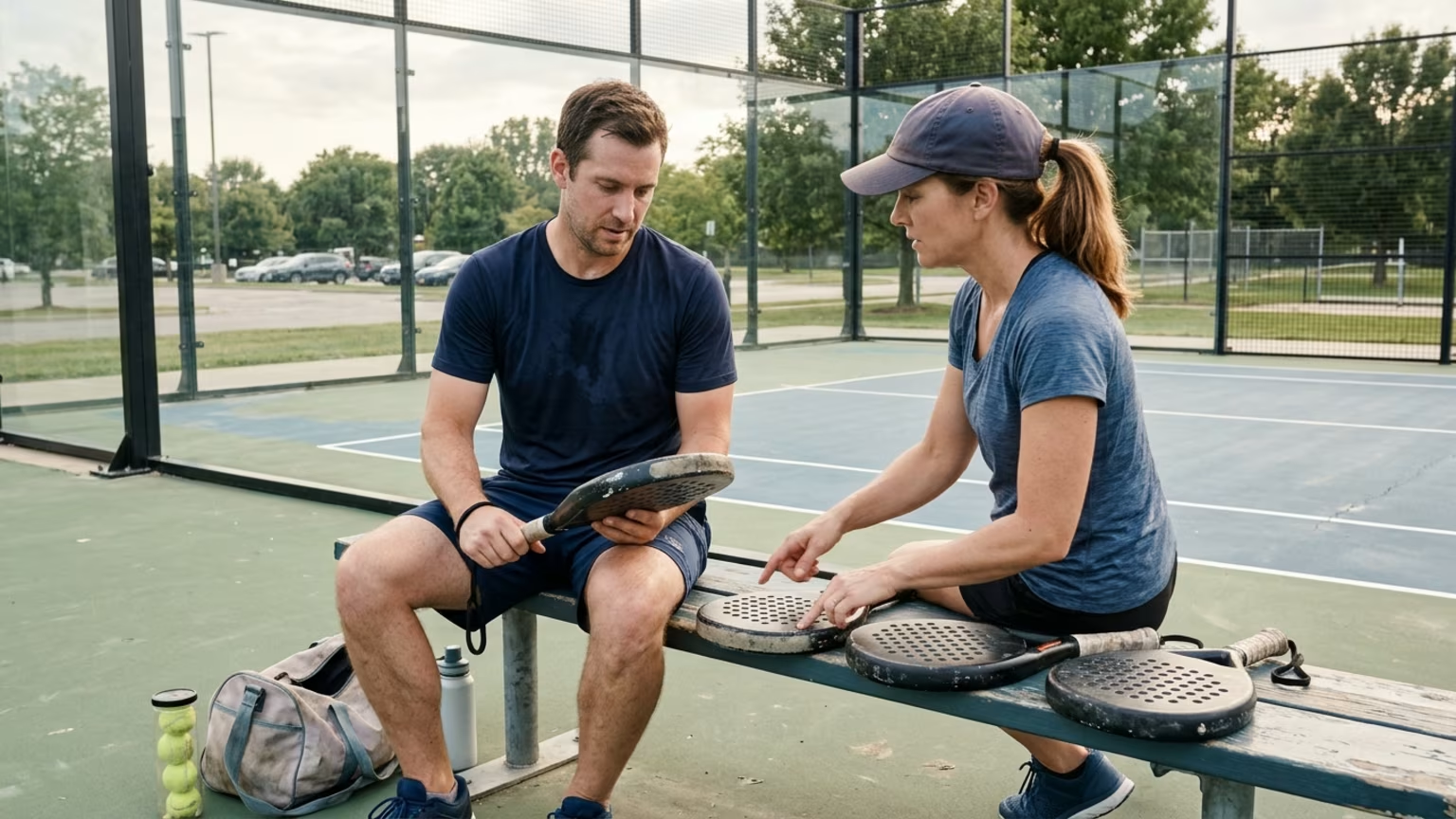
Answers to padel racket questions about weight, balance, shape and grip, with practical trial prompts and guidance on persistent discomfort.
Read practical guidance for better movement, smarter preparation and a game that keeps working for you.
explore the Blog
