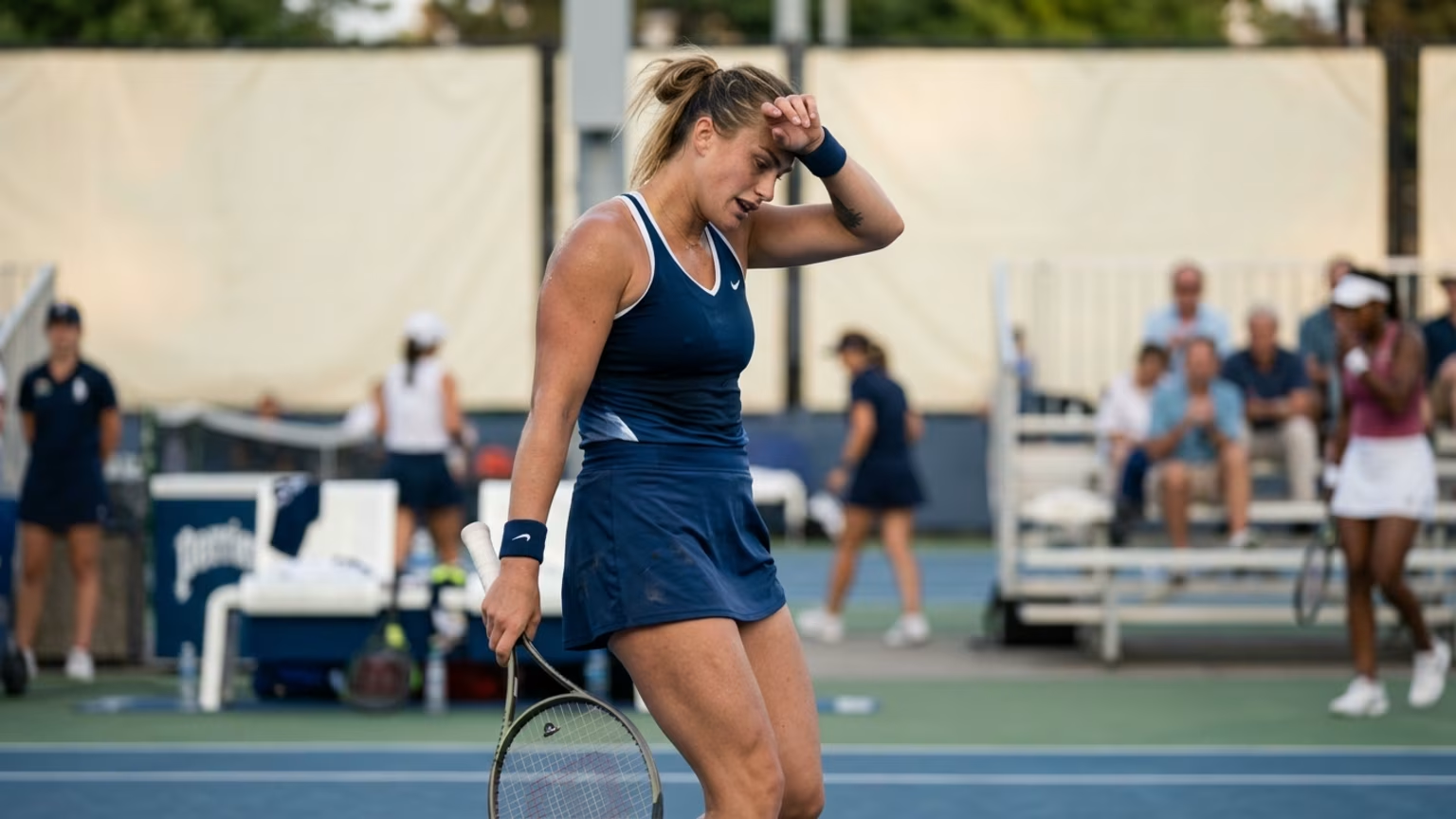

World No. 1 Aryna Sabalenka suffered a Toronto setback in her U.S. Open buildup. Learn how adult players can use these lessons for athletic longevity.




You have just finished a brutal three set match under the heavy summer sun, and your knees are practically begging for a day off. World No. 1 Aryna Sabalenka recently faced a similar physical reality during the demanding North American hard court swing. Sabalenka lost to 16th seeded Ekaterina Alexandrova 7-6(3), 4-6, 6-4 in the fourth round of the 2026 Canadian Open in Toronto. The nearly two and a half hour battle clearly exposed the narrow margins of consecutive competition days.
The primary objective for adult recreational players is maintaining athletic longevity and healthy capabilities across a full season. Reviewing the 2026 Canadian Open results helps evercourts readers understand how to manage accumulated match load. Sabalenka entered the contest as the defending U.S. Open champion and a four time Grand Slam winner. Even the most elite athletes must balance intense competition with smart recovery to keep playing well.
This practical routine outlines how players can carefully structure their own tournament blocks to avoid physical burnout. The ultimate goal is separating true physical fatigue from poor execution during a long competitive match. Adopting a sensible schedule allows you to enjoy competitive play without compromising your long term joint health. It ensures you remain capable, confident, and completely court ready for many years to come.
Players should plan their recovery before a league weekend or vacation event actually begins. Sabalenka recovered after dropping the opening set tiebreak and took the second set after breaking for a 4-3 lead. However, pushing through nearly two and a half hours of intense play always takes a heavy toll. You should avoid maximum intensity hitting on consecutive days whenever your personal schedule permits.
Alternating hard sessions with light mobility work ensures your body can handle the incoming workload. Choosing the right competition for your season helps prevent the kind of scheduling overload that derails performance. Repeated high load days should be carefully planned rather than allowed to accumulate accidentally during the summer. Leaving at least one lower load period between demanding matches is a highly effective longevity strategy.
It is incredibly easy to blame physical exhaustion when late match errors start piling up. Serving at 4-5 in the deciding set, Sabalenka saved two match points but double faulted on the third to end the match. Alexandrova stated she approached each point as though it were her last because she believed Sabalenka would give her few opportunities. When reviewing your own performance, ask if your movement quality actually deteriorated or if you simply rushed a tactical choice.
True physical fatigue often shows up as altered movement patterns rather than just a missed tennis shot. A sudden drop in performance might involve poor pacing, rushed shot selection, or a simple technical breakdown. It helps to review our resources for court athletes to understand how hydration and focus directly impact match execution. Recreational players should avoid automatically labeling every late match error as a fitness failure.
Maintaining a repeatable pre serve routine under pressure is vital when matches stretch past the two hour mark. Alexandrova advanced to the quarter finals to face Ukraine’s Elina Svitolina. Svitolina defeated eighth seeded American Amanda Anisimova 6-2 and 6-4 to reach that stage. Sustaining that level of high performance requires protecting your lower body from sudden spikes in court volume. Using a repeatable 30 minute routine to prepare your body is a great way to start your day.
The broader 2026 North American swing has also produced high profile withdrawals and notable fitness concerns. Jannik Sinner withdrew from Cincinnati with a right knee injury, while Carlos Alcaraz withdrew from the event during recovery from a wrist injury. Respecting new or worsening pain is crucial for long term athletic longevity on the tennis court. A performance dip alone is not evidence of an injury, but persistent pain absolutely warrants qualified medical advice.
The 2026 U.S. Open was scheduled for late August and early September in New York. The tournament was set to begin around August 30 or 31 depending on the specific event calendar used. Players must carefully pace their physical preparation leading up to their most important competitive events. Alexandrova, who was ranked No. 19 in the world during tournament coverage, noted that she thought her opportunity had passed after losing the second set.
Her ability to reset mentally and physically was obviously key to securing the final set victory. Adult recreational athletes should not copy professional tournament density simply because top level players compete frequently. The more useful takeaway is to carefully monitor your personal sleep, muscle soreness, and next day physical function. Categorizing your practice sessions into high, moderate, and low physical loads is a very practical model.
Tennis demands significant repetitive loading on the serve and heavy lateral movement on abrasive hard courts. Matches can easily stretch past two hours just like the recent Toronto contest between Sabalenka and Alexandrova. Players should prioritize lower body recovery and actively avoid scheduling back to back heavy singles days. Focusing on consistent stroke technique late in a match effectively protects the shoulder from unnecessary physical strain.
Pickleball tournaments often feature multiple matches compressed into a single day of highly competitive play. This event density requires an entirely different recovery strategy compared to a single long tennis match. Focus on short rest intervals, active fluid hydration, and completely resetting your posture between scheduled tournament rounds. Avoiding maximum intensity play on every single practice day keeps you physically fresh for these demanding pickleball weekends.
Padel combines the lateral demands of tennis with rapid changes of direction near the enclosed glass walls. Players face repetitive overhead motions that heavily tax the shoulder and core over a long weekend. You should alternate hard padel sessions with low load mobility work to protect these specific vulnerable joints. Reducing your overall training volume immediately after a heavy match day is absolutely essential for continuous padel play.
Consistent workload management is exactly how you remain capable and court ready for the seasons ahead.
Follow Evercourts for practical insights on tennis, pickleball and padel performance, movement, recovery and healthy ageing. Stay connected for new articles, research-led guidance and ideas to help you play well and keep playing for years.


Holger Rune withdrew from the European Open with a back problem. The facts behind his decision and a grounded perspective for recreational players.

The Dink’s October 17 guide emphasizes deep returns, ball-height decisions and positioning against faster pickleball opponents.

A new report outlines padel and tennis gear trends. Learn how to assess adjustable rackets, sensor feedback and smart-court claims.
Read practical guidance for better movement, smarter preparation and a game that keeps working for you.
explore the Blog
