

Learn how hot weather changes fluid and electrolyte needs on the tennis court, with science-backed tips to calculate sweat loss and maintain performance.




The midday sun baked the hard court while heat radiated through my shoes. I wiped away heavy sweat before serving and felt a familiar fatigue settle into my legs. A player can lose more than 2.5 liters of sweat in an hour under midday sun according to West 42 Sports. That staggering fluid loss completely rewrites your physiological needs during a summer match.
Playing in hot weather forces your body into a constant balancing act. The heat sends more blood toward your skin to increase sweating and cool your system down. Meanwhile, your heart must continue supplying oxygen to your working muscles. This dual demand means the exact same rally will feel harder as a match progresses. Your cardiovascular system is essentially working double duty just to maintain your baseline pace.
If you fail to replace fluid adequately, cardiovascular and cooling demands will accumulate rapidly. West 42 Sports identifies approximately 2% body-mass fluid loss as a point at which performance may begin to decline. Players often reach that deficit before they even feel strongly thirsty. Heavy legs, slower movement, and reduced concentration are common symptoms of this creeping fatigue. You might mistake this for a lack of fitness when it is actually a measurable fluid deficit.
I used to think a tough conditioning block was the only way to improve my court endurance. Then I started tracking my sleep. I noticed that on days I slept less than six hours, my reaction time at the net was noticeably sluggish, and I felt gassed by the second set. Prioritizing consistent rest did more for my late match stamina than any extra sprints ever did. Recovery is the true foundation of performance. A well-rested body manages heat and hydration stress much more effectively.
Understanding your personal fluid loss requires looking at specific numbers. West 42 Sports reports that hot-court tennis sweat rates range from approximately 0.6 to 2.6 liters per hour. This depends heavily on the player, court surface, sun exposure, and humidity. Indoor match-play data shows an average sweat loss of approximately 1.1 liters per hour. Long matches in hot, dry conditions have been associated with total fluid losses of 5 to 6 liters.
Sweat sodium concentration also varies significantly between players. The West 42 Sports feature notes that sweat sodium can range from approximately 20 to 80 millimoles per liter. This wide range explains why two people playing the same match might have completely different recovery needs. Visible salt residue on clothing or repeated cramping are practical clues that you might be losing substantial sodium. You cannot rely entirely on a partner's drinking habits to guide your own.
Recreational players can estimate their own deficit using a simple home method. West 42 Sports recommends weighing yourself immediately before and after play without heavy wet clothing. Each pound of body weight lost is treated as approximately 16 fluid ounces of unreplaced fluid. This helps you build a personalized hydration plan instead of relying on generic bottle labels.
A more complete sweat loss estimate requires just a little extra math. You can record the amount of fluid consumed during the match and factor it into your weight calculation. Adding your drinking volume to your body mass change provides a clearer picture of your actual sweat rate. This extra step ensures your hydration strategy accurately reflects your body's true output.
For pre-match preparation, Showcase Tennis reports a staged routine recommended by the USTA. This involves drinking 12 to 16 ounces after waking and another 12 to 16 ounces approximately one hour before play. You should then consume 8 ounces about 10 minutes before stepping onto the court. These structured habits are a cornerstone of any long-term framework for managing physical stress. Building a routine prevents you from playing catch-up during the first set.
The physical toll on your body changes based on which racquet sport you play. Showcase Tennis reports that tennis matches can last up to five hours. This prolonged exposure makes cumulative heat strain a major risk for adult players. The risk of a tournament day above 82 degrees Fahrenheit has increased since 1970 in the cities hosting the four Grand Slam tournaments. For the U.S. Open in Queens, the probability of such a hot day rose from 49% in the 1970s to 67%.
Professional circuits have recognized these dangers and adjusted their guidelines accordingly. The WTA introduced extreme-weather rules in 1992 to protect players. More recently, the Australian Open introduced its Heat Stress Scale in 2019, and the U.S. Open began allowing its stadium roof to close during extreme heat in 2023. The ATP even implemented extreme-heat rules after seven match retirements at the October 2025 Shanghai Masters. These rules mandate a 10-minute cooling break above 86 degrees Fahrenheit and play suspension above 90 degrees Fahrenheit.
Pickleball concentrates player movement onto a smaller footprint. This high-density court setup can create intense surface heat on sunny summer days. Court technology is adapting to help protect players from the ground up. Showcase Tennis reports that a surface called CoolTop reduced a pickleball court from approximately 126 degrees to 100 degrees. Another product called Laykold Chill debuted in 2024 and achieved a reported 30% temperature reduction.
Padel introduces unique environmental challenges because of its enclosed glass walls. These walls can block natural wind and trap humidity directly on the court. In humid conditions, sweat may simply drip from your skin instead of evaporating and cooling your body. A seemingly cooler humid day on a padel court can actually cause more heat stress than a hotter, dry day playing tennis.
Managing heat effectively requires acting before you ever feel thirsty. Water is generally reasonable for low-intensity or moderate-intensity sessions lasting less than an hour. However, West 42 Sports suggests that carbohydrate-electrolyte drinks may be more useful once play extends beyond 60 minutes. This helps replace both the sodium lost through sweat and the fuel used during prolonged rallies.
Active cooling provides another vital layer of defense against heat stress. Showcase Tennis reports that using ice towels and wetting the skin in front of a fan reduced core temperature by approximately 1 degree compared with drinking cold water alone. Do not rely on fluids as your only protection against the summer heat.
To support your healthy aging this week, start measuring your own fluid losses. Weigh yourself before and after your next match to see how much water you actually need to replace. Combine this data with comprehensive hydration strategies to protect your performance all season. Understanding your baseline is the best way to maintain your edge.
Follow Evercourts for practical insights on tennis, pickleball and padel performance, movement, recovery and healthy ageing. Stay connected for new articles, research-led guidance and ideas to help you play well and keep playing for years.


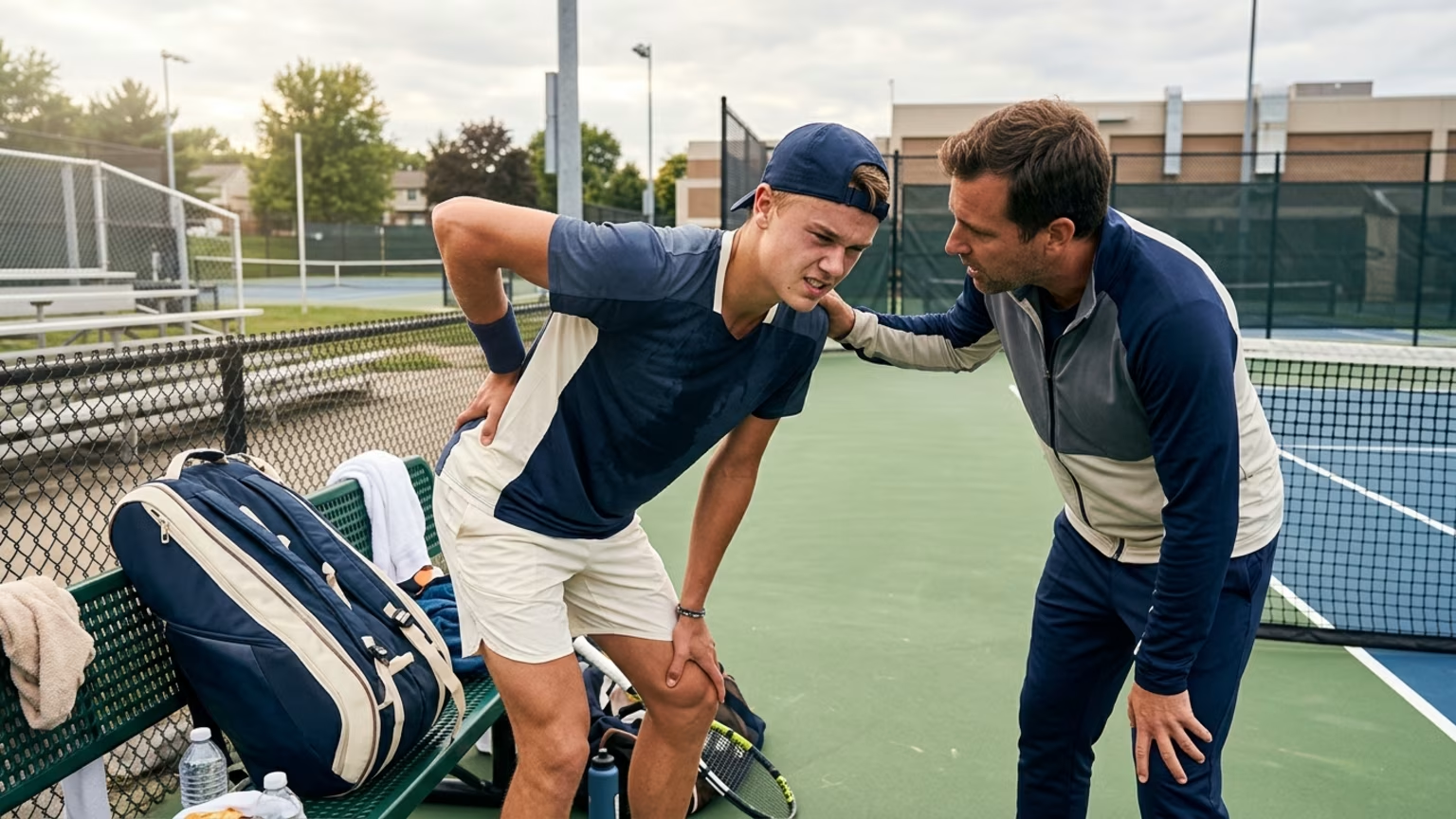
Holger Rune withdrew from the European Open with a back problem. The facts behind his decision and a grounded perspective for recreational players.

The Dink’s October 17 guide emphasizes deep returns, ball-height decisions and positioning against faster pickleball opponents.

A new report outlines padel and tennis gear trends. Learn how to assess adjustable rackets, sensor feedback and smart-court claims.
Read practical guidance for better movement, smarter preparation and a game that keeps working for you.
explore the Blog
