

A 2026 sports medicine review finds minimal evidence that peptide supplements improve musculoskeletal recovery, urging players to prioritize proven rehab.




In 2026, The American Journal of Sports Medicine published a major review evaluating six emerging peptide supplements. The research examined compounds like BPC-157 and MK-677 for their effects on musculoskeletal treatment and sports performance. According to a MedicalXpress report, the review concluded that the claimed benefits of these supplements remain unsubstantiated by current human trials. Medical experts are now advising athletes to avoid using these unregulated products as substitutes for established orthopedic care.
The findings represent a significant moment of clarity for the sports medicine community. Doctors are urging active adults to pause before seeking out injectable shortcuts for their aches and pains. This definitive review provides much-needed guidance for players trying to navigate a market flooded with bold promises.
The review evaluated six specific compounds. These included BPC-157, TB-500, and CJC-1295. Researchers also looked at MK-677, ipamorelin, and GHK-Cu. Dr. Thomas Kremen, an expert cited in the MedicalXpress summary, stated clearly that "There is little to no evidence that these peptide supplements work."
He noted that the clinical evidence was not only small in quantity but also exceptionally weak in quality. The available human studies reporting positive results generally lacked robust controls and appropriate study designs. He criticized the practice of using evidence for a topical product to promote an injectable peptide for recovery. In one large BPC-157 study, the research group reportedly had a financial stake in the compound.
Safety issues emerged as a central finding in the review. In one documented MK-677 trial, researchers stopped the study after one group experienced a higher rate of congestive heart failure. The review also identified cardiovascular complications and metabolic dysfunction, such as insulin resistance, as documented risks.
The MedicalXpress report detailed a case where a young patient needing rotator cuff surgery had cardiac output too low for safe outpatient care. This patient had disclosed peptide use prior to the evaluation. While Dr. Kremen could not establish direct causality in that specific instance, he considered it a serious warning sign.
Product quality presents another significant risk for consumers. These products are often marketed as "gray-market peptides" or labeled for "research purposes only." This labeling leaves their actual contents completely unclear. Consumers may ultimately receive products mixed by compounding pharmacies without knowing the exact approval status or ingredient purity.
Some testing has even identified dangerous substances in these vials. According to the MedicalXpress report, testing found contaminants including arsenic and lead. These heavy metals have no place in a healthy athletic routine. This lack of oversight means players are taking enormous risks with their long-term health.
Elite athletes sometimes chase marginal gains through experimental protocols when millions of dollars are on the line. Recreational tennis, pickleball, and padel players face a completely different reality. An adult amateur looking to maintain athletic longevity should not treat online testimonials about peptides as medical facts. The priority should always be identifying the true root cause of the pain.
Players need to know if their discomfort reflects tendon overload, joint degeneration, muscle injury, or nerve irritation before attempting a return to full-court play. A padel player with a strained shoulder needs different treatment than a tennis player managing chronic knee stiffness. Choosing unverified injectables over proper diagnosis and rehabilitation can actively delay your return to the court. Proper physical therapy directly addresses the mechanical flaws causing the pain.
We see the temptation for shortcuts frequently in court sports. When I first started playing pickleball, I noticed how many people skipped warming up entirely. They would jump straight out of their cars and right up to the kitchen line. I tried doing that and immediately pulled a calf muscle.
Pickleball requires just as much explosive lateral movement as tennis, just in a tighter space. Since then, I always spend five minutes doing dynamic lunges and ankle rolls. It changes everything about how confident I feel pushing off the baseline. Proper preparation always outperforms unproven shortcuts.
For the weekend player, true recovery starts with the basics. A player dealing with tennis elbow or Achilles pain needs a proper clinical assessment before attempting any chemical fixes. Rather than risking unregulated compounds, players should stick to proven strategies like active recovery and structured rest. Building capacity gradually through progressive strength work and sport-specific conditioning is far more reliable.
Players should also consider evidence-based physical therapy routines. If you are dealing with common joint issues, prioritizing a physical therapy-first approach for knee injury recovery offers a much safer path. True athletic longevity comes from staged returns to hitting, serving, and lunging under professional guidance. Relying on a recovery decision framework for racquet sports helps distinguish normal soreness from actual injuries requiring medical care.
The numbers behind this review highlight exactly why medical professionals are issuing warnings. The American Journal of Sports Medicine review examined 565 studies involving these six emerging peptides. While that sounds like a massive amount of data, the details tell a different story. More than two-thirds of those studies were conducted exclusively in animals.
Animal research often produces promising results involving tendon and ligament healing. However, the review authors cautioned that findings in rodents do not reliably translate to human patients. The human evidence for musculoskeletal recovery remains essentially absent. The few human studies that showed modest improvements were mostly for nonorthopedic indications.
This data gap is why experts urge patients to demand rigorous clinical proof before injecting experimental substances. Regulatory actions provide additional context for these numbers. The FDA held a Pharmacy Compounding Advisory Committee meeting on July 23 to 24 in 2026. Committee materials listed BPC-157-related and TB-500-related substances among compounds being considered for the agency's bulk-drug list.
However, this inclusion for discussion does not equal proof of clinical effectiveness or approval for human use. The scientific consensus clearly shows that marketing has simply moved ahead of the actual science.
Looking ahead to the next season, the conversation around sports recovery will likely shift back toward verified methods. Medical professionals will continue pushing back against the marketing hype surrounding unproven peptide supplements. Athletes can expect stricter scrutiny on compounding pharmacies and unregulated online sellers as adverse events become more widely reported. The sports medicine community will likely double down on educating recreational players about the risks of these gray-market products.
Instead of chasing rapid repair through chemical shortcuts, the focus will return to sustainable athletic longevity. Dr. Kremen identified sleep, nutrition, strength training, and aerobic training as the true building blocks of athletic performance. The American College of Sports Medicine’s Exercise is Medicine initiative similarly encourages professionals to rely on proven exercise programs. Racquet sports players will benefit most by relying on qualified exercise professionals rather than internet trends.
The separation of healthy aging from performance marketing will become increasingly important. Players seeking to remain active for decades must prioritize sustainable training, adequate recovery, and proper nutrition. Medical screening and proactive injury prevention will continue to outpace experimental compounds in delivering real results. Prioritizing these fundamentals ensures a safer, more reliable path for staying healthy and competitive on the court.
Follow Evercourts for practical insights on tennis, pickleball and padel performance, movement, recovery and healthy ageing. Stay connected for new articles, research-led guidance and ideas to help you play well and keep playing for years.


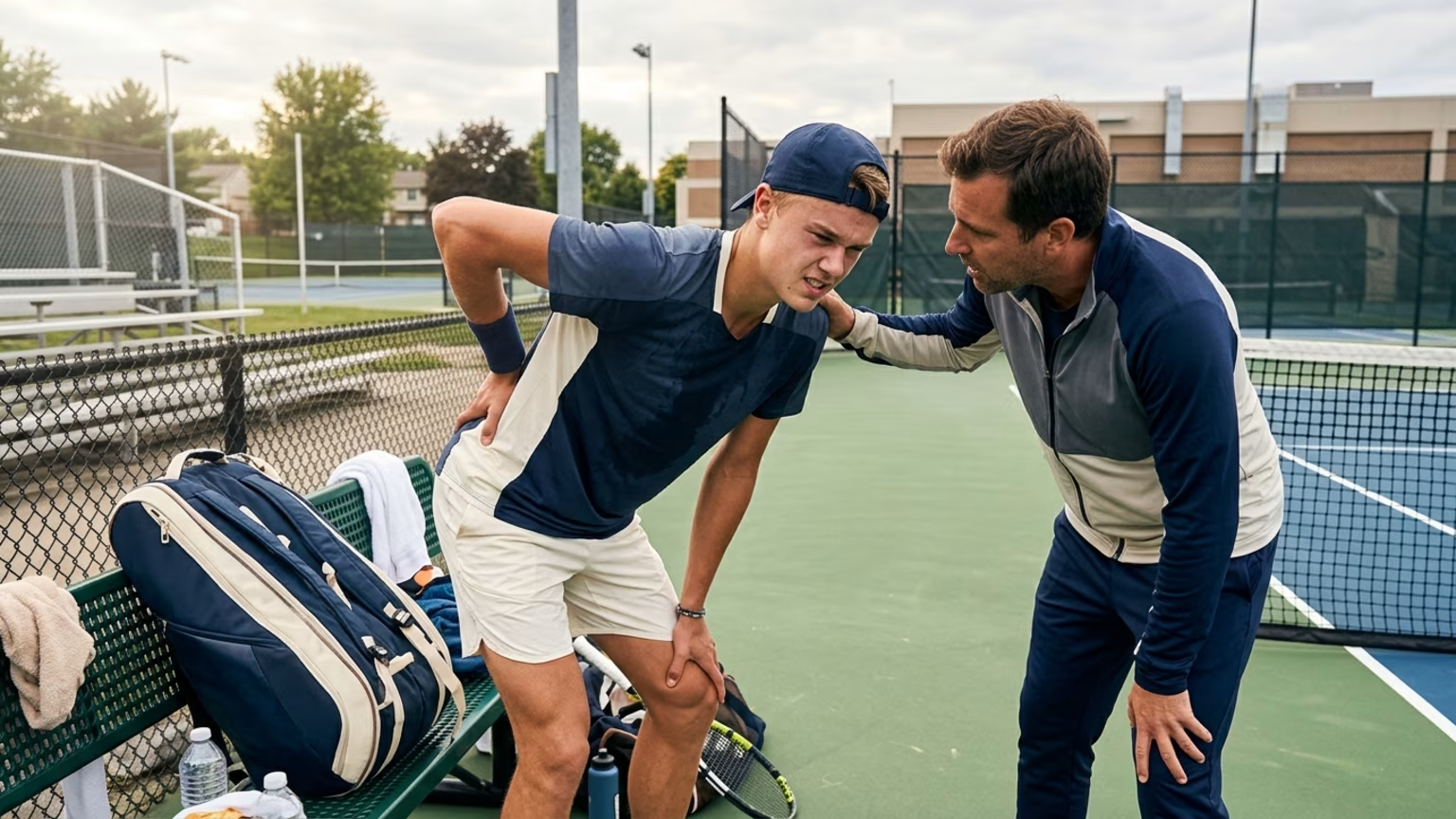
Holger Rune withdrew from the European Open with a back problem. The facts behind his decision and a grounded perspective for recreational players.

The Dink’s October 17 guide emphasizes deep returns, ball-height decisions and positioning against faster pickleball opponents.

A new report outlines padel and tennis gear trends. Learn how to assess adjustable rackets, sensor feedback and smart-court claims.
Read practical guidance for better movement, smarter preparation and a game that keeps working for you.
explore the Blog
