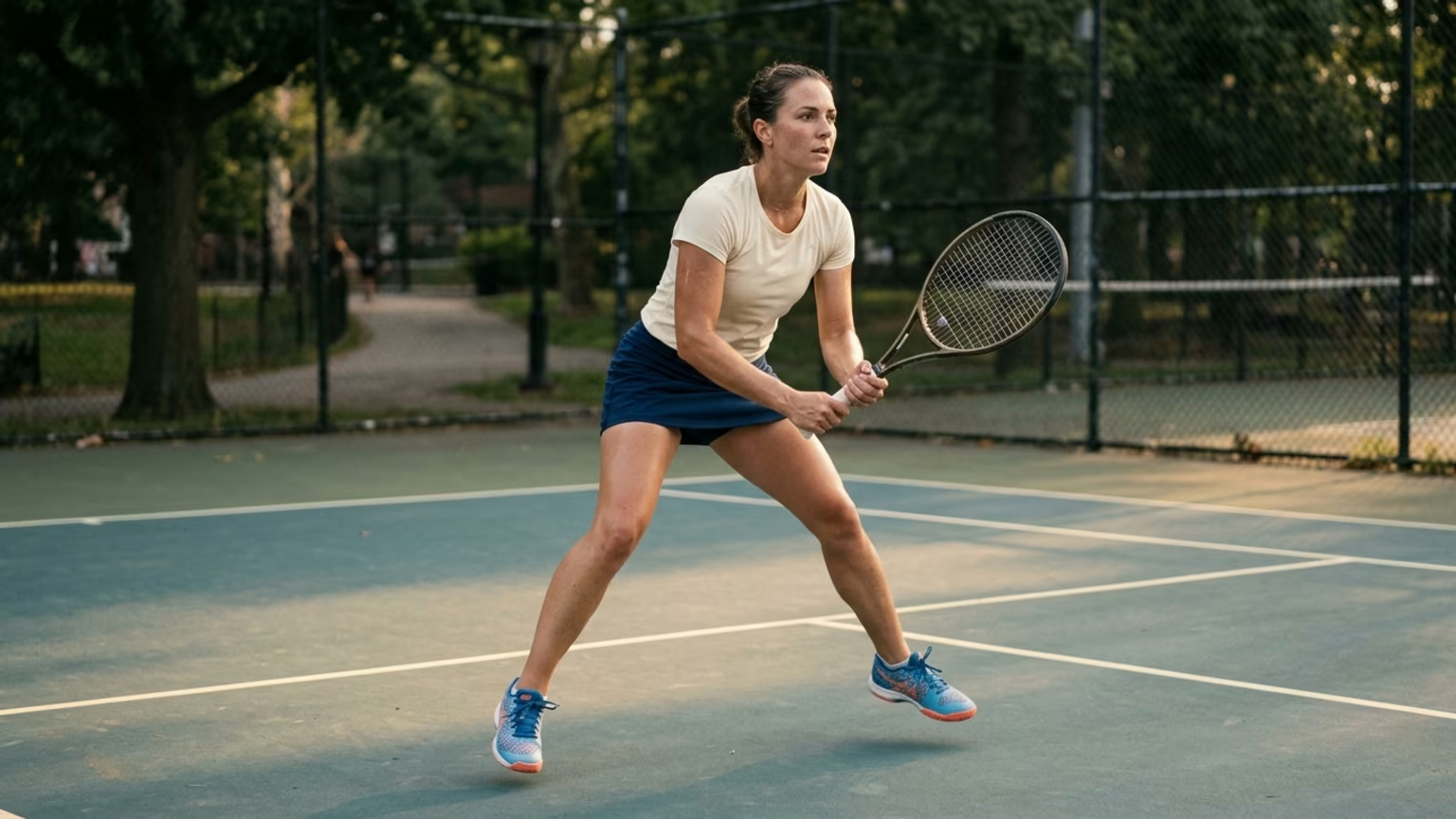

Learn how to time your split step perfectly in tennis, pickleball, and padel. Discover why an explosive jump actually delays your movement on the court.




Players lining up at the baseline often look like sprinters waiting for a starting gun. They tense their legs, bounce heavily on their heels, and prepare to launch themselves across the court. Then the opponent makes contact, and these eager players are caught completely flat-footed. The intention is right, but the execution actually delays their movement.
The most common misconception in racquet sports is that the split step should be an explosive vertical leap. Players believe that jumping higher generates more kinetic energy, making their first step toward the ball much faster. The truth is that the split step is a small balancing movement that helps the player reset into a ready position. Its primary purpose is to unweight your feet for a fraction of a second.
If you treat it like a jump, you spend too much time in the air while the ball is already flying past you. When you jump aggressively, gravity dictates your landing time. You lose the ability to change direction until your feet finally touch the court again. A properly executed split step should feel like a subtle drop into an athletic stance.
You are simply removing your body weight from the floor just long enough to process where the ball is going. This keeps your center of mass stable and your legs prepared to push off instantly. At evercourts, we believe good court coverage relies on this grounded stability rather than dramatic leaps. Mastering this small reset is one of the most essential footwork skills for tennis, pickleball and padel.
Modern fitness marketing often sells court movement as a pure display of plyometric power. Influencers push intense jump training and highlight-reel agility drills, promising that maximum vertical force is the key to reaching every ball. For adult recreational players, chasing that kind of explosiveness usually leads to delayed reactions and sore joints. The reality of healthy aging on the court requires repeatable readiness over maximum physical output.
A low, quiet split step reduces unnecessary impact while keeping you perfectly balanced. When our team first started playing pickleball, we noticed how many people skipped warming up entirely. They would jump straight out of their cars and right up to the kitchen line. We tried doing that and immediately pulled a calf muscle.
Pickleball requires just as much explosive lateral movement as tennis, just in a tighter space. Since then, we always spend five minutes doing dynamic lunges and ankle rolls. It changes everything about how confident we feel pushing off the baseline. Proper physical preparation makes the split step feel completely effortless.
If your legs feel completely exhausted after a short match, you are likely jumping too high during every single reset. Keep the split step low and controlled. The goal is to unload the feet rather than jump high. You want to preserve your energy for the actual sprint to the ball.
A technically sound movement breaks down into four distinct and connected phases. First is the unloading phase. You start a small upward movement just before the opponent makes contact. This brief unweighting allows you to adjust your directional momentum without fighting your own body weight.
Your torso should remain quiet, and your shoulders should stay entirely level. Second is the reading phase. While your feet are briefly off the court, you carefully observe the opponent. Use paddle angle and body position as early clues.
You can also monitor weight transfer and court position to anticipate the shot direction. Combine these details to form a prediction, then confirm your read exactly at contact. Third is the landing phase, which requires precise timing and body mechanics. Pickleball coach Michael Loyd describes the split step as a "ready hop" and recommends keeping weight on the balls of the feet rather than on the toes or heels.
You want to land with soft knees, keeping a base wide enough to move left or right. Start the split just before contact so that you land as the opponent strikes the ball or immediately around that moment. Finally, the starting phase flows directly from the landing position. You push off firmly from the leg opposite your intended direction of travel.
You should avoid inserting a separate pause after your feet touch the ground. The landing energy should seamlessly transfer into your first directional step. Arriving balanced is exactly what allows this kinetic transfer to happen smoothly.
Understanding these phases helps you diagnose your own movement errors during competition. Players who consistently land too early often become entirely stationary before the shot direction is fully known. This forces them to start their sprint from a dead stop. Conversely, players who land too late are still completely airborne as the ball begins its rapid flight toward them.
The correction in both cases is to focus less on jumping and more on synchronizing your landing with the opponent. You want to build the entire movement backward from the moment of contact. The contact point is your strict target landing point. Everything you do prior to that moment is just preparation to arrive perfectly on time.
Perfecting this sequence requires intentional practice and a strict focus on external cues. The opponent's contact point is your primary trigger for the entire sequence. Pickleball’s shorter reaction windows at the kitchen line make timing especially important. Coaching sources warn that splitting too late can leave the player unable to respond effectively to fast attacks.
You must synchronize your landing with their forward swing. You can build this timing with a simple partner exercise on the practice court. Coach Michael Loyd recommends having a partner call "Hit!" at contact while the player practices landing the split step on that exact cue. This forces you to focus on the sound and visual moment of contact rather than guessing early.
Taking the time to train the movements behind faster court movement makes this specific response a permanent physical habit. Adult players returning from time away or managing joint stiffness might find a full hop uncomfortable. In these situations, you can simply slow down or briefly stop in balance at contact. This still provides the core benefit of grounding your energy without the sharp impact of a jump.
As your body adapts, you can gradually build court-ready movement using a structured and progressive mobility routine. Once you master the basic timing, you can advance the practice further. A highly useful progression is to have your practice partner vary their stroke direction unexpectedly. During this drill, you must focus entirely on matching your landing to the visual moment of contact rather than guessing the destination in advance.
Patient reading is always more effective than frantic guessing. An open racket face might suggest a higher trajectory, while a forward weight transfer hints at a faster ball. In padel, receivers may need to adjust their landing timing further to account for lobs and tricky wall rebounds. You read these subtle cues to narrow down the possibilities before the ball crosses the net.
Improving these anticipation skills will help you improve your reaction time without requiring faster sprinting speed. Once you establish a balanced base, you are ready to track the actual flight of the ball and confidently step into your shot. Small adjustments to your timing yield massive improvements in your overall court coverage. The game slows down significantly when your feet are properly prepared.
A highly effective split step relies on early recognition and perfectly timed balance rather than maximum vertical jumping power.
Follow Evercourts for practical insights on tennis, pickleball and padel performance, movement, recovery and healthy ageing. Stay connected for new articles, research-led guidance and ideas to help you play well and keep playing for years.


Holger Rune withdrew from the European Open with a back problem. The facts behind his decision and a grounded perspective for recreational players.

The Dink’s October 17 guide emphasizes deep returns, ball-height decisions and positioning against faster pickleball opponents.

A new report outlines padel and tennis gear trends. Learn how to assess adjustable rackets, sensor feedback and smart-court claims.
Read practical guidance for better movement, smarter preparation and a game that keeps working for you.
explore the Blog
