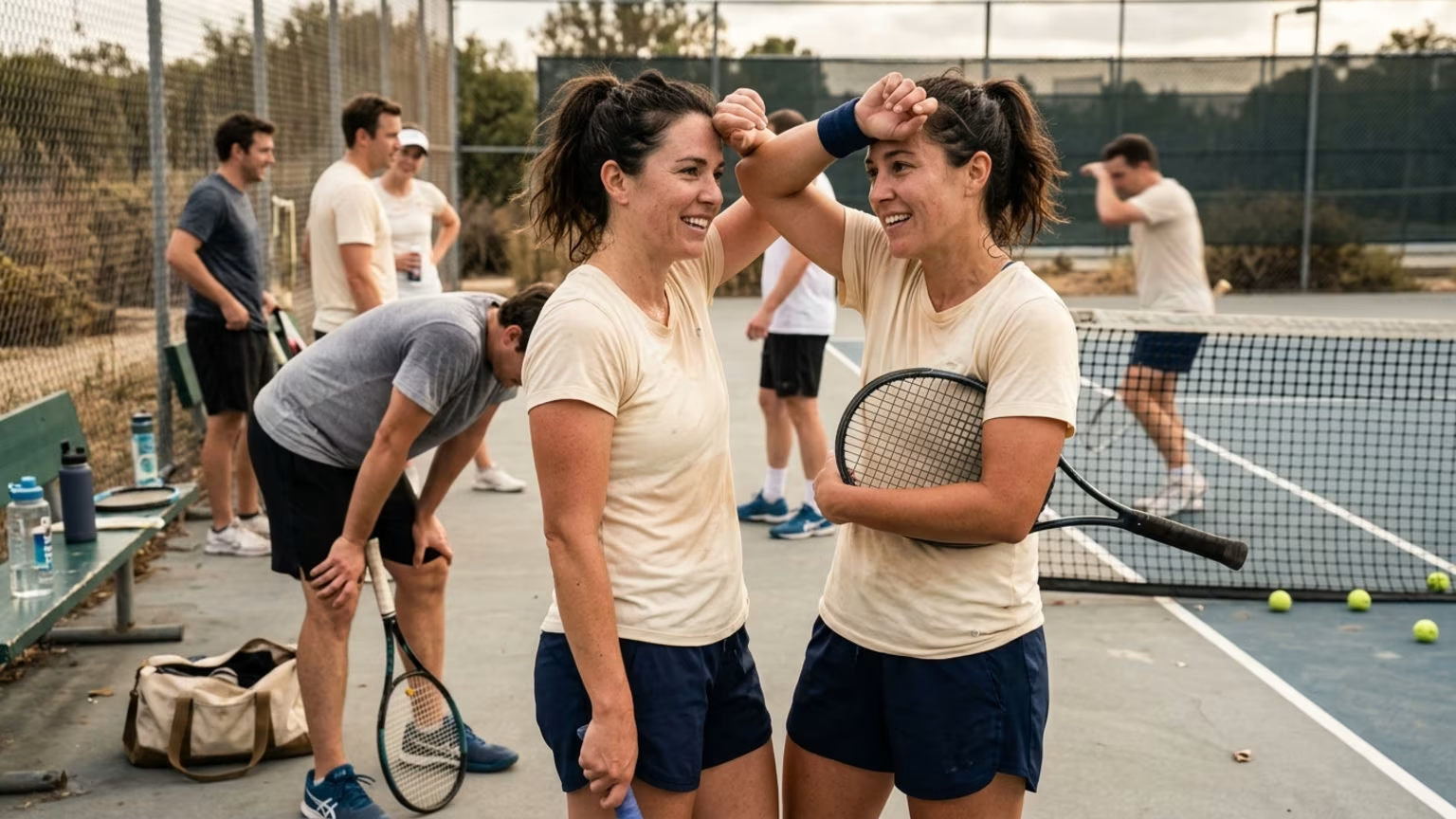

Learn how to build a sustainable training week balancing court time, strength, and active recovery to keep enjoying your racquet sport for years.




Delayed-onset muscle soreness generally develops after a new or unusually demanding workout rather than appearing as an immediate sharp pain during a movement. The available clinical guidance describes this ordinary soreness as something that typically peaks over the following day or two and then gradually improves. If you are mildly sore but moving normally, you may not need complete rest. Light activity may be compatible with this ordinary soreness.
However, the ACSM-linked guidance cautions that evidence for light activity speeding recovery is limited. The true benefit of an easy session is maintaining your schedule without overloading your joints. You can maintain your physical capabilities through gentle movement when your technique is unaffected. A deliberate approach to structuring your physical preparation helps you avoid excessive fatigue.
Post-match heaviness, reduced enthusiasm and general tiredness can be ordinary consequences of a demanding session. This is especially true when a player has played longer or harder than usual. The appropriate response is often lower intensity, food, fluids, sleep and a less demanding following day rather than abandoning the entire training week. Taking an easy day keeps your momentum going and supports athletic longevity on the court.
Active recovery falls under a practical green light in clinical models. Low-level discomfort that remains controlled and returns to baseline by the next morning may be trainable. You can enjoy a light hit, a relaxed doubles match or a brief mobility routine. This gentle rhythm allows adult players to stay active and engaged with their favorite racquet sports.
You do not need to rely on complicated treatments to feel better. Gentle movement, sleep and an appropriate reduction in workload are defensible foundations for managing soreness. The available clinical guidance emphasizes that simple activity often works just as well as expensive interventions. Keeping your routine straightforward makes it much easier to sustain over an entire season.
Sometimes, soreness makes a movement difficult or excessively painful. In these cases, the available ACSM-linked guidance recommends avoiding that activity for several days and returning as symptoms subside. Pushing through severe discomfort rarely improves your performance or your physical condition. Complete rest gives irritated tissues the time they need to settle.
A practical distinction for players is whether discomfort is diffuse and muscular or focal and movement-specific. Mild, stable muscular soreness may allow an easier session, whereas sharp, escalating, joint-focused or form-altering pain is a reason to stop or modify the provoking activity. The guidance also identifies sharp, sudden or escalating pain, swelling, instability and movement changes as reasons to stop or modify the activity. Ignoring these signals can lead to a prolonged absence from the game.
This is especially relevant to racquet sports because players may unconsciously change their serve, lunge, split step or overhead mechanics to protect a painful area. If you find yourself avoiding a normal split step, you are entering red-light territory. Worsening, sharp or persistent pain suggests backing off and reassessing the situation. Developing a habit of recognizing signs of physical exhaustion means respecting these physical warnings.
Moderate or lingering symptoms suggest reducing load or volume before complete rest is strictly required. This amber zone might mean shortening your practice, reducing your intensity or avoiding repeated overhead smashes. If those modifications do not relieve the pressure, a full break is the smartest choice. Resting appropriately protects your ability to play next month and next year.
It is important to remember that fatigue is not the same as an injury. A player who feels tired after a long weekend does not automatically require a clinical assessment. However, if a previous symptom lingers into the next day and worsens, that is a clear signal to stop. Learning to read these subtle differences protects your body from unnecessary wear and tear.
Tennis places heavy explosive demands on the shoulders, knees and ankles. Because players might unconsciously alter their serve, lunge or split step to avoid discomfort, complete rest is highly effective for focal joint pain. Active recovery is less useful if every step on a hard court aggravates a specific spot. Tennis players often need a full day off after an intense singles match.
Pickleball features a stop-start nature and a high frequency of play among dedicated participants. A structured routine of active recovery helps pickleball players manage the general tiredness that follows back-to-back demanding sessions. Light walking or easy cycling can relieve post-match heaviness without adding high-impact stress. Maintaining a steady approach to monitoring your weekly court volume keeps the body resilient over time.
Padel requires constant multidirectional movement, deep corner lunges and repeated off-the-wall explosive steps. For padel players, active recovery maintains hip and ankle mobility between grueling tournament days. However, complete rest is the appropriate response to sharp pain from sudden decelerations. Balancing both modalities ensures padel players can handle the varied physical tests of the court.
The “green/amber/red” framework reported in the available clinical guidance is useful as a coaching tool across all three sports. It helps you decide whether to choose a light paddle session, modify your drills or take a day completely off. The available sources do not establish a universal readiness score or a precise number of recovery hours for recreational tennis, pickleball or padel players. You must adjust these principles to fit your specific court schedule.
Each sport presents unique challenges that require a flexible approach to weekly planning. A schedule that is sustainable for a healthy competitive player may be excessive for someone returning after a layoff. You should consider your age, playing history, sleep quality and previous injuries when deciding between active recovery and rest. Tailoring your recovery modality to your specific situation is the key to consistent performance.
When evaluating which option better supports the mission of staying on court for life, active recovery is the definitive winner. While complete rest is an essential intervention for escalating pain, relying on it for every instance of post-match fatigue disrupts your sustainable weekly rhythm. Consistent, gentle movement builds a foundation for long-term athletic longevity. It allows your body to adapt to the demands of your sport gradually.
Choosing light activity helps you stay consistent, mobile and connected to the game you love. Mild, stable muscular soreness may allow an easier session that keeps your joints moving freely. You can implement walking, easy cycling or gentle mobility work to bridge the gap between hard match days. This active approach aligns perfectly with the philosophy of evercourts.
Complete rest should be reserved for sharp, form-altering pain rather than standard physical fatigue. If you stop moving entirely after every match, you miss the opportunity to reinforce your movement patterns. Active recovery empowers you to take control of your physical preparation. Staying in motion helps you build a resilient body for years to come.
Understanding the difference between useful training discomfort and problematic pain gives you the confidence to keep playing. You can build a sustainable weekly rhythm that balances court time, strength, mobility and life demands. This proactive mindset prevents you from losing your physical capabilities as you age.
Assess your stiffness tomorrow morning, and choose a brief walk or easy technical session if your court movement remains normal.
Follow Evercourts for practical insights on tennis, pickleball and padel performance, movement, recovery and healthy ageing. Stay connected for new articles, research-led guidance and ideas to help you play well and keep playing for years.


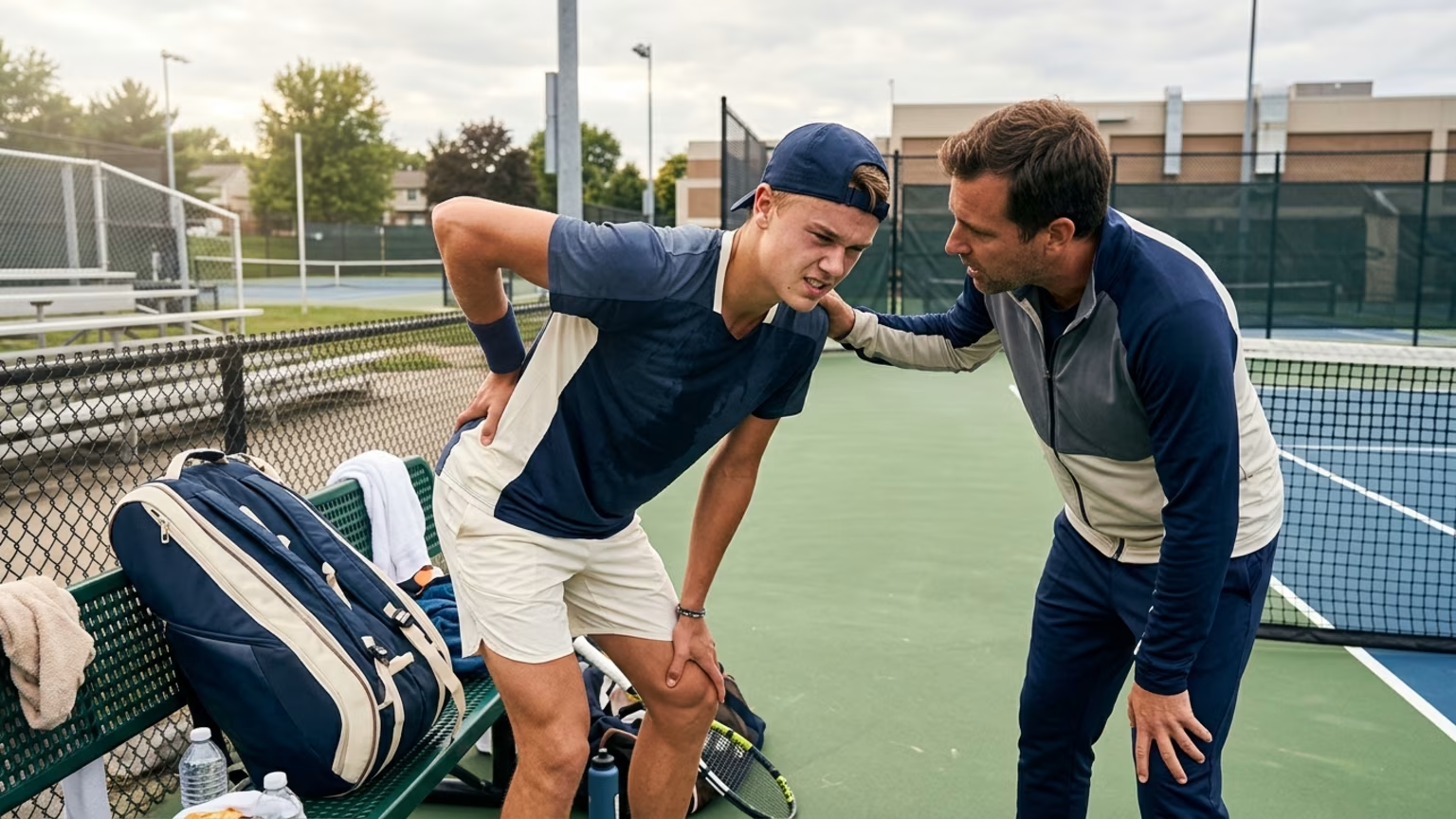
Holger Rune withdrew from the European Open with a back problem. The facts behind his decision and a grounded perspective for recreational players.

The Dink’s October 17 guide emphasizes deep returns, ball-height decisions and positioning against faster pickleball opponents.

A new report outlines padel and tennis gear trends. Learn how to assess adjustable rackets, sensor feedback and smart-court claims.
Read practical guidance for better movement, smarter preparation and a game that keeps working for you.
explore the Blog
