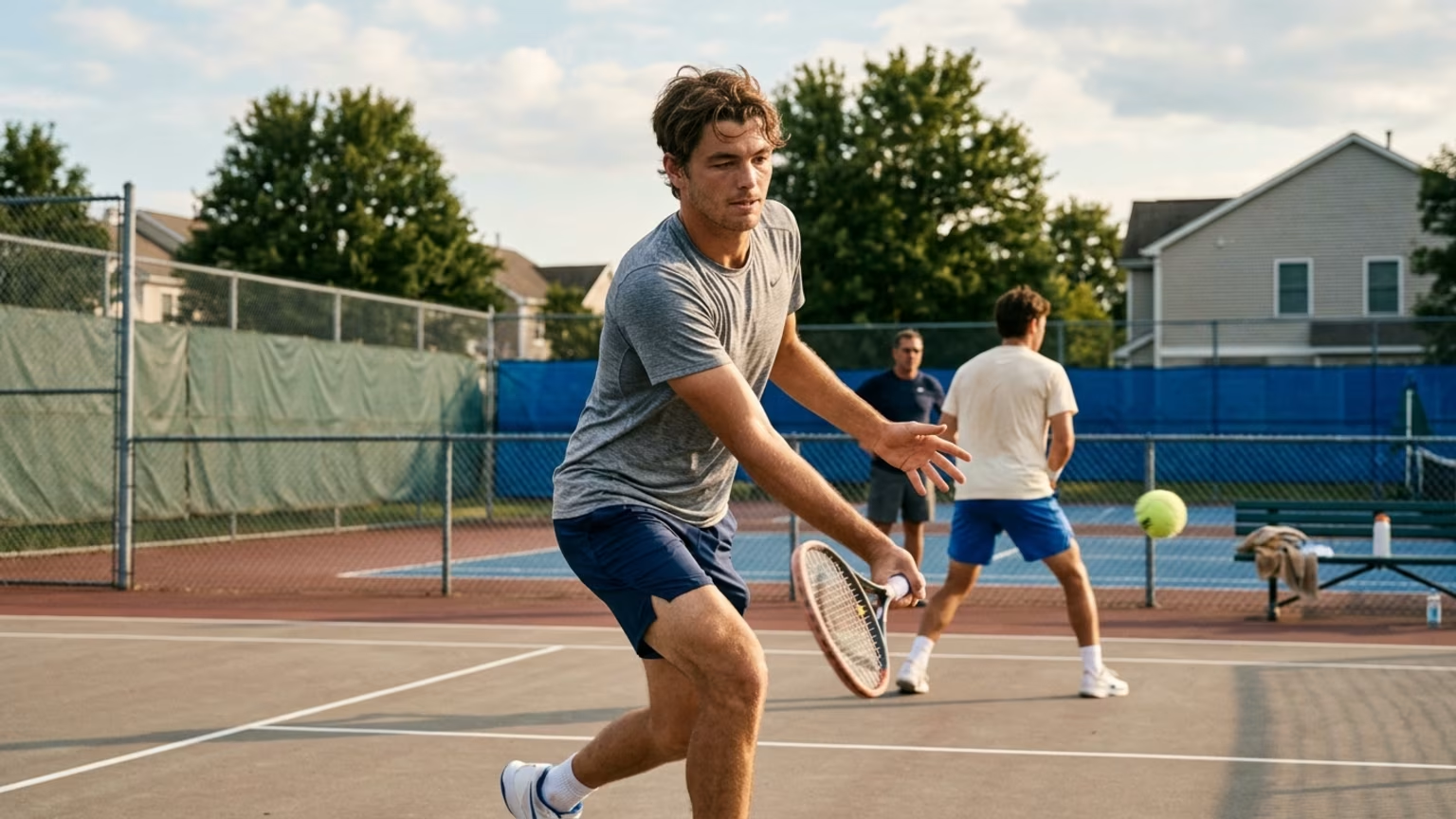

Taylor Fritz says retail and tournament tennis balls perform differently. Learn how equipment consistency impacts match preparation for adult racquet players.




On September 10, 2026, Taylor Fritz published a lengthy complaint regarding the performance gap between retail and tournament Wilson US Open tennis balls. After returning home from the North American hard-court swing and the US Open, he stated that the retail balls he used for practice felt incredibly soft, dead, and lacking pace. Fritz argued that practicing with these retail balls altered his preparation because they performed differently than the tournament supply. He believes players need to train with the exact same balls they will use in competition.
Fritz had spent the late summer using tournament-supplied Wilson US Open balls in Washington, Cincinnati, and New York. This extended schedule included a full week of dedicated US Open preparation on the official courts. He developed a clear feel for how those specific tournament balls responded off his racket during high-level match play. Upon returning home, he opened retail cans marketed under the exact same label and found they felt completely different.
He tested balls from multiple packs to ensure he had not simply bought a single defective batch. According to his statement, this inconsistency is not an isolated incident for his training camps. Fritz reported noticing a significant gap between retail and tournament versions of both Wilson and Dunlop balls over approximately the previous year and a half. He noted that other professionals had shared similar experiences regarding unpredictable equipment.
For professional athletes, equipment inconsistency is a serious preparation problem that can impact their careers. Fritz worries that training with a softer or less lively ball encourages a player to swing harder. This overcompensation can force athletes to alter their mechanics or practice point patterns that do not transfer cleanly to competition. Professionals use structured off-court training to prepare their bodies, but equipment variables still disrupt their established rhythm.
Adult recreational players face a slightly different reality when opening a fresh can for weekend league play. We understand the frustration of stepping onto the court with unpredictable or heavy equipment. I remember finishing a tough two hour padel match on a cold Tuesday night and waking up the next morning feeling like my lower back was locked in concrete. At the time, I blamed the slow, heavy balls we had used in the damp evening conditions.
But once I started spending just ten minutes on targeted hip mobility before heading to the club, the stiffness almost completely vanished. It taught me that we do not have to accept pain as a default state of aging. While we cannot always control court speed or ball pressure, we can control our physical preparation. Investing time in targeted mobility and range of motion provides a better physical foundation than worrying entirely about ball brands.
Adult players should focus on matching their practice environment to their match environment whenever possible. If you are preparing for a competitive tournament, buy the exact brand and model specified by the event organizers. However, do not permanently change your stroke mechanics to compensate for a single can of dead balls. For more on managing equipment lifespans, understanding when your court gear actually needs replacing is a practical next step for serious players.
It is also wise to build adaptability into your practice sessions. A short training segment using older balls can help players remain composed when match conditions are imperfect. Track ball behavior actively, noting whether cans feel unusually soft, heavy, or fuzzy. If a practice can seems abnormal, compare it with another fresh can before changing your swing technique.
The most relevant distinction for recreational players involves tracking three separate variables before a match. Players must account for the specific brand and model of the ball, the condition of the ball, and the overall playing environment. Even a fresh ball that meets professional standards may feel unusually fast on a quick hard court. Conversely, a perfectly manufactured ball can feel slow when affected by low temperatures or high humidity.
Fritz raised his concerns shortly after a grueling five-set match in New York. He suffered a third-round loss to Francisco Cerúndolo after leading by two sets. Cerúndolo eventually won the match by taking the final three frames 6 to 3, 6 to 4, and 6 to 4. While the match result cannot be blamed on the ball supply, the intense physical demand of long rallies highlights why players want complete trust in their equipment.
When evaluating your own equipment, remember that personal testimony is not the same as controlled testing. Even genuinely equivalent balls may feel different after shipping, storage, temperature exposure, or different amounts of use. Tournament balls also change during a practice session, as felt wear and pressure loss alter speed and bounce. When planning your season, choosing the right competitive events helps you manage these variable conditions without overplaying.
The debate over tennis ball manufacturing standards will likely intensify over the coming season. Players will continue pushing for closer alignment between the balls sold at retail and those provided for professional draws. Tournaments may face increased pressure to prove their quality control processes through independent testing rather than just issuing public statements.
For everyday players, this trend serves as a reminder to be intentional about physical and mental preparation. Consistency is easier to achieve when both sides know the equipment standard in advance. Leagues and club ladders will likely start being more specific about ball requirements. This ensures that practice sessions can safely translate to competitive match play throughout the entire year.
Follow Evercourts for practical insights on tennis, pickleball and padel performance, movement, recovery and healthy ageing. Stay connected for new articles, research-led guidance and ideas to help you play well and keep playing for years.


A Times analysis highlights how an expanded pro tennis calendar and late matches affect player health. See how adult amateurs should manage their court workload.
Pickleball.com reports Anna Leigh Waters teased an unreleased Franklin paddle. Here is what this mystery equipment means for adult recreational players.

Former Pescara captain Andrea Camplone collapsed during a padel match on September 13. Learn how this incident highlights the need for court preparedness.
Read practical guidance for better movement, smarter preparation and a game that keeps working for you.
explore the Blog
