

Put tennis in a realistic healthy aging plan, with a clear look at longevity research, strength, balance, recovery and when to seek qualified advice.




Physical capacity is your ability to handle the movements and effort that everyday life and sport ask of you. For an adult tennis player, that makes healthy aging a practical subject: maintaining the capabilities that allow you to keep participating in a game you enjoy.
Tennis can be an enjoyable part of an active life. But enjoying regular matches and having a complete approach to physical fitness are different things. The useful question is how court time fits alongside strength work, other activity and recovery.
That distinction also changes how we read research. A study linking tennis participation with longer life answers a different question from a trial measuring changes in strength or balance. Neither should become a promise about an individual player's future.
For tennis, pickleball and padel, a useful movement lens is repeated explosive effort and changes of direction. Consider those demands separately: producing a movement is one task; controlling it and being ready for another is a different task.
This is a practical way to examine court play rather than a claim about a measured training effect. A session can ask something of your strength or balance without establishing how much it improves either quality. The distinction is between using a capability and demonstrating that it has developed.
In tennis, that means looking beyond whether a match felt demanding. What aspects of physical capacity did the session ask you to use? Which capabilities do you want to maintain through other training?
The same questions are useful for pickleball and padel without assuming identical demands or benefits. Start with the actual play you are considering rather than treating the racquet-sport label as a fitness assessment. Our discussion of braking and balance in court movement offers another way to think about this distinction.
A 2026 systematic review in the European Review of Aging and Physical Activity examined racket-sport interventions in adults aged 60 and older. It included 13 trials across 14 reports. Its primary analysis drew on 10 randomized trials involving 469 participants.
The review assessed strength and balance alongside cognition, aerobic capacity and flexibility. Its authors reported favorable table-tennis estimates in four of five functional domains compared with non-exercise control. That is a finding about table tennis within this evidence base, not a result that should be relabeled as tennis research.
The important limits belong together:
Longevity headlines require a separate distinction. A published summary of the Copenhagen City Heart Study reports that the analysis followed 8,577 Danish adults for up to 25 years. It describes an estimate associating tennis participation with 9.7 additional years of life expectancy compared with sedentary participants.
That was an observational comparison. It shows an association rather than establishing that tennis caused the difference. The estimate is not a number of years an individual player can expect to gain by taking up the sport.
Read together, these sources support keeping three claims separate: an association with lifespan, a measured change in physical function and evidence for a complete training approach. They are not interchangeable. The practical value of the research is clearer when each finding stays attached to the question it actually addresses.
For athletic longevity, the editorial takeaway is to give tennis a place within a broader activity pattern. Court time need not carry responsibility for every fitness goal. Strength and balance deserve attention as distinct capabilities rather than benefits assumed from the name of a sport.
A useful planning conversation separates several areas:
These are planning categories, not a prescribed routine. Their purpose is to make different goals visible before deciding how to address them. Our guide to conditioning beyond match play provides a broader framework for that discussion.
This approach respects experienced players. Someone can value tennis deeply without needing it to be the answer to every question about healthy aging. Complementary training is not a judgment that the sport is inadequate; it is a way of keeping different objectives distinct.
Recovery deserves the same clear thinking. Our resource on assessing recovery claims offers context for considering that part of the picture. A sustainable approach leaves room for play, preparation and recovery without turning any one of them into a promise of a particular outcome.
General information is useful for framing questions. A qualified physio or healthcare provider is the appropriate setting when those questions concern symptoms or personal decisions about participation.
Reasons to seek that input include:
These are reasons for an individual conversation, not diagnoses or a self-clearance test. Personal decisions about symptoms and exercise need more than a general account of tennis research.
The long view is not about proving that every session is manageable. It is about keeping a relationship with the court that remains workable as your circumstances change. A game can matter deeply without having to provide everything.
Follow Evercourts for practical insights on tennis, pickleball and padel performance, movement, recovery and healthy ageing. Stay connected for new articles, research-led guidance and ideas to help you play well and keep playing for years.


Understand court reactions, anticipation and split-step timing, with coaching-informed partner practice and a clear role for solo rehearsal.

Plan an all-day tournament with familiar food and fluids, practical packing, and flexible match gaps for tennis, padel or pickleball.
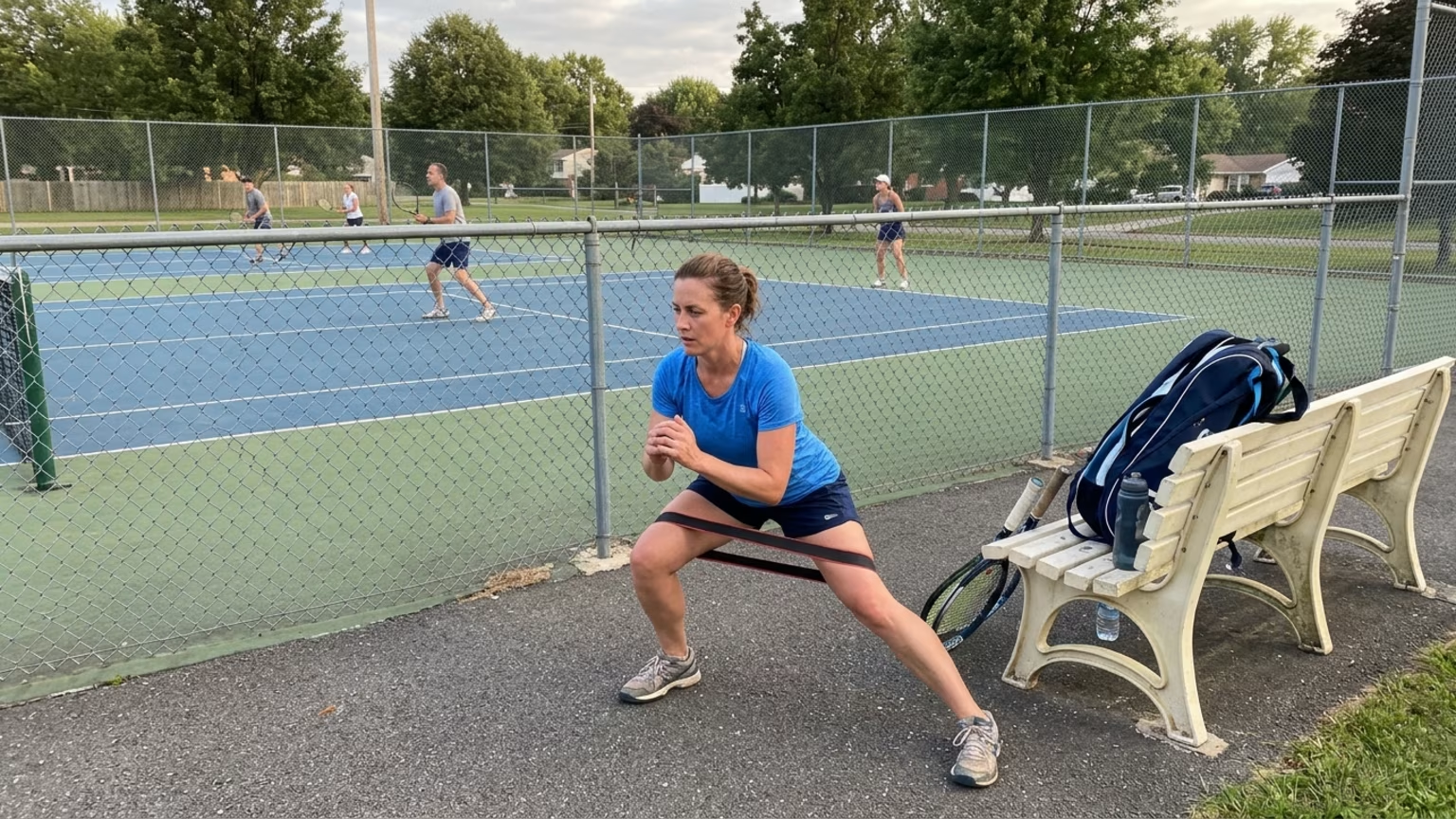
How off-court strength, balance and braking control can complement racquet sports, with clear evidence limits and signs to seek professional advice.
Read practical guidance for better movement, smarter preparation and a game that keeps working for you.
explore the Blog
