

Understand court reactions, anticipation and split-step timing, with coaching-informed partner practice and a clear role for solo rehearsal.




A court reaction is the connected act of reading what is happening, choosing a response and moving to meet the ball. It is not simply how quickly your feet move after a signal. The useful skill is connecting information with an appropriate movement.
A tennis coaching analysis describes this as a perception-action problem. Players use ball flight, opponent movement and the surrounding game situation to organize their response. Movement belongs within that process rather than sitting at the end of a separate mental decision.
That distinction changes the purpose of reaction practice. The goal becomes reading a meaningful cue and responding with control, not making every exercise faster or more tiring.
In tennis, pickleball and padel, reacting means handling repeated short explosive efforts and changes of direction. The challenge is not just starting quickly. It is choosing where to move while the situation continues to develop.
The tennis coaching analysis identifies several useful information sources: the ball's flight, the opponent's position and movement, and the previous shot. Those details give movement a purpose. A fast first step in an unsuitable direction does not solve the court problem.
For tennis practice, that means keeping the relationship between the opponent's action and your response visible. For pickleball and padel practice, use the same question to guide the exercise: does the player respond to information from the actual game or merely follow a known pattern?
This is a practical way to think about reading the play before starting to move. It keeps attention on the quality of the response rather than foot speed alone.
A 2026 scoping review published in Sports Medicine included 40 studies of biological-motion perception. Of these, 30 concerned anticipation and 10 concerned motor learning. Biological-motion information means information available from another person's movement.
The review included evidence that skilled athletes can use an opponent's movement to anticipate actions in sports including tennis. This supports looking beyond the ball in isolation. The opponent's developing action can also contain useful information.
The tennis coaching analysis reports that collegiate players reached a target faster with a split step in a simulated task. Its account also emphasizes that the benefit depended on landing timing.
The same analysis describes split-step timing that varies with the game situation. It also reports that expert returners adjusted their movement timing to the server's unfolding action.
The practical interpretation is straightforward: treat the split step as preparation for the movement problem in front of you. Do not turn it into a compulsory bounce performed identically on every ball. The question is whether it helps organize the response to the developing play.
The coaching analysis reports that only eight of 62 studies in a tennis anticipation review met its criterion for high task representativeness. In plain language, relatively few closely reproduced the information and actions involved in actual play. The Sports Medicine review also reported mixed results across some tennis comparisons.
The assembled evidence is largely tennis-based. It does not establish a validated standalone solo routine, an age-specific reaction program or an injury-prevention benefit. Nor does it show that these drills extend playing careers. The practice ideas below are coaching-informed applications rather than a proven training dose for adult players across all three sports.
For adult players, the useful aim is to keep practicing the connection between reading play and moving with control. Exhaustion does not need to become the measure of a successful session. A manageable movement problem gives the practice a clearer purpose.
The tennis coaching analysis recommends changing ball speed and court dimensions to alter that problem. A slower ball gives the player more time to read information and organize movement. A wider playable area increases the space to defend.
These adjustments are tools for shaping practice rather than targets everyone must reach. A coach or partner can use them to create a task that remains connected to the game.
A simple coaching-informed sequence is:
The important feature is the relationship between the information and the response. Simply knowing in advance which direction to run changes the task. It becomes rehearsal of a planned movement rather than a response to unfolding play.
The coaching analysis also recommends varying balls, surfaces or opponents to present different movement problems. Variety should serve a clear purpose: changing what the player must read and respond to.
Solo shadow movement can be low-pressure rehearsal of a balanced ready position and a controlled first movement. Label it that way. Its purpose is movement rehearsal rather than a substitute for reading an opponent.
This distinction makes solo work easier to place within a broader practice week. Partner work supplies changing information. Solo rehearsal provides an opportunity to focus on the movement itself.
A useful reflection is whether the exercise allowed you to notice the cue and organize your response. That is a more relevant question than whether the drill left you exhausted.
A brief record of how practice felt can give that reflection a place alongside your other training notes. Record the task and how manageable the movement felt without treating the entry as a medical assessment.
For athletic longevity, reaction practice belongs within the wider conversation about how much training fits your week. The editorial priority is sustainable participation and purposeful practice, not proving that every session can be harder than the last.
Pain or recurring stiffness that is changing your court movement deserves individual attention rather than a more demanding drill. Difficulty with movements you normally manage is another reason to discuss the situation with a qualified physio or healthcare provider.
Describe the movement that troubles you and how it affects your play. These observations are useful starting points for a consultation, not grounds for diagnosing yourself or choosing treatment from a reaction-training article.
If pain or recurring stiffness is changing your movement today, book an assessment with a qualified physio or healthcare provider.
Follow Evercourts for practical insights on tennis, pickleball and padel performance, movement, recovery and healthy ageing. Stay connected for new articles, research-led guidance and ideas to help you play well and keep playing for years.


Plan an all-day tournament with familiar food and fluids, practical packing, and flexible match gaps for tennis, padel or pickleball.
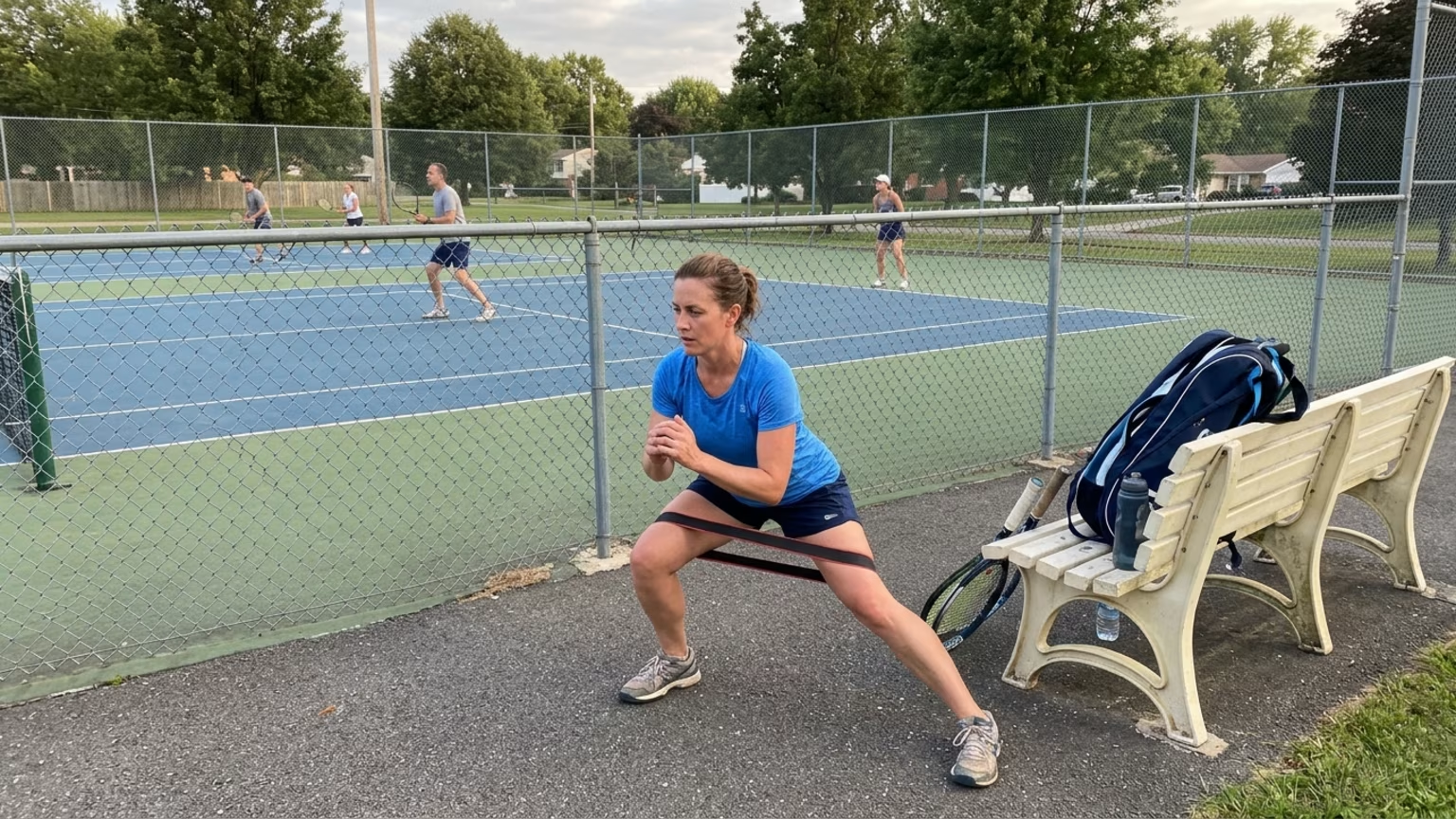
How off-court strength, balance and braking control can complement racquet sports, with clear evidence limits and signs to seek professional advice.

Understand pickleball balance research, reaching and backward movement, with practical control cues and signs to seek qualified guidance.
Read practical guidance for better movement, smarter preparation and a game that keeps working for you.
explore the Blog
