

Moving from tennis to padel? Keep the compact volley, learn when to use the back glass and see how partner movement and lobs change the point.




The part of tennis worth keeping is how you see and meet the ball. Padel Magazine identifies stroke coordination, reading trajectories and rally experience as useful foundations. Those skills give a tennis player something familiar to work with even when the right moment to make contact changes. Reading the incoming ball still matters. The new decision is whether to meet it early or wait for a rebound.
Net experience carries over too. ShadowSwing’s transition guide singles out the compact volley as a tennis habit that fits padel. If you already set the racket with a short motion at the net, you don’t need to start over. You have a familiar movement to draw on when the ball comes at you quickly.
That’s a question of skill transfer. It’s separate from how tennis players prepare for starts, stops and strokes.
ShadowSwing recommends smaller swings and more controlled preparation, especially when handling pace or playing close to the net. Think of a quick ball coming straight at you. The aim is to get the racket ready to meet it rather than make the same backswing you might use on an unhurried tennis groundstroke. A shorter swing changes how you prepare without asking you to give up the timing you brought from tennis.
According to The Padel Books’ rules explainer, a ball that first bounces on your side can be returned after it rebounds off the glass, provided you hit it before the second floor bounce. ShadowSwing recommends letting suitable deep balls reach the back glass and tracking the rebound rather than rushing to make contact before the ball reaches the wall.
The key word is suitable. The glass gives you another option, not a reason to wait on every deep ball. ShadowSwing’s four-week practice outline gives back-glass work its own week. The useful idea is to give the rebound your attention in practice instead of trying to read it for the first time while deciding where to place a return.
SCUD’s positioning guide treats the space between the back court and the net as somewhere to pass through, not a place to settle. It recommends advancing and retreating together. In practical terms, that means talking with your partner about when to go up or drop back rather than making those decisions in isolation.
ShadowSwing’s practice outline also sets aside a week for moving as a pair. That separates two decisions that come together in a point: how to handle the ball and where both players go next.
Tennis is the more direct fit for the stroke timing you already know. In padel, that timing has to work alongside the wall rebound and your partner’s movement. A fast exchange at the net is a good place to use a compact tennis volley. A deep ball heading for the glass is where the urge to take it early can get in the way. Those are different movement decisions, not just different swings. Evercourts takes a closer look at the footwork demands of padel.
Shot selection shows the difference just as clearly. Padel Magazine and ShadowSwing caution against trying to hit through opponents from the back. A hard ball can come off their glass and stay playable. A lob offers a different route: if it pushes the opponents away from the net, the defending pair has a chance to move forward together. If it doesn’t move them back, the lob alone isn’t a signal to advance.
There’s a related choice when you’re already at the net and a lob comes your way. ShadowSwing suggests the bandeja as an overhead option when the aim is to keep the net position. The point of that choice isn’t to hit the hardest overhead available. It’s to play a ball that helps your pair hold its position.
Neither tennis nor padel wins on longevity. These coaching guides explain how to play the points. They don’t establish that either sport is safer, better for long-term health or more likely to keep you on court for life.
For a tennis player who wants a second sport without starting from scratch, padel is the pick. The case for it is tactical: familiar skills still count, but the glass and the movement of your partner change which shot makes sense. That makes padel a different game to grow into, not a longevity upgrade.
Follow Evercourts for practical insights on tennis, pickleball and padel performance, movement, recovery and healthy ageing. Stay connected for new articles, research-led guidance and ideas to help you play well and keep playing for years.


Plan a flexible week of racquet sports, strength work and recovery, with adjustments for hard matches, time away and lingering fatigue.
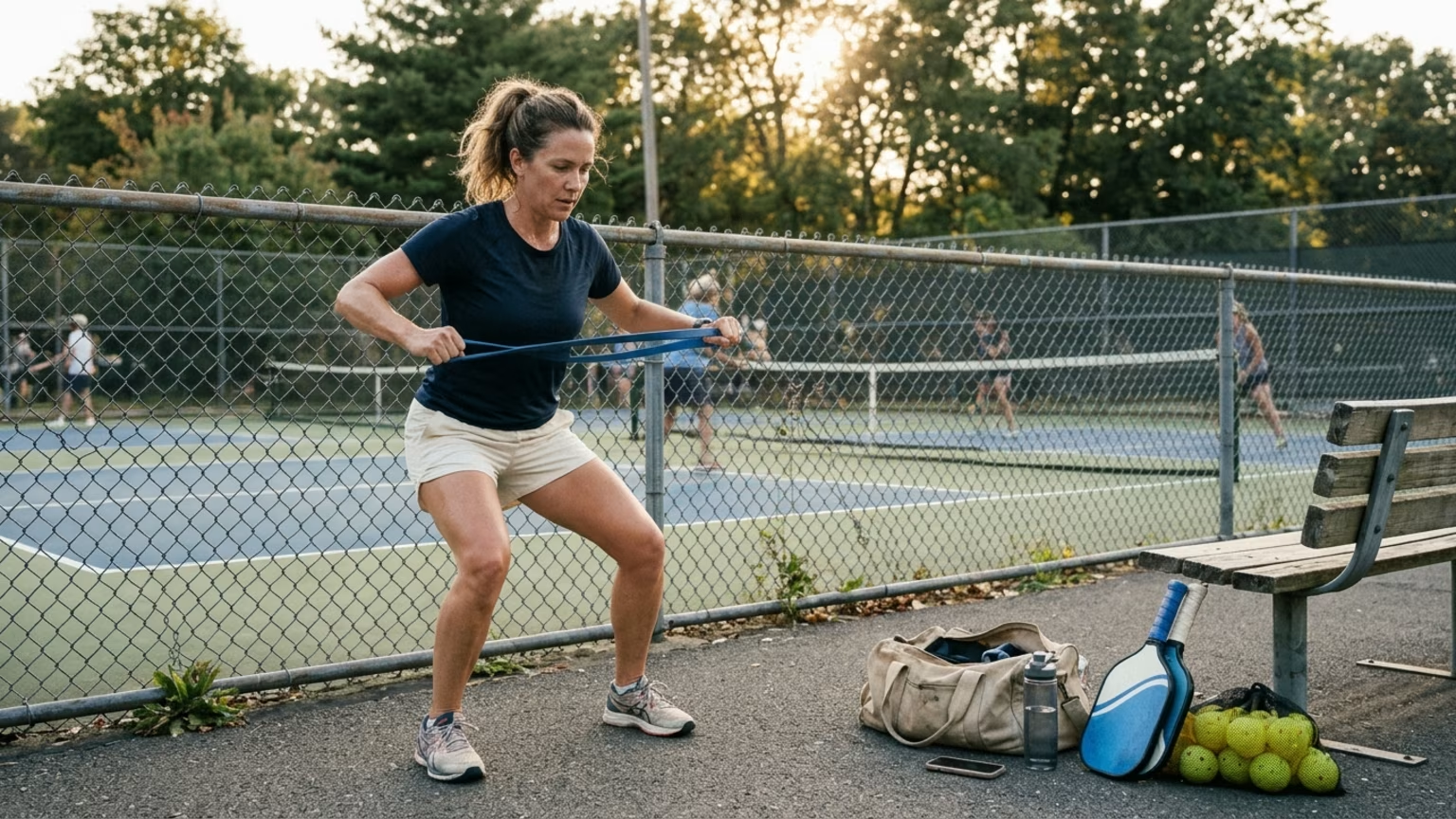
Build a manageable pickleball strength routine for starts, stops and side steps, with exercise options and gradual ways to progress.

Compare tennis racquets and pickleball paddles on court with practical tips on grip fit, swing weight and deciding what's worth buying.
Read practical guidance for better movement, smarter preparation and a game that keeps working for you.
explore the Blog
