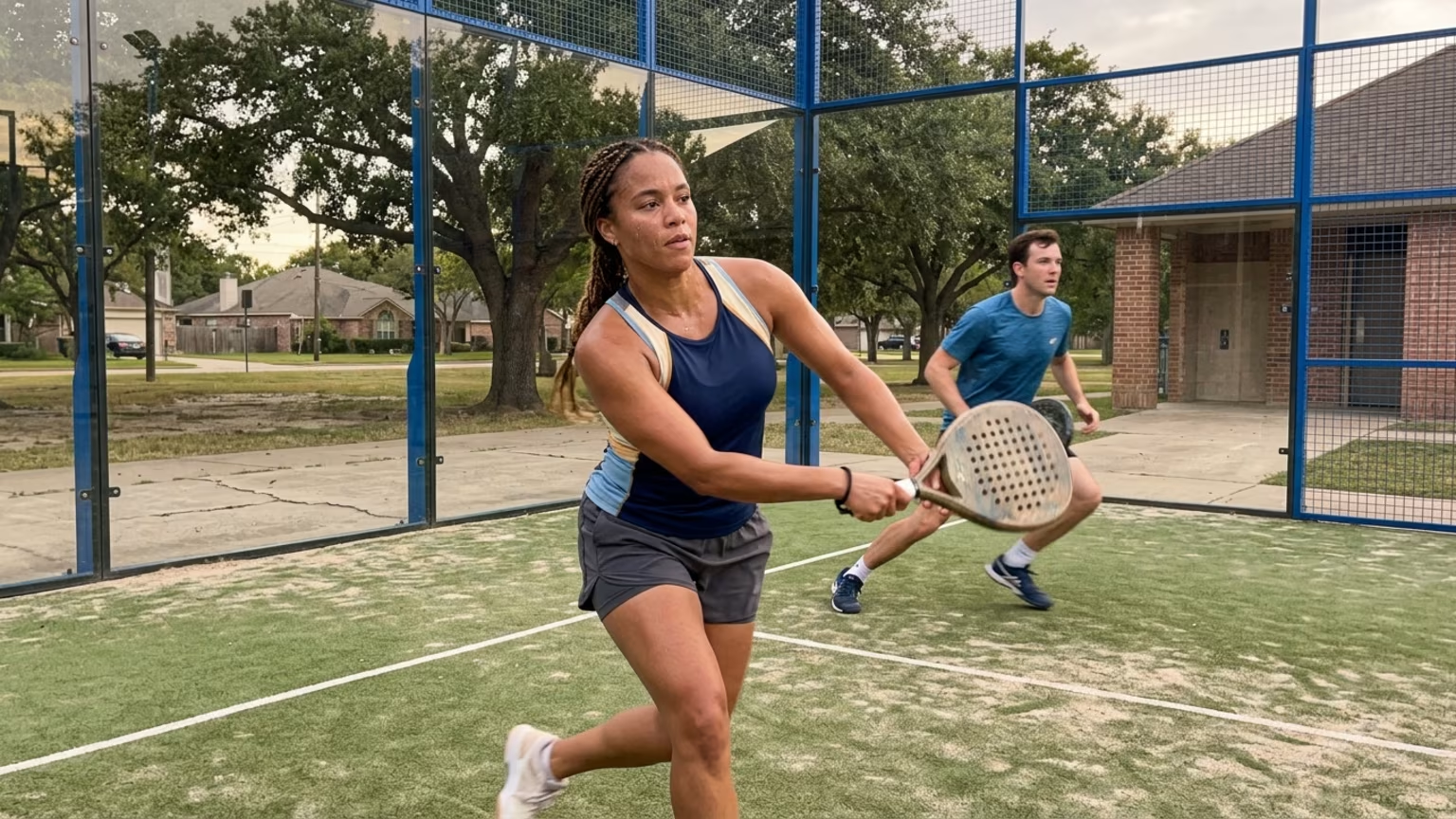

Padel demands constant acceleration, controlled braking, and rotational strokes on a compact court. Learn how to match your physical capacity to the game.




Padel is an intermittent repeated effort sport defined by constant acceleration, controlled braking, and rotational strokes on a constrained court. The physical profile comes from the constant interaction of a compact surface, rebound walls, and short reactive movements. Padel is not simply tennis on a smaller court. The movement patterns require a completely different physiological and biomechanical approach.
A regulation padel court is 20 metres long and 10 metres wide. It is enclosed by glass or other approved rebound surfaces and metal mesh. This smaller court size reduces the need for long linear sprints. However, it significantly increases the frequency of rapid direction changes and low defensive recoveries.
The smaller court layout changes the physical equation entirely. The official court descriptions confirm that the enclosure is a rebound surface built into the rules. Players must judge whether to intercept the ball before the rebound, allow it to pass, or move around it. This process requires constant positioning adjustments, rapid stops, and low defensive postures to return low bouncing shots.
These physical demands separate padel from tennis and pickleball. Tennis players rely on linear speed to cover a large baseline area. Pickleball demands fast hand reactions and tight lateral shifts near the kitchen line. Padel sources describe the sport as involving lateral movement, rapid changes of direction, and repeated overhead strokes. The glass walls force players to brake late, turn, and reaccelerate under control.
I remember finishing a tough two hour padel match on a cold Tuesday night and waking up the next morning feeling like my lower back was locked in concrete. For a long time, I just accepted this as the price of playing hard in my forties. But once I started spending just ten minutes on targeted hip mobility before heading to the club, the stiffness almost completely vanished. It taught me that we do not have to accept pain as a default state of aging.
The lower body must absorb the stress of braking and lateral force production repeatedly. For the upper body and trunk, repeated overhead shots and rotational strokes add a different mechanical demand entirely. Players need targeted physical preparation to handle this unique load safely. Building this specific capacity helps reduce joint stress and improves overall movement efficiency over time.
Padel is better understood as a sequence of repeated short bursts rather than a continuous endurance event. Review level reporting places average padel heart rate broadly around 70 to 80 percent of maximum. The exact value varies significantly by player, match, and playing conditions. A cardiology oriented review describes both tennis and padel as combining an aerobic base with repeated harder bursts.
This intermittent profile means heart rate falls only partly between points before rising again rapidly during rallies. The smaller court size simply shifts the emphasis from sprinting to frequent starts, stops, and rotational efforts. Total court distance is an incomplete measure of physiological load for this reason. A player covering less ground may still experience intense mechanical strain from repeated decelerations.
Because padel uses rebound walls, movement capacity includes perception and timing alongside pure physical fitness. During a match, players must decide whether to take the ball before the wall, let it rebound, or move around it. A player who runs comfortably but repeatedly arrives too close to the wall may struggle with these spatial demands. Our court performance guide details strategies to handle this specific technical and physiological burden.
To perform well consistently, players need targeted physical preparation to manage this unique structural load. Building this specific capacity helps reduce joint stress and improves overall movement mechanics. The main physical challenge is executing powerful actions while constantly reacting to unpredictable rebounds off the glass.
Understanding the precise physical requirements of padel is the foundation of athletic longevity. Healthy aging on the court requires capacity matching, which means building enough movement reserve so normal rallies do not force uncontrolled braking. The main question is whether a player can repeat a lateral movement while tired. Padel heavily tests this repeatability during long, grueling matches.
The sport has expanded into a wider recreational audience rapidly over recent years. Physiotherapy reporting highlights the challenge for newcomers who move from a relatively low activity base into unfamiliar high intensity movements. The sudden introduction of repeated acceleration, braking, and changes of direction requires a sensible progression plan. A recreational player returning from inactivity may begin with shorter blocks, more recovery, and lower pressure points.
Practical assessments can help adult players measure their repeatable capacity safely before stepping onto the court. Before playing a full session, players should perform short forward accelerations, lateral shuffles, and controlled decelerations. The goal is to observe whether technique remains stable across multiple rounds. Players must learn to prepare for the first point to maintain control across these physical repetitions.
A practical way to build this capacity is to use a simple repeatability circuit tailored for racquet sports. Players can perform short shuttle efforts over a few metres, alternating forward, lateral, and backward movement. Include controlled stops and changes of direction rather than running only in a straight line. This reflects the repeated effort structure of padel much more closely than a single long distance running test.
Injury statistics emphasize the importance of this careful approach to physical preparation. One report cites approximately three injuries per 1,000 training hours and eight per 1,000 matches. These figures highlight substantial differences between studies, and padel is absolutely not inherently dangerous. However, aligning your physical readiness with the sport reduces the physical toll on your body significantly over time.
Even with thorough preparation, adult players must remain vigilant for signs of mechanical overload. Pain that worsens as a session continues is a primary warning sign to stop playing and seek help. Persistently upright or uncontrolled braking, heavy foot contact, and an inability to react indicate excessive fatigue. When a generic court test reveals these consistent issues, it is time to consult a qualified physiotherapist.
Cardiovascular warning signs also require prompt medical attention from a healthcare provider. Unusual shortness of breath, chest symptoms, or a failure to recover breathing between points should never be ignored. Medical professionals can evaluate these symptoms and clear you for safe participation. Never rely on general advice when facing acute joint instability or systemic health concerns.
Building physical resilience requires understanding when your body needs active recovery rather than another intense match. Consulting a qualified professional ensures you understand your baseline health before undertaking repeated hard bursts. A professional can help you structure a safe, progressive return to play after any physical setback. Evercourts always recommends putting your long term health above winning a single casual match.
Padel is a fast, reactive game played within a 20 by 10 metre enclosed space. It challenges your ability to accelerate, stop rapidly, and rotate under constant pressure. When you address the specific demands of these rebound walls and tight spaces, you build true court resilience. You can leave the court after a cold Tuesday night match feeling capable, informed, and completely ready to play again.
Follow Evercourts for practical insights on tennis, pickleball and padel performance, movement, recovery and healthy ageing. Stay connected for new articles, research-led guidance and ideas to help you play well and keep playing for years.


An evidence check on sports supplements like tart cherry juice. Learn why racquet sports players should prioritize core nutrition over functional foods.
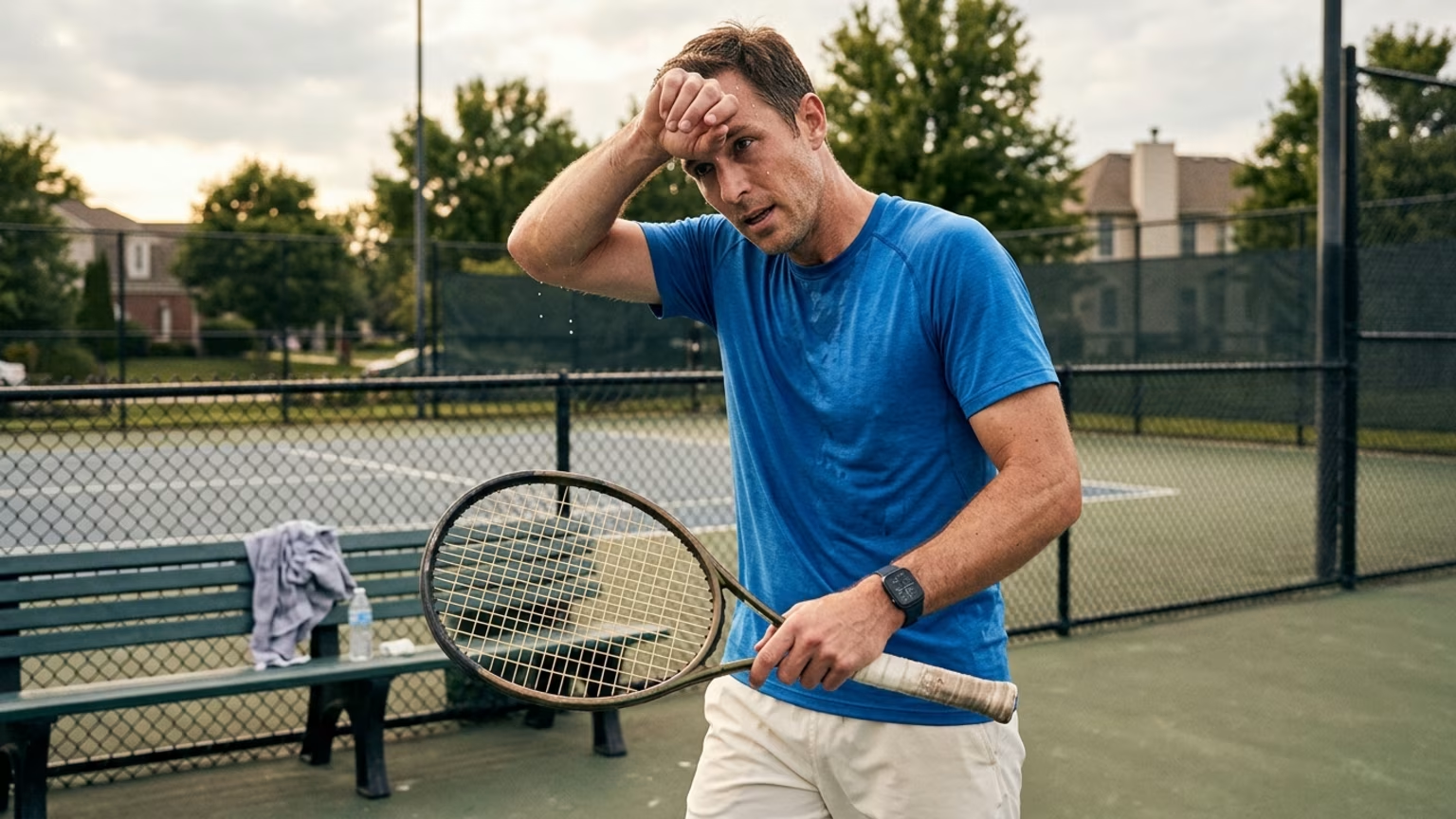
In late 2026, Oura analyzed wearable data to see how recreational tennis impacts heart health and recovery. Learn what this means for your athletic longevity.
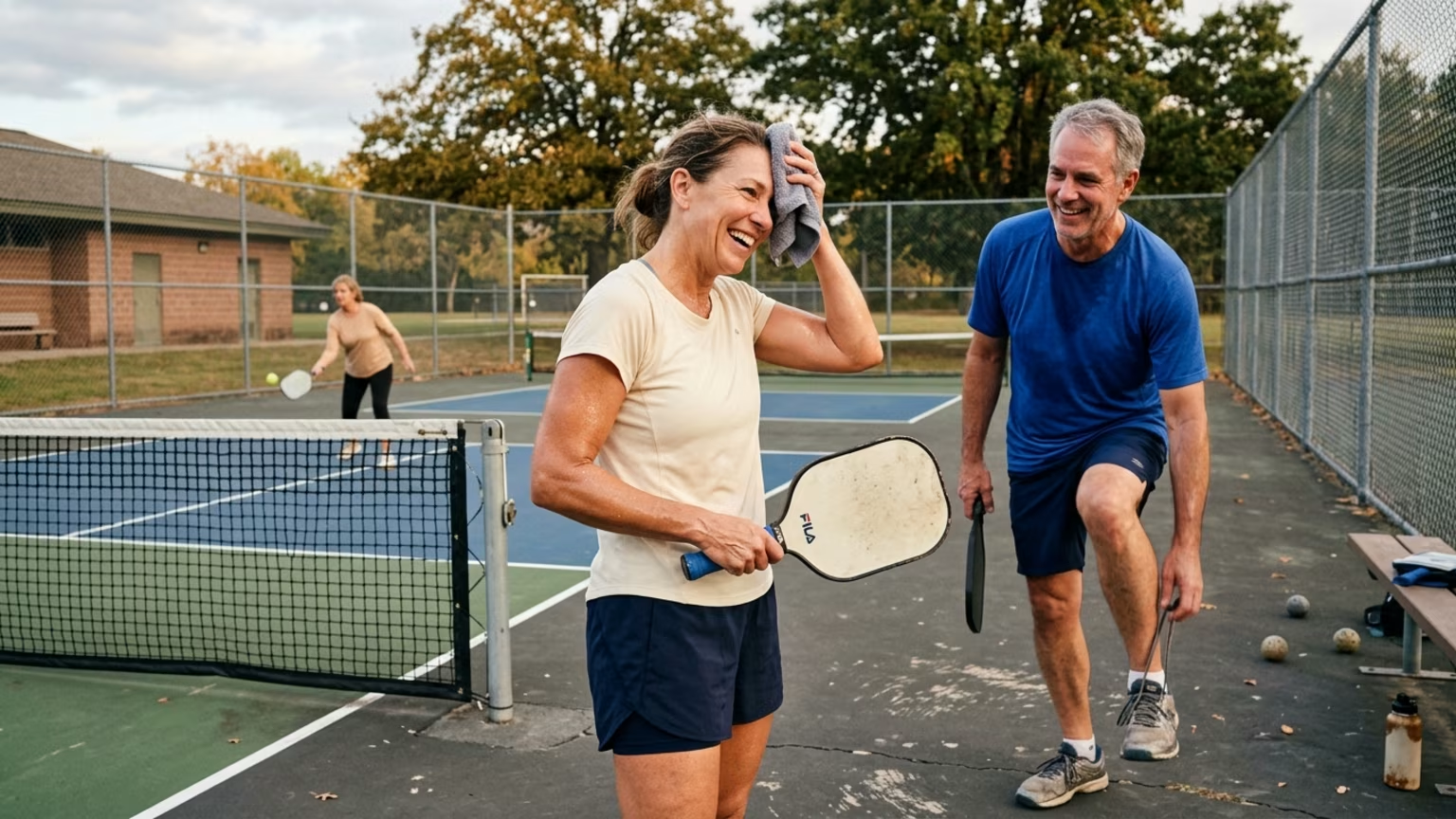
Recent guidelines emphasize gradual progression, dynamic warm-ups, and scheduled recovery to help adult racquet sports players maintain athletic longevity.
Read practical guidance for better movement, smarter preparation and a game that keeps working for you.
explore the Blog
