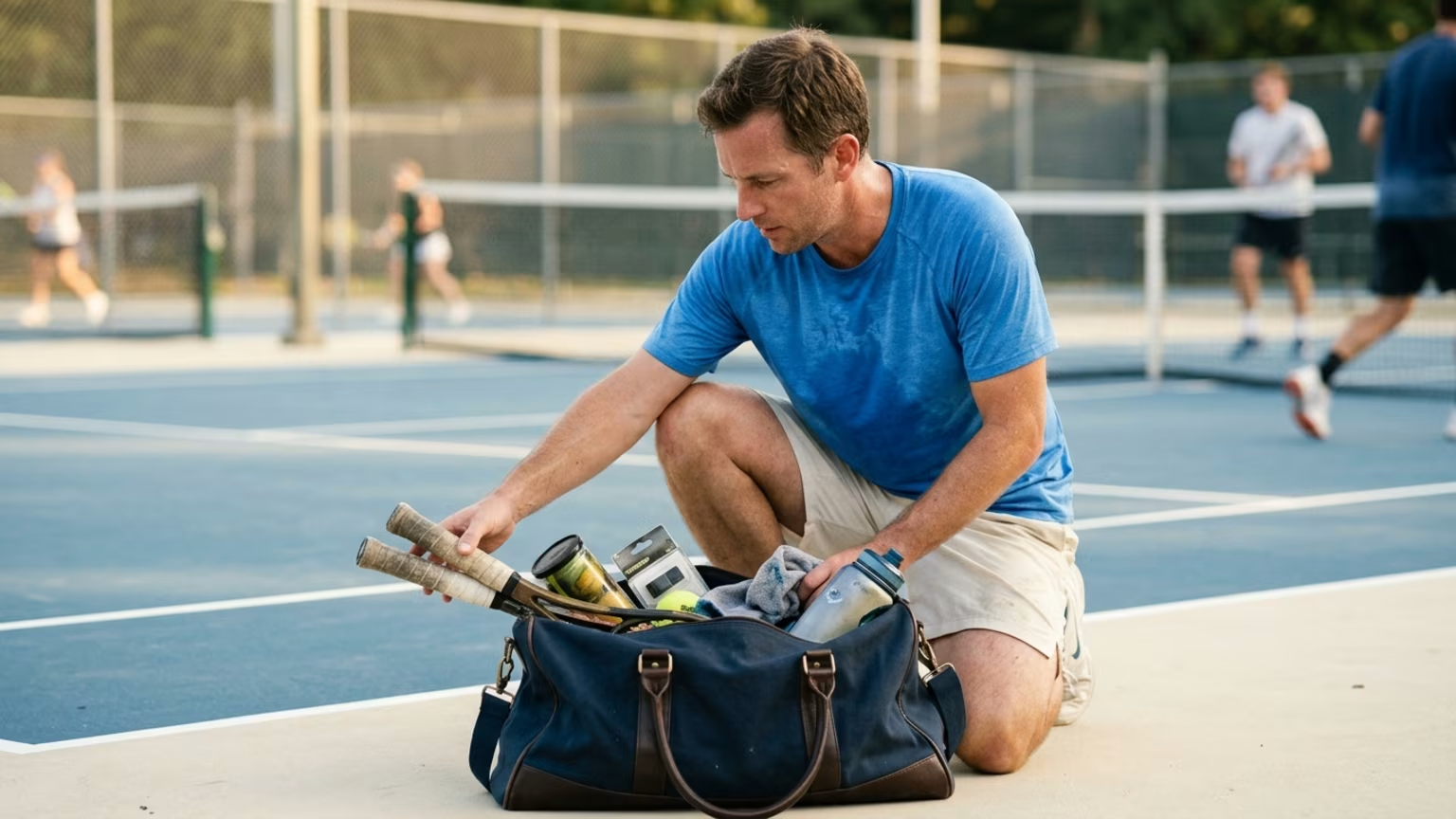

Discover how to build a dependable court bag using environmental realities. Learn to pack for tennis, pickleball, and padel with verified recovery priorities.




Packing a massive bag with every conceivable gadget does not make you a better player. The most reliable match kits are built around environmental realities rather than consumer trends. A loss of more than 2 percent of body weight is commonly treated as significant dehydration in exercise guidance. That single statistic dictates exactly what deserves permanent space in your daily setup.
Treating your equipment bag as a risk management tool completely changes how you pack. You are not collecting items for convenience, but preparing to survive the specific conditions of your environment. Every item you carry must justify its weight by solving a predictable physical problem. A conditions first mindset ensures you always have the right resources on hand.
Playing a competitive racquet sport places immense physiological stress on the human body. Repeated explosive sprints and sudden stops generate intense force on the lower body joints. Environmental heat exposure forces the cardiovascular system to work significantly harder to pump blood. The body sheds water rapidly to maintain a safe core temperature during heavy physical exertion.
The United States Tennis Association advises players to start hydrating the day before competition. Their guidelines suggest drinking water and sports drinks while seeking shade whenever possible. They also recommend using a wet towel or ice during changeovers to manage core temperature. Heat exhaustion is a serious risk that careful preparation can help manage effectively.
Players must recognize that ignoring these environmental demands leads directly to premature fatigue. The body simply cannot execute precise physical skills when it lacks basic hydration. A well packed bag acts as a portable support system for these intense physiological needs. Proper fluid replacement is the absolute foundation of sustained athletic longevity.
I used to think a tough conditioning block was the only way to improve my court endurance. Then I started tracking my sleep. I noticed that on days I slept less than six hours, my reaction time at the net was noticeably sluggish, and I felt gassed by the second set.
Prioritizing consistent rest did more for my late match stamina than any extra sprints ever did. Recovery is the true foundation of performance. A carefully packed gear bag acts as a portable support system for these vital bodily requirements. Proper fluid replacement is another absolute foundation of sustained athletic longevity.
A clinical sports hydration guide suggests water is usually sufficient for shorter athletic sessions. This applies to play lasting roughly 60 to 75 minutes in moderate weather conditions. Once a match extends beyond that specific timeframe, the mathematical reality of sweat loss changes. Longer durations and heavier sweating make electrolyte replacement far more necessary for safe play.
The United States Tennis Association specifically emphasizes that players need to eat properly. The body requires consistent fuel during heat affected competition to maintain optimal energy levels. Packing an easily digestible carbohydrate snack is a biological necessity rather than a luxury. Food provides the essential raw materials your muscles need to keep firing during a long match.
Sun protection also requires a strict adherence to clinical baseline numbers. The American Academy of Dermatology recommends broad spectrum water resistant sunscreen. They specify using a product with SPF 30 or higher for adequate outdoor protection. This broad spectrum designation is critical because it protects against both UVA and UVB radiation.
Sunscreen needs to be reapplied constantly due to the realities of sweating and toweling off. A practical outdoor kit should include a resealable pouch so liquids do not leak into your electronics. Players who compete regularly in hot conditions can monitor their own physical metrics carefully. Understanding these specific numbers helps build a sustainable racquet sports longevity plan over time.
Different racquet sports impose highly specific footwear and logistical rules on players. In tennis, your shoes must match the exact friction levels of the court surface. Hard courts require lateral stability and cushioning designed for aggressive braking forces. Clay courts demand specialized tread patterns that allow controlled sliding without retaining excessive debris.
Pickleball creates its own unique packing requirements for regular competitive players. While the bag might be smaller, you still need properly fitted non marking court shoes. USA Pickleball issued a uniform related referee notice in July 2026. This recent update proves why players must check current event rules when building a reliable gear bag.
Padel introduces distinct footwear and clothing mandates that traveling players must respect. Summaries of the sport rules dictate that players must wear suitable sports clothing and footwear. Swimwear is explicitly prohibited by these official standards. Arriving at a new club with inappropriate clothing can result in an immediate refusal of play.
Padel specific guidance highlights the need for lateral support and herringbone soles. These specific shoe elements help manage movement on sand dressed artificial turf courts. Every racquet sport demands a modular packing approach based on surface and scheduled session length. A universal shoe simply does not exist across these three distinct disciplines.
The physical layout of the venue also dictates what you need to bring along. An indoor hit requires a simple water bottle and a single towel. An all day tournament demands multiple clothing changes, extra shoes and dedicated recovery nutrition. Recognizing these contextual differences prevents you from carrying useless weight while missing the actual essentials.
The most valuable items in your bag often focus on what happens after the match ends. A dry shirt and clean socks can significantly improve comfort while reducing blister risks. Wet clothing becomes a liability during long tournament waits or the drive home. Changing into dry layers immediately signals to your body that the exertion phase is complete.
Small repairs and preventative tools boast an incredibly high usefulness to weight ratio. Packing spare overgrips and finishing tape prevents a slippery handle from ruining your swing mechanics. A wet grip forces you to squeeze the handle tighter, which places unnecessary strain on the forearm. Swapping a grip takes two minutes but saves hours of potential joint irritation.
Recovery should always remain proportionate to the actual physical toll of the session. Basic cooling strategies and fluid replacement matter far more than carrying heavy electronic massage devices. Prioritizing the fundamentals ensures you return to the court healthy the next day. This grounded approach to post match recovery priorities is essential for older players.
A sensible post match kit should also include basic blister care and any prescribed medication. Players should never use painkillers as a way to mask warning signs and continue competing. Anyone with heart conditions should seek individualized hydration advice rather than blindly drinking more water. Listening to your body is the ultimate safeguard against severe physical exhaustion.
The experienced player knows that preparation is about anticipating the most likely points of failure. True readiness comes from matching your equipment exactly to the forecast and the surface. The bag simply carries the tools required to keep you moving safely. Preparation eventually becomes a quiet, invisible part of the game.
Follow Evercourts for practical insights on tennis, pickleball and padel performance, movement, recovery and healthy ageing. Stay connected for new articles, research-led guidance and ideas to help you play well and keep playing for years.


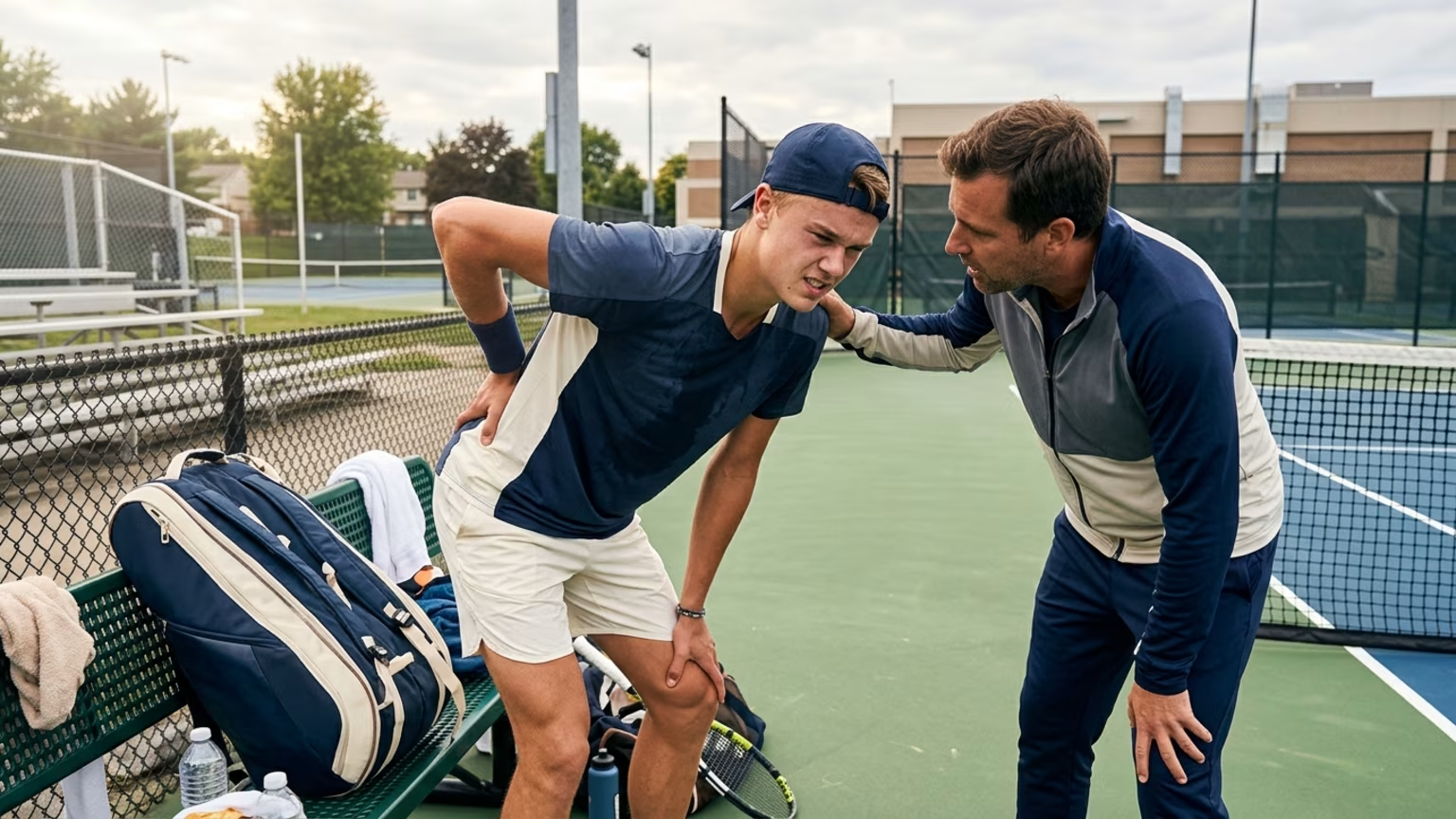
Holger Rune withdrew from the European Open with a back problem. The facts behind his decision and a grounded perspective for recreational players.

The Dink’s October 17 guide emphasizes deep returns, ball-height decisions and positioning against faster pickleball opponents.

A new report outlines padel and tennis gear trends. Learn how to assess adjustable rackets, sensor feedback and smart-court claims.
Read practical guidance for better movement, smarter preparation and a game that keeps working for you.
explore the Blog
