

Learn how to build a dependable racquet sports match bag. Pack the right equipment, hydration, and backups for tennis, pickleball, and padel tournaments.




On July 15, 2026, USA Pickleball announced a new equipment testing timeline that will strictly limit paddle spin rates in competitive play. I remember finishing a tough two hour padel match on a cold Tuesday night and waking up the next morning feeling like my lower back was locked in concrete. For a long time, I just accepted this as the price of playing hard in my forties.
But once I started spending just ten minutes on targeted hip mobility before heading to the club, the stiffness almost completely vanished. It taught me that we do not have to accept pain as a default state of aging. That exact principle applies to how we prepare our equipment for the courts today.
The governing body confirmed that newly submitted paddles must meet a 2,100 RPM spin rate limit starting October 1, 2026. This technical adjustment addresses how much spin a player can generate during matches. It forces competitive players to carefully check their equipment before entering sanctioned tournaments. You can confirm your gear is legal by checking the approved equipment database maintained by USA Pickleball.
Other sports are seeing similar structural developments for adult competitors. The International Padel Federation announced a 2027 European championship edition in the Netherlands and a 2029 edition in Germany.
Meanwhile, the International Tennis Federation continues to operate masters competition for players aged 40 and older. This includes active coverage of the 2026 Masters World Championships. As international and local tournament formats grow, players need a modular strategy for their gear.
Professional players have equipment managers who handle racket stringing and hydration mixing. Adult recreational players have to carry their own supplies and manage their own physical readiness. The goal is to build a reliable setup based on your specific sport and local weather conditions.
Bringing multiple rackets is sensible for a full tournament day, but it is unnecessary weight for a one hour social session. A truly dependable match bag helps you perform well and supports athletic longevity.
Players often make the mistake of assuming all racquet sports use identical setups. A summary of the rules from the International Padel Federation confirms that padel uses stringless rackets and depressurized balls. Tennis relies on conventional strung rackets, while pickleball requires specific plastic balls.
Your core bag must start with the correct tools for your specific court surface. Creating a structured packing process helps you establish a dependable routine before you step on the court.
Your main compartment should always contain your primary racket or paddle. You should pack a backup racket only when the match format or travel distance justifies it. Include the correct balls for your venue, proper court shoes, and a clean towel. A dependable bag also holds your identification, phone, payment method, and personal medication.
Tournament organizers frequently update acceptable footwear rules for specific surfaces. The wrong shoe tread damages the court and severely limits your lateral movement. Pickleball players need a court shoe designed for hard court transitions. Padel players require specialized grip patterns to handle the synthetic grass and sand surfaces.
Grip management is a practical reason to carry small backup items in your bag. A slippery handle ruins technique and causes painful forearm fatigue over time. You should always carry a replacement overgrip and small scissors. Wristbands and basic blister plasters keep small irritations from becoming match ending injuries.
The most useful backups in your bag are usually small and inexpensive. You should always pack a phone battery pack to ensure you have emergency power. Storing the venue address and match schedule offline prevents issues if cellular service fails. Cash or a physical payment card ensures you can buy extra water if necessary.
A spare key to your vehicle prevents a minor mistake from ruining your weekend. Pack a simple plastic or waterproof bag to store wet clothing after long matches. A basic first aid kit is essential for managing minor scrapes on the court. Protecting your ability to travel home safely is more important than packing a third backup racket.
Weather conditions dictate your clothing layers and sun protection strategy. Your outfit should use breathable fabrics that allow full movement across the court. Bringing a spare shirt is vital during long events to avoid sitting in damp clothes between matches. You should also pack extra socks to protect your feet during heavy sweating.
Outdoor matches require a dedicated focus on blocking dangerous ultraviolet rays. The American Academy of Dermatology recommends using a broad spectrum sunscreen that is water resistant. They advise applying an SPF 30 or higher product and reapplying it after sweating or toweling off. You should complement sunscreen with a wide brimmed hat and protective sunglasses.
Heat management goes beyond applying skin protection during summer tournaments. CDC heat guidance recommends carrying water, refilling it, taking breaks, and using shade when conditions are hot. A simple cooling towel provides immediate relief during short changeovers. Having a planned recovery spot in the shade prevents extreme fatigue before your next round.
Nutrition and hydration items should reflect the length and intensity of your playing session. Short matches typically only require a large reusable water bottle and a normal pre match meal. Longer tournament days demand multiple bottles and familiar snacks like bananas or pretzels. It is important to avoid testing new energy products on the day of a major competition.
You should carry snacks that consist of familiar and easy to digest foods. Dried fruit and granola bars provide excellent carbohydrates for quick energy during matches. A full sandwich or wrap is appropriate if you have a long wait between tournament rounds. Always avoid heavy meals right before you step onto the court.
Fluid replacement is a highly personal requirement rather than a universal prescription. One available summary of sports hydration guidance recommends beginning exercise adequately hydrated and individualizing replacement according to sweat losses. Players must listen to their own bodies instead of forcing down arbitrary volumes of water. You can further customize your routine by reviewing strategies for refueling properly after competition.
Electrolytes are helpful, but they are not strictly mandatory for every single match. A source summarizing ACSM guidance gives a sodium concentration of approximately 0.5 to 0.7 grams per liter for exercise lasting more than one hour. This benchmark is useful for sweaty players competing in humid conditions. You should always consult your clinician if you have specific medical conditions or fluid restrictions.
We pack extra gear to prevent small physical issues from turning into lasting injuries. Recent research highlights why adult players must take court safety and movement preparation seriously. A secondary report on a recent study says roughly one in three surveyed pickleball players reported an injury in the previous year. Soft tissue problems and lower body injuries feature prominently in these types of sports.
Accidental trips and slips remain a notable hazard for older competitive athletes. A report summarizing emergency department research found that falls accounted for 65.5 percent of cases. That same summary noted that players aged 65 to 80 made up 61.1 percent of the sample. Proper court shoes and targeted grip supplies directly mitigate the risk of falling or dropping a paddle.
Equipment regulations and tournament formats will continue to evolve rapidly across tennis, pickleball, and padel. Governing bodies will likely introduce tighter testing standards for rackets and paddles at regional events. Adult players will increasingly travel for multi match days as international federations expand their competitive calendars.
You will need to refine your packing strategy to match these higher travel demands. Check our guide on selecting the right gear without overpacking for deeper insights.
At evercourts, we believe a serious match bag is a practical risk management tool rather than a chaotic storage bin. Take five minutes tonight to audit your current bag and remove any gear you have not used this season.
Follow Evercourts for practical insights on tennis, pickleball and padel performance, movement, recovery and healthy ageing. Stay connected for new articles, research-led guidance and ideas to help you play well and keep playing for years.


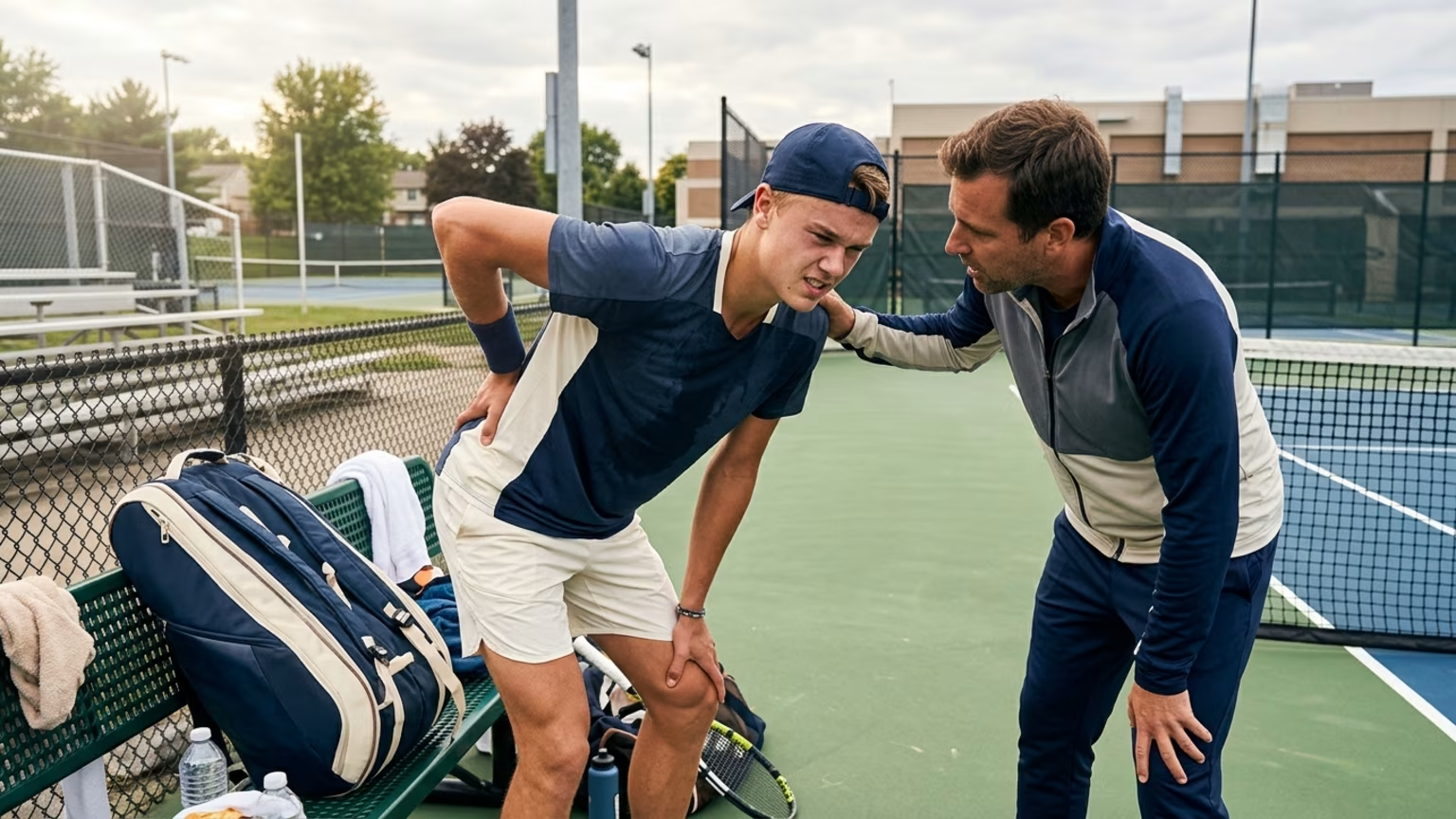
Holger Rune withdrew from the European Open with a back problem. The facts behind his decision and a grounded perspective for recreational players.

The Dink’s October 17 guide emphasizes deep returns, ball-height decisions and positioning against faster pickleball opponents.

A new report outlines padel and tennis gear trends. Learn how to assess adjustable rackets, sensor feedback and smart-court claims.
Read practical guidance for better movement, smarter preparation and a game that keeps working for you.
explore the Blog
