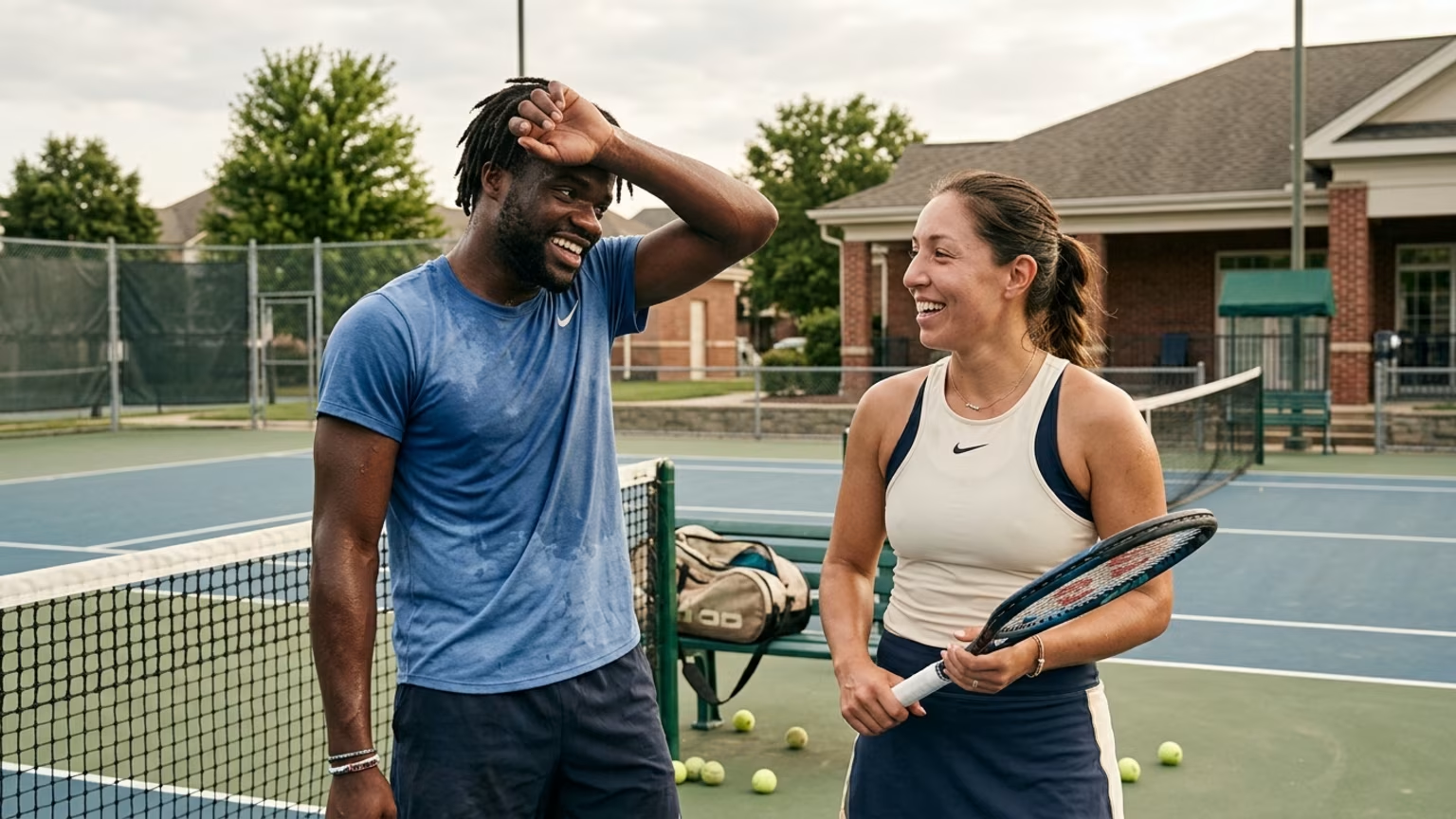

US Open semifinalists Frances Tiafoe and Jessica Pegula join the New York Empire Racquet Club for the 2026 World TeamTennis relaunch. Learn how format variety affects workload.




Frances Tiafoe and Jessica Pegula are scheduled to play together for the New York Empire Racquet Club when World TeamTennis returns in December 2026. The league announced the relaunch this September, setting a concise six-match schedule running from December 1 to December 15. The new format brings elite competitors into a concentrated winter window rather than the standard tournament calendar. This development highlights a growing effort to create alternative professional tennis products that combine shorter matches with concentrated scheduling.
Both athletes recently reached the 2026 US Open semifinals before committing to this unique winter league. Their decision to join the New York team underscores a broader shift in how modern players manage their annual competitive load. We are seeing a distinct move toward varied formats that offer different physical and tactical challenges. The upcoming December season will serve as an interesting case study for balancing elite competition with strategic off-season programming.
The World TeamTennis return ends a five-year absence for the league, according to regional coverage of the relaunch. The competition involves three clubs: the New York Empire Racquet Club, the Toronto North Racquet Club, and the Florida Flamingos Racquet Club. The New York roster announced so far also includes Taylor Fritz and Camila Osorio.
Other prominent players joining the 2026 relaunch include Learner Tien and Iva Jovic. The league also added Victoria Mboko, Leylah Fernandez, and Gabriel Diallo to the roster. These additions confirm that the league is successfully attracting high-level talent for its upcoming season.
Under the newly announced structure, each team match includes four singles sets followed by a mixed doubles Supertiebreaker. The singles portion features a top-seeded man, a top-seeded woman, a second-seeded man, and a second-seeded woman. Each team begins a match with two male players and two female players on the court. This mixed gender format ensures both men and women share an equal role in securing the final team result.
The 2026 relaunch explicitly focuses on delivering high-level tennis within a tightly controlled time window. Matches are purposefully spread across six specific dates during the first half of December. The geographic spread places the events in major arenas like Barclays Center, Coca-Cola Coliseum, and Amerant Bank Arena. This concentrated scheduling limits prolonged travel periods while giving athletes more predictability during the winter season.
The league has scheduled six matches in total, with each club hosting two home events during the two-week season. New York will open its season on December 1 at Barclays Center in Brooklyn against the Florida Flamingos. The New York Empire is also scheduled to play Toronto North at Barclays Center on December 2. World TeamTennis CEO Stephen Amritraj said the league is using a new vision and restructuring to attract higher-level players and modernize the product.
For recreational players, this shift illustrates how blending different formats can alter physical demands without removing them entirely. A shorter match or a team setting certainly changes your court positioning, but travel and consecutive scheduling still add up. Adult players should treat format variety as a workload management tool rather than a guaranteed injury prevention strategy. Serves, overheads, lunges, and rapid deceleration remain significant physical stressors across all racquet sports regardless of the scoring system.
You must track your total weekly activity across tennis, pickleball, and any fitness classes instead of counting only singles matches. Elite players have extensive medical and recovery support that most amateur club members simply lack. This fundamental difference is why why recreational racquet players should not treat elite athlete comebacks as a recovery guide when managing their own weekly schedules. Taking a rest day or switching to lower-volume tactical drilling can help maintain joint health and overall athletic longevity.
Preparation remains a non-negotiable factor for safely participating in structured league matches or weekend tournaments. A physician quoted by El Confidencial recommends about 15 minutes of tennis-specific activation before you start playing. This warm-up should focus on the specific muscle groups actively used during racquet sports. Furthermore, the same medical coverage advises seeking a professional assessment if lower-back symptoms persist beyond two or three days of gentle care.
Strength work and conditioning are equally important for navigating varied competition schedules safely over the long term. An orthopedic surgeon quoted by CBS19 identified strength work, plyometrics, landing mechanics, and rest days as useful elements of ACL risk management. You should never play through persistent or escalating pain during your local club matches. Reviewing critical on-court safety guidelines for responding to sudden in-match physical distress is highly recommended for all adult athletes competing heavily.
Recreational athletes often make the mistake of stacking hard singles sessions on consecutive days. You can use the World TeamTennis model as an actionable programming idea for your own routine. Try alternating high-intensity singles with lower-volume doubles matches to give your primary muscle groups a slight reprieve. Maintaining a balanced mix of formats helps you stay active while managing the localized stress placed on your shoulders and knees.
It is equally vital to understand that changing from singles to pickleball does not eliminate repetitive loading. The physical movements required to hit successful strokes remain relevant stressors across all modern racquet sports. Selecting a supportive community is just as crucial, which is why understanding what to look for in a racquet sports club can improve your overall experience. Prioritize environments that offer access to diverse formats, quality courts, and perhaps even basic fitness equipment.
The severe physical toll of standard tournament play explains exactly why shorter formats hold significant appeal today. Tiafoe reached the 2026 US Open semifinal after a grueling comeback win over Alex Michelsen. That intense five-set quarterfinal lasted four hours and 38 minutes. Elite tennis matches impose substantial acute demands long before a winter league ever begins, highlighting the need for careful scheduling.
Pegula earned her spot in the women's semifinal by defeating Emma Navarro with scores of 3 to 6, 6 to 4, and 6 to 3. Following these victories, Tiafoe advanced to face Ben Shelton, while Pegula drew top seed Aryna Sabalenka for her semifinal match. The six-match World TeamTennis schedule offers a condensed alternative to this grueling traditional tour. Spreading six matches across December provides helpful format variation without completely eliminating the total annual playing volume.
Evaluating total court time provides clear context for why players seek out these condensed leagues. A full professional schedule often requires athletes to compete across multiple continents for ten months of the year. The World TeamTennis structure restricts the intense competition to a small two-week period. This deliberate limitation allows participants to diversify their playing environment without dramatically inflating their total annual match count.
We know that competitive fatigue builds up quickly during back-to-back matches or late night sessions. Reflecting on key sleep and recovery lessons for amateur tennis players facing demanding match schedules provides valuable perspective on managing these rapid turnarounds. Shorter matches may reduce physical exposure in one single session, but compressed scheduling over two weeks still requires disciplined recovery practices. The New York team will have to navigate back-to-back matches on December 1 and December 2.
The return of World TeamTennis points toward an evolving professional calendar where team identity and shorter matches play a much larger role. Watching how elite athletes integrate this December league into their off-season will provide excellent insight into modern scheduling strategies. The broader sports community will likely see more alternative products emerge to balance the intense physical demands of the traditional tour. Mixed formats clearly support long-term participation by adding a strong social and competitive dimension.
However, the presence of team play does not automatically equate to a lighter physical burden for the participants. Players balancing these new leagues must still manage their rest, strength routines, and total seasonal workload. The ongoing experiment with condensed formats will shape how both elite competitors and recreational players build their competitive seasons. Healthy aging in sports will always depend on smart scheduling and consistent conditioning rather than merely changing the match structure.
The success of this specific league model could encourage local tennis organizations to adopt similar mixed gender structures. Adult recreational leagues frequently struggle to maintain participation during the colder winter months. Providing a structured team environment during these off-season periods might help adult players stay engaged without overwhelming their physical capacity. The evolution of racquet sports relies heavily on finding this perfect balance between competitive intensity and sustainable physical output.
Follow Evercourts for practical insights on tennis, pickleball and padel performance, movement, recovery and healthy ageing. Stay connected for new articles, research-led guidance and ideas to help you play well and keep playing for years.


Compare scheduled leagues with flexible club play, using tennis, pickleball and padel examples to judge commitments, partner arrangements and fit.

ACSM highlighted an active-aging coordination model. Here is what it means for recreational racquet-sport players and what the evidence supports.

Understand padel fatigue and use research-led principles to balance matches, other training and recovery without a rigid weekly formula.
Read practical guidance for better movement, smarter preparation and a game that keeps working for you.
explore the Blog
