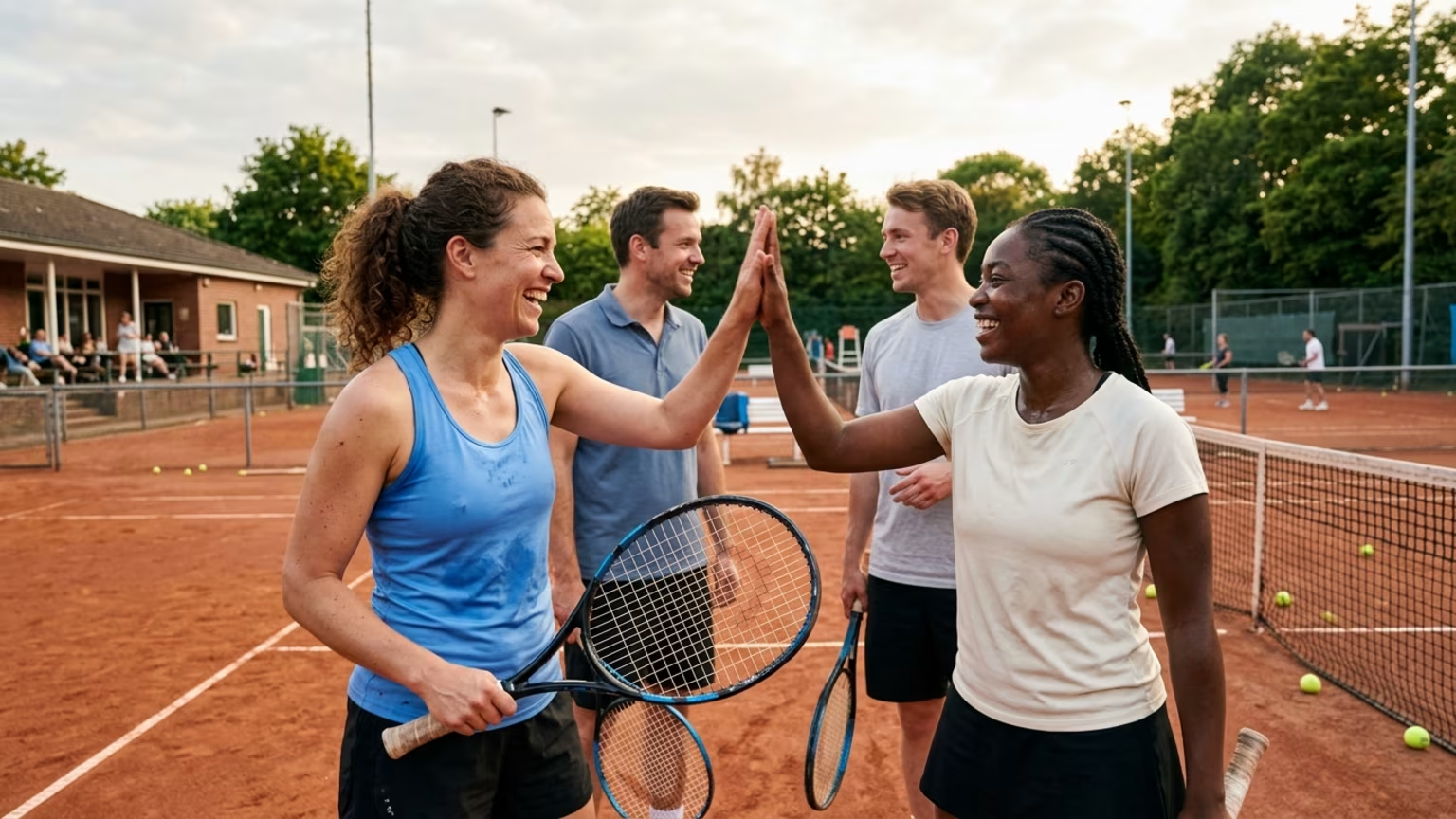

Learn how to find welcoming tennis, padel, and pickleball communities by seeking structured social pathways and clubs that support healthy aging on the court.




How do players find a welcoming racquet sports community when most facilities feel like closed groups? You find belonging by seeking out clubs that offer structured social pathways, transparent skill levels, and varied play formats rather than just basic court rentals.
You walk into a busy racquet facility with your gear and a strong desire to play. The courts are packed with active groups, but every single session is locked behind a private booking. That friction between wanting to play and actually finding a game is a common frustration. It shows exactly why modern facilities must build accessible communities instead of just renting out empty space.
Open play is often promoted as the ultimate social experience for racquet sports. Facilities advertise these sessions as a quick way to drop in, meet new partners, and get some exercise. However, open play is not automatically welcoming for beginners or returning players. A novice who walks into a highly competitive session might feel entirely out of place.
Without clear structure, open play can quickly become intimidating rather than inclusive. Court availability complicates this issue further. Florida State University sport-management professor Amy Chan Hyung Kim noted that court access remains the single largest barrier to pickleball growth. She highlighted that temporary lines on tennis courts and busy public spaces often leave players waiting for hours.
When space is limited, established groups tend to take over the available courts. This leaves new players struggling to find a spot to learn and practice. The best communities solve this problem by organizing their calendar with serious intention. Good clubs offer separate sessions categorized by ability level, format, or specific purpose.
They might host a dedicated beginner hour, a mixed social mixer, or a competitive ladder. This clear scheduling helps you find an appropriate challenge while removing the awkwardness of joining a random group. Transparent programming is the foundation of a truly welcoming facility.
Finding a community is essential for athletic longevity and overall well being. Research cited by Florida State University found that one in three adults aged 50 to 80 reported feeling lonely or lacking companionship some of the time or often. According to the same research, pickleball can strengthen older adults' social connections and sense of community while reducing feelings of isolation. The social nature of the sport offers immense mental benefits.
But players must balance these social rewards with sensible physical precautions. I remember finishing a tough two hour padel match on a cold Tuesday night and waking up the next morning feeling like my lower back was locked in concrete. For a long time, I just accepted this as the price of playing hard in my forties. But once I started spending just ten minutes on targeted hip mobility before heading to the club, the stiffness almost completely vanished.
It taught me that we do not have to accept pain as a default state of aging. Taking a few minutes to complete a brief dynamic routine before you play makes a massive difference. When assessing a new club, older adults should look for clear safety guidelines. Experts from Florida State University advise players to manage risks like sprains, falls, and unsuitable footwear.
Researchers also note that older adults must take precautions against excessive heat and sun exposure. A responsible club will actively promote safe pacing and proper court shoes. They will likely provide shaded areas and hydration stations for their members. A facility that ignores basic safety is not a healthy place to build your weekly routine.
You should also seek out groups that prioritize cooperative play over aggressive competition. Some clubs run specific social rotations where the primary goal is simply keeping the ball in motion. This cooperative style reduces sudden sprinting and frantic changes of direction. It allows you to build stamina safely while enjoying the company of your partners.
Your approach to building a social schedule will change depending on your chosen sport. Pickleball often thrives on informal rotation, shared space, and quick games. Florida State University experts argue that the smaller pickleball court makes conversation easier during rallies. The frequent rotation of partners also encourages repeated social contact.
This structure naturally creates a casual environment where you can meet dozens of people in a single afternoon. Padel presents a slightly different social dynamic. It requires exactly four players and involves strategic movement around heavy glass walls. Because the court is enclosed and the matches take longer, padel usually demands a more organized approach to booking.
You will likely spend more time communicating with a smaller, dedicated group of partners. The social bond in padel often forms through post-match chats rather than mid-game conversations. Tennis communities tend to rely heavily on established leagues or steady hitting partners. The larger court size means you spend less time talking and more time running.
Finding a tennis community often requires joining a structured clinic or a formal ladder. The social connections are built over full seasons rather than casual weekend drop-in sessions. Each sport has its own unique rhythm for developing friendships. Players who enjoy all three sports must be careful not to overcommit.
You must actively monitor your schedule by managing your court workload. Bouncing between three different movement patterns in one week can quickly lead to fatigue. Choosing the right blend of sports helps you stay fresh and engaged. It is always better to prioritize one strong community over three exhausted commitments.
Start by attending clearly labeled sessions that match your actual skill level. Do not sign up for an unspecified open block if you are just learning the basics. Look for a club that hosts introductory clinics or designated beginner pathways. These structured entry points give you a safe place to learn the rules.
They also surround you with other players who share your current experience level. Once you find a comfortable group, commit to showing up consistently. Belonging requires repeated interactions over several weeks. People need to see your face regularly to remember your name and your playing style.
Consistent attendance transforms you from a random visitor into a reliable community member. This slow process of integration is how durable friendships are formed on the court. You might also consider selecting a facility that prioritizes athletic longevity. A supportive club will care about your progress and physical well being.
They will offer proper warm up areas, knowledgeable coaches, and reasonable scheduling. Good operators know that a healthy player is a long term member. Your chosen facility should align with your desire to play safely for years. Finally, take the initiative to introduce yourself to new arrivals.
When you see someone looking confused by the rotation system, offer a quick explanation. Simple acts of hospitality help create the kind of environment you want to play in. A strong racquet sports community relies on members who actively welcome others. Your personal attitude sets the tone for the entire club.
Racquet sports offer a unique chance to stay active and connected, provided you choose an environment that matches your needs. Finding the right community ensures you can enjoy healthy aging on the court for years to come.
Start your search today by asking a local club if they offer level-based social rotation.
Follow Evercourts for practical insights on tennis, pickleball and padel performance, movement, recovery and healthy ageing. Stay connected for new articles, research-led guidance and ideas to help you play well and keep playing for years.


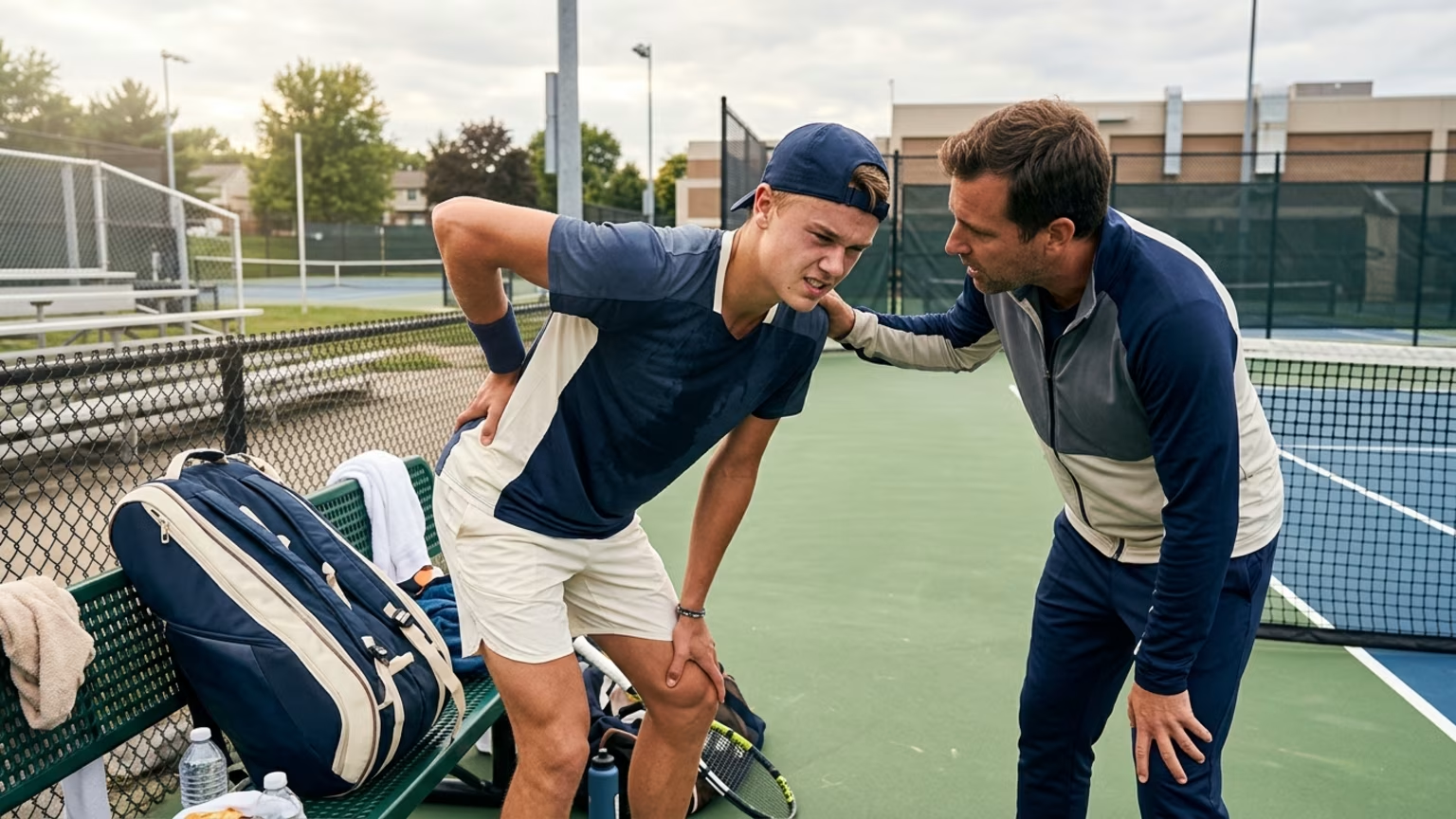
Holger Rune withdrew from the European Open with a back problem. The facts behind his decision and a grounded perspective for recreational players.

The Dink’s October 17 guide emphasizes deep returns, ball-height decisions and positioning against faster pickleball opponents.

A new report outlines padel and tennis gear trends. Learn how to assess adjustable rackets, sensor feedback and smart-court claims.
Read practical guidance for better movement, smarter preparation and a game that keeps working for you.
explore the Blog
