

Virginia Beach Open quarterfinals follow singles upsets. A practical look at the results, event schedule and lessons for recreational players.




On October 16, 2026, the Professional Pickleball Association’s third Virginia Beach Open reached the quarterfinals at Pickleball Virginia Beach with play scheduled from noon into the evening, according to The Virginian-Pilot.
The newspaper reported quarterfinals across all five professional divisions. Those were men’s singles and women’s singles plus men’s doubles, women’s doubles and mixed doubles. The tournament offered more than $1 million in prize money.
The Dink’s preview placed Friday within a multi-day progression. It listed the Round of 64 on Tuesday, October 13. Quarterfinals were scheduled for Friday with semifinals Saturday and championships on Sunday, October 18.
For viewers, the same preview listed Friday coverage from noon to 8 p.m. Eastern on PickleballTV. Tennis Channel’s window was 2 to 5 p.m. Eastern. These were the event’s published broadcast windows.
For professionals, Virginia Beach carried both prize-money stakes and a route through successive rounds. The Dink described the Open-level event as awarding 1,000 ranking points to each division’s champion. A weekend competitor has a different question: how does the tournament fit around the rest of life?
The Virginian-Pilot’s earlier preview expected both professional and amateur competitors at the venue. That makes the contrast useful without making their schedules interchangeable. Being at the same tournament does not mean having the same competitive commitments.
The reporting has a clear limit. Event schedules and broadcast windows do not establish individual court time, rest intervals or measured workload. The sources also do not test recovery methods or health benefits. The practical lesson here is about logistics rather than medical or training advice.
For an adult player balancing work and travel, the useful planning unit is the event day. A listed match is part of that day rather than a complete itinerary. That is the same perspective worth bringing to a trip built around court time.
For players switching between singles and doubles, the starting question is which format they are entering. The professional event’s five-division program is useful context. It is not a template that every recreational entrant needs to copy.
Evercourts’ practical reading is to separate interest in the professional draw from decisions about personal availability. The aim is a workable tournament commitment rather than a professional-looking itinerary.
According to The Virginian-Pilot, the reported singles results included wins by lower seeds and defeats for prominent former tennis players.
The singles scorelines show different routes to an upset. Johnson won two close games against Ford. Sewing lost the opening game against Buckner before winning the next two 11-1. Widdershoven’s second game against Bouchard finished 13-11.
The Dink’s preview had characterized the men’s singles draw as open. Its reasoning was that absent top players created an opportunity for lower-ranked players to earn ranking points. That was the preview’s assessment of this field. The subsequent reported upsets give the tournament a lively story without turning that assessment into a rule for the wider tour.
Sewing’s result sits alongside losses for Sock and Bouchard. That is a mixed picture for the tennis connection at this event. For a recreational player with a background in another racquet sport, it is a useful reason to treat credentials as context rather than a forecast.
The same coverage reported a comeback in mixed doubles. No. 2 Tina Pisnik and Noe Khlif beat No. 16 Anderson Scarpa and Alex Walker 9-11, 11-6, 12-10. Pisnik was a former world No. 29 tennis player.
Their match moved from a lost opening game to a narrow deciding-game win. That gives the event another competitive story beyond singles upsets. It also keeps the focus where it belongs: on what happened in the match rather than what a player’s tennis résumé might suggest.
The next stages in The Dink’s published schedule are Saturday’s semifinals and Sunday’s championships. Those rounds will determine which players turn a quarterfinal place into a chance at the title.
Over the next season, the standard worth watching is how clearly tournament information separates the overall event program from an individual entrant’s commitments. For adult competitors, that distinction matters when deciding how competition fits around work and travel.
Virginia Beach offers a good reason to follow the matches without reading a tennis résumé as a prediction. The longer-term editorial priority is equally practical: tournament schedules should help recreational players make realistic plans rather than feel obliged to copy the professional week.
Follow Evercourts for practical insights on tennis, pickleball and padel performance, movement, recovery and healthy ageing. Stay connected for new articles, research-led guidance and ideas to help you play well and keep playing for years.


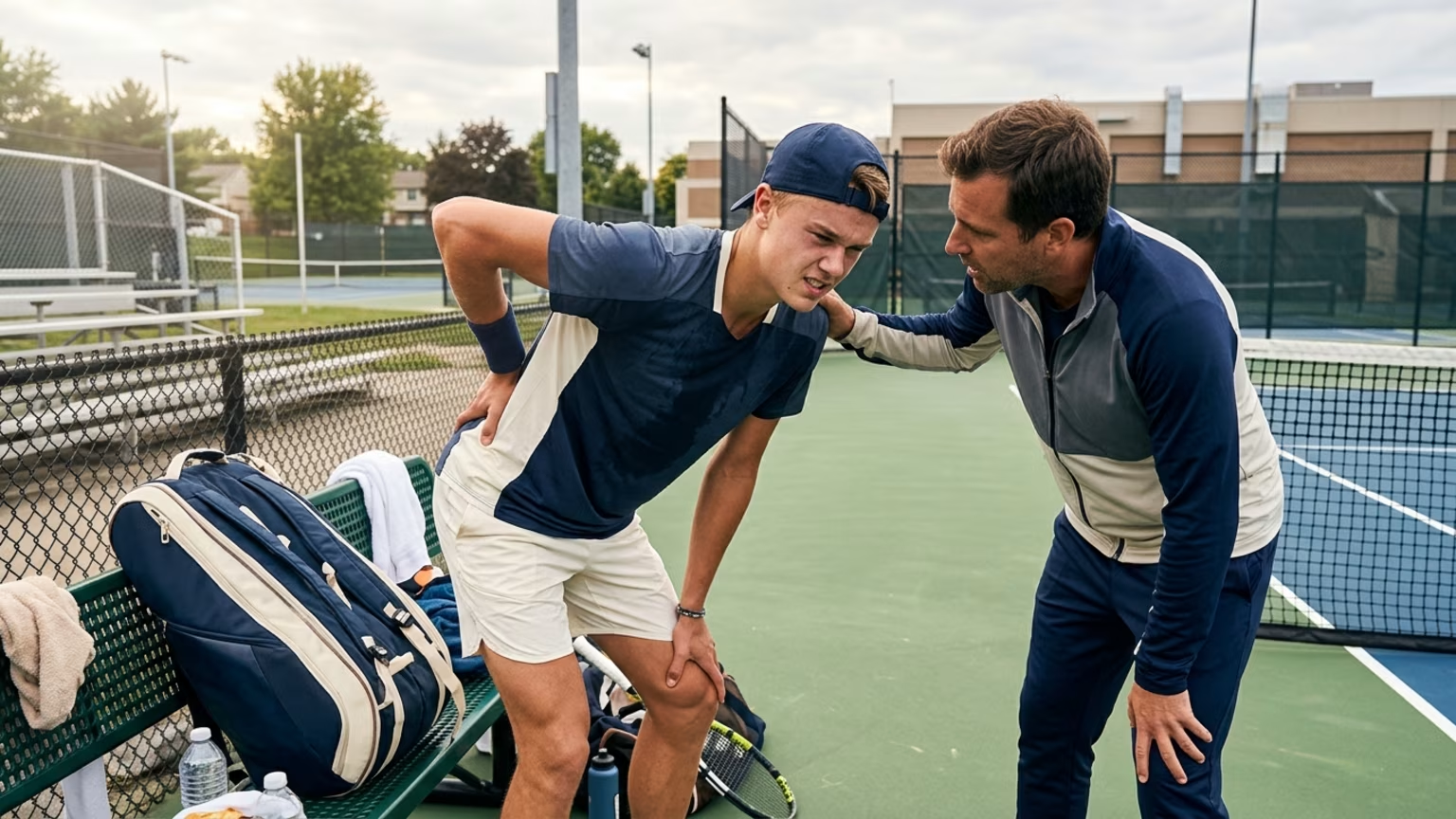
Holger Rune withdrew from the European Open with a back problem. The facts behind his decision and a grounded perspective for recreational players.

The Dink’s October 17 guide emphasizes deep returns, ball-height decisions and positioning against faster pickleball opponents.

A new report outlines padel and tennis gear trends. Learn how to assess adjustable rackets, sensor feedback and smart-court claims.
Read practical guidance for better movement, smarter preparation and a game that keeps working for you.
explore the Blog
