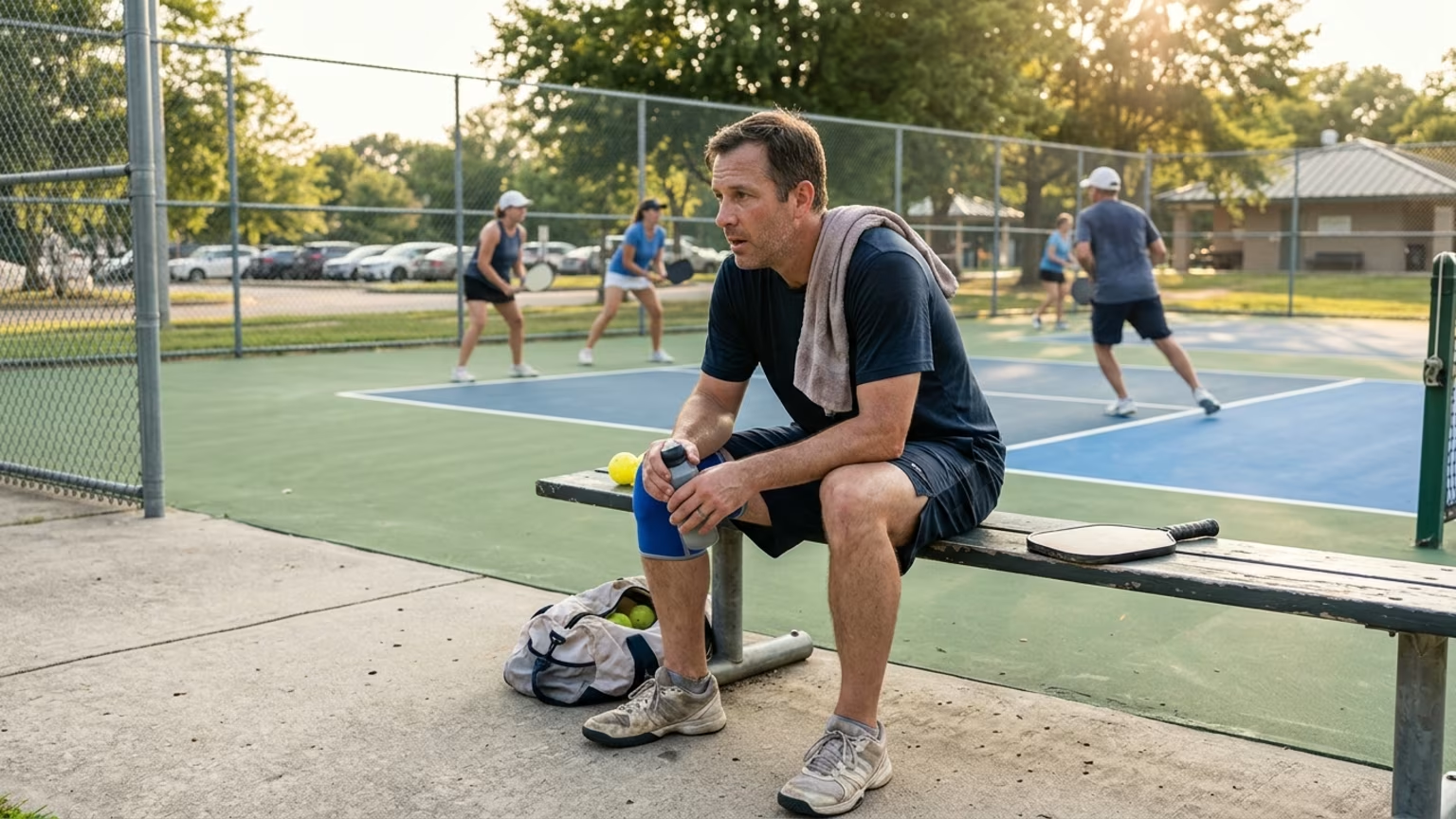

Understand weekend playing load with a simple log of court time and recovery for tennis, pickleball and padel.




Playing load is how much time you spend on court and how demanding that play feels. A long weekend booking can look like a chance to make up for a quiet week. From a workload perspective, it is a concentrated block of activity rather than a replacement for days without play.
The useful question is not whether weekend play is a bad habit. It is how that session compares with your recent routine and what you notice afterward. That shifts attention from the label “weekend warrior” to something you can record: the play you actually did.
Tennis, pickleball and padel involve repeated explosive efforts and changes of direction. Starting, stopping and moving again are part of the session alongside striking the ball. For workload monitoring, that makes both time and perceived intensity worth recording.
For tennis, record the session as tennis rather than treating every racquet-sport minute as interchangeable. Apply the same distinction to pickleball and padel. Keep each sport visible in your record even when you also add up total court time.
The useful comparison is with your own recent experience of that sport. There is no need to rank the sports from easiest to hardest to start keeping a useful record.
A long session places its court time into one bout. Separate sessions distribute that time across different occasions. That distinction frames the workload question without making the weekend booking itself the problem. For more context, see how the three sports place different movement demands on players.
A tennis-focused workload summary identifies sharp increases in load as a possible warning sign. It describes the underlying evidence as observational. It also calls the acute:chronic workload ratio methodologically contested and says no trial shows that acting on it prevents injury.
A secondary padel analysis discusses wearables as a possible way to observe exposure. That is a monitoring role, not evidence that wearing a device prevents injury.
The available research does not directly compare one long match after a week off with several shorter sessions. It also does not establish a universal safe weekly volume, a validated soreness scale or a progression rate for recreational players. Nor does it provide a validated conversion between the three sports. These are secondary summaries rather than direct tests of a recreational player's schedule.
The practical conclusion is to use a record to understand patterns rather than calculate permission to play. The approach below is conservative editorial guidance, not a tested injury-prevention protocol.
A sensible starting point is a recent routine that felt comfortable rather than an ideal weekly total. A quiet week does not need to be repaid with a marathon session. Gradual progression means keeping any increase connected to what the player has recently been doing, not chasing a fixed deadline.
A useful post-session record contains the following:
Together, those entries provide a personal history of time, effort and recovery. Review the pattern before adding another booking: was the recent routine comfortable, or did the last session feel unusually demanding? The point is to notice the change rather than judge a session only by its duration.
For someone who plays several sports, keep the individual entries alongside the total court minutes. The total shows how much time was spent playing. The separate entries preserve the context that a single sum leaves out.
This is also a more useful perspective on athletic longevity than treating every week as a chance to do more. Maintaining a comfortable routine is a worthwhile aim in its own right. More court time is an option to consider, not an obligation.
For adult players, the longer-term aim is to maintain physical capabilities and leave room for future play. A record gives that aim a practical reference point: what has recently felt manageable. Our guide to building playing exposure thoughtfully offers related context for thinking about changes over time.
Soreness that persists or worsens is a reason to reduce the next exposure and consider advice from a qualified physiotherapist or healthcare provider. An unusually demanding session also warrants reassessing the next planned amount of play. These decisions are personal, particularly when the appropriate next step is unclear.
A useful starting point for that conversation is the record itself: the sport played, the court minutes and the perceived effort. Include how soreness changed and where rest days fell. That keeps the discussion grounded in recent experience rather than a workload score.
The long weekend booking can still be something to look forward to. It is simply one block of play within a longer playing life. When ongoing soreness makes that block difficult to judge, qualified advice matters more than trying to make up missed minutes.
Follow Evercourts for practical insights on tennis, pickleball and padel performance, movement, recovery and healthy ageing. Stay connected for new articles, research-led guidance and ideas to help you play well and keep playing for years.


Holger Rune withdrew from the European Open with a back problem. The facts behind his decision and a grounded perspective for recreational players.

The Dink’s October 17 guide emphasizes deep returns, ball-height decisions and positioning against faster pickleball opponents.

A new report outlines padel and tennis gear trends. Learn how to assess adjustable rackets, sensor feedback and smart-court claims.
Read practical guidance for better movement, smarter preparation and a game that keeps working for you.
explore the Blog
