

A recent sports study highlights the impact of vitamin D deficiency on stamina and recovery, offering vital lessons for adult racquet sports players.




A study by the Department of Sports Medicine and Sports Injury Centre at Post Graduate Institute of Medical Sciences (PGIMS), Rohtak, found vitamin D deficiency in more than 40% of 500 sportspersons tested in Haryana. This widespread shortfall matters because a high training volume does not automatically guarantee adequate nutritional status. Players can easily mistake the quiet symptoms of poor nutrition for normal training stress.
Vitamin D is a foundational nutrient that helps the body absorb calcium and supports bone and muscle function. It acts as a silent regulator for the systems that keep humans moving. Without it the body cannot properly repair the micro-damage caused by intense physical activity. This basic biological function makes it essential for anyone who regularly subjects their body to athletic stress.
The nutrient is not a performance enhancer that will instantly make a player faster. It is simply a basic requirement for normal physiological function. A British Journal of Sports Medicine review notes that there is no universal consensus on the serum 25(OH)D concentration defining deficiency in athletes. However the U.S. National Institutes of Health provides clear baselines for the general public.
The NIH lists a daily recommended intake of 600 IU for adults aged 19 to 70. Adults aged 71 and older have a recommended daily intake of 800 IU. The nutrient also supports nerve signalling and immune-system function. These underlying processes are exactly what allow players to wake up ready for another match.
Tennis, pickleball and padel require repeated explosive efforts and constant changes of direction. These sudden movements place immense mechanical stress on the skeletal system and lower body muscles. Players must decelerate quickly and push off with maximum force to cover the court. This repetitive loading demands rapid cellular repair that relies heavily on available nutrients.
When I first started playing pickleball, I noticed how many people skipped warming up entirely. They would jump straight out of their cars and right up to the kitchen line. I tried doing that and immediately pulled a calf muscle.
Pickleball requires just as much explosive lateral movement as tennis, just in a tighter space. Since then, I always spend five minutes doing dynamic lunges and ankle rolls. It changes everything about how confident I feel pushing off the baseline.
That same explosive movement style drains bodily resources over a long season. Modern players frequently train in environments that limit natural sunlight exposure. Indoor facilities, early morning sessions and extensive skin covering all reduce the natural production of this vital nutrient. A recent sports-supplementation review identifies indoor sports and limited sunlight exposure as settings in which deficiency is common among athletes.
The PGIMS report described vitamin D deficiency as a major factor behind low stamina, fatigue and reduced bone strength. Researchers tested participants ranging from budding athletes to state-level competitors across five districts. These included athletes training in Rohtak, Jhajjar, Sonepat, Panipat and Hisar. PGIMS is scheduled to host “Sports MedCon 2026” on August 30 to discuss sports injuries and treatment.
Dr Rajesh Rohila is the head of the Department of Sports Medicine and Sports Injury Centre at PGIMS Rohtak. Researchers first discussed practice and fitness problems with the athletes before using blood tests to investigate causes. Dr Rajesh Rohila attributed the reported deficiency mainly to inadequate effective sunlight exposure. He also cited indoor lifestyles, extensive skin covering, air pollution and limited intake of fortified foods.
It is important to look at these findings objectively without assuming that supplementation guarantees better match results. Current sports-science reviews do not show a consistent performance benefit from extra vitamin D when an athlete is not deficient. A sports-nutrition review reports an association between low vitamin D status and higher stress-fracture risk in military recruits. The review cites a study in which U.S. naval recruits receiving 800 IU of vitamin D3 daily together with 2,000 mg of calcium had a 20% reduction in stress-fracture incidence.
The NIH consumer guidance identifies 50 nmol/L, equivalent to 20 ng/mL, or higher as adequate for most people for bone and overall health. Levels below 30 nmol/L, or 12 ng/mL, are considered too low and may weaken bones or affect health. The same NIH guidance cautions that levels above 125 nmol/L, or 50 ng/mL, may cause health problems. Players should understand these baseline facts before making any nutritional changes.
Understanding your nutritional status helps you maintain your physical capabilities over decades of play. Adult recreational players often blame age for stiffness that might actually stem from poor daily athletic recovery habits. Maintaining strong bones and responsive muscles is critical for athletic longevity on the court. Proper nutrient levels help prevent the gradual decline in structural integrity that leads to forced time off.
Because racquet sports feature asymmetrical movements the skeletal system undergoes localized stress. A heavy serving session demands tremendous structural stability from the spine and shoulders. The body requires adequate calcium absorption to reinforce these heavily loaded areas. Vitamin D is the required catalyst for that absorption process.
Consistent skeletal health prevents the stress fractures that frequently sideline eager competitors. When players support their biological systems properly they can safely manage a sustainable tournament calendar. The body can only rebuild itself using the materials it has available in the bloodstream. Supplying those materials ensures that joints and muscles can withstand another year of heavy matches.
Adult players who track their health markers tend to spend less time rehabilitating severe injuries. This proactive mindset separates players who enjoy continuous seasons from those trapped in a cycle of pain. By treating basic nutrition as a structural necessity you build resilience against the unpredictable nature of racquet sports.
Players experiencing persistent fatigue or recurring bone pain should consult a qualified healthcare provider. Do not assume that taking handfuls of supplements will solve a mystery ache. For adults the general tolerable upper intake level is 4,000 IU per day from food, beverages and supplements combined. Although a healthcare provider may prescribe higher doses temporarily to treat deficiency you should not self-prescribe maximum limits.
A physician can safely assess your actual status with a blood test measuring 25-hydroxyvitamin D. Medical professionals can review your dietary habits alongside your specific training volume. They can tell you if your symptoms stem from a nutritional gap or simply an inadequate injury recovery plan. Self-diagnosing based on internet articles often leads to unnecessary supplementation and missed structural problems.
We always advise players to start with simple dietary checks and sensible sun exposure first. If those foundational steps do not improve your energy levels on the court then make an appointment. Getting a professional medical opinion is the smartest investment you can make for your future playing years.
This returns us to the stark reality of the Haryana study data. Unseen nutritional gaps can quietly impact large numbers of athletes without them ever realizing it. By taking a measured approach to your biological needs you can stay off the sideline and remain on the court.
Follow Evercourts for practical insights on tennis, pickleball and padel performance, movement, recovery and healthy ageing. Stay connected for new articles, research-led guidance and ideas to help you play well and keep playing for years.


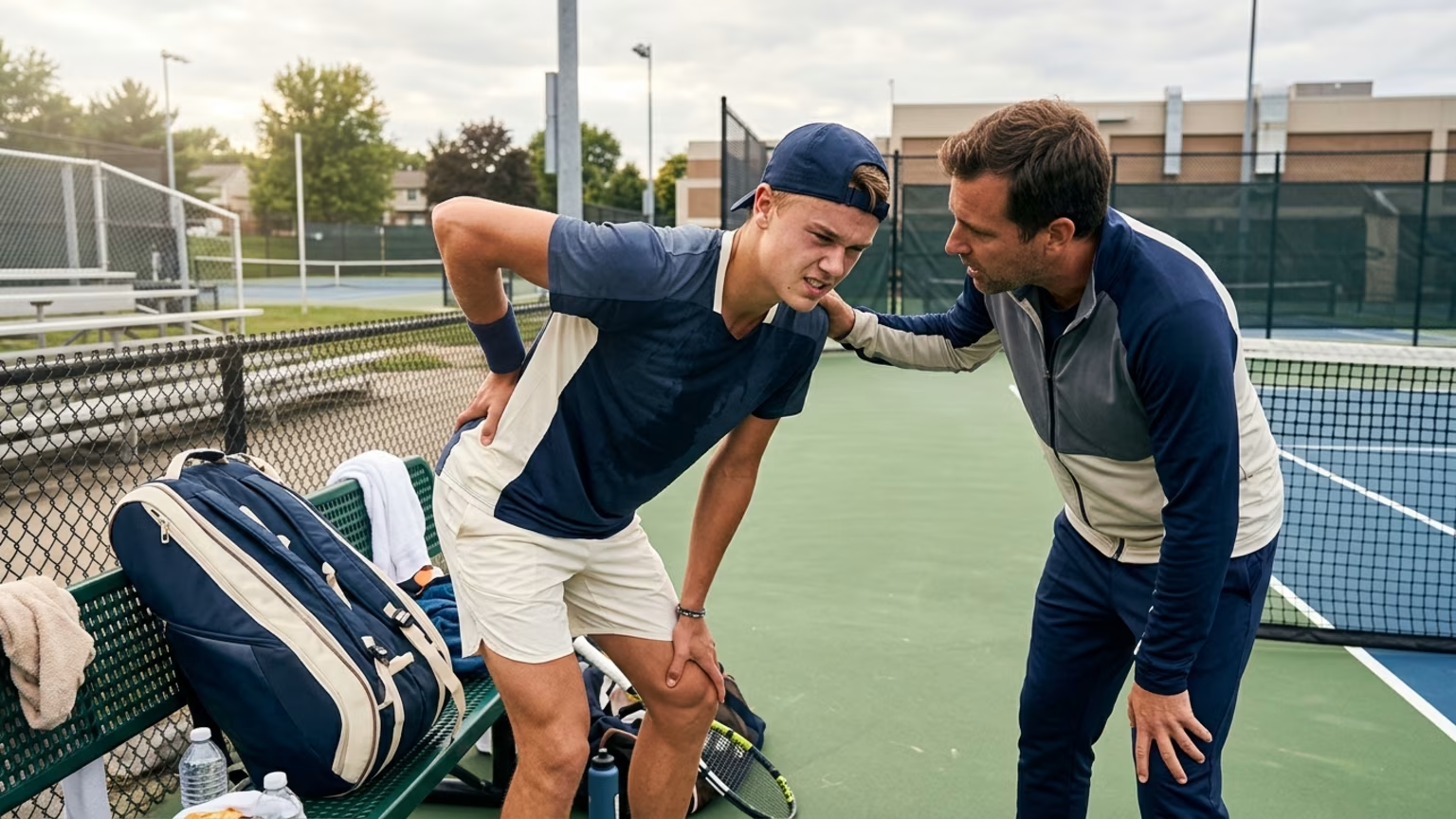
Holger Rune withdrew from the European Open with a back problem. The facts behind his decision and a grounded perspective for recreational players.

The Dink’s October 17 guide emphasizes deep returns, ball-height decisions and positioning against faster pickleball opponents.

A new report outlines padel and tennis gear trends. Learn how to assess adjustable rackets, sensor feedback and smart-court claims.
Read practical guidance for better movement, smarter preparation and a game that keeps working for you.
explore the Blog
