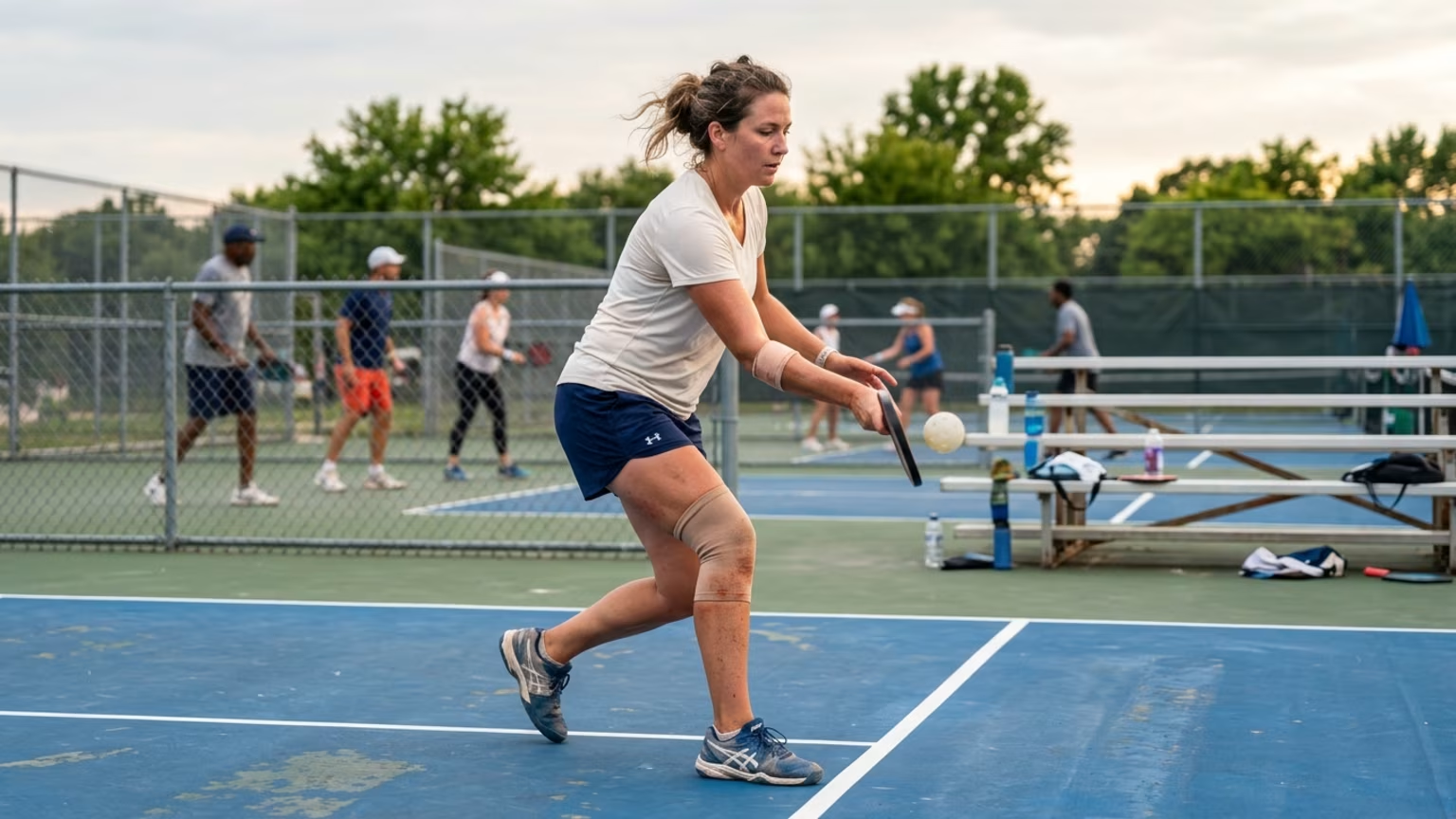

The Yeongnam Sports Medicine Research Society reviewed training-load limits and tissue adaptation. Learn how adult racquet players can safely return to play.




On the afternoon of September 29, the Yeongnam Sports Medicine Research Society held its third regular academic meeting of 2026 at Daegu Dongsan Hospital. According to Chosun, the gathering analyzed training-load limits, tissue adaptation, and the criteria for returning to play safely. The presentations examined the complex relationship between an athlete's physical condition and the exact training loads they can handle safely over a season. Alongside adult athletic parameters, the meeting addressed adolescent injuries like pitching loads and growth-plate stress fractures. Managing these variables remains a core component of sustainable athletic performance.
The sessions at Daegu Dongsan Hospital provided a structured forum for sports-medicine professionals to share current expertise. Woo Dong-hwa, the president of the Yeongnam Sports Medicine Research Society, oversaw the afternoon schedule. Medical staff and trainers gathered to review case studies and analyze how physical structures respond to repetitive athletic stress over time. The agenda featured four primary presentations covering the mechanics of workload and the realities of clinical recovery.
Dr. Noh Seung-wook opened the discussion by examining training-load limits and the parameters that dictate safe athletic progression. This foundational topic set the stage for trainer Lim Seong-min, who presented on evaluating whether athletes can handle a given physical load during rigorous schedules. The focus then shifted to the cellular and structural level with trainer Kang Tae-young. His presentation detailed tissue changes and outlined the biological limits of adaptation when the body faces continuous physical demands.
The final presentation tackled a recurring point of friction in sports medicine and physical rehabilitation. Dr. Kim Dong-hee presented a session discussing why athletes and coaches claim physical readiness while medical doctors advise against playing. This presentation examined the fundamental differences in return-to-play judgments across different roles in competitive sports. Dr. Kim highlighted why medical professionals rely on structural readiness rather than personal eagerness to compete. This ongoing debate underscores the need for clear communication between players and their medical providers.
The physiological principles outlined at Daegu Dongsan Hospital hold immense value for adult racquet sports players seeking athletic longevity. Elite tennis operations employ dedicated medical teams to monitor tissue adaptation on a daily basis throughout the competitive year. These teams carefully restrict practice hours to ensure an athlete never exceeds their biological capacity to recover safely. Everyday players operate without this oversight, making them highly vulnerable to overuse injuries when their enthusiasm outpaces their physical conditioning. Understanding these boundaries is the first step toward healthier training habits.
A frequent issue among weekend competitors is treating cardiovascular fitness as concrete proof of overall physical readiness. After a brief layoff, a player might step onto the court feeling fresh, energetic, and prepared for a long match. However, the connective tissues required for rapid directional changes adapt much slower than the cardiovascular system. Ignoring this biological reality often leads to acute joint strain and extended periods of forced downtime away from the court.
The presentation by Dr. Kim Dong-hee highlights exactly why personal motivation is a poor metric for clinical readiness. Athletes naturally possess an urgent desire to compete, which can easily cloud their judgment regarding lingering physical deficits. Medical providers approach readiness strictly through the objective lens of tissue healing and verified structural load tolerance. Recognizing this difference helps adult players make safer, more calculated decisions when planning their return to the local leagues.
A separate Chosun Health report on running provides a clear parallel for workload management across all sports. The researchers advised that a sudden, large increase in running distance gives the body insufficient time to adapt physically. They concluded that runners must allow deliberate time for systemic adaptation and comprehensive structural recovery. This logic applies directly to racquet sports, where sudden spikes in weekly match play can easily overwhelm unprepared ligaments and tendons.
Building a sustainable routine requires players to respect these physiological limits consistently throughout the entire calendar year. Adopting a structured recovery strategy helps recreational players manage their weekly physical stress effectively. When resuming play after a hiatus, progressing from initial soreness to safe adjustment demands strict pacing and intentional load monitoring. Players should always seek individualized clinical advice rather than relying on personal feelings of readiness to dictate their schedule.
Over the next competitive season, the criteria for returning to play will continue to shift from pain reduction to proven tissue tolerance. The medical community is increasingly demanding objective evidence of structural capacity before clearing an athlete for full, unrestricted competition. This transition away from subjective readiness will likely influence how adult players schedule their training blocks, practice sessions, and recovery periods. Expect to see a growing emphasis on gradual, measured increases in court time rather than immediate returns to high-intensity match play.
The traditional approach of simply resting until a joint stops hurting is rapidly becoming obsolete in modern sports medicine. Medical providers now favor staged load management, requiring tissues to prove they can handle stress safely through controlled movements. As these clinical strategies become more accessible to the recreational public, adult athletes will benefit from adopting firmer boundaries around their training schedules. Practicing disciplined load management is the most practical, effective way to ensure a long, healthy future on the court.
Follow Evercourts for practical insights on tennis, pickleball and padel performance, movement, recovery and healthy ageing. Stay connected for new articles, research-led guidance and ideas to help you play well and keep playing for years.


Learn why racquet sports demand specialized strength and how to build a practical, movement-based foundation to support your athletic longevity on the court.
Tennis, pickleball, and padel challenge your body with different movement patterns and physical loads. Learn to scale your play for athletic longevity.
Learn how to manage upper body load in racquet sports. Review recent injury research and sensible strategies to protect your shoulder and elbow on the court.
Read practical guidance for better movement, smarter preparation and a game that keeps working for you.
explore the Blog
