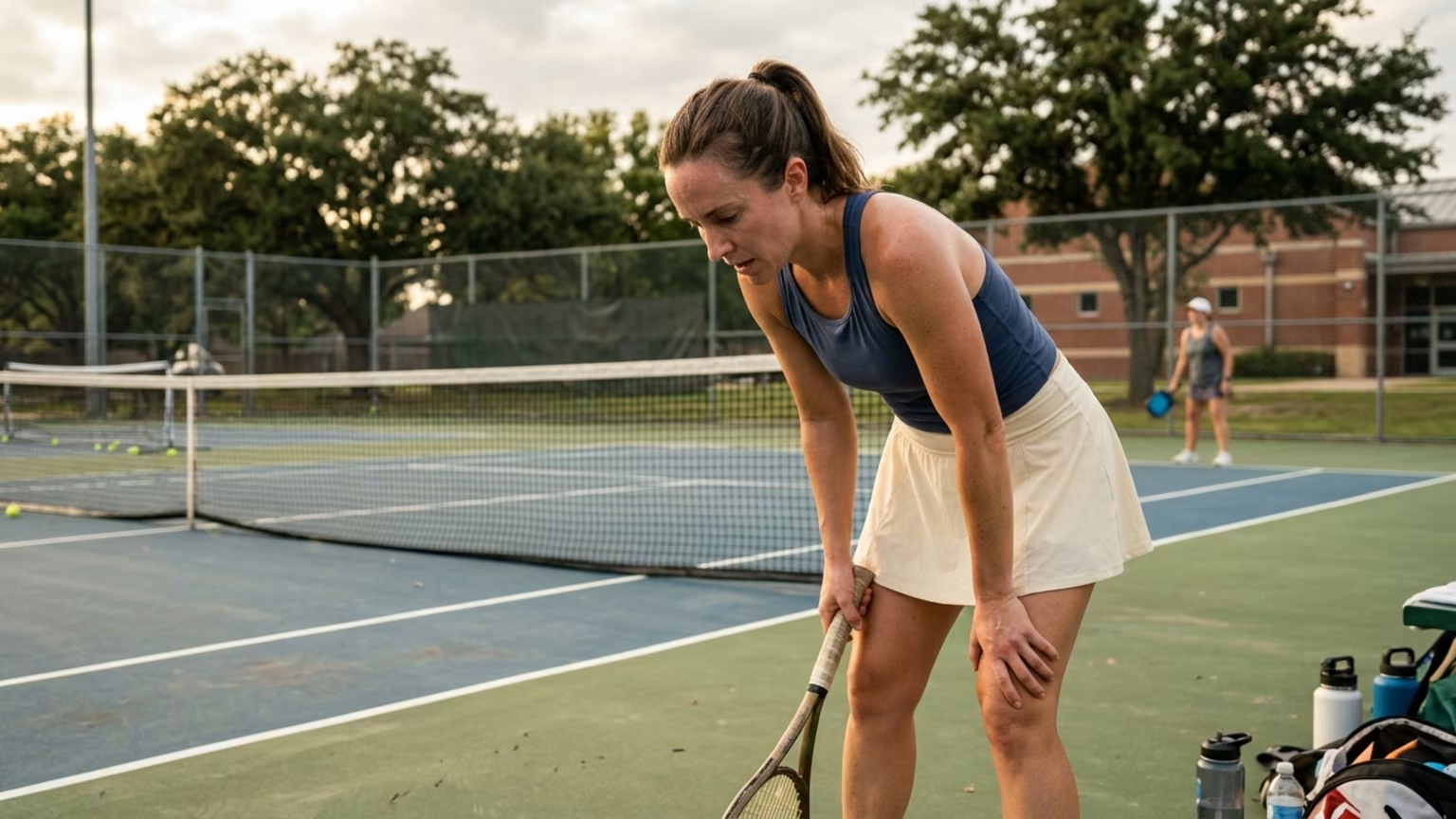

Tennis, pickleball, and padel challenge your body with different movement patterns and physical loads. Learn to scale your play for athletic longevity.




Tennis serves as the traditional baseline for racquet sports. Covering a 78-foot court requires sustained explosive speed. Players must constantly accelerate to reach wide balls and immediately decelerate to recover. The sheer distance traveled in a singles match heavily tests cardiovascular endurance. This continuous movement creates a unique physical load.
The mechanics of tennis also demand massive rotational power. Generating pace from the baseline requires planting the feet and rotating the hips. This transfers force through the core and into the upper body. Hitting heavy topspin groundstrokes repeatedly places significant stress on the shoulders and elbows. Players must be physically prepared for these long levers and heavy swings.
Recovery from tennis requires addressing the muscles used for deceleration. The quadriceps and calves take the brunt of the stopping forces on hard courts. Players often need dedicated mobility work to maintain their hip rotation after long matches. Managing these specific recovery needs allows players to maintain their court coverage over the long term.
Many adults assume that playing on a full court is inherently harder on the joints. The reality is simply that the workload is dispersed over a larger area. Tennis allows players more time to track the ball compared to smaller courts. Understanding how court geometry changes the physical toll is crucial for managing your weekly workload.
Moving to a smaller court changes the physical challenge entirely. Pickleball and padel force players to manage frequent short bursts of movement. You are not running long distances in these sports. You are constantly reacting, squatting and reaching within a confined area instead. This concentrated workload shifts the stress to different joints and muscle groups.
Pickleball rallies often occur right at the non-volley zone. This requires players to hold a low athletic stance for extended periods. Players must defend against rapid volleys with quick hands and short backswings. Padel introduces the complexity of glass walls and wire fences. Tracking a ball as it rebounds off the glass demands continuous turning and twisting.
It is a mistake to assume that a smaller court guarantees safety. A web source summarizing a 2023 padel injury review reports approximately three injuries per 1000 training hours and eight per 1000 matches. However, this underlying review requires direct verification before treating those numbers as established rates. The evidence simply does not support a direct ranking of safety among these sports.
Pickleball injury figures require similar care when evaluating risk. Retrieved pages summarize research about emergency department injuries in pickleball players. These figures concern injuries presenting to hospitals rather than the overall likelihood of being injured while playing. A high volume of hospital visits does not prove that pickleball is fundamentally more dangerous than tennis or padel.
Each racquet sport suits different physical capabilities and movement profiles. You must match your current joint health to these specific movement patterns. Ignoring these differences often leads to overuse injuries and prolonged soreness. Players who understand these unique demands can make smarter choices about their weekly playing schedule. Adapting your movement to the correct sport is a vital skill.
Tennis is ideal for players who are comfortable with open-court running. The sport rewards cardiovascular stamina and the ability to sprint in straight lines. Players who have strong stable shoulders can handle the heavy serving demands. The larger court also provides a fraction of a second more reaction time between groundstrokes. The wide court allows players to dictate their own movement patterns during practice. You can choose to hit from the center and limit your sprinting if necessary. This scalability makes tennis highly adaptable for players recovering from minor lower-body stiffness.
Pickleball suits players who prefer quick reaction times over long-distance running. The stop-start nature of the game requires excellent stability in the knees and ankles. Players must constantly absorb sudden stops near the kitchen line. Those with limited cardiovascular endurance often find the compact court easier to manage. The paddle itself is lighter but the volume of contacts is significantly higher. Players might hit dozens of volleys in a single minute of rapid play. This repetitive loading on the wrist and forearm requires careful monitoring to prevent tendon irritation.
Padel demands exceptional agility and spatial awareness. The multidirectional movement of padel requires players to constantly pivot and track the ball over their shoulders. Padel also heavily features overhead hitting which challenges shoulder mobility and stability. Players who enjoy continuous fluid positioning often thrive in this environment. The walls keep the ball in play longer and create extended rallies that test muscular endurance. You are rarely standing still during a padel point. The constant shifting and low positioning demand robust strength in the glutes and hamstrings.
The true winner for staying on the court for life is not one specific sport. The smartest choice is an approach that prioritizes scaling play to the individual. Assuming that familiarity with one racquet sport automatically prepares you for another is risky. The evidence does not support labeling any single sport as universally safe.
You must assess physical readiness and adjust your session duration conservatively. Begin by considering your recent activity levels, current conditioning and weekly playing frequency. Pay close attention to how your body feels during a match and the morning after. Treat recurring soreness as a signal to modify your intensity rather than a normal part of aging.
Avoid treating court size or rally style as a simple proxy for your personal workload. A two-hour pickleball session can easily outpace the physical toll of a relaxed tennis match. Every player has a unique physical capacity that changes over time. Matching your schedule to the body you currently have is the only way to play for life.
Ignoring the signs of overtraining inevitably leads to forced time away from the court. Minor stiffness can quickly develop into a chronic issue if you refuse to lower your intensity. The most successful adult players treat rest as a non-negotiable part of their routine. Staying disciplined with your schedule ensures you are always ready for your next match.
Follow Evercourts for practical insights on tennis, pickleball and padel performance, movement, recovery and healthy ageing. Stay connected for new articles, research-led guidance and ideas to help you play well and keep playing for years.


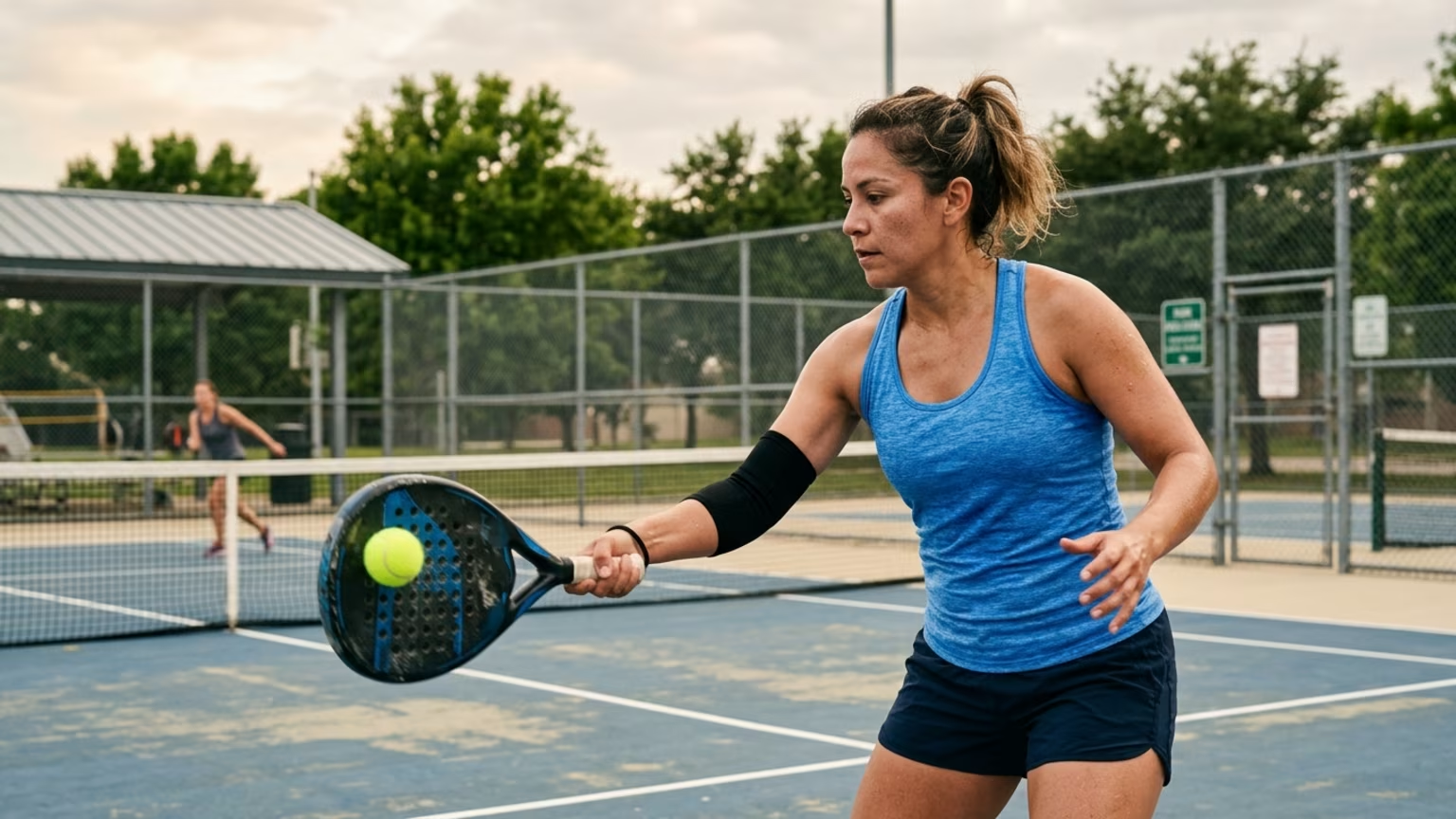
Learn how to manage upper body load in racquet sports. Review recent injury research and sensible strategies to protect your shoulder and elbow on the court.
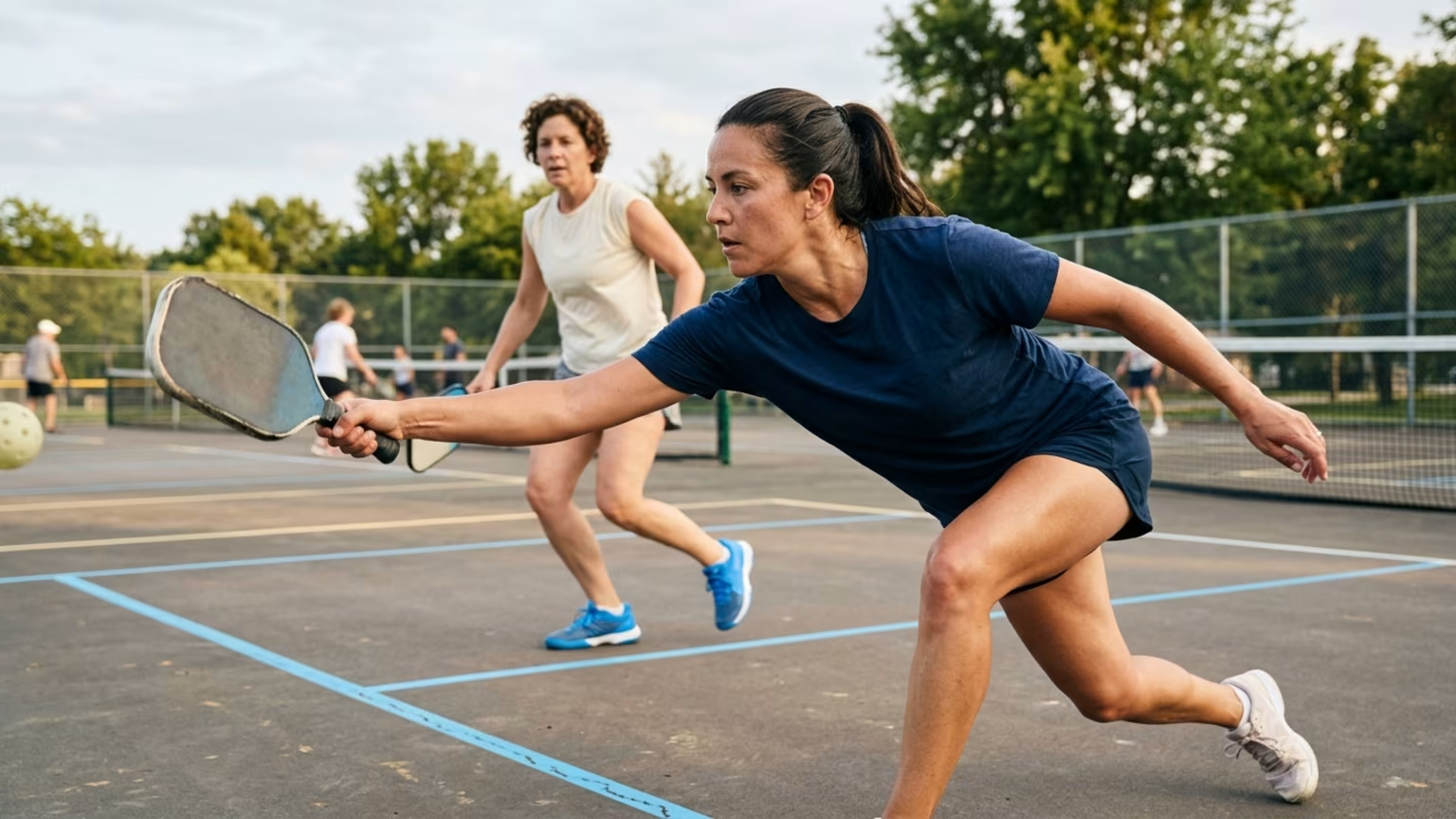
Learn how usable mobility in the ankles, hips, and shoulders helps adult pickleball players comfortably reach, turn, and change direction safely on the court.
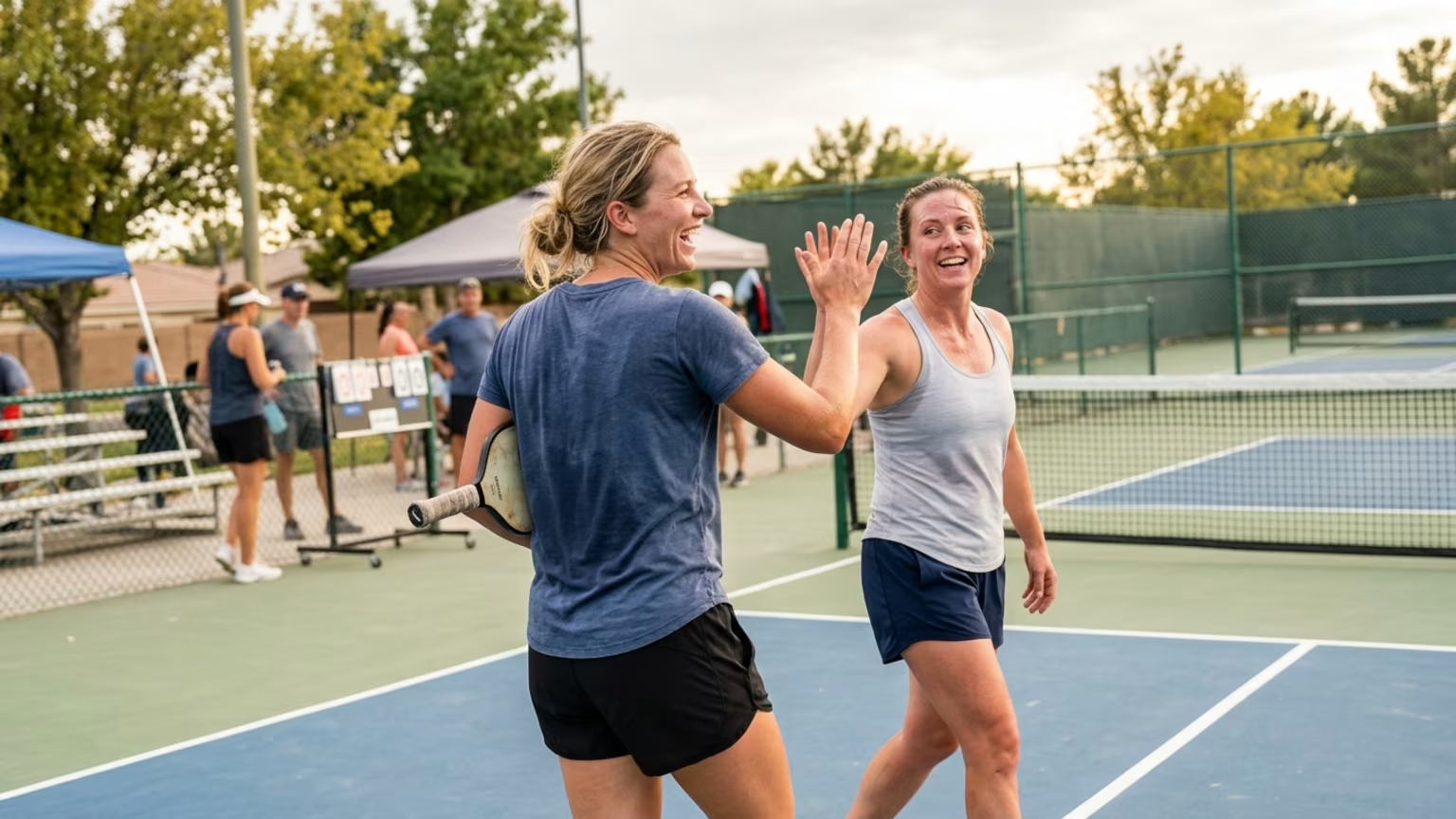
The 2026 PPA Las Vegas Open featured major upsets across singles and doubles. Read how adult recreational pickleball players should interpret these results.
Read practical guidance for better movement, smarter preparation and a game that keeps working for you.
explore the Blog
