

Learn why racquet sports demand specialized strength and how to build a practical, movement-based foundation to support your athletic longevity on the court.




Court-specific strength training is the practice of building muscular capacity to handle the reaching, lunging, and stopping motions required during play. It focuses on preparing the body for the dynamic forces of a match rather than lifting heavy weights for aesthetic changes. For adult players, this means building a physical foundation that directly translates to better movement, improved resilience, and faster recovery between sessions. Rather than simply tiring you out, this specific type of physical preparation makes every hour spent playing feel much less taxing on your joints.
Tennis, pickleball, and padel require constant movement adjustments and rapid force absorption. According to a tennis training guide by Phil Halfmann, court demands involve repeated accelerations and braking. The same guide notes that players must also handle frequent directional changes, deep lunges, and forceful trunk rotation. Players rarely move in predictable straight lines at a steady, uninterrupted pace.
Instead, you have to sprint forward for a short ball, stop abruptly, and push back aggressively to your ready position. This stop-and-start pattern places high mechanical stress on the legs, hips, and trunk. Without adequate conditioning, your muscles fatigue quickly and struggle to absorb the impact of sudden deceleration. As fatigue sets in during a match, movement efficiency drops noticeably, and you may find yourself arriving late to the ball.
This late arrival compromises your swing mechanics and forces you to hit from weak, unstable positions. Braking is often the most neglected aspect of physical preparation for amateur players. When you sprint toward the net to retrieve a short ball, your body builds significant forward momentum. Stopping that momentum requires eccentric strength, which is the ability of your muscles to lengthen under tension.
Without adequate braking capacity, your steps become heavy, and you lose the ability to recover quickly for the next shot. Each sport has its own unique rhythm, but the underlying physical requirements remain remarkably similar across the board. Pickleball features rapid, short-distance reactions at the kitchen line, while padel demands frequent twisting and deep lunges to retrieve balls off the glass.
Tennis requires explosive lateral movement and forceful rotational power from the baseline. Developing a structured approach to targeted neuromuscular training helps your muscles handle these recurring stressors across all three sports.
Current sports conditioning guidance emphasizes functional movement over heavy, static lifting. Tennisfitness.com provides guidance for players over 40, arguing that strength training should support tennis movements rather than imitate bodybuilding. Traditional bodybuilding isolates individual muscles to increase their size and visual definition. In contrast, racquet athletes need their muscles to work together in synchronized, dynamic chains.
The primary goal is to build physical qualities that actually apply during a competitive rally. This guidance frames strength as a necessary support system for accelerating, changing direction, and hitting with power. It also highlights the absolute importance of maintaining stability while reaching for difficult balls out wide. These are the exact actions that decide whether you can comfortably return a wide serve or successfully track down a defensive lob.
To meet these complex needs, Tennisfitness.com recommends considering lower-body, upper-body, and rotational strength as core components of a training plan. Lower-body strength provides the solid base required for moving around the court efficiently. Rotational strength connects the lower body to the upper body, allowing force to transfer smoothly into your shots. Upper-body strength helps manage the repetitive strain of swinging a racquet thousands of times a month.
The current research and coaching literature avoids presenting any single workout as a perfect solution for every player. Instead, the focus remains firmly on sensible progression and consistent movement quality. The priority is to build a practical strength base without resorting to extreme fitness routines. This measured approach ensures that your off-court work enhances your on-court performance rather than leaving you too exhausted to play.
Understanding the physical demands of racquet sports helps adult players maintain their capabilities and stay active for years. Training the specific actions of pushing off, braking, and rotating prepares your tissues for the realities of the game. This proactive approach supports athletic longevity and helps you play with lasting confidence. It allows you to focus on strategy and shot selection rather than worrying about physical fatigue late in a match.
Targeted leg and hip work directly supports effective lunges and quick recoveries between points. Exercises that mimic court movements train your nervous system to stabilize your joints during awkward, sudden reaches. Working on hip strength and mobility ensures you can safely drop your center of gravity when defending difficult shots. This lower center of gravity improves your balance and reduces the overall workload on your knees, ankles, and lower back.
Dedicated trunk conditioning helps control rotation when hitting off-balance from the back of the court. The muscles of your core act as a critical bridge transferring power between your legs and your arms. A strong trunk allows you to transfer energy efficiently from the ground up into your racquet. It also acts as an internal braking system, stopping your torso from twisting too far after you complete a powerful groundstroke.
Upper-body strength manages the repetitive strain of serving, volleying, and driving the ball during a rally. While the legs generate the initial power, the shoulders and arms must control the heavy impact of the ball hitting the strings. Building capacity in these areas reduces the feeling of heaviness and fatigue in your arm after a long tournament weekend. This comprehensive requirement is why relying solely on traditional gym machines fails racquet sport players who need dynamic, full-body coordination.
Players with existing symptoms, medical conditions, or a recent physical setback often need individualized advice before starting a new routine. While general strength training is highly beneficial, it simply cannot replace personalized clinical guidance. Recognizing when your body needs expert attention is a crucial part of managing your long-term physical health. Evercourts encourages all players to listen to their bodies and seek proper care when needed.
If you experience sharp pain during a lunge, persistent stiffness that limits your serve, or joint swelling after a match, it is time to seek professional help. These signs clearly indicate that your tissues are struggling to recover from the physical demands placed upon them. Pushing through discomfort or relying on generic advice often complicates the issue and extends your time away from the court.
A qualified physiotherapist or sports healthcare provider can assess your specific movement limitations and prescribe a targeted recovery plan. They can accurately identify weakness in specific muscle groups and provide scalable exercise variations tailored exactly to your current physical ability. This professional input ensures your training supports your time on the court rather than actively hindering your progress.
Establishing a clear line of communication with a health professional allows you to address minor aches before they become major structural issues. This preventative mindset is absolutely essential for players who want to enjoy tennis, pickleball, or padel well into their later years. As a single actionable takeaway you can do today, start your next off-court session by practicing three slow, controlled lateral lunges on each leg to assess your current stability and control.
Follow Evercourts for practical insights on tennis, pickleball and padel performance, movement, recovery and healthy ageing. Stay connected for new articles, research-led guidance and ideas to help you play well and keep playing for years.


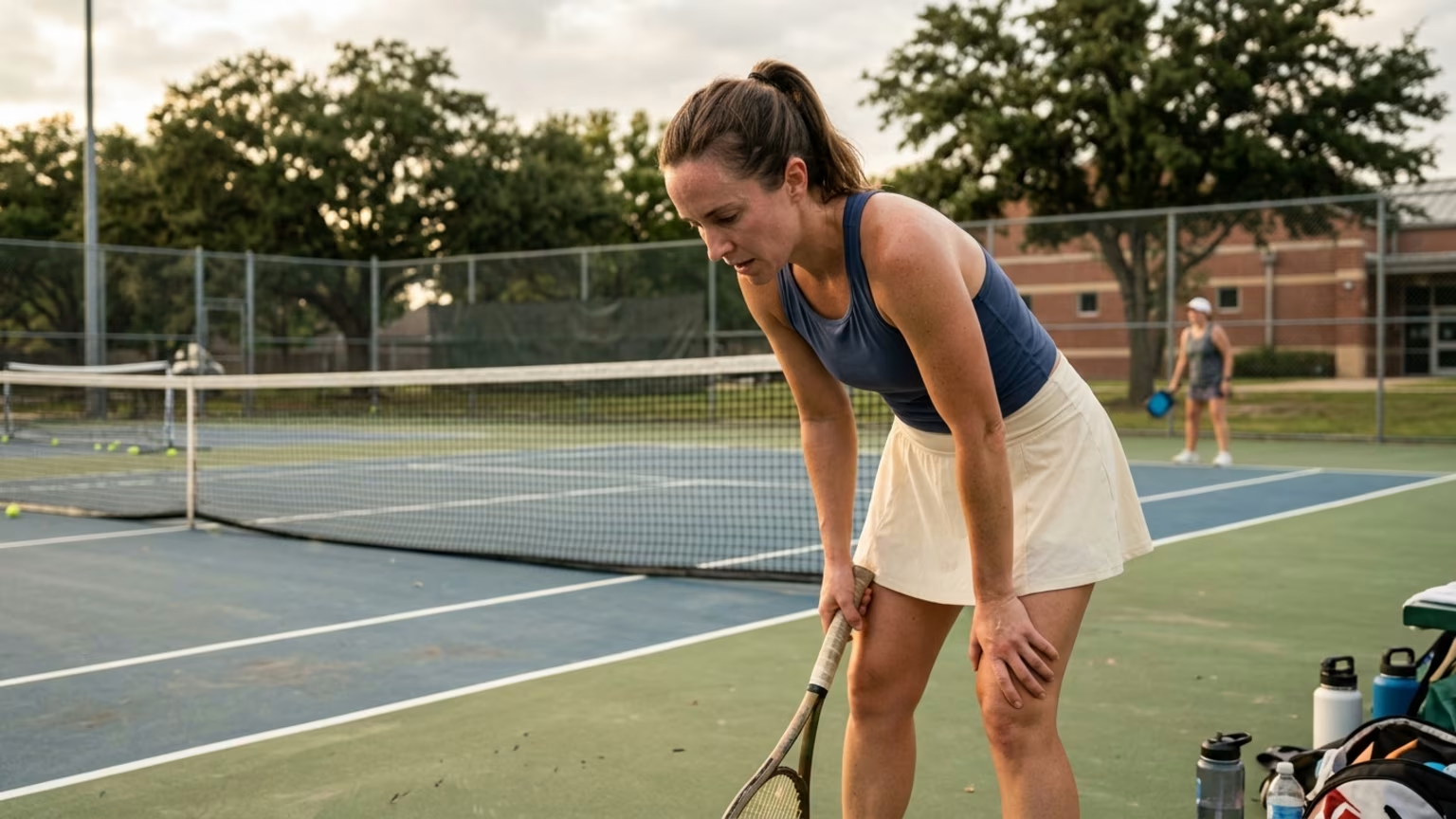
Tennis, pickleball, and padel challenge your body with different movement patterns and physical loads. Learn to scale your play for athletic longevity.
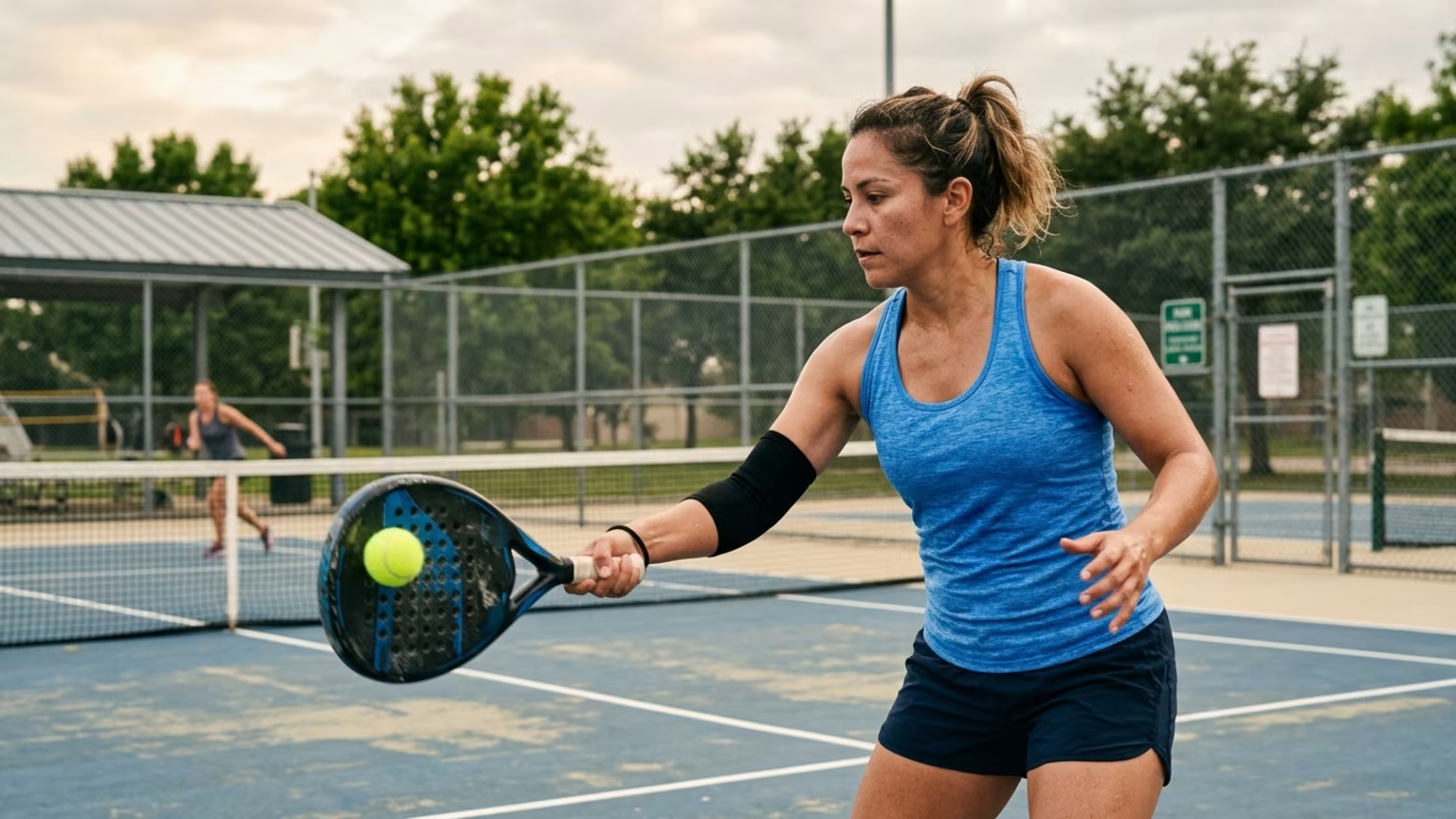
Learn how to manage upper body load in racquet sports. Review recent injury research and sensible strategies to protect your shoulder and elbow on the court.
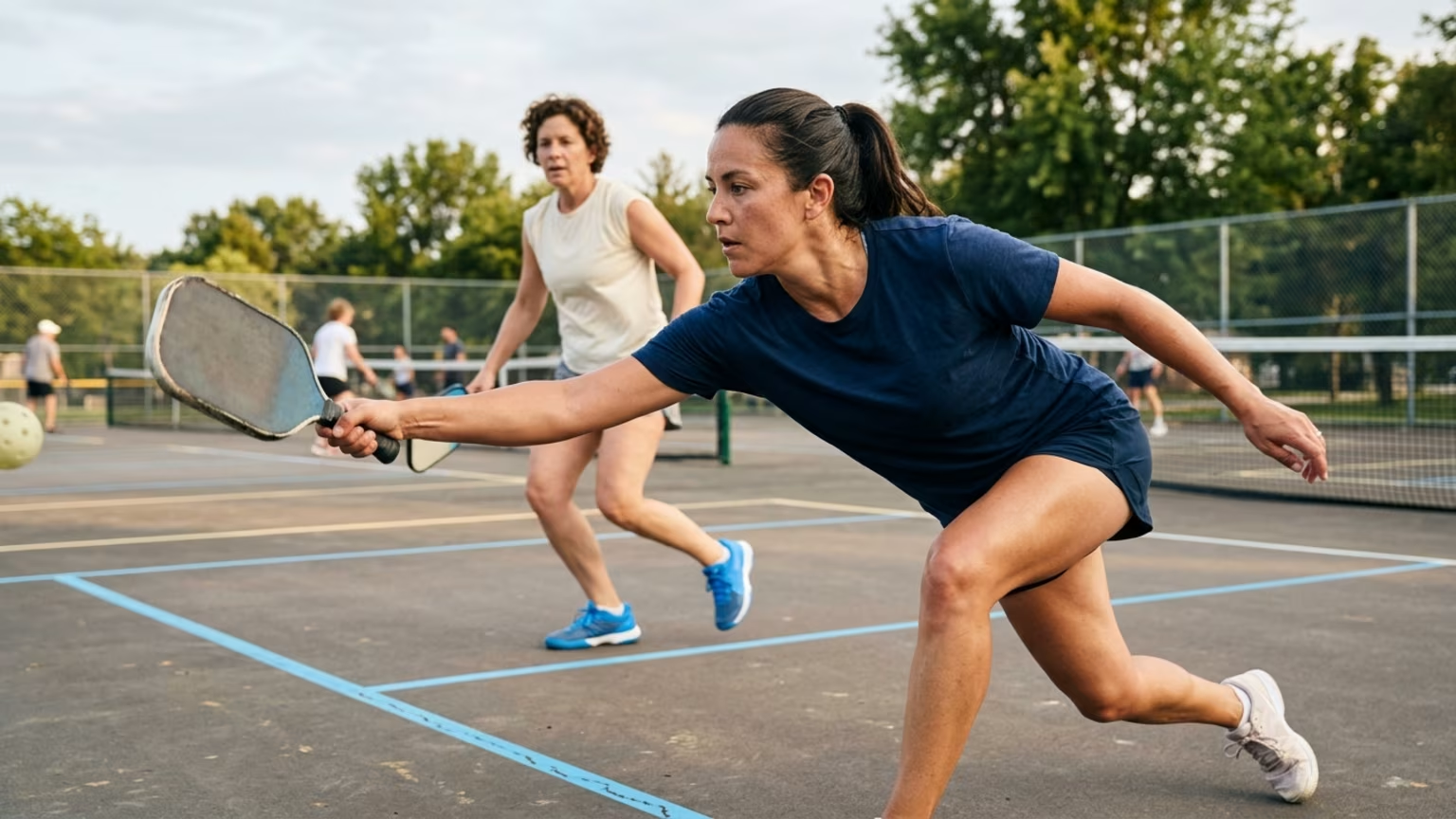
Learn how usable mobility in the ankles, hips, and shoulders helps adult pickleball players comfortably reach, turn, and change direction safely on the court.
Read practical guidance for better movement, smarter preparation and a game that keeps working for you.
explore the Blog
