

Zverev’s Shanghai ankle account shows why a comfortable warm-up should not be treated as the full picture of symptoms during a match.




On October 13, 2026, Alexander Zverev reached the Shanghai Masters quarter-finals by beating Alexander Bublik and reported that his ankle had felt fine early before worsening as the match progressed.
The ATP Tour’s match report described Zverev struggling physically in the second set and holding his right ankle on several occasions. In his account of the match, Zverev said he had first noticed symptoms during the previous match. His ankle then felt fine in the warm-up and early in the first set against Bublik.
The change came around the middle of the second set, according to Zverev. He described the ankle as “acting up again” and said he was “starting to feel my body more and more.” The important detail was the sequence: an acceptable start followed by worsening symptoms later in play.
In his post-match comments, Zverev also said he had not considered retiring. He wanted to maintain his record of not retiring except at the 2022 French Open, when he said he “really couldn't walk.” That was his explanation of his competitive choice, not a recommendation for other players.
The reports describe one player’s experience without an independent medical assessment. They do not identify a diagnosis or establish the cause or severity of his symptoms. They also do not show that match duration caused the problem, that playing through it was safe or that this represents a wider tennis injury trend. The practical interpretation below concerns noticing changes during play rather than making medical judgments.
For a professional in this match, the competitive outcome was a place in the Shanghai quarter-finals. Zverev’s comments also put his personal commitment to completing matches in view. A weekend league player should separate those competitive priorities from the question of how their own symptoms are changing.
Evercourts’ reading of this episode is straightforward: the warm-up is useful information about the start of a session, not a verdict on the whole session. In Zverev’s account, the later stages told a different story from the opening stages. Adult players do not need to copy his decision to finish to take that observation seriously.
A comfortable start can be encouraging without settling what comes next. The useful response is to stay attentive to the experience of playing rather than treating the early minutes as a test that has been passed. This keeps pre-match preparation in perspective without turning it into a promise about the rest of the match.
The evidence supports a simple distinction between observations:
Keeping those observations separate helps preserve the full account of a session. A good opening should not overwrite a later change simply because the player hoped to finish.
Zverev completed the match and won. For recreational players, the useful editorial distinction is between completing a sporting task and understanding a physical problem. A result answers who won; a description of symptoms answers what the player experienced along the way.
That distinction belongs in a wider view of competition workload, where the match result is only part of the player’s account. Personal decisions about continuing with pain should be discussed with a qualified healthcare professional. A professional player’s determination is not an individual care plan.
For an adult trying to keep playing over the years, success need not be defined by matching a tour player’s refusal to retire. The more relevant standard is an honest account of the session, including changes that appeared after an encouraging start. That approach respects the player’s experience without asking the scoreboard to settle a health question.
According to the ATP Tour, Zverev beat Bublik 7-6(6), 4-6, 7-6(1). The report adds the following competitive context:
The opening-set escape and decisive final tie-break belong to the story of how Zverev advanced. His account of symptoms belongs alongside that story rather than being reduced to a footnote because he won. The match can be reported as a competitive achievement while still taking his changing physical experience seriously.
Over the next season, useful follow-up would focus on Zverev’s own updates about the ankle and whether he describes the same pattern in later matches. The question is not simply whether he keeps winning. It is whether subsequent reporting gives a clearer account of how the symptoms develop during play.
More broadly, tennis coverage should give physical timelines the same attention it gives scorelines. Reports that distinguish the warm-up from later match experience offer readers a better basis for understanding what a player actually said. Competitive resolve and symptom reporting do not need to compete for space in the story.
For recreational players, the standard worth carrying into the next season is equally clear: judge a session by its whole course rather than its opening moments. Watch for reporting that preserves that distinction instead of treating a completed match as the final word.
Follow Evercourts for practical insights on tennis, pickleball and padel performance, movement, recovery and healthy ageing. Stay connected for new articles, research-led guidance and ideas to help you play well and keep playing for years.


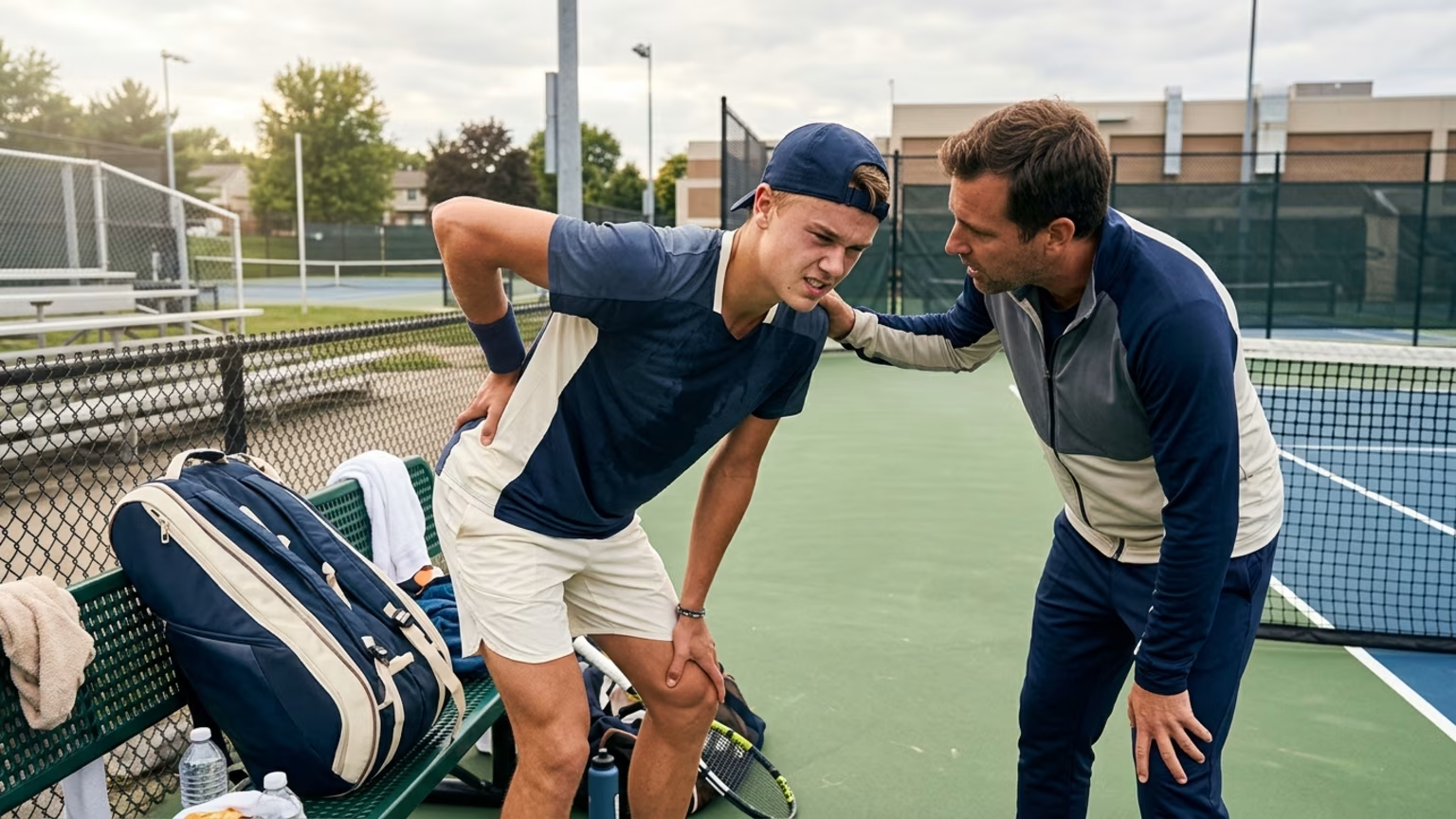
Holger Rune withdrew from the European Open with a back problem. The facts behind his decision and a grounded perspective for recreational players.

The Dink’s October 17 guide emphasizes deep returns, ball-height decisions and positioning against faster pickleball opponents.

A new report outlines padel and tennis gear trends. Learn how to assess adjustable rackets, sensor feedback and smart-court claims.
Read practical guidance for better movement, smarter preparation and a game that keeps working for you.
explore the Blog
