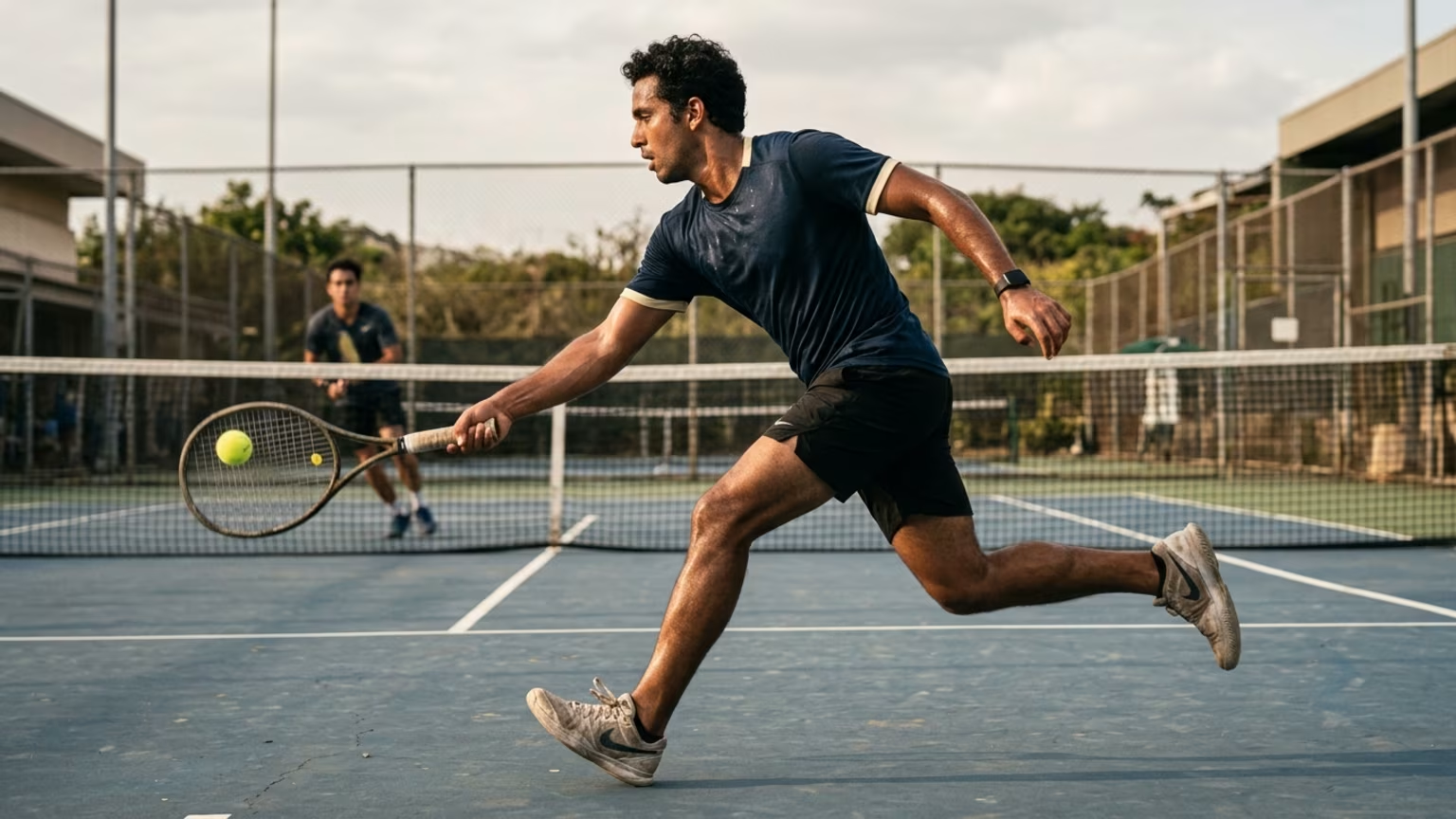

Learn how tennis, pickleball, and padel players can improve their reaction speed and anticipation through progressive visual recognition and movement drills.




The ball leaves the opponent's strings with a sharp crack and dips toward the outer service box line. Reacting a fraction of a second too late turns an offensive opportunity into a defensive emergency. A delayed start forces an off-balance lunge that usually ends in an error. Court speed is dictated by the very first movement you make after the ball is struck.
Most players believe that reaction time is an innate quality that inevitably fades with age. This perspective treats court movement like a simple clinical reflex test. In reality, a fast first step is a trainable chain of visual recognition, precise decision-making, and physical preparation. You do not need to be born with elite twitch reflexes to get to the ball faster.
Many athletes assume that age automatically dictates a slower, less competitive game. They watch younger opponents chase down drop shots and conclude that their own quickness is permanently lost. This fatalistic mindset ignores the mechanics of how we actually intercept a moving object in racquet sports. Your ability to return a fast serve relies heavily on early pattern recognition.
When you learn to decode the server's posture, you effectively buy yourself extra fractions of a second. You just need to organize your eyes, brain, and feet into a more efficient sequence. Players who want to move faster without hurrying must focus on anticipation rather than raw speed. A late reaction is rarely a failure of your neurological system.
It is almost always a failure to read the opponent early enough to prepare correctly.
Social media feeds are filled with athletes catching flashing lights, juggling irregular objects, and wearing stroboscopic glasses. These flashy tools promise superhuman reflexes for anyone willing to buy the expensive equipment. They market the illusion that raw neurological speed is the primary barrier to athletic longevity. Adult recreational players do not need app-connected light boards to improve their court coverage.
The reality of healthy aging in racquet sports is much more pragmatic and accessible. Missing a wide volley usually comes down to poor posture or a late split step. You can improve these mechanical issues without spending money on gimmicky gadgets. A solid foundation in off-court mobility training often yields better movement than isolated reflex drills.
Proper anticipation requires understanding the geometry of the court and the habits of your opponent.
Sports science and structured coaching frameworks break movement down into a measurable, repeatable sequence. According to coaching material from SchlaegerClub, a tennis player under pressure follows a distinct physical pattern. The player must first read the direction and length of the incoming ball. They must then react immediately with an explosive first step toward the target.
Crucially, the player must prepare their grip and shoulder turn during the movement rather than waiting. They finish by adjusting with small steps and striking the ball under control. This entire chain requires coordination, balance, and early visual processing.
The split step is the physical bridge between seeing the ball and moving toward it. Tennis coaching guidance characterizes the split step as a brief unloading and landing action. This specific technique allows the player to start rapidly in any desired direction. The timing of this landing must be directly linked to the exact moment of the opponent's contact.
If you land too early, you lose the kinetic energy required for a fast push-off. If you land too late, the ball is already past you before your feet can move. Good balance and proprioception training ensures you land stably and push off powerfully.
A common mistake among recreational players is making the split step too large or too high. A massive jump leaves you suspended in the air while the ball is already traveling. A small, quiet hop allows your feet to meet the court exactly when you need to push. The outside leg can then drive powerfully into the ground to initiate your movement.
Anticipation begins before the ball is even struck by your opponent. In pickleball, coaching guidance emphasizes observing the opponent rather than just tracking the ball itself. Players should read the opponent's paddle position, body posture, and court position before contact. They then combine that specific visual information with a perfectly timed split step.
This visual discipline gives you a crucial head start on your movement. You can predict whether the opponent will hit a soft dink or a hard passing drive. Effective vision, reaction, and anticipation training teaches players to look for these early physical indicators.
Amateur players are frequently told to keep their eyes glued exclusively to the ball. While watching the ball is important at contact, staring at it mid-flight offers limited predictive value. The ball only tells you what has already happened, not what is about to happen next. By shifting your visual focus to the opponent's preparation, you gather crucial intelligence.
The confined space and glass walls of padel demand exceptional early recognition from players. Padel coaching guidance recommends watching the opponent until the moment of contact. Players can predict the likely shot simply by analyzing the opponent's backswing and stance. This focused observation reduces the feeling of being rushed during fast exchanges.
As players improve, they can progressively add more complex visual cues to their process. They might start analyzing the opponent's weight transfer or the specific angle of the racquet face. Eventually, they can also read the ball's unique rebound off the glass walls.
Improving your response time requires purposeful, sport-specific practice on the court. You can build these physical qualities without complicated gym equipment or expensive subscriptions. The goal is to train the sequence of recognition, decision, and movement in short intervals.
You can improve your split step using simple, low-impact partner exercises. Tennis coaching resources recommend a drill where a partner alternates forehand and backhand movements across the net. The working player must execute a split step at the simulated moment of contact. They then immediately react to a called direction or a simple ball toss.
This drill connects visual timing directly to footwork initiation in a controlled environment. It forces the brain to link the visual cue of the opponent's swing to the physical drop.
Pickleball coaching material suggests using short nervous-system training blocks to sharpen decision-making skills. These concentrated blocks can include fast kitchen hand battles and variable dink drills. You can also incorporate random-feed movement drills and transition-zone decision-making exercises. Keeping these practice sessions brief ensures you are training speed rather than grinding through physical fatigue.
During these fast-paced drills, it is important to practice intentional decision-making rather than mindless swinging. A good kitchen hand battle drill forces you to choose between blocking, countering, or resetting the ball. The feeder should occasionally change the pace or the direction of the ball to test your responses. You must quickly recognize the incoming speed and select the safest, most effective shot.
Short bursts of highly focused attention translate better to match play than long, exhausting rallies. The quality of your movement matters far more than the total quantity of your repetitions. A fast start is useless if you stumble upon landing. This makes dedicated balance training for racquet sports vital for maintaining agility over time.
Do not try to read every single opponent cue all at once during a match. Start by simply trying to identify the height of the opponent's backswing early in the point. Once that becomes automatic, try to predict the depth or the spin of the incoming shot. This progressive layering helps you process court geometry automatically without feeling overwhelmed.
You can practice this recognition away from the pressure of an actual match. Watching professional matches on video is a highly effective way to train your visual processing. Pause the video just before the player makes contact with the ball. Try to guess the direction, speed, and spin based entirely on their body mechanics.
True court speed is built by training your eyes to recognize patterns early, allowing your feet to move with balanced precision instead of desperate panic.
Follow Evercourts for practical insights on tennis, pickleball and padel performance, movement, recovery and healthy ageing. Stay connected for new articles, research-led guidance and ideas to help you play well and keep playing for years.


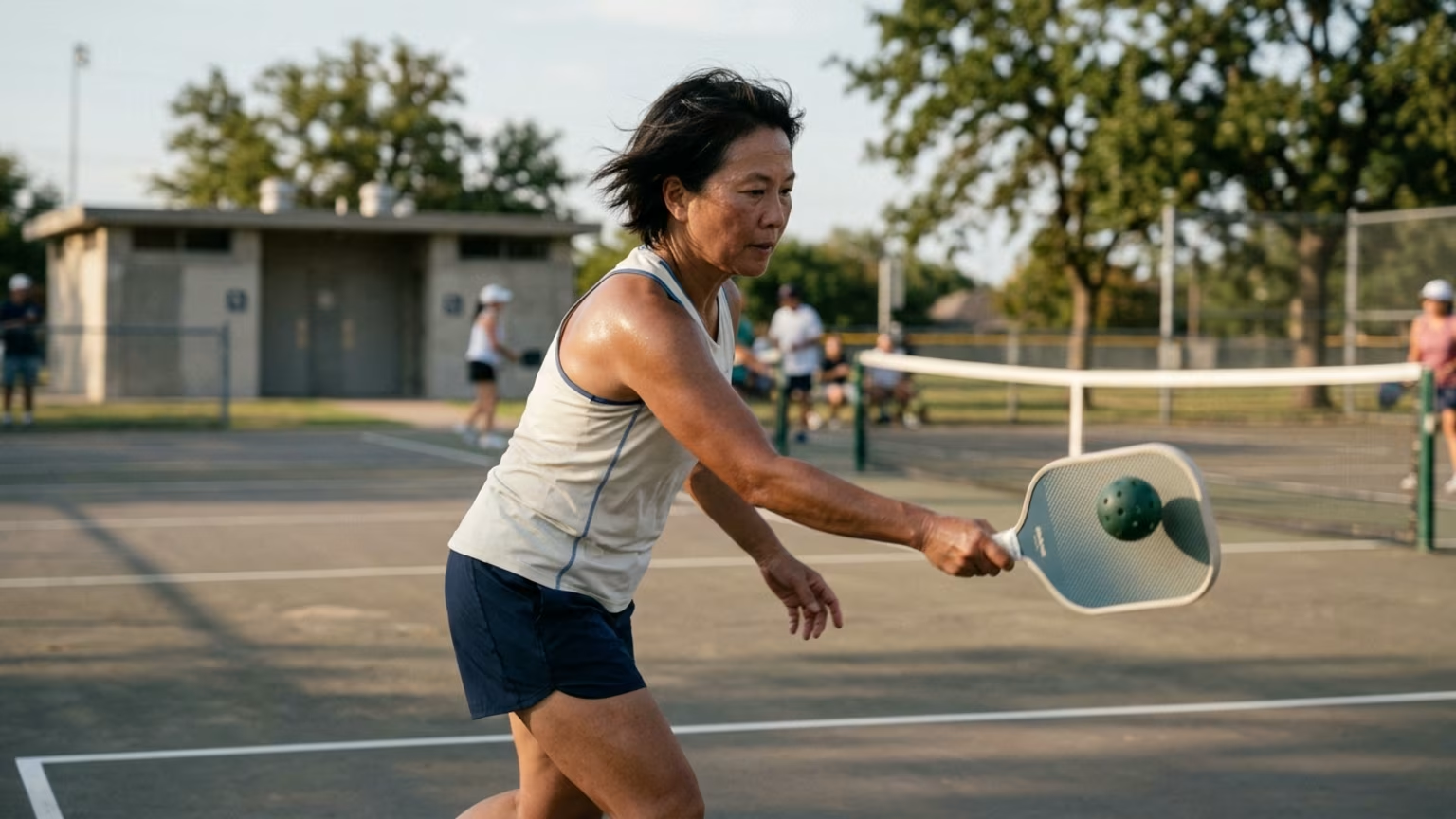
A recent live-play test of a silent pickleball highlights its value for practice, but standard balls still perform better for match play and power control.

An evidence check on sports supplements like tart cherry juice. Learn why racquet sports players should prioritize core nutrition over functional foods.
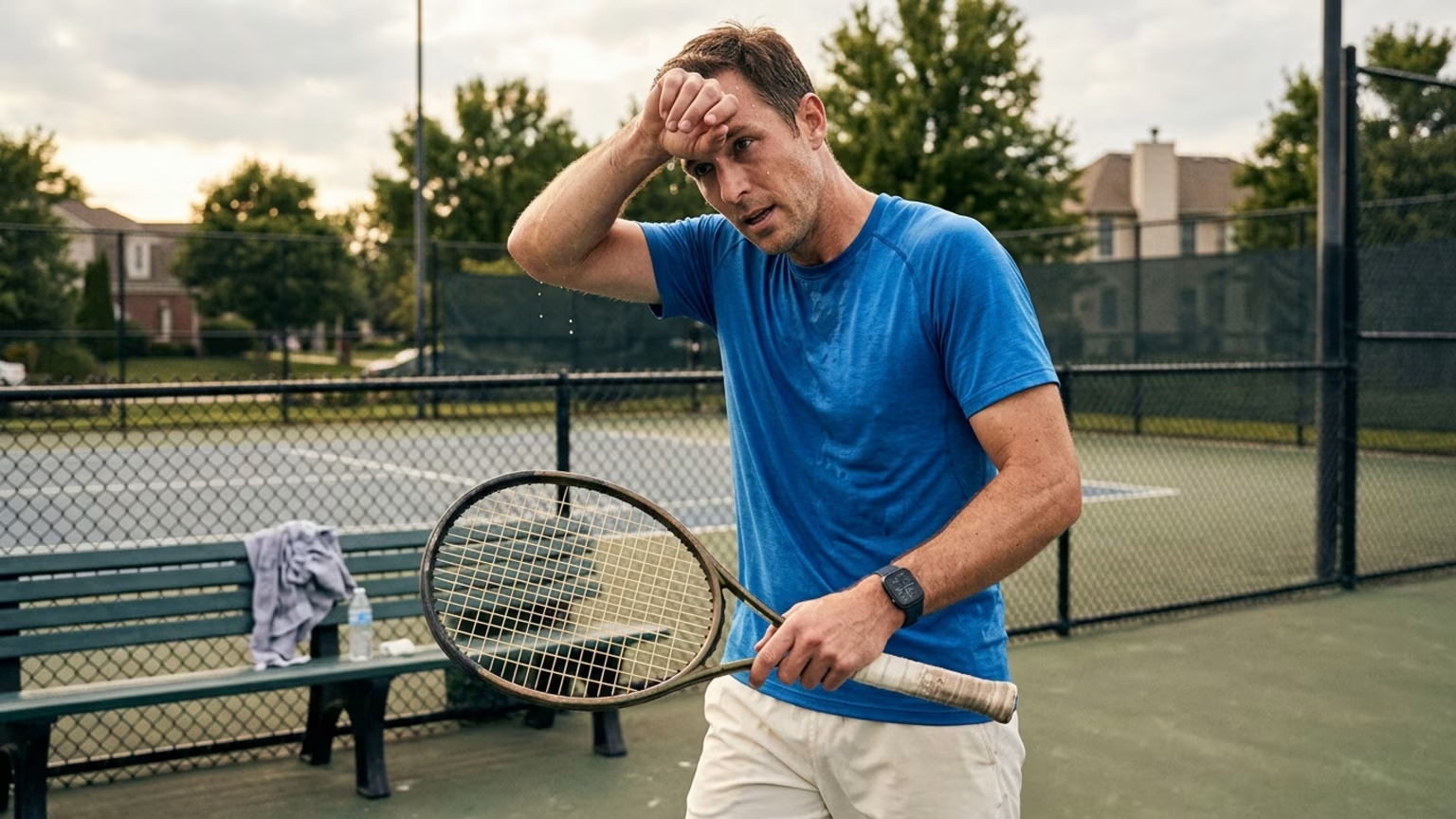
In late 2026, Oura analyzed wearable data to see how recreational tennis impacts heart health and recovery. Learn what this means for your athletic longevity.
Read practical guidance for better movement, smarter preparation and a game that keeps working for you.
explore the Blog
