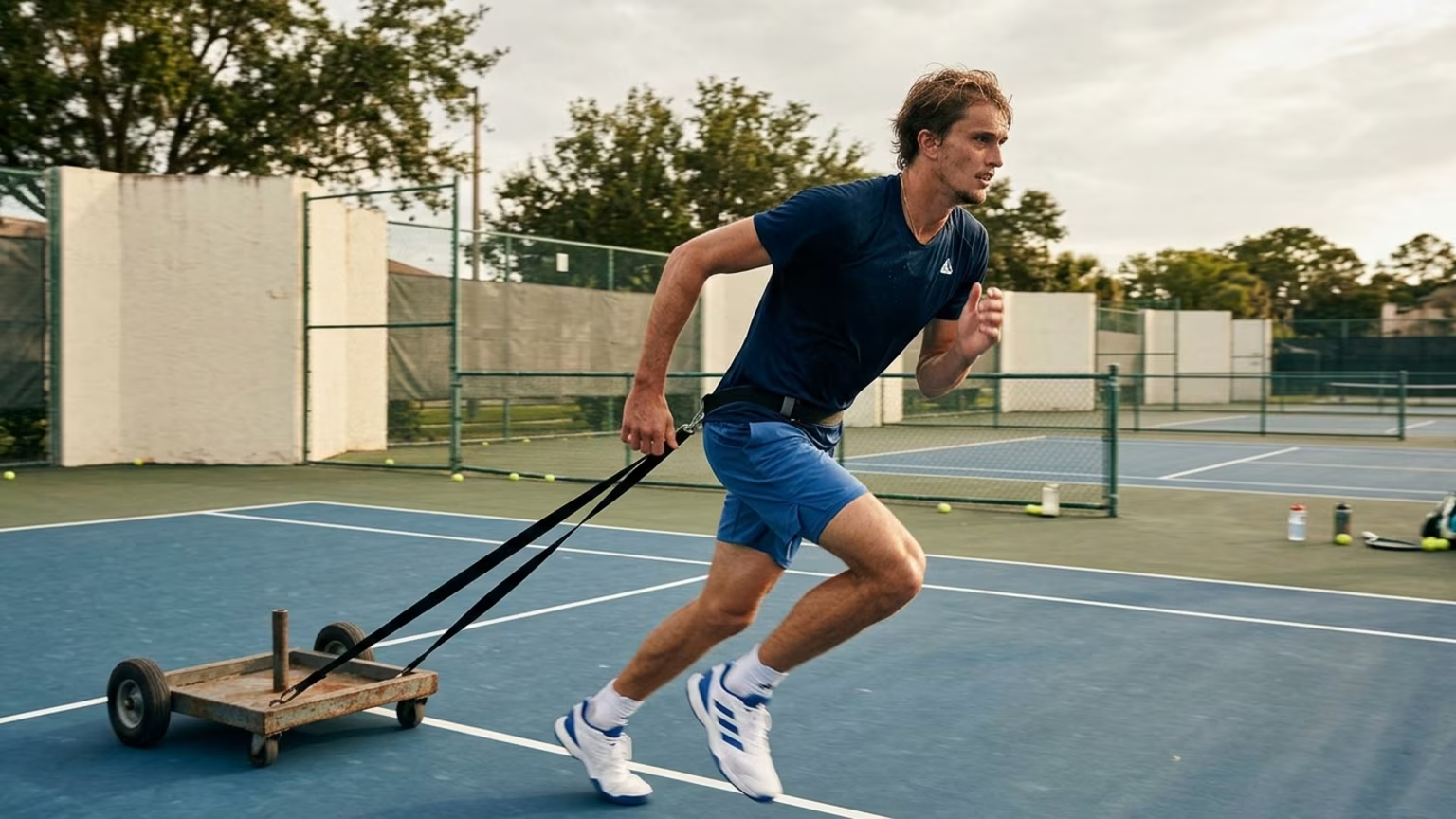

Alexander Zverev survived consecutive five-set matches at the 2026 US Open. Learn how gym and track conditioning builds essential resilience for all players.




Alexander Zverev spent approximately 9 hours and 26 minutes on court across his first two matches at the 2026 US Open. This heavy workload shows exactly why physical durability matters in competitive racquet sports. You have just finished a brutal three-setter, your knees are barking, and your timing feels completely off.
Pushing through those heavy-legged moments requires a foundation that goes far beyond hitting perfect groundstrokes. Matches are rarely won on perfect technique alone when both competitors are physically exhausted. The ability to endure long rallies when your body wants to quit separates resilient players from the rest of the pack. Preparation happens quietly off the court to ensure you have enough energy left to make sound tactical choices.
The goal of this approach is not to guarantee a victory or mimic an elite training camp. The objective is to build enough athletic longevity to survive tough stretches when your technique inevitably breaks down. Zverev defeated Quentin Halys in five sets. He won the match 6-4 4-6 7-6(3) 6-7(3) 6-3 in a long battle lasting 4 hours and 33 minutes.
After the match, Zverev candidly described his performance as "pretty s*" and noted that winning was the most important thing. ESPN reported that Zverev became the first top-seeded man in the Open Era to begin a major with back-to-back five-set matches. The Halys match followed a 4-hour-and-53-minute five-set victory over Lorenzo Sonego. Most recreational players will never face consecutive four-hour battles.
However, the underlying principle remains highly relevant for amateur tournament players and weekend club competitors. You want to prepare your body to handle fatigue safely. This conditioning ensures that a temporary drop in confidence or shot-making does not cost you the match. Physical preparation serves as an insurance policy for your court time.
It allows active players to maintain their favorite hobbies without relying entirely on flawless execution. By following a smart conditioning plan, you can track your athletic longevity and stay on the court for years. Building this resilience means you can trust your body even when your racket feels completely foreign in your hands.
Zverev clearly credited his off-court work for his ability to outlast opponents under pressure. His explanation for surviving the match centered entirely on preparation rather than flawless execution. He stated, "That's what I go to the gym for. That's what I go to the track for and train for, to be able to come out on top of these difficult moments when you're not playing your best."
The following steps outline how adult players can adapt this concept for their own routines. You do not need professional coaches or unlimited free time to benefit from off-court conditioning. A few targeted adjustments to your weekly schedule can distinctly improve your ability to finish long matches safely.
You should not limit your conditioning to the times when you feel fresh. Zverev noted that his physical capacity allowed him to continue competing through very difficult moments. Adult players can apply this concept by integrating controlled intervals and repeated movement efforts into their weekly schedules. Completing a brief cardio block at the end of a session trains the body to respond well during the final sets.
A sensible program includes basic lower-body strength, single-leg control, and trunk stability. In our experience, managing your physical workload is critical. "A few years ago, I realized my tennis serve speed was dropping, and my shoulder was constantly throbbing after matches. Instead of pushing through the pain, I took a month to rebuild my mechanics and focus on rotator cuff endurance."
"I stopped trying to hit flat aces and developed a much heavier kick serve. My win rate actually went up, and my shoulder stopped hurting. Sometimes longevity means outsmarting your own ego on the court."
Short movement blocks followed by tennis-specific hitting can help you maintain good footwork when tired. The objective is to sustain quality movement rather than pushing yourself to absolute exhaustion. Building an aerobic base for racquet sports ensures your decision-making remains sharp even when your muscles burn. Training your brain to execute tactics while physically drained offers a distinct competitive advantage.
Players managing age-related changes must increase their exercise volume conservatively. A workout program that leaves you too sore to play or sleep is poorly matched to your needs. You should add intensity slowly to avoid overloading your joints and tendons. If you experience persistent pain, always seek qualified medical advice before starting vigorous running or lifting routines.
The Halys match finished at about 2:15 a.m. local time, creating a significant recovery hurdle. Zverev had to manage a late finish before facing Alejandro Tabilo in the third round. When amateur players face long tournament days, they must plan their hydration, food, and sleep carefully. Proper match pacing and structured rest are far more beneficial than scheduling another heavy workout immediately after an event.
The demands of off-court training change depending on your preferred racquet sport. Tennis requires players to cover long baseline distances and execute repeated forward sprints. Tennis players need a robust aerobic foundation and heavy leg conditioning to absorb the impact of hard courts. Your gym routine should feature lateral lunges and explosive split steps to prepare for these unique demands.
Pickleball features shorter court dimensions but demands constant low-to-high defensive transitions. The frequent bending at the non-volley zone places immense pressure on the knees and lower back. Pickleball players should prioritize joint stability and core endurance to handle these rapid directional shifts. Resistance band work and isometric holds are highly effective for mastering the prolonged dink rallies in this sport.
Padel introduces unique biomechanical challenges due to the glass-wall rebounds and frequent overhead shots. Players must constantly twist, turn, and backpedal to retrieve lobs. Padel conditioning must include dedicated trunk rotation exercises and extensive shoulder endurance work. Strengthening the upper back helps players avoid the common overuse injuries associated with heavy overhead workloads.
Preparation happens in empty gyms and quiet tracks, long before the lights come on. The truest measure of durability is simply being able to show up again tomorrow.
Follow Evercourts for practical insights on tennis, pickleball and padel performance, movement, recovery and healthy ageing. Stay connected for new articles, research-led guidance and ideas to help you play well and keep playing for years.


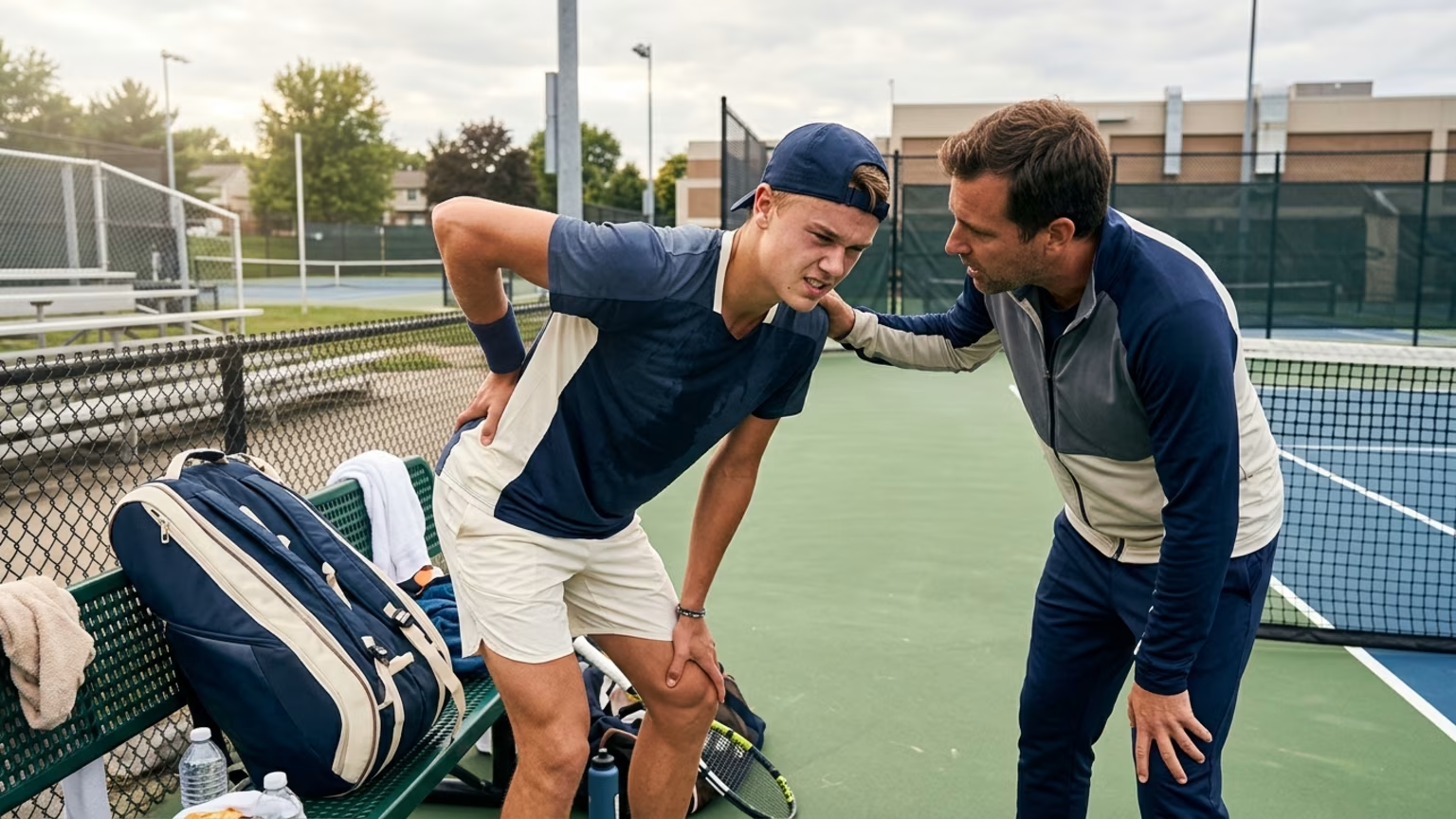
Holger Rune withdrew from the European Open with a back problem. The facts behind his decision and a grounded perspective for recreational players.

The Dink’s October 17 guide emphasizes deep returns, ball-height decisions and positioning against faster pickleball opponents.

A new report outlines padel and tennis gear trends. Learn how to assess adjustable rackets, sensor feedback and smart-court claims.
Read practical guidance for better movement, smarter preparation and a game that keeps working for you.
explore the Blog
