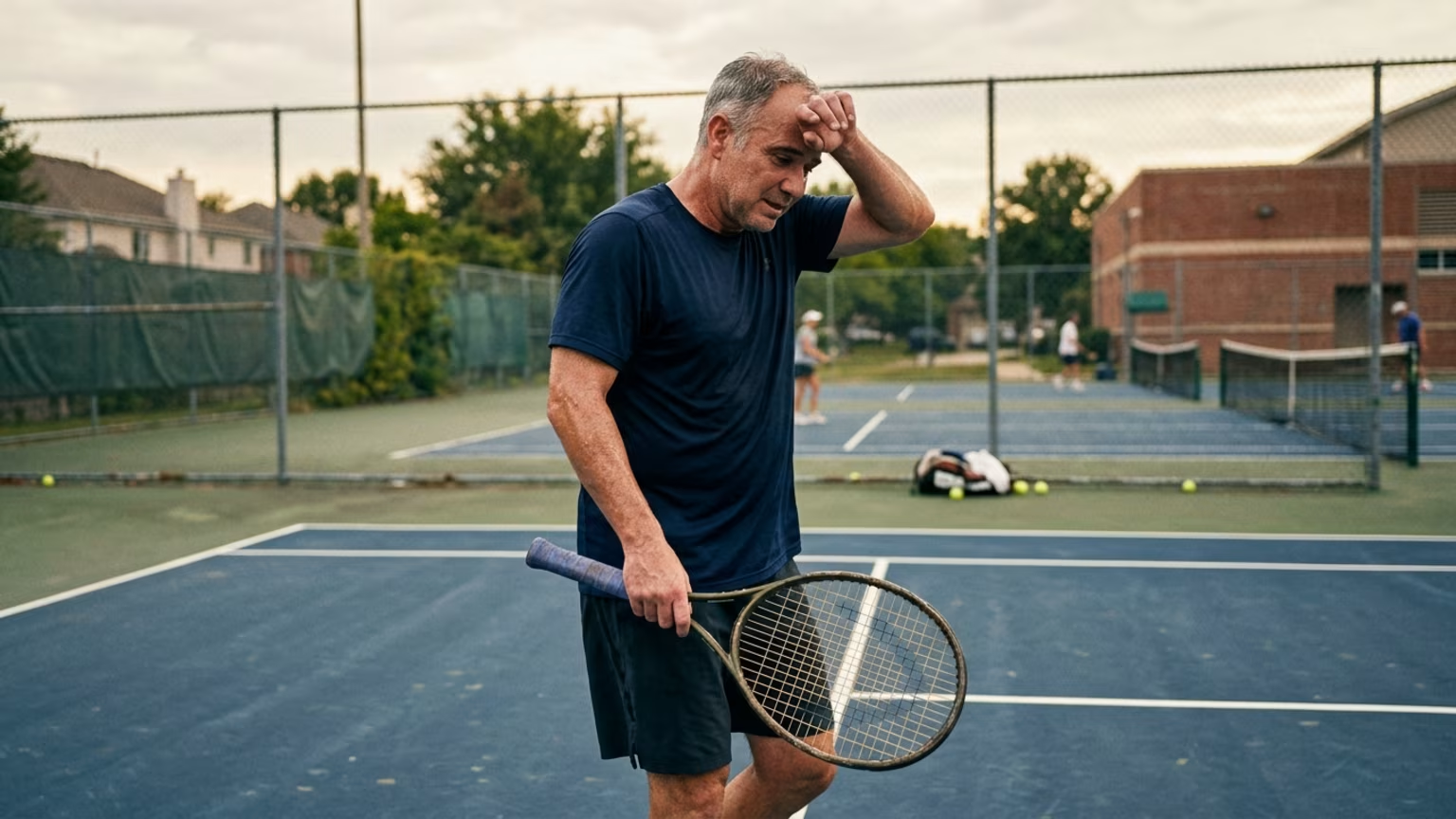

Andre Agassi called for a more secure tennis offseason. Read how the expanding calendar limits recovery time and why everyday players must plan their own rest.




Ahead of the September 2026 Laver Cup, Andre Agassi publicly argued for a more secure offseason in professional tennis. The American tennis legend stated clearly that the sport does not need to be played all year. He suggested a reliable break would heavily benefit both the active players and the dedicated fans. This statement added significant weight to an ongoing conversation about athletic longevity and physical workload management on the professional tour. As the sport continues to grow, the physical demands placed on top competitors have reached unprecedented levels. Agassi's timely comments highlight a growing consensus that the current scheduling model may be unsustainable for long-term health. His perspective brings valuable insight to a complex issue affecting every level of the game.
Agassi linked the current injury rate directly to both the calendar length and the increasing intensity of modern play. He noted that some players get injured simply because the sport has become incredibly forceful. To survive this demanding environment, he emphasized that competitors must manage their tournament schedules carefully around their specific goals. A structured pause would give players reliable downtime to heal from these extreme physical demands. Rather than playing continuously, athletes need dedicated phases to rebuild their physical foundations away from the match court.
These remarks followed similar concerns raised by current top competitors facing physical setbacks. In September 2026, Carlos Alcaraz stated he planned to take longer breaks in the future to protect his health. Alcaraz had recently returned to competition after enduring a four-month layoff for a wrist injury. The Spanish player explained that playing every major event on the current calendar felt entirely impossible to him. This admission from a top athlete underscores the severe physical strain generated by the modern professional tour.
The ATP currently maintains a slightly different perspective on the scheduling matter. Reuters reported the ATP's official position is that players ultimately control their own schedules throughout the year. The tour also stated it is actively working to encourage an appropriate match load during the season. This highlights a clear tension between calendar availability and the individual physical limits of the athletes. The governing bodies provide the competitive framework, but the players must ultimately shoulder the burden of remaining healthy.
Professional players debate offseason length because their livelihoods depend on peak physical condition. Adult recreational players often overlook this concept entirely in their own weekly routines. Weekend competitors routinely play tennis, pickleball, and padel all year without ever scheduling a meaningful break. This constant play can slowly break down soft tissues and reduce a person's overall athletic longevity. Many local players ignore minor aches until they develop into serious physical limitations.
While recreational players do not face a mandatory travel schedule, they do face the realities of aging joints. Treating recovery as a proactive choice is highly critical for local league players wanting to stay active. Without forced rest periods, recreational athletes must take firm ownership of their physical workloads. You can read more about adapting your movement across different courts to stay healthy longer. Deliberate rest is not a sign of weakness, but a required component of lasting physical performance.
A professional tour proposal for a longer offseason does not perfectly translate into a specific medical protocol for weekend warriors. However, the underlying principle of structured periodization applies to everyone holding a racquet. Reducing your court time for a few weeks each year can help reset your body completely. It is often a vital step for breaking the recurring injury cycle in recreational racquet sports. Pausing your competitive matches gives your joints time to recover from repetitive stress.
Players should view their year in distinct phases rather than a continuous, exhausting grind. Taking time away from competitive matches allows you to focus on strength training and mobility work. This dedicated physical preparation helps protect against the forceful movements that Agassi mentioned. Smart scheduling is a practical tool for maintaining performance and enjoying the sport for many years.
The debate around player rest is happening against a challenging backdrop of expanding tournament formats. Reuters reported that seven of the nine ATP Masters 1000 events had expanded to 12 days from 2025. Only the Monte Carlo and Paris tournaments retained their traditional one-week formats. This shift requires players to spend significantly more time on site for the majority of top-tier events. Longer tournaments naturally mean fewer days available for recovery between major competitive commitments.
The professional calendar itself leaves very little room for a traditional offseason block. The Independent noted that the season runs extensively from the Australian summer in January through to late November. In 2026, the men's Davis Cup Finals were scheduled to finish on November 29. According to Philstar, this late finish leaves only a few weeks before the Australian swing begins again. Such a brief intermission barely provides enough time for athletes to return home and unpack their bags.
This narrow window restricts how much time players can devote to true physical rest. When a season ends in late November, the turnaround required for a January peak is incredibly steep. Athletes must cram vacation time and preseason physical conditioning into less than a single month. This compressed timeline makes it exceedingly difficult to rebuild strength after a grueling eleven months of global travel. A rushed preseason often leads to early fatigue when the new calendar begins.
The tight turnaround also limits opportunities to rehabilitate lingering minor injuries effectively. Without sufficient time away from the court, small issues can easily develop into major physical problems. Agassi's call for a more secure offseason directly addresses this fundamental flaw in the yearly cycle. A guaranteed break would allow athletes to properly heal before the next demanding season demands their full participation.
The conversation around workload management will likely intensify throughout the upcoming competitive year. As the calendar remains heavily populated with expanded events, players will face increasingly difficult career choices. We can expect more top-ranked athletes to independently design their own offseasons by skipping prominent tournaments. This selective participation may become the new standard for achieving real athletic longevity on tour. The era of playing every available tournament seems to be coming to a definitive close.
The tension between tour requirements and physical survival is clearly reaching a critical tipping point. Athletes are becoming much more vocal about the physical toll of modern playing styles. Over the next season, the focus will likely shift toward how individual camps balance ranking points with long-term health. Strategic rest will become just as important as on-court tactical preparation. Coaches will need to prioritize recovery metrics alongside traditional performance data.
Fans may need to adjust their expectations regarding player attendance at certain major events. If the governing bodies do not institute a mandated offseason, the players will create one themselves through strategic withdrawals. Prioritizing physical health over a perfect attendance record is a necessary evolution for the sport. Players who manage their load efficiently will ultimately demonstrate the most consistent performance over a long career.
Follow Evercourts for practical insights on tennis, pickleball and padel performance, movement, recovery and healthy ageing. Stay connected for new articles, research-led guidance and ideas to help you play well and keep playing for years.


A new guide from ProfileX Tennis outlines how adult recreational players should document and systematically test racquet weight and string tension modifications.

Sheffield Pickleball Club launches free Friday sessions to counter rising local court costs. Learn how subsidized access impacts adult racket sports players.
A recent live-play test of a silent pickleball highlights its value for practice, but standard balls still perform better for match play and power control.
Read practical guidance for better movement, smarter preparation and a game that keeps working for you.
explore the Blog
