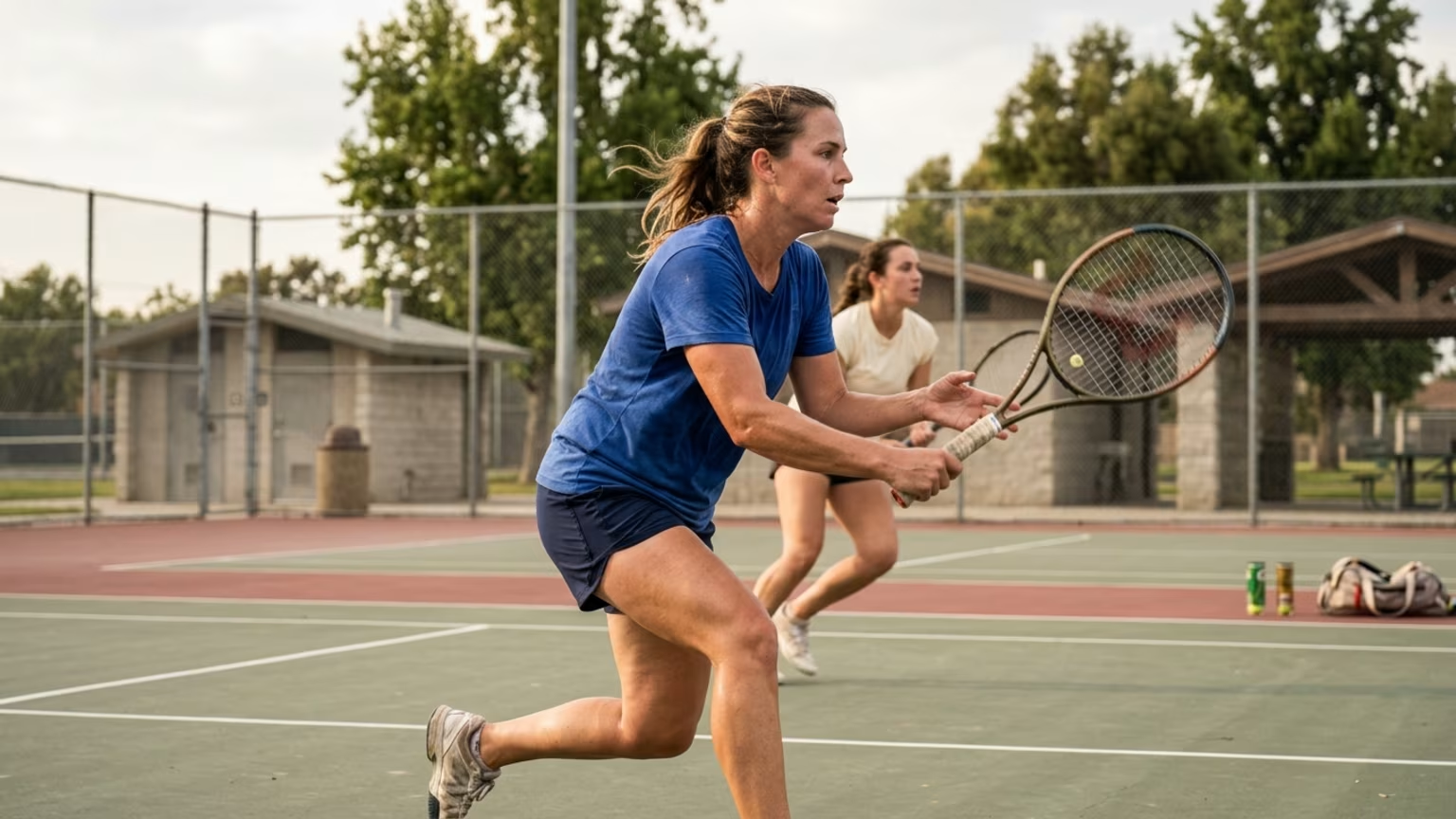

Recent studies indicate that taking high-dose vitamin C and E immediately after playing can blunt physiological training adaptations. Learn how a new post-exercise timing framework helps players separate concentrated antioxidant supplements from court practice.




On September 19, 2026, Smart Wellness Lab published a proposed post-exercise timing framework advising athletes to delay taking high-dose antioxidant supplements immediately after training. The publication reviewed recent randomized controlled trials indicating that high-dose vitamin C and vitamin E supplementation can blunt important physiological training responses. Rather than eliminating antioxidants entirely, the framework proposes a specific timeline that separates concentrated supplement doses from active workout windows.
The new guidance recommends reserving the first zero to two hours after a practice session for foundational recovery nutrition. During this immediate post-workout window, players are advised to prioritize water, electrolytes, fast carbohydrates, and complete protein. Concentrated antioxidant supplements should then be avoided.
Following this initial recovery phase, the framework suggests delaying the intake of any concentrated antioxidant supplements by at least four to six hours. However, the publication's executive summary also references a broader two-to-four-hour delay. This variance underscores that separating concentrated doses from adaptation-focused training is a general practitioner framework rather than an absolute clinical law.
This timing protocol is fundamentally rooted in the biological process known as mitohormesis. Exercise naturally generates reactive oxygen species within the active muscles. These compounds were historically viewed by sports nutritionists simply as harmful by-products causing cellular damage and fatigue. However, current sports science shows that these compounds actively participate in critical physiological signaling pathways. The temporary physical stress of a tough tennis drill serves as the exact trigger the body needs to rebuild itself stronger.
By flooding the system with massive doses of exogenous antioxidants immediately after stepping off the court, players may inadvertently suppress the signals that prompt their bodies to adapt. Smart Wellness Lab specifically warns against taking megadoses of vitamin C, vitamin E, N-acetylcysteine, and concentrated polyphenols right after training.
For the adult recreational tennis player, this guidance introduces a necessary distinction between building long-term capability and chasing short-term soreness relief. When players put in the work during a mid-week conditioning session, the objective is lasting physiological adaptation. We want the cardiovascular system to become more efficient, the muscles to remodel, and our overall court capacity to increase over the season. Taking high-dose antioxidants right after practice might actively undermine those exact goals.
Adult racquet sports players frequently turn to heavy supplementation to combat the natural stiffness that follows a grueling three-set match. It is tempting to view exogenous antioxidants as a simple biochemical shortcut to faster recovery. Yet the evidence clearly shows that the body requires a certain level of natural stress to trigger the remodeling processes that build lasting resilience. When we artificially suppress that stress signal every single time we play, we may be trading our long-term physical capacity for a slight reduction in temporary soreness.
Importantly, this concern centers entirely on concentrated, high-dose supplementation rather than normal dietary intake. Players should not interpret this research as a reason to avoid whole fruits or vegetables. To illustrate the vast difference in scale, the article notes that a large orange contains roughly 70 to 80 mg of vitamin C. Reaching a 1,000 mg supplement dose would require a player to consume approximately 14 oranges in one sitting.
The framework does identify a distinct practical exception for multi-day competitive events. Smart Wellness Lab presents a three-day tennis tournament as a prime example where acute recovery often takes priority. If a player has to manage back-to-back performance situations with another match approaching in less than six hours, reducing immediate muscle soreness may simply matter more than maximizing the cellular training effect of the morning session.
Yet even during heavy competition blocks, players must remember that less soreness does not automatically equate to better mechanical function on the court. We consistently see that the fundamentals of bodily rest matter far more than carefully timed supplement stacks.
"I used to think a tough conditioning block was the only way to improve my court endurance. Then I started tracking my sleep. I noticed that on days I slept less than six hours, my reaction time at the net was noticeably sluggish, and I felt gassed by the second set. Prioritizing consistent rest did more for my late match stamina than any extra sprints ever did. Recovery is the true foundation of performance."
Before attempting to micro-manage physiological adaptation signals with expensive pills, recreational players should focus on building a sustainable weekly training plan and securing adequate sleep. Proper sleep naturally regulates systemic inflammation and supports tissue repair without blunting the critical adaptation signals generated during practice. These basic habits form the bedrock of true athletic longevity for racquet sports players.
The cautionary guidance relies heavily on a few highly specific randomized controlled trials. A 2009 trial, detailed in a widely cited study summary, observed 39 young men who completed four weeks of structured exercise training. These participants were assigned to take either a daily antioxidant dose containing 1,000 mg of vitamin C and 400 IU of vitamin E or a standard placebo.
The results of this four-week trial were stark. Exercise-related improvements in insulin sensitivity and several crucial transcriptional responses occurred successfully in the non-supplemented group. However, these same positive physiological responses were absent in the antioxidant group.
A separate 11-week randomized double-blind trial tracked a slightly larger cohort of 54 young men and women. These participants took 1,000 mg of vitamin C and 235 mg of vitamin E daily during a prolonged endurance training block. At the end of the eleven weeks, both groups successfully improved their physical shuttle-run performance.
However, the underlying molecular changes painted a more complicated picture. The biological markers associated with mitochondrial biogenesis increased in the placebo group while actually declining in the antioxidant group. This distinction is critical because it shows that while molecular adaptations were attenuated, the athletes did not experience an immediate loss of measurable running performance.
The broader evidence landscape remains highly nuanced. A research consensus summary cautions that antioxidant effects vary widely based on the specific nutrient, dosage, diet, and training type. It firmly states that high-dose supplementation has not reliably improved endurance performance across the board. Furthermore, it notes that not every single trial has found impaired adaptation.
The consensus summary explicitly notes that high-dose vitamin C and vitamin E have reduced selected mitochondrial, insulin-sensitivity, or hypertrophy responses in some studies. Insulin sensitivity is particularly important for endurance athletes, as it governs how efficiently muscles can utilize carbohydrates during a long match. By potentially blunting this response, heavy antioxidant use could hypothetically make a player less metabolically efficient on the court.
These molecular findings also come from clinical studies focused on younger adults in laboratory settings. Because the 2009 study involved 39 young men and the later trial observed 54 young men and women, extrapolating their exact molecular findings directly to older adults remains scientifically uncertain.
Smart Wellness Lab also does not provide any tennis-specific randomized trial data demonstrating that taking vitamin C or other antioxidant products between matches actually improves competitive results. Managing training load appropriately remains a far more proven strategy for surviving a multi-day tournament without breaking down.
Over the next season, expect sports nutrition guidance to move steadily away from rigid daily pill regimens and toward highly periodized supplementation strategies. Players and professional coaches will increasingly adjust their nutritional recovery protocols based on the specific demands of their immediate schedule. The decision to use concentrated antioxidant supplements will likely be treated as a targeted, short-term compromise during intense competition windows rather than an assumed daily requirement for everyday court practice.
Follow Evercourts for practical insights on tennis, pickleball and padel performance, movement, recovery and healthy ageing. Stay connected for new articles, research-led guidance and ideas to help you play well and keep playing for years.


An evidence check on sports supplements like tart cherry juice. Learn why racquet sports players should prioritize core nutrition over functional foods.
In late 2026, Oura analyzed wearable data to see how recreational tennis impacts heart health and recovery. Learn what this means for your athletic longevity.
Recent guidelines emphasize gradual progression, dynamic warm-ups, and scheduled recovery to help adult racquet sports players maintain athletic longevity.
Read practical guidance for better movement, smarter preparation and a game that keeps working for you.
explore the Blog
