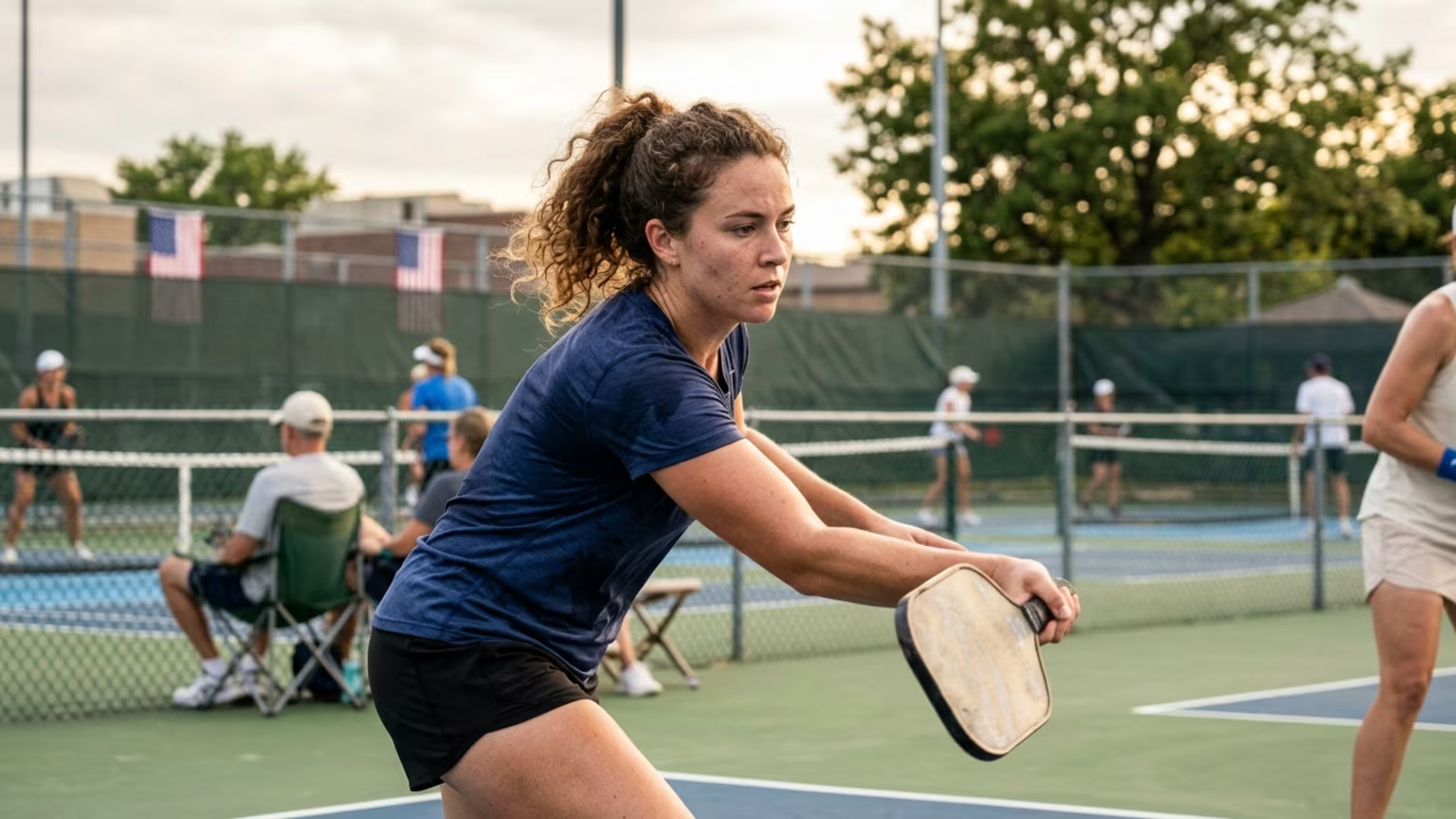

The Association of Pickleball Players 2026 Detroit Open showcased how top seeds manage heavy workloads and use tactical discipline to secure tournament titles.




Tournament brackets rarely dictate the absolute limits of competitive potential. Bako Balint recently proved this at the Association of Pickleball Players 2026 Detroit Open by starting as the 36th seed in a 37-player men's singles draw and reaching the medal rounds. The event was the first Association of Pickleball Players stop in the city. It arrived during a grueling stretch that included three professional events in three weeks.
Balint defeated fourth seed DeHeart, 20th seed Davis, and 12th seed Palm before facing the top seed. He eventually secured a bronze medal. The demanding August schedule forced competitors to rely heavily on structured point construction rather than pure athleticism. This environment rewarded patience and physical durability over early attacking shots.
Professional tours challenge athletes with tight schedules and relentless travel. The Detroit event followed a Tier 1 competition in Chicago and the English Open in Birmingham. Such a compressed timeline makes physical recovery just as vital as shot selection. Players who fail to manage their energy often struggle to close out tight matches.
The context behind these tournament runs reveals an intense physical toll. Top seed Ronan Camron navigated three-game matches in both the round of 16 and the quarterfinals. He defeated Balint 9-9 in the semifinal. Camron finally secured the title by beating third seed Dusty Boyer 11-8 in the third game of the final.
The human body absorbs significant stress during these repeated explosive efforts on hard courts. Muscles and joints must decelerate rapidly after sprinting to the non-volley zone. This constant stopping and starting requires massive eccentric strength in the lower body. Players must sustain this capacity across multiple matches on the same day.
Building a resilient foundation away from the court becomes necessary for athletic longevity. A reported Japanese study of 5,074 adults aged 65 and older found that strength training was associated with a 74% lower dementia risk. The same study noted that 430 participants developed dementia during the follow-up period. While this research did not evaluate pickleball specifically, it underscores the broader value of maintaining physical capacity as we age.
Playing racquet sports requires a structured approach to physical preparation. Smart training load management helps competitors survive long tournament weekends without breaking down. Camron won his second career gold medal in singles during this demanding schedule. He proved that physical endurance heavily influences late-stage tournament success.
The women’s professional singles draw contained 13 players and followed a more predictable pattern than the men's side. Top seed Kat Stewart defeated Bobbi Oshiro 0-7 in the final. This victory earned Stewart what Forbes identified as her fifth gold medal. The win also extended her lead atop the official rankings.
Oshiro entered the championship match as the No. 3 player on tour. The Detroit final marked her fifth career singles final at this level. Stewart has now defeated Oshiro in four of her five gold-medal matches. These recurring matchups highlight the intense competitive density at the top of the women's professional game.
The mixed doubles results provided a contrasting statistical story. Seventh seeds Nicola Schoeman and Richard Livornese Jr. secured the title. They defeated the No. 1, No. 2, and No. 3 seeded teams on their way to the championship. This run delivered Schoeman her first career professional gold medal.
Livornese Jr. achieved a double for the weekend by also winning the men's doubles title. He and top seed Jack Munro won their fourth consecutive domestic tournament together. Forbes listed their recent international titles at the English Open, Petrolimex Cup, and Japan Open. Meanwhile, the women’s doubles draw saw the top two seeded teams reach the final.
Shelby Bates and Christine Maddox defeated second seeds Megan Fudge and Kara Wheatley to win the women's doubles gold. This victory was the first women's doubles gold medal for Maddox. The professional calendar moves quickly after these major domestic stops. Forbes reported that the next listed events were an international partnership event in Vietnam during the weekend of September 13, 2026, and a Tier 1 event in Overland Park on September 20, 2026.
The sheer volume of matches at events like the Association of Pickleball Players 2026 Detroit Open highlights unique physical demands. Professional and recreational pickleball tournaments often require competitors to play several matches in a single day. This compresses the physical toll into a very short window. Tennis tournaments traditionally space matches out over several days.
Tennis players rely heavily on lateral endurance to cover a much larger court area. Their matches can last hours, demanding sustained aerobic capacity and efficient energy conservation. Pickleball requires faster rotational movements and immediate reactions at the non-volley zone. The smaller court size in pickleball increases the frequency of multi-directional lunges and sudden stops.
Padel introduces an entirely different set of physical requirements. The enclosed court keeps the ball in play much longer than in tennis or pickleball. Padel players must constantly change direction, track rebounds off the glass, and execute frequent overhead smashes. These actions place a high demand on the hips, knees, and shoulders.
Mastering essential footwork skills is critical across all three of these popular racquet sports. Tennis emphasizes long strides and smooth sliding on certain surfaces. Pickleball demands split-second split steps and low defensive postures. Padel requires explosive vertical jumps and rapid backwards movement to defend lobs effectively.
Regardless of the specific court size, players must prepare their bodies for the unique stresses of their chosen sport. The multi-match format seen in Detroit tests a player's ability to maintain form while fatigued. Implementing a functional strength program supports this required durability. Proper physical preparation directly influences tactical discipline during long tournament weekends.
Forbes analysis noted that players sometimes overthink partnerships after abandoning successful combinations. The mixed doubles results in Detroit showed longtime partners competing with different teammates. Stable partnerships often reduce mental fatigue and allow teams to automate their defensive movements. Clear communication systems prove incredibly valuable when physical energy begins to drop.
The match data from Detroit reinforces the value of patient point construction. Players do not need to win every rally with an immediate attacking shot. Using the soft game to create a better ball is highly effective. Keeping the ball low and moving the opponent gradually preserves physical energy for crucial moments.
Building tactical discipline begins with setting specific return targets before each point. Choosing a deep zone or the middle of the court is safer than attempting a difficult winner. High-percentage serves limit the immediate attacking options of an opponent. Reliable patterns reduce the physical scrambling required to stay in the rally.
Adult players managing age-related changes should prioritize recovery between difficult games. The Japanese study on older adults highlighted that activities like gateball and park golf were associated with a 32% lower dementia risk. Combining court time with dedicated strength training builds a foundation for long-term health. Physical resilience allows competitors to make sound decisions late in demanding matches.
A balanced approach to racquet sports focuses on consistency rather than flashy execution. Treating every game as part of a longer match encourages better pacing and smarter shot selection. True athletic longevity is found in the quiet discipline of repeating basic patterns well. Excellence is often just patience applied over time.
Follow Evercourts for practical insights on tennis, pickleball and padel performance, movement, recovery and healthy ageing. Stay connected for new articles, research-led guidance and ideas to help you play well and keep playing for years.


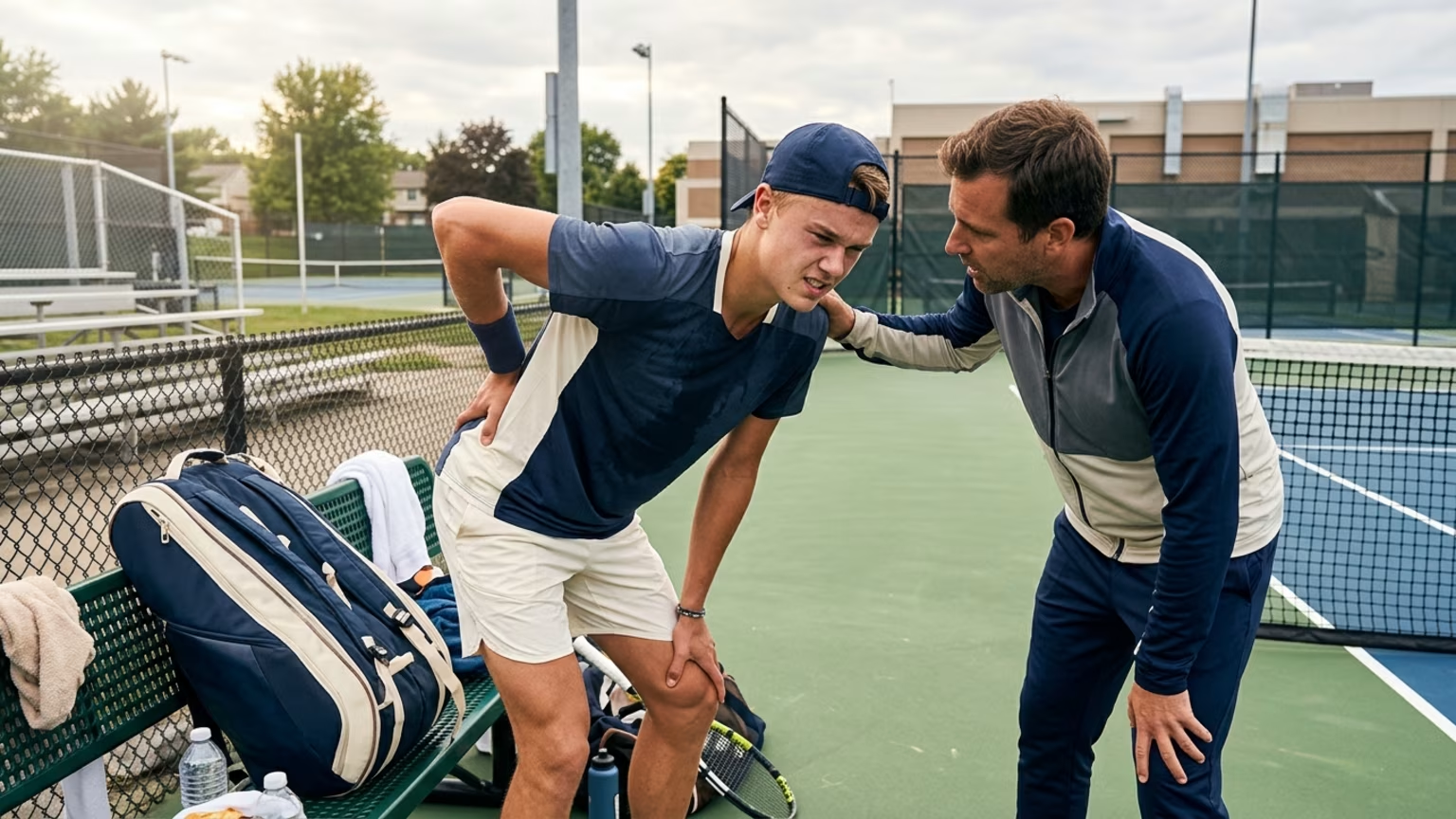
Holger Rune withdrew from the European Open with a back problem. The facts behind his decision and a grounded perspective for recreational players.

The Dink’s October 17 guide emphasizes deep returns, ball-height decisions and positioning against faster pickleball opponents.

A new report outlines padel and tennis gear trends. Learn how to assess adjustable rackets, sensor feedback and smart-court claims.
Read practical guidance for better movement, smarter preparation and a game that keeps working for you.
explore the Blog
