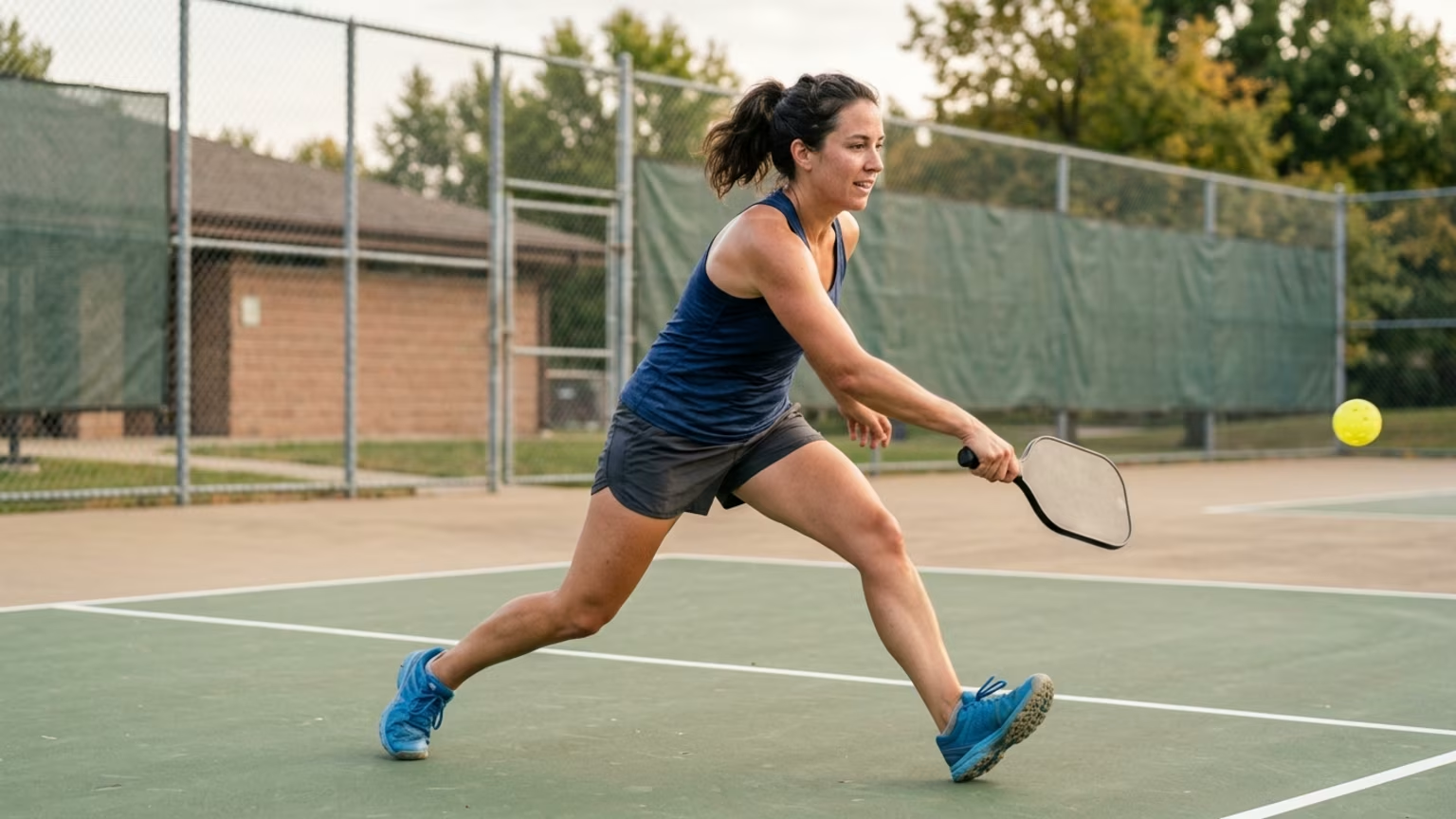

An October 2026 clinical commentary outlines how physical therapists can use the lateral countermovement jump to evaluate lateral force during recovery.




On October 1, 2026, the International Journal of Sports Physical Therapy published a clinical commentary on using the lateral countermovement jump for return-to-play decisions. The paper addresses a common gap in physical rehabilitation following an injury. It suggests that conventional tests often focus too heavily on vertical jumping and straight-line hopping. For athletes in multi-directional sports, evaluating lateral force production is a necessary piece of the recovery puzzle.
Evercourts understands the frustration players feel when they test well in the clinic but struggle to move effectively on the court. This disconnect often occurs because clinical tests do not perfectly mirror the dynamic sideways movements required during a match. The new commentary offers a structured way for physical therapists to measure lateral pushing power objectively. It provides a fresh perspective for players who want to ensure their bodies are truly ready for competitive play.
The paper is titled "Beyond the Sagittal Plane: The Lateral Countermovement Jump as a Clinical Tool for Return-to-Play Decision-Making and Performance Evaluation." The authors are Michael L. Voight, Robert C. Manske, Phil Page, Peter Draovitch and Barbara J. Hoogenboom. They propose measuring a single-leg lateral push-off on a triaxial force platform. This specific movement is called the lateral countermovement jump, or LCMJ.
The commentary points out a potential blind spot in standard testing batteries used for athletic rehabilitation. Traditional assessments usually emphasize quadriceps strength and sagittal-plane movements like forward hopping. While these tests offer valuable data, they do not directly measure lateral capacity. A racquet sports athlete relies heavily on sideways force production to cover the court effectively.
To address this gap, the authors recommend a combined approach. They suggest interpreting the LCMJ alongside a standard countermovement jump, commonly known as a CMJ. Clinicians should also include a sport-specific change-of-direction or lateral-agility task. These three assessments serve as complementary measures of physical capacity and movement performance.
The authors stress that the LCMJ is not a substitute for established strength and hop testing. Instead, it adds another objective layer to the clinical evaluation when designing a return-to-play framework for tennis players. Pairing LCMJ results with a bilateral CMJ profile helps clinicians distinguish a predominantly vertical limitation from a lateral one. Using a sport-specific task then assesses how well the athlete actually moves in a game-like scenario.
For an adult tennis, pickleball or padel player, this clinical proposal offers a useful perspective on athletic recovery. Standard physical therapy often measures rehabilitation success through vertical or forward strength metrics. However, lateral movement is how you actually navigate the court to reach a wide ball. When recovering from an injury, it makes sense to ask your physical therapist if lateral capacity is being assessed.
A cautious clinical discussion could consider three complementary questions outlined in the paper. You can discuss how you perform on a standard CMJ, what the LCMJ indicates about lateral force capacity and how you handle a change-of-direction task. The paper does not supply tennis norms or a clearance threshold for these tests. Because of this, players should view the framework as a thorough evaluation rather than a pass-fail exam.
It is important to remember that this new framework is structured clinical guidance. The LCMJ described in the paper requires a specialized triaxial force platform to measure lateral kinetics. The commentary notes that this requirement may limit practical use in clinics without that specific equipment. The test is a highly controlled clinical measurement rather than a simple drill you can evaluate on your own.
Furthermore, the evidence cited in the paper currently focuses on elite athletes in a different sport. The authors specifically identified tennis as a sport in which the LCMJ framework should be investigated further. They have not yet established tennis-specific norms or an LCMJ limb-symmetry threshold that serves as a return-to-play gate. Adult players should treat the testing approach as a conversation starter with a clinician who understands how to analyze your racquet sports performance.
The commentary grounds its recommendations in specific reliability and performance data drawn from basketball. In one reliability study involving 20 professional basketball players, researchers evaluated 10 different LCMJ variables. Only four of these variables met the paper's between-session reliability criteria. The reliable measures included peak vertical force, peak lateral force, relative lateral force and lateral impulse.
Conversely, total movement time and rate-of-force-development variables did not meet the reliability criteria. The authors advise against using those unreliable measures for any return-to-play decisions. This ensures that clinicians base their evaluations on metrics that remain consistent from one session to the next. Focusing on mass-normalized relative lateral force proved to be the most informative LCMJ measure in the cited evidence.
Another study highlighted in the paper examined 140 professional and collegiate basketball players. Researchers compared the athletes' LCMJ results against their performance in a 5-5 lateral-shuffle task. The group classified as fast shufflers produced a mean relative lateral force of 9.51 N/kg. The slow-shuffler group produced 8.93 N/kg, which represents a reported 6.29% difference.
Of the reliable measures tested in that comparison, only relative lateral force significantly separated the fast and slow shufflers. The authors urge caution when interpreting these specific numbers for athletes in other sports. The 9.51 N/kg figure is a recorded average from a basketball study, not a universal target for a recovering tennis player. The commentary explicitly notes the lack of validated LCMJ return-to-play thresholds and the absence of injury-outcome validation.
This finding simply shows an association between lateral force and shuffle performance in that specific study group. It does not prove that increasing relative lateral force directly causes faster movement or prevents reinjury. The authors note that an athlete's change-of-direction performance can also be affected by movement strategy, trunk position and force-application angle. Coordination and technique play massive roles in how force translates into actual court speed.
The introduction of the lateral countermovement jump as a documented clinical tool signals a potential shift in sports physical therapy. Moving forward, clinical evaluations will likely place greater emphasis on multi-directional force testing. The authors of the commentary have already called for prospective rehabilitation research and follow-up on reinjury outcomes. They also highlighted the need to replicate these studies in sports beyond basketball, including tennis.
Over the next few years, racquet sports will likely see more specialized testing data emerge. As triaxial force platforms become more accessible, therapists will gather better baseline data to support healthy aging on court. This equipment evolution will allow clinics to build more precise return-to-play profiles for multi-directional athletes. Until tennis-specific thresholds are validated, the combined testing approach remains the most practical path forward.
Evaluating vertical jumping, lateral force and sport-specific agility gives players the most complete picture of their physical readiness. A comprehensive evaluation respects the multi-directional demands of racquet sports. This grounded approach ensures that recovering players rebuild the exact physical capacities they need to perform well. By integrating lateral testing into standard recovery protocols, athletes can confidently prepare for the long game.
Follow Evercourts for practical insights on tennis, pickleball and padel performance, movement, recovery and healthy ageing. Stay connected for new articles, research-led guidance and ideas to help you play well and keep playing for years.


An evidence check on sports supplements like tart cherry juice. Learn why racquet sports players should prioritize core nutrition over functional foods.
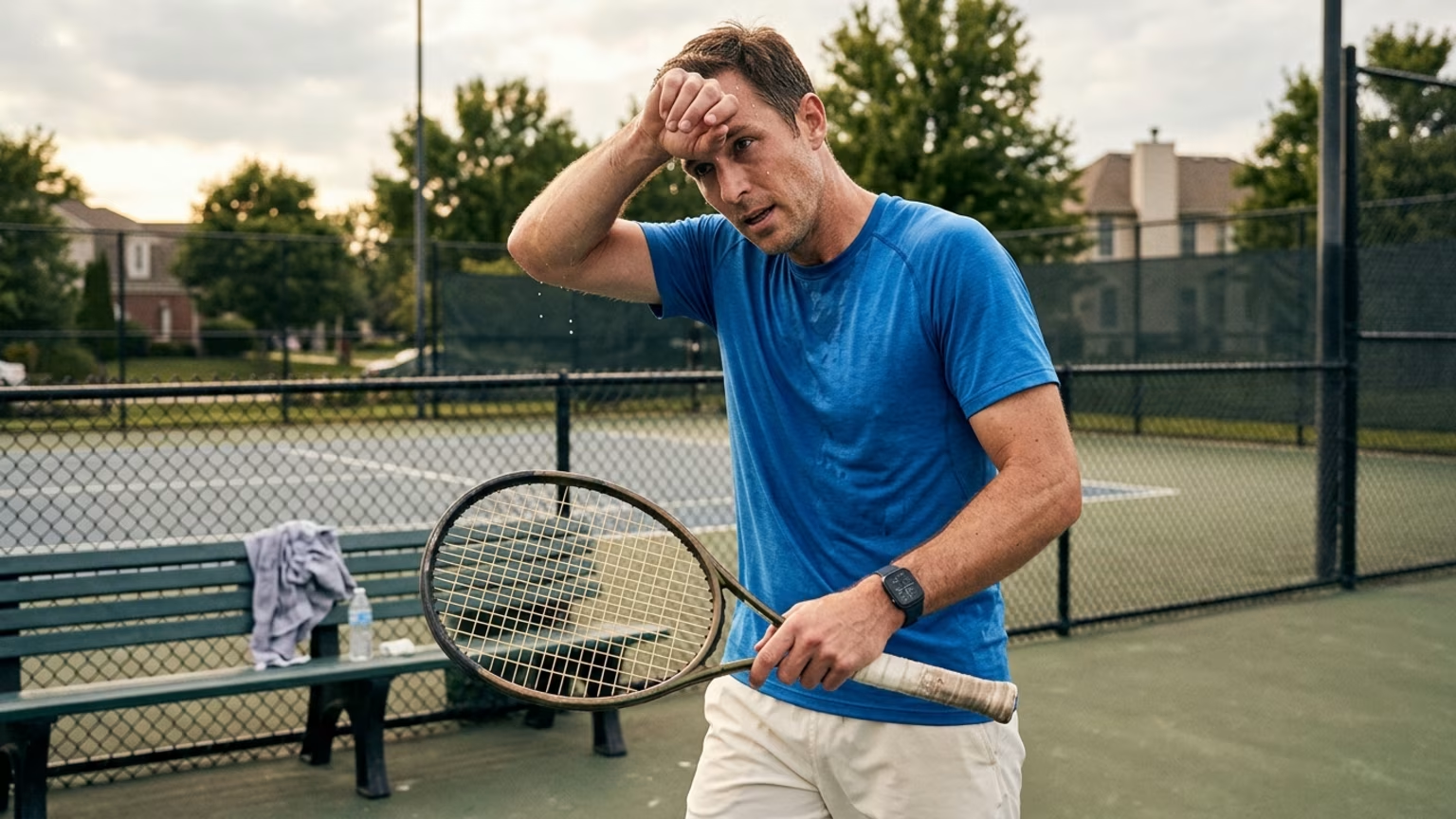
In late 2026, Oura analyzed wearable data to see how recreational tennis impacts heart health and recovery. Learn what this means for your athletic longevity.
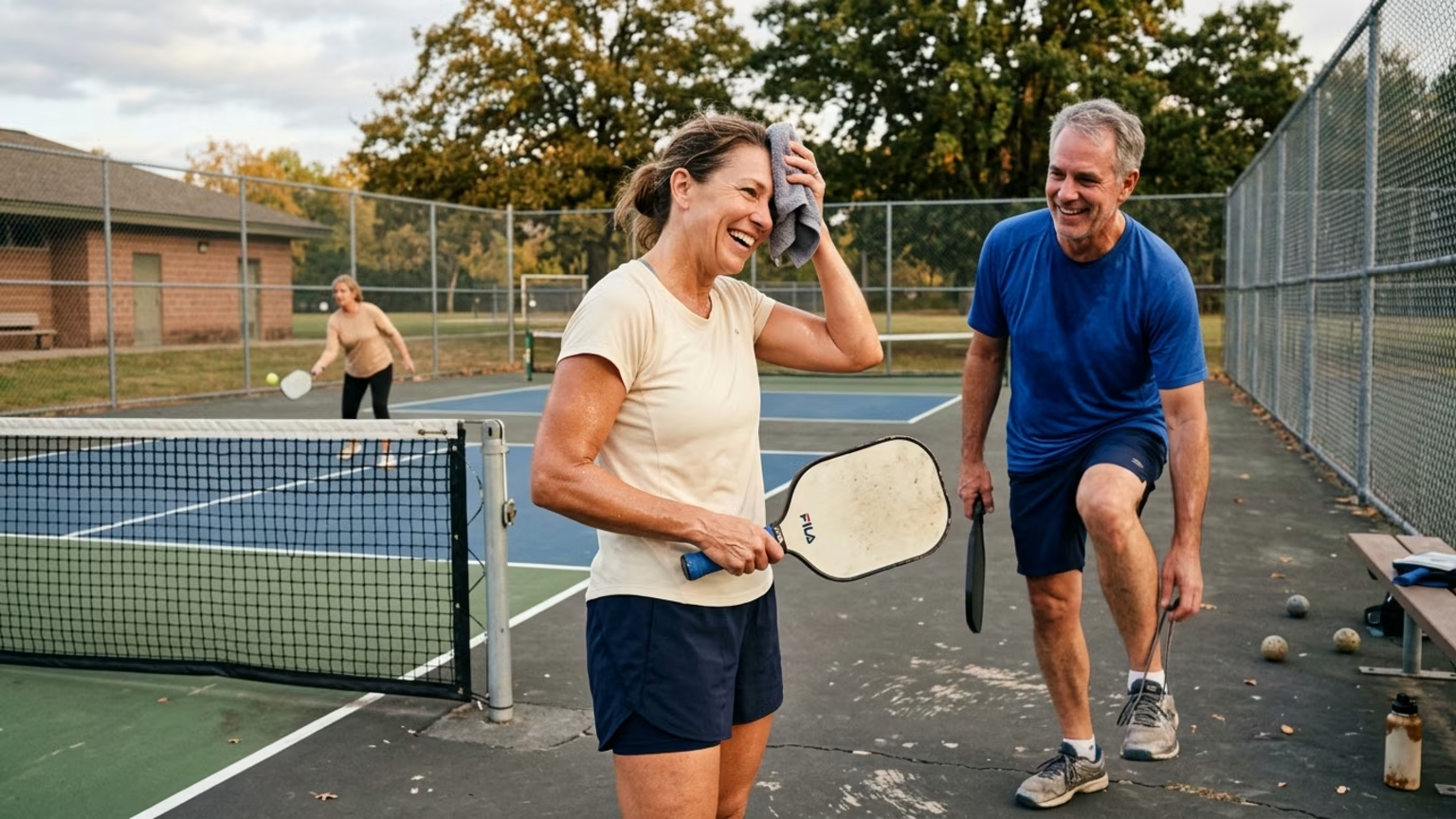
Recent guidelines emphasize gradual progression, dynamic warm-ups, and scheduled recovery to help adult racquet sports players maintain athletic longevity.
Read practical guidance for better movement, smarter preparation and a game that keeps working for you.
explore the Blog
