

Understand dynamic balance in tennis, pickleball and padel, with coaching-based ideas for practising reaches, controlled stops and recovery steps.




Dynamic balance is the ability to stay in control of your body while you move, stop or change direction. On court, that means more than holding a steady position. It includes reaching for a ball and then organising your next step.
A lunge is therefore not finished when the racket or paddle reaches the target. The return matters too. Thinking about the whole movement gives balance practice a clear purpose: rehearse the approach, the stop and the recovery rather than treating each as a separate skill.
Our guide to balance while moving on court provides a broader introduction to that distinction.
Tennis, pickleball and padel involve repeated bursts of movement rather than a single effort in one direction. Reaching and changing direction put the emphasis on controlling movement as well as starting it. An explosive first step is only part of the task.
A tennis-footwork coaching article describes a useful sequence: react, move toward a target and brake under control. Contact or a catch follows where applicable, then the player recovers toward the relevant base position. That sequence makes the recovery an explicit part of practice.
The tennis-based sequence also offers a practical way to think about the other sports. These are movement applications rather than separate research findings:
When practising while tired, the useful question is whether the stop and recovery remain controlled. Chasing a longer reach or faster approach need not be the aim of every repetition.
For more on this part of footwork, see our explanation of slowing down before the next movement.
A tennis-footwork coaching article suggests lateral shuffles and controlled lunges alongside figure-eight movement and wall-ball catches. It recommends beginning with easier movement and smooth direction changes before progressing toward more demanding court-like tasks. This is coaching guidance rather than evidence from a controlled trial.
Separately, a 2024 study recorded by the University of Arkansas used US emergency-room data to examine pickleball injuries by age. Its institutional record reports differences in injury types and mechanisms across age groups.
Those findings have distinct limits. The injury record does not establish injury likelihood for a typical recreational player or show that balance training prevents injuries. The proposed drills have not been directly tested in adult recreational players across all three sports as a combined population, so they should not be presented as proven injury-prevention or fall-prevention methods. Shorter distances and nearby support are practical adaptations rather than tested progressions.
The useful application is straightforward: treat the following drills as opportunities to practise controlled movement. They are not treatment plans or tests of whether someone is fit to play.
The coaching source describes lateral movement between markers. A simple version keeps the distance comfortable and makes the stop as deliberate as the travel between them.
The point is to give braking its own attention. Reaching the marker does not complete the task if the movement immediately spills into the return.
A shorter distance or slower movement offers an easier version. Nearby support is another possible adaptation when appropriate to the setting and the player's circumstances. More demanding court-like movement belongs to the coaching source's broader progression from easier tasks.
Controlled lunges and recovery toward base both appear in the coaching guidance. Bringing them together creates a simple practice idea: move toward a reachable target and deliberately return to the starting position.
The target need not demand maximum reach. The purpose is to keep the outward movement and return connected, rather than making the lunge the only part that receives attention.
For tennis, the target can represent a contact position. Applying the same idea to a pickleball or padel reach is an editorial adaptation of the tennis-based guidance. It keeps the focus on movement quality without claiming a sport-specific training effect.
The coaching article also describes tossing a tennis ball against a wall. The player reads the rebound and moves to catch it, then regains balance and resets before the next throw.
This adds a reaction to an external target rather than using only a planned movement. The reset remains part of the drill instead of becoming an incidental pause between throws.
For pickleball or padel, changing the implement or movement pattern would be a practical adaptation. The useful starting point is the source's original sequence: read the ball, move and catch, then regain balance and reset.
For adult players, athletic longevity is a planning goal: maintaining the physical capabilities needed to keep enjoying the sport. Dynamic balance gives that goal a concrete movement focus. Instead of treating balance as a vague quality, practice can address an identifiable part of a reach or recovery.
The practical interpretation is to notice which part of the sequence needs attention. Is the approach rushed? Does the stop receive any deliberate practice? Is recovery included at all?
These questions help define a practice task without requiring a claim about future injuries or match results. A session can focus on smooth changes of direction rather than becoming another test of speed or maximum reach.
The coaching source's progression also leaves room for different starting points. Easier movement is part of the practice approach, not a lesser version that needs to be rushed through.
Movement practice sits within a wider playing schedule. Our guide to organising demanding tennis sessions around recovery addresses that planning context. The editorial priority is to give movement quality a place alongside the amount of court time being planned.
Choose an individual assessment rather than a more demanding drill if reaching or lunging is painful. Repeated loss of balance or difficulty returning under control also deserves a conversation with a qualified physiotherapist or healthcare provider.
A change from your usual movement is another reason to ask for help, especially when you are unsure why it is happening. Describe the movement involved and whether the difficulty appears during the approach, the stop or the recovery. That is more useful than trying to assign yourself a diagnosis from an exercise description.
Questions about which movements are appropriate for your personal circumstances belong with qualified care, not a general practice guide.
Good court sense includes knowing when to ask for help.
Follow Evercourts for practical insights on tennis, pickleball and padel performance, movement, recovery and healthy ageing. Stay connected for new articles, research-led guidance and ideas to help you play well and keep playing for years.


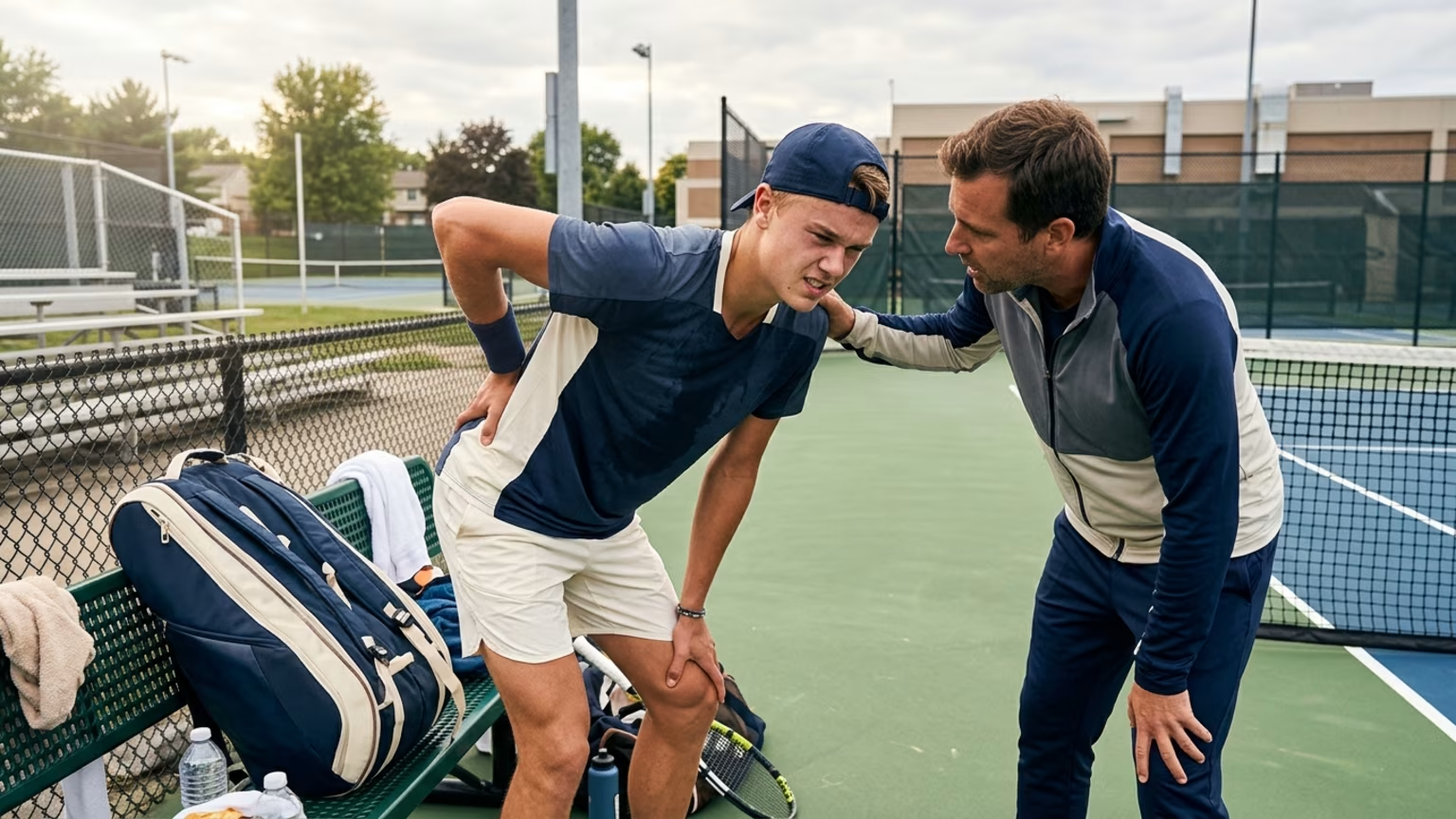
Holger Rune withdrew from the European Open with a back problem. The facts behind his decision and a grounded perspective for recreational players.

The Dink’s October 17 guide emphasizes deep returns, ball-height decisions and positioning against faster pickleball opponents.

A new report outlines padel and tennis gear trends. Learn how to assess adjustable rackets, sensor feedback and smart-court claims.
Read practical guidance for better movement, smarter preparation and a game that keeps working for you.
explore the Blog
