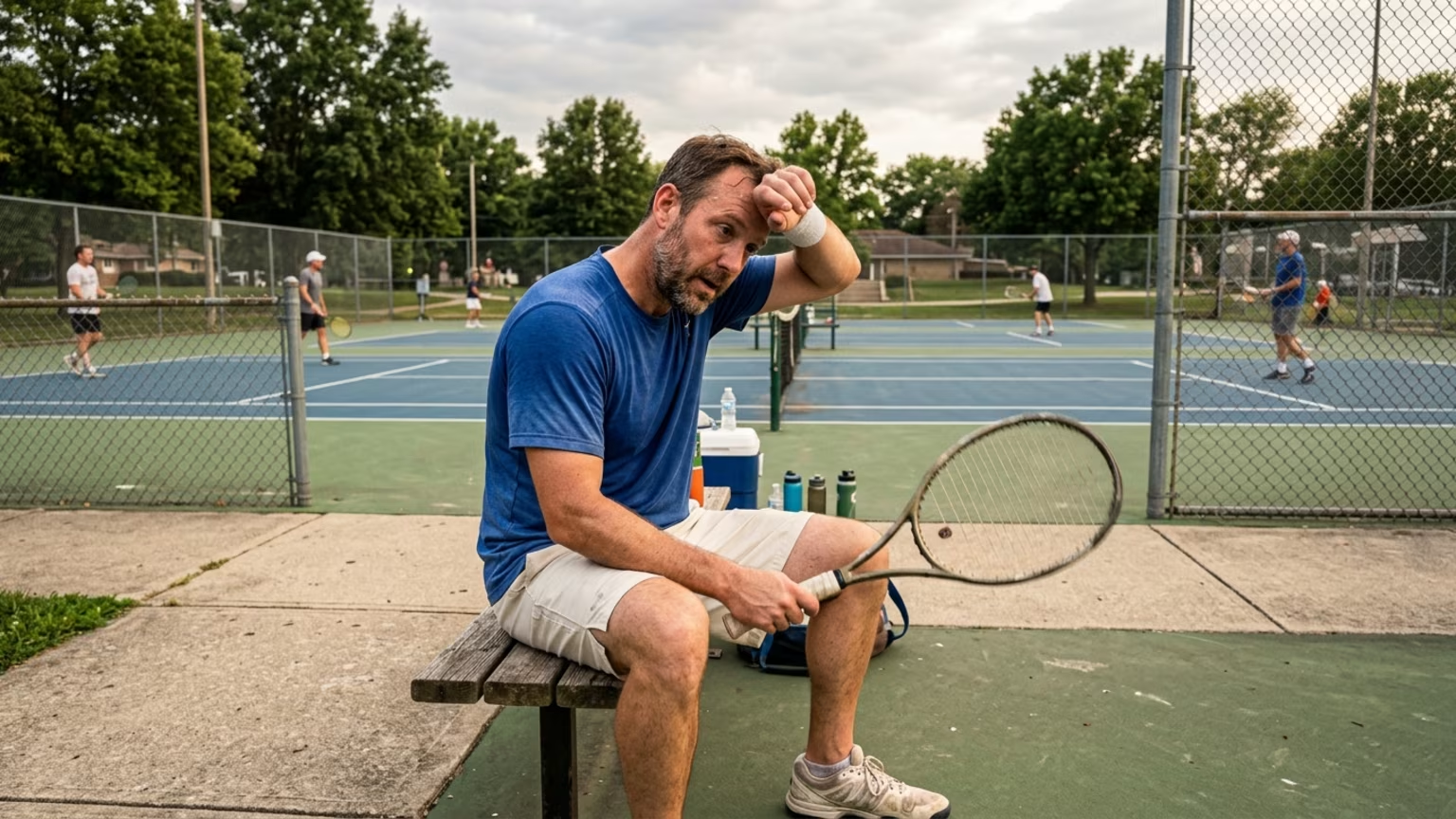

A new tennis training guide details how adult players can structure weekly microcycles, monitor physical fatigue, and schedule active recovery days.




On September 12, 2026, the publication Notizie.it released a detailed training framework titled “Tennis e calendario fitto: guida a carichi e recupero.” This guide outlines how tennis players can structure a weekly microcycle to manage dense competition schedules. It provides specific workload distributions and recovery protocols to help players maintain performance while limiting overuse injuries. The publication introduces a highly structured approach to balancing court time with necessary physical rest.
Adult players face unique challenges when attempting to maintain high performance across a busy season. This new resource offers a pragmatic blueprint for managing those physical demands efficiently. It shifts the focus away from simply playing more toward practicing smarter. Understanding these workload principles allows weekend competitors to stay active for years to come.
The guide frames the tennis microcycle as a five to seven day planning unit. It recommends alternating demanding practices with lower intensity work and dedicated recovery time. The suggested distribution includes two to three high intensity sessions and two to three moderate workouts. It also advises taking one to two light or completely off days per week.
The publication provides a concrete example for an adult player completing four to five weekly sessions. This sample week features a 60 to 75 minute high intensity technical session and a 30 to 45 minute full body strength workout. It also includes one match, a moderate practice, and a dedicated active recovery day. The guide strictly advises against stacking consecutive hard days that stress the same physical qualities.
For example, players should avoid scheduling repeated maximal serving drills immediately after a day of explosive lateral movement. Progressing safely requires changing only one training variable at a time. Players should adjust either duration, intensity, or density rather than increasing all three simultaneously. This measured approach prevents sudden spikes in physical stress that often lead to connective tissue problems.
To limit the accumulation of central and peripheral fatigue, the article recommends a deliberate reduction in training volume. This scheduled deload should occur every three to four microcycles. Planning these lighter weeks proactively helps players absorb their prior training and enter tournaments feeling fresh. Following this systematic distribution builds a solid foundation for sustainable athletic performance.
Professional athletes rely on dedicated coaching teams to monitor every physical variable. Adult recreational players must balance competitive ambitions with demanding work schedules and daily life stress. A rigid calendar template often fails when league matches move or local tournaments run late. The guide emphasizes that actual match demands must override strict weekly planning.
This reality becomes especially clear when managing physical stiffness during a busy season. I remember finishing a tough two hour padel match on a cold Tuesday night and waking up the next morning feeling like my lower back was locked in concrete. For a long time I just accepted this as the price of playing hard in my forties, but once I started spending ten minutes on targeted hip mobility before heading to the club, the stiffness almost completely vanished. It taught me that proactive recovery is the most reliable way to manage a heavy weekly workload.
Amateur players often try to make up for missed practices by pushing harder the day after a long match. Instead, the guide suggests reducing the next day to light technical work or mobility. You can find more detail on this exact balance in our comprehensive training load guide. Learning to downshift is crucial for maintaining physical capabilities across long tournament blocks.
The publication lists several warning signs that indicate non functional overreaching. These signals include a persistent decline in ball speed, higher perceived effort, and worsening sleep. Players might also notice irritability, recurrent joint pain, and an elevated resting heart rate. If these symptoms cluster, the immediate response should be reducing the training load for three to five days.
During this reduction phase, players should protect their sleep and retain only low intensity work. The International Olympic Committee consensus framework supports this multidimensional approach to tracking athlete health. Their statement encourages monitoring training alongside psychological load, well being, and injury risk. Proper adjustment is the foundation of a recovery based training schedule.
The guide outlines a specific tapering model to use before important competitions. It advises reducing overall training volume by 30 to 50 percent to shed accumulated fatigue. During this taper, players should retain shorter, explosive exposures to preserve physical intensity and court feel. The final intense session should occur no later than 48 hours before competition, though some individuals prefer a harder reminder at 72 hours.
Recovery recommendations are highly specific regarding sleep and immediate post match protocols. The guide instructs players to aim for seven to nine hours of sleep per night. An athlete sleep consensus review identifies high training loads, travel, and competition stress as primary risk factors for chronic sleep disturbance. This makes consistent sleep timing and a cool, dark bedroom essential during busy tournament weeks.
After late evening matches, the guide suggests downshifting with diaphragmatic breathing, a warm shower, or light reading. For nutrition, the article provides practical targets to support physical restoration. It recommends consuming easily digestible carbohydrate alongside 0.3 grams of protein per kilogram of body weight. This intake should happen within 30 to 60 minutes after a match. These guidelines form a strong baseline for any competition nutrition strategy.
The publication also clarifies the proper role of fitness wearables in load management. Heart rate variability, resting heart rate, and sleep data should provide trend context rather than strict commands. The guide recommends keeping a short daily log containing rating of perceived exertion and total court minutes. Players should only adjust their training when subjective feelings and wearable indicators agree for at least two days.
The conversation around racquet sports conditioning is shifting rapidly away from merely tracking hours on court. We expect the upcoming season to feature a stronger emphasis on monitoring total physical load. This total load includes work stress, travel fatigue, and sleep quality alongside actual match play. As more adult players recognize these cumulative demands, rigid weekly templates will likely give way to highly individualized adjustments.
Tournament organizers and recreational leagues may soon need to acknowledge this reality as well. Compressing multiple competitive matches into a single weekend often forces players to abandon structured recovery entirely. The next phase of amateur sports development will require better calendar spacing to protect player health. Until those structural changes happen, individual players must take total ownership of their rest cycles to keep performing well.
Follow Evercourts for practical insights on tennis, pickleball and padel performance, movement, recovery and healthy ageing. Stay connected for new articles, research-led guidance and ideas to help you play well and keep playing for years.


A recent live-play test of a silent pickleball highlights its value for practice, but standard balls still perform better for match play and power control.

An evidence check on sports supplements like tart cherry juice. Learn why racquet sports players should prioritize core nutrition over functional foods.
In late 2026, Oura analyzed wearable data to see how recreational tennis impacts heart health and recovery. Learn what this means for your athletic longevity.
Read practical guidance for better movement, smarter preparation and a game that keeps working for you.
explore the Blog
