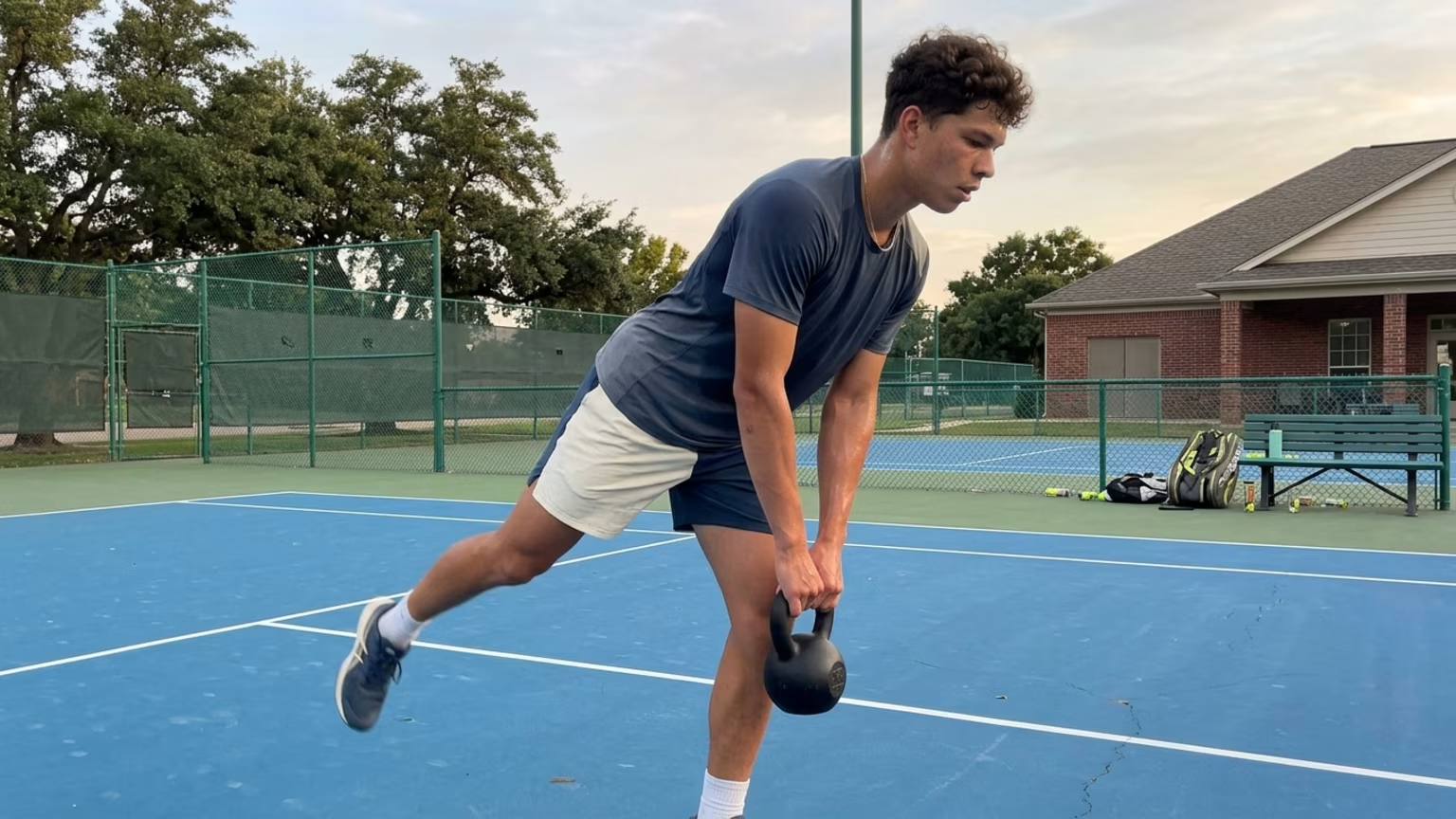

On September 30, 2026, a report detailed Ben Shelton’s use of single-leg exercises, plyometrics, and the Copenhagen plank, offering practical off-court training ideas.




On September 30, 2026, Business Insider reported the specific details of American tennis professional Ben Shelton's off-court physical preparation. The report outlined a training approach built heavily around unilateral strength work, plyometrics, and targeted adductor conditioning. The coverage highlighted his specific use of Bulgarian split squats, mini-hurdle hops, box jumps, and the physically demanding Copenhagen plank. This inside look provides a clear view into how elite competitors prepare their bodies for the repetitive stress of the modern game.
The report details several foundational pillars in Shelton's physical preparation strategy. Business Insider characterizes single-sided exercises as a method for the athlete to address balance and power one leg at a time. The routine relies on specific plyometric movements, such as mini-hurdle hops and box jumps, as a primary way to cultivate explosive power away from the court. These exercises demand high neuromuscular coordination and focus on force production.
A major focal point of the coverage is the Copenhagen plank. The article describes this movement as a rigorous side-plank variation that heavily targets the inner thigh. The athlete rests their top leg on a bench while lifting their hips, and the lower leg hangs suspended beneath the bench. This specific setup forces the hip adductors, obliques, and deep abdominal muscles to support the body against gravity.
The article notes that Shelton calls the Copenhagen plank his least favorite exercise in the world. It is described as a highly demanding exercise for the adductors and trunk. Beyond these structured strength sessions, Shelton told Business Insider that he prioritizes sleep and nutrition as the foundation of his routine. He views these basic health pillars as critical for his ongoing recovery.
He adds a specific regimen of supplements to support his daily recovery demands. The report details his use of whey protein, creatine, and magnesium. It also notes he takes electrolytes and a daily multivitamin. These details provide a report of his personal approach, though the sources do not establish a particular dose or schedule for each item.
The report emphasizes that strength building is only one segment of the overall physical protocol. The athlete pairs these intense gym sessions with focused practice on the court. Business Insider reports that this combination is designed to handle the specific physical demands of the professional tennis tour. The routine is built around consistency in both the gym and the recovery process.
An elite routine provides an interesting conceptual template, but adult recreational players must view it as a menu of ideas rather than a strict prescription. Professional players manage intense tournament schedules, possess years of physical adaptation, and have dedicated coaching teams. A weekend player copying a professional workload directly without assessing their own capacity risks unnecessary fatigue or injury. The sources do not provide individualized guidance on exercise selection or progression for amateur athletes.
The practical takeaway for recreational players is to value variety in off-court preparation. Incorporating single-leg strength and explosive jumping drills can thoughtfully complement standard tennis practice. Players looking to improve their physical resilience should consider discussing a progressive strength training guide for injury-resistant tennis, pickleball, and padel players with a qualified coach. Understanding how to scale these exercises is crucial for long-term health on the court.
Finding the right balance requires patience and an understanding of one's own limitations. A professional athlete has built the capacity to train for hours a day. A recreational player might only have a few hours a week to dedicate to fitness and practice combined. Therefore, prioritizing the most effective movements over excessive training volume is the smartest path forward.
Proper training load management for tennis, pickleball, and padel players requires balancing court time with appropriate recovery. Shelton's emphasis on sleep and nutrition highlights that gym work is only one part of the equation. Supplements like creatine and magnesium are presented in the report as additions to those basics, not replacements for a healthy diet and adequate rest. Recreational athletes should focus on establishing consistent sleep habits before worrying about complex supplement protocols.
Furthermore, amateurs must account for their own physical history before attempting advanced movements. The Copenhagen plank requires significant baseline strength in the core and groin muscles. Rather than jumping straight to the fully elevated version, recreational players can start with modified variations on the floor to build initial capacity. This pragmatic approach makes off-court training far more sustainable over a long season.
While the Business Insider report details what Shelton does, clinical data offers wider context on why adductor strengthening is often prioritized in sports. A September 2026 clinical commentary published in the International Journal of Sports Physical Therapy provides relevant outcome statistics. The commentary summarizes a major trial involving 35 semiprofessional Norwegian soccer teams. This data highlights the potential impact of targeted groin conditioning.
The research found that a Copenhagen-based strengthening program was associated with 41 percent fewer groin injuries compared to the control group. Additionally, the intervention group experienced 20 percent less time lost to sport. This is explicitly soccer evidence, and it does not represent a proven injury reduction metric for tennis or other recreational racquet sports. However, the physical demands of lateral changes in direction share similarities across these athletic disciplines.
The authors of the clinical commentary note that athletic groin pain can be incredibly disruptive to regular training. While the 41 percent reduction in injuries is a significant figure, it is important to remember the context of the study. Soccer involves repetitive kicking and sudden deceleration that places immense stress on the adductors. Tennis requires similar rapid deceleration and lateral push-off, making the underlying anatomical principles highly relevant for court players.
The soccer trial illustrates why elite athletes across different sports might endure demanding exercises like the Copenhagen plank. For racquet athletes, the clinical data supports the general concept of progressive adductor strengthening as a logical component of physical preparation. A targeted strength approach helps players maintain the rapid lateral movement required on hard courts. Understanding this evidence allows players to make informed decisions about their own off-court routines.
Over the next season, expect off-court training for racquet sports to become increasingly specialized and targeted toward specific movement patterns. The visibility of specific routines like Shelton's highlights a clear shift away from generic endurance work. Players and coaches will likely place a sharper focus on unilateral stability and deep core function to handle the physical toll of modern play. This evolution will shape how amateur players structure their gym sessions going forward.
This trend suggests that recreational programs will begin adopting scalable versions of exercises like Bulgarian split squats and adductor planks. As athletes learn more about the specific mechanical demands of the sport, basic strength conditioning will become a standard practice. The focus will remain on structured progression, allowing players to build capacity safely and maintain their performance. A thoughtful approach to physical preparation will continue to define athletic longevity in racquet sports.
Follow Evercourts for practical insights on tennis, pickleball and padel performance, movement, recovery and healthy ageing. Stay connected for new articles, research-led guidance and ideas to help you play well and keep playing for years.


An evidence check on sports supplements like tart cherry juice. Learn why racquet sports players should prioritize core nutrition over functional foods.
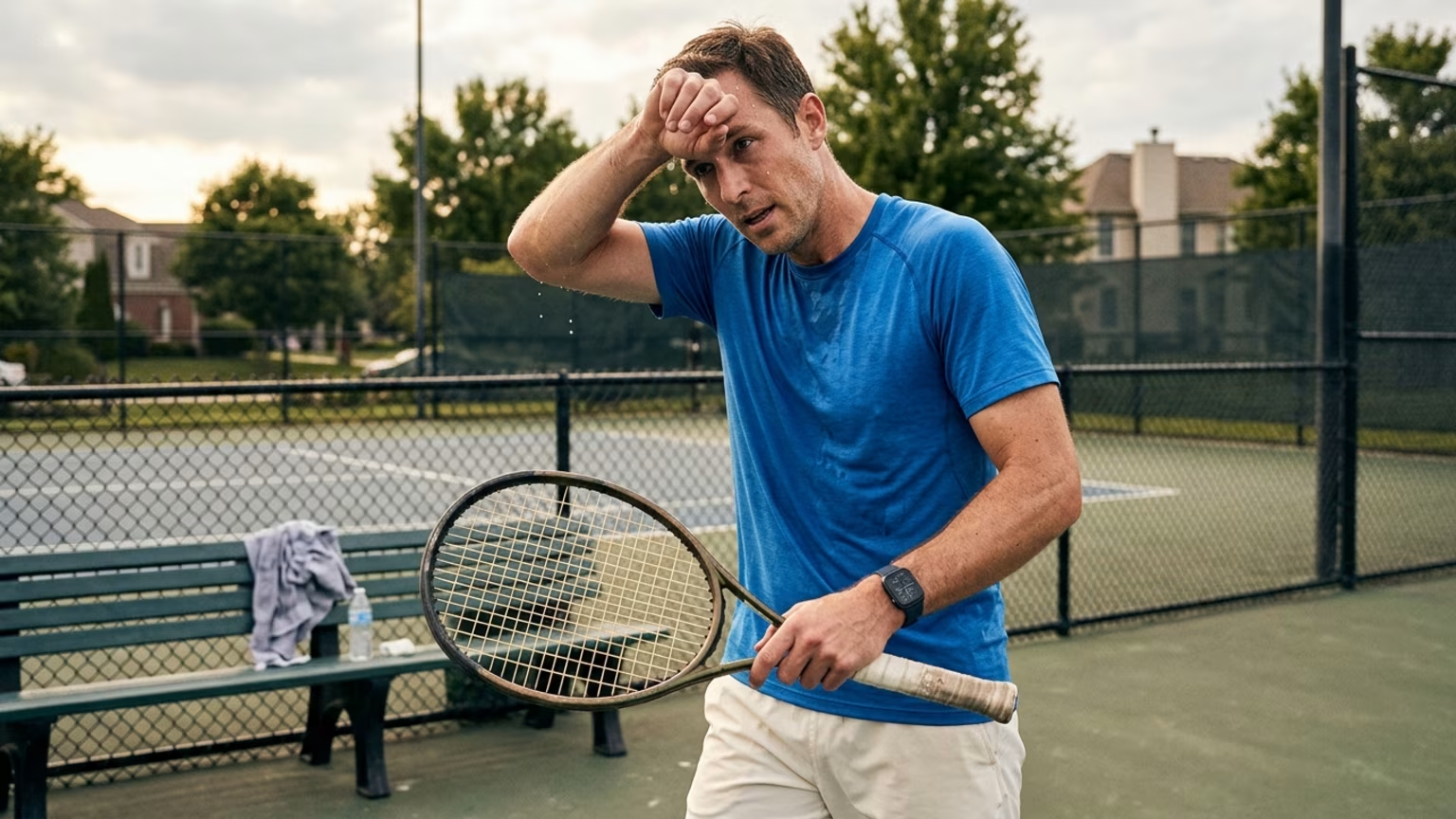
In late 2026, Oura analyzed wearable data to see how recreational tennis impacts heart health and recovery. Learn what this means for your athletic longevity.
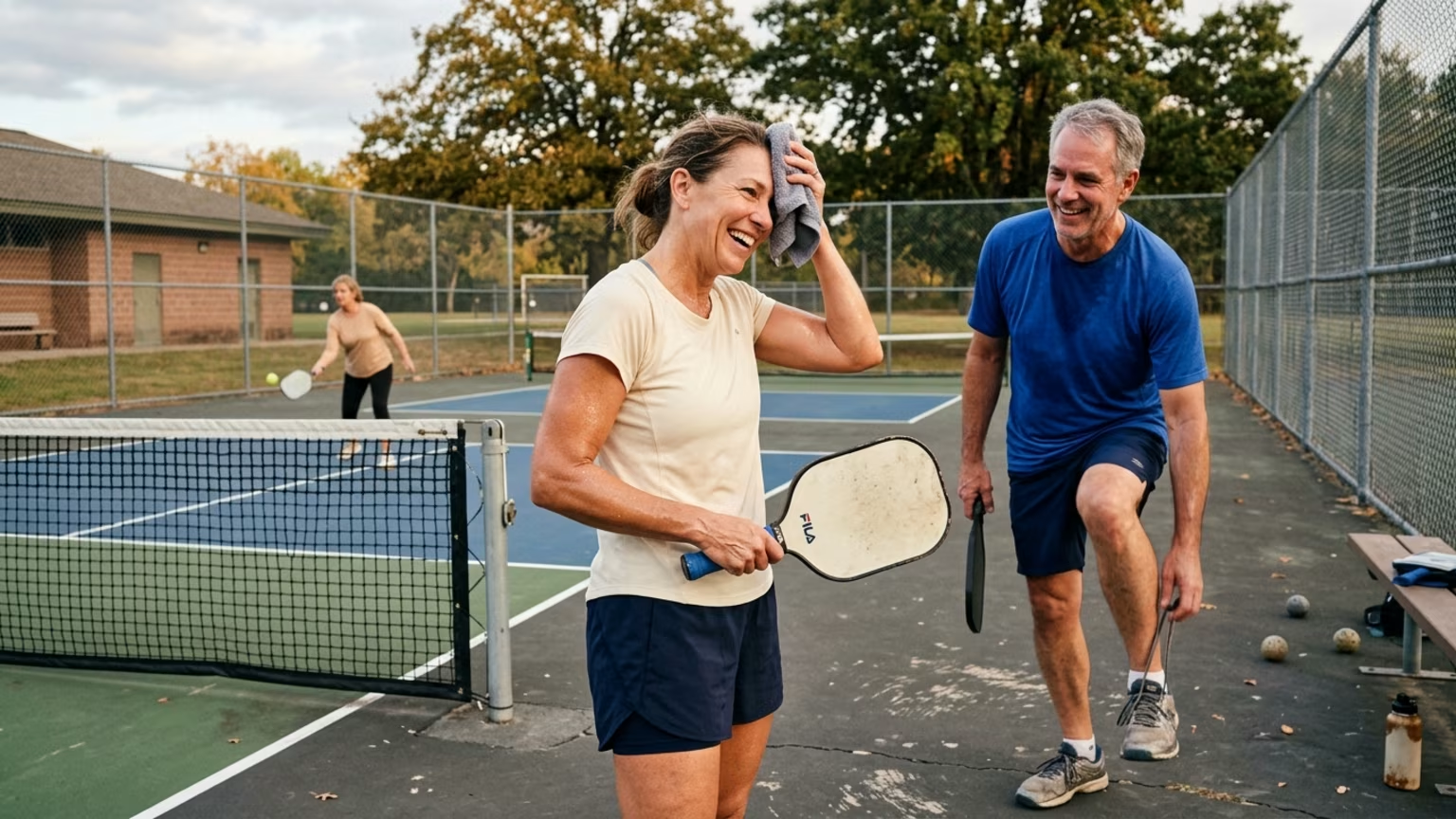
Recent guidelines emphasize gradual progression, dynamic warm-ups, and scheduled recovery to help adult racquet sports players maintain athletic longevity.
Read practical guidance for better movement, smarter preparation and a game that keeps working for you.
explore the Blog
