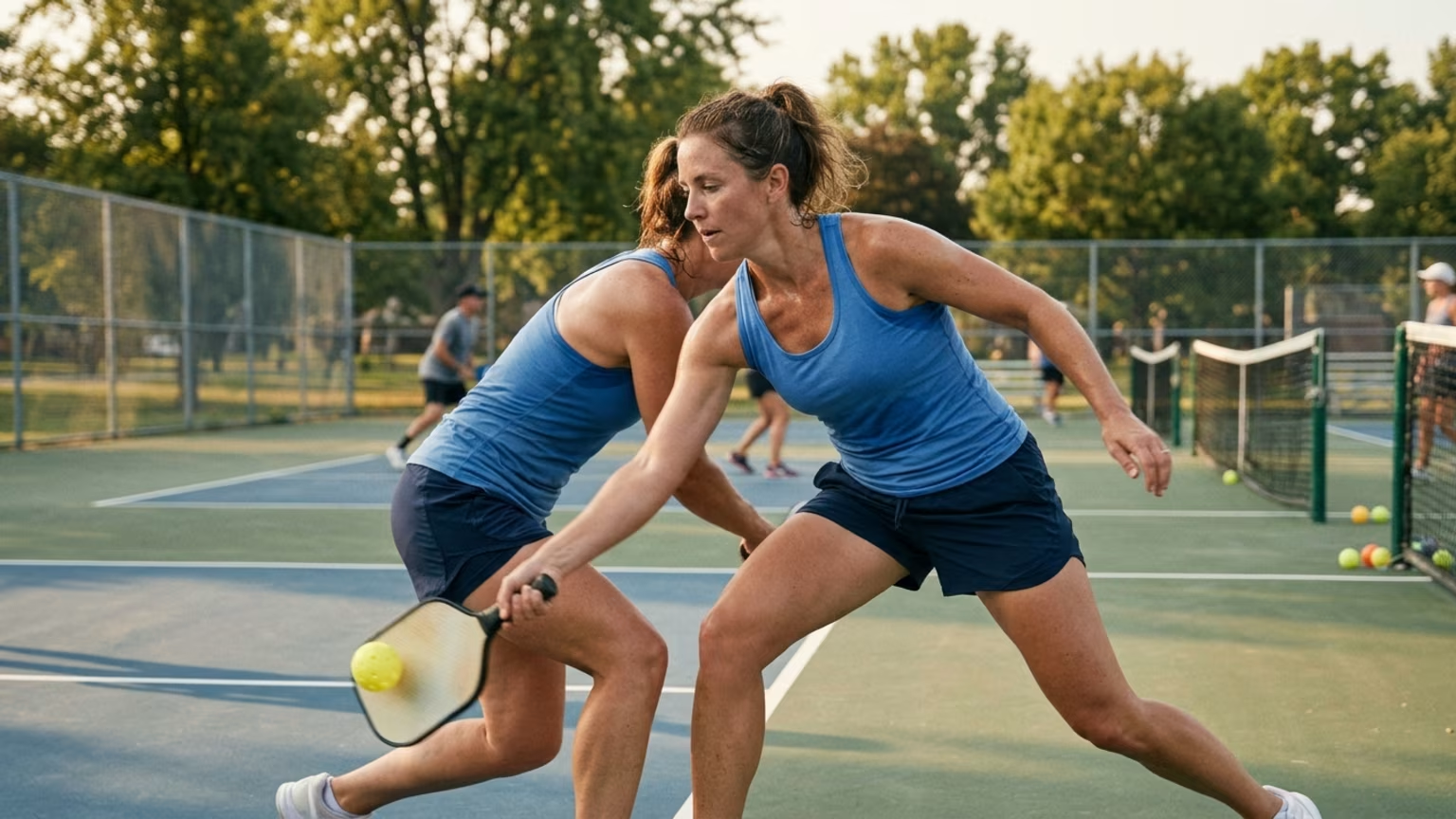

A September 2026 physiotherapy guide from Hills Street outlines how pickleball players can build single-leg strength, lateral power, and movement capacity.




On September 22, 2026, Hills Street published a comprehensive physiotherapy guide outlining how pickleball players must train to sustain performance on the court. The publication, titled “Best Exercises for Pickleball Players: Build Strength, Power and Movement Capacity,” argues that stroke technique alone is insufficient for the demands of the sport. The guide details how players need single-leg strength, lateral power, landing control, and reaction ability. This framework shifts the focus from simply accumulating court time to building measurable physical capacities.
The Hills Street guide breaks down pickleball as a sport defined by quick lateral movements and lunges. Players must also manage unpredictable reactions and sudden stops. These rapid movements place stress on the ankles, knees, shoulders, and elbows. To counter this stress, the publication recommends a specific progression of strength and power exercises.
The recommended strength exercises begin with Bulgarian split squats. These are presented as a way to develop single-leg strength, hip control, and split-stance stability. The guide also incorporates single-arm chest presses and single-arm shoulder presses. These specific pressing movements challenge upper-body force production and trunk coordination.
For power and force absorption, the guide suggests starting with box drops to practice landing control. Box jumps are recommended for explosive lower-body power. The program also incorporates single-leg lateral pogos to help players repeatedly produce and absorb force in a lateral direction. Upper-body force is addressed through fast cable pulldowns, while Pallof twists train trunk control and force transfer.
Hills Street frames two to three gym sessions per week as a general starting range. However, the guide stresses that training frequency must depend on how often a person plays and how well they tolerate total training load. It advises beginning split squats with bodyweight or dumbbells and starting box drops from a low height. Players are told to prioritize quality and control before increasing complexity or load.
The guide specifically warns that box jumps should remain a power exercise. They must not become a fatigue exercise when jump height, technique, or landing quality declines. Stopping sets before exhaustion maintains the intended training goal.
The article describes one practitioner-reported case involving a client in their late 20s returning to tennis and pickleball after an ACL rupture. In this example, the rehabilitation progressed through single-leg loading and landing drills. It also included direction-change, reaction and sport-specific work. The client reported having 100 percent confidence in returning to normal activities and sport.
Hills Street does present these exercises as potentially helpful for reducing injury risk. However, the publication does not quantify any specific injury-risk reduction. A separate physiotherapy-oriented article similarly highlights the importance of specific physical capacities. It points to lower-limb and calf capacity alongside deceleration and change-of-direction control.
Single-leg balance and shoulder tolerance are also identified as relevant training targets. Together, these guidelines reinforce that pickleball demands a robust physical foundation. Players need adequate structural tolerance in their joints to handle repetitive stopping and starting safely.
For the adult recreational player, this guidance provides a practical blueprint for healthy aging. Many players treat pickleball simply as a fun weekend activity and skip structured physical preparation entirely. Our team sees this exact scenario constantly on public courts. When I first started playing pickleball, I noticed how many people skipped warming up entirely.
They would jump straight out of their cars and right up to the kitchen line. I tried doing that and immediately pulled a calf muscle. Pickleball requires just as much explosive lateral movement as tennis, just in a tighter space. Since then, I always spend five minutes doing dynamic lunges and ankle rolls.
It changes everything about how confident I feel pushing off the baseline. This practical experience aligns directly with the Hills Street recommendation to build a movement toolkit rather than just swinging a paddle. Adult players must focus on developing a stable base before advancing to complex plyometrics. Skipping foundational strength work often leads to frustrating setbacks and persistent aches.
A practical starting point for healthy adults is to add controlled unilateral leg exercises alongside their regular play. Implementing a routine focused on building unilateral leg strength helps create the split-stance stability needed for lunges. Players who already tolerate strength work can add carefully progressed power exercises. Lateral pogos and change-of-direction drills should begin with low volume.
They should only progress when the player can maintain strict alignment and physical control. The message here is not to train harder at all costs. The goal is to develop enough strength and movement control to handle the sport without breaking down. Players must coordinate their gym work with their court sessions.
They should adjust their total workload based on their playing frequency, training history, age, and individual goals. Those returning from injury should obtain individualised advice rather than copying an advanced plyometric program.
The need for structured physical preparation is becoming more urgent due to the sheer volume of new participants. The American Council on Science and Health reported 24.3 million U.S. pickleball players in 2025. This figure, based on Sports & Fitness Industry Association data, marks a massive increase from just 4.2 million players in 2020. This explosive participation growth gives the training question much wider relevance across the fitness industry.
More adults are exposing themselves to lateral stresses than ever before. This expansion means the player population now includes a vast mix of recreational newcomers and highly experienced competitors. Therefore, a single universal training prescription is highly inappropriate. Load management becomes increasingly critical when playing frequency and injury history differ substantially between adults.
A weekend warrior requires a very different conditioning plan than a tournament regular. More players on the court means more people trying to master the complex lateral and forward motions without an athletic foundation. The physical toll of the game often surprises beginners who mistake the smaller court for a lower intensity workout. Educating these millions of new players on proper preparation is essential for keeping them active.
Proper strength training ensures these newcomers can continue enjoying racquet sports for years to come.
As the sport matures, expect physical preparation to become a standard part of weekly routines rather than an afterthought. Recreational leagues will likely see more players adopting structured gym work to support their competitive court time. The focus will continue to shift away from maximum weightlifting toward exercises that build speed, control, and functional movement quality. Players will increasingly recognize that maintaining their ability to load one leg and decelerate safely is the true foundation of long-term participation.
Over the next season, the most successful adult players will be those who balance competitive matches with targeted capacity building. Physiotherapy guidance will move away from generic injury treatment and toward proactive performance planning. Ultimately, those who treat their time off the court with the same respect as their time on it will enjoy the longest playing careers.
Follow Evercourts for practical insights on tennis, pickleball and padel performance, movement, recovery and healthy ageing. Stay connected for new articles, research-led guidance and ideas to help you play well and keep playing for years.


An evidence check on sports supplements like tart cherry juice. Learn why racquet sports players should prioritize core nutrition over functional foods.
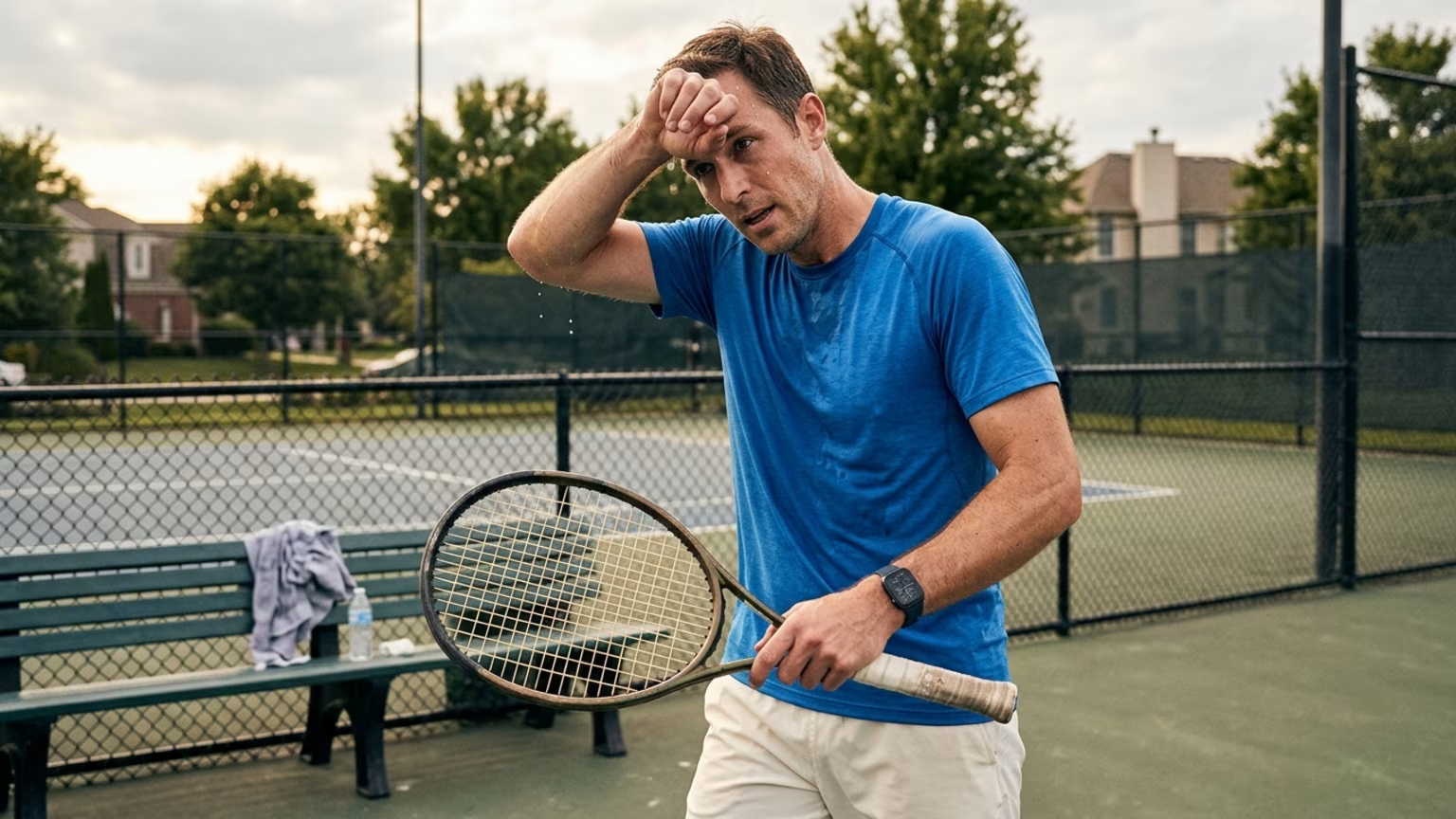
In late 2026, Oura analyzed wearable data to see how recreational tennis impacts heart health and recovery. Learn what this means for your athletic longevity.
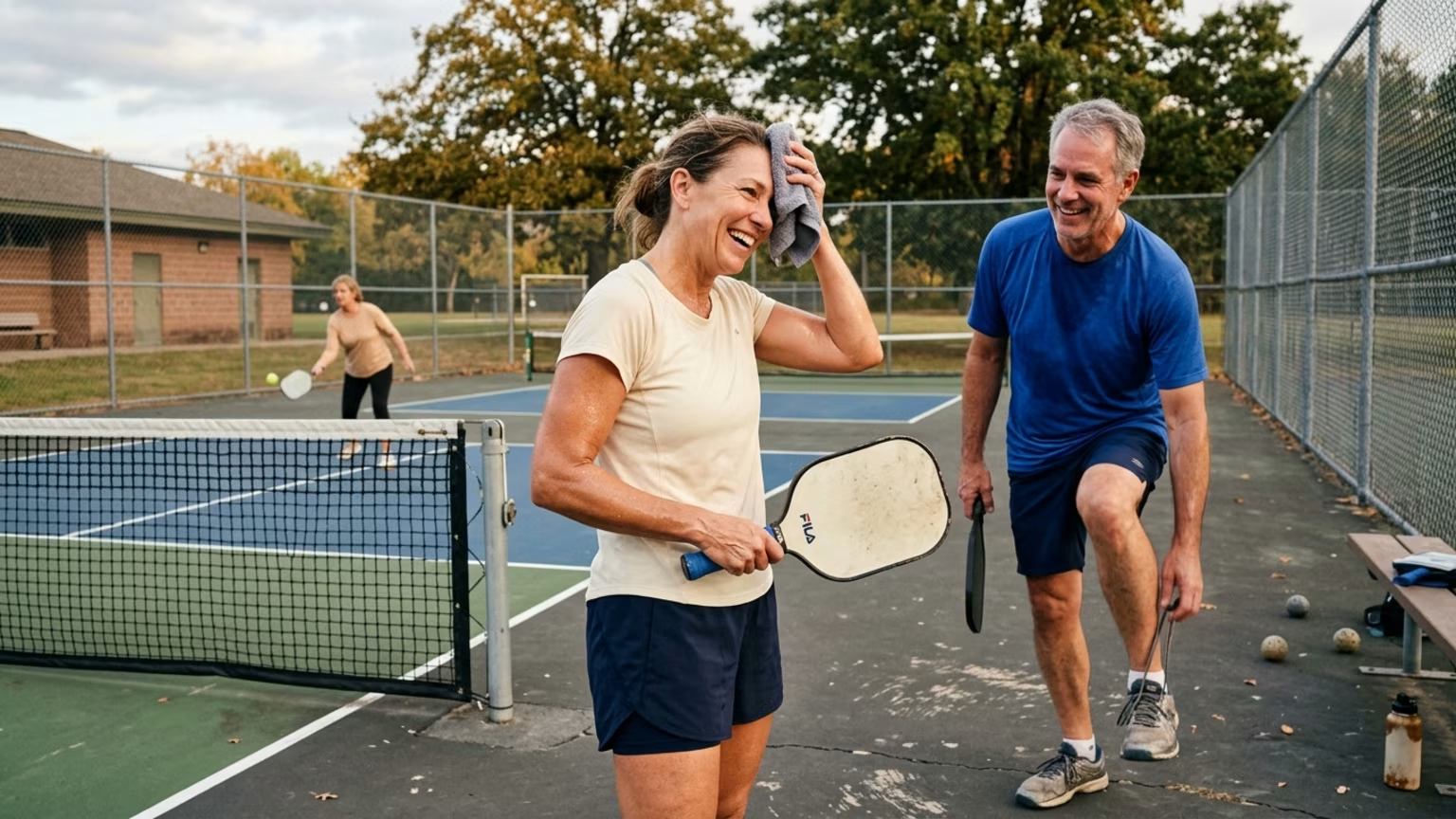
Recent guidelines emphasize gradual progression, dynamic warm-ups, and scheduled recovery to help adult racquet sports players maintain athletic longevity.
Read practical guidance for better movement, smarter preparation and a game that keeps working for you.
explore the Blog
