

Billie Jean King’s reported tennis return offers perspective on staying active, personal routines and the limits of healthy-aging tennis research.




On August 28, 2025, The Economic Times reported that Billie Jean King had gradually returned to tennis after knee and shoulder problems, describing the champion’s active life at 81.
The Economic Times said King resumed tennis with encouragement from her wife, Ilana Kloss, a former No. 1 doubles player. The account placed that return within a wider picture of exercise and daily life rather than a competitive comeback announcement.
According to the report, King and Kloss aimed to play two or three times a week. They also tried to get eight hours of sleep each night, including while traveling. Those details described what the pair were trying to maintain at the time of the article.
The Economic Times also described regular exercise and a balanced relationship with food. It reported that King avoided red meat and valued social connection, continued learning and work on causes she cared about. Tennis was part of that picture, not the whole story.
One example was education. The report said King had returned to California State University to complete the undergraduate degree she had left unfinished in 1964.
The report referred to King’s 39 Grand Slam titles. For an elite champion, a return to the court naturally attracts attention because of the career behind it. For an adult recreational player, the useful question is more modest: what place should tennis have in an active life now?
Here is the boundary of the comparison: the account did not identify King’s injuries or describe a rehabilitation process. It offered no return timetable or tested progression. Her weekly playing aim and other habits were personal routines, not a prescription for older players.
But there is still a practical editorial lesson. King’s story frames returning as a gradual process rather than a single moment of being back. A weekend league player can use that distinction to think about participation without treating a previous standard of play as the only worthwhile outcome.
The question need not be whether someone can match King’s schedule. It can be whether their own goal is regular social play, league participation or simply having tennis in their week. Those are different priorities, even when every player describes the aim as getting back on court.
For personal decisions after knee or shoulder problems, a qualified healthcare professional is the appropriate person to discuss the return. A celebrity profile is better used to start a conversation than to settle one. Our coverage of questions around returning to tennis offers a related starting point for that discussion.
What a player wants from tennis also matters when considering the setting. Someone who values the social part of King’s story may want to think about the kind of club environment that suits them. That is a choice about priorities, not a claim that one setting produces better health.
The wider routine deserves attention in its own right. In The Economic Times account, sleep and food sat alongside learning and meaningful work. Reading the story only as a tennis comeback misses much of what King was describing.
For Evercourts, the practical reading is to consider court time as one part of life rather than the entire measure of staying active. The aim is a playing life that remains meaningful, not a scorecard built from someone else’s habits.
Social connection is particularly relevant to how her return was reported. Kloss appeared in the account both as encouragement and as a playing partner. The point for readers is not to recreate that relationship but to recognize that companionship was part of this particular tennis story.
A 2026 systematic review and network meta-analysis in European Review of Aging and Physical Activity provides useful context. It examined racket-sport interventions for adults aged 60 and older. Across the review there were 13 trials, with 10 randomized trials and 469 participants in the primary analysis.
The review reported favorable associations with several functional outcomes. But the evidence was concentrated in table tennis. The tennis evidence came from one trial of 16 men without a non-exercise control group, which left the authors unable to draw firm tennis-specific conclusions.
That distinction matters when a broad phrase such as racket sports appears in a healthy-aging headline. Evidence drawn mainly from table tennis should not become a claim that tennis prevents age-related decline or extends life. The review also could not establish that one racket sport was superior to another.
Readers comparing the demands of different court sports can keep a straightforward distinction in mind: choosing an activity and proving its health effects are different questions. King’s account concerns how one person kept tennis within her life. The review concerns what a specific body of research can support.
Both are useful when read on their own terms. Personal experience can show what someone values, while research can test defined outcomes. Neither needs to be made into a universal formula to be worth reading.
As the next season approaches, the editorial question is whether healthy-aging tennis stories will put more emphasis on the experience of staying involved. Age and trophy counts make an easy headline. The more useful follow-up would describe what participation means to the person now and what makes it worth continuing.
King’s reported return offers a sensible direction for that conversation: tennis alongside relationships, learning and the rest of daily life. Future reporting would be more valuable if it also explained the practical circumstances of a return, with the player’s consent. That would add context without turning a personal experience into advice for everyone.
For recreational tennis, the standard worth watching is not whether more people reproduce a champion’s week. It is whether the conversation makes room for different ways of remaining part of the sport over the next season.
Follow Evercourts for practical insights on tennis, pickleball and padel performance, movement, recovery and healthy ageing. Stay connected for new articles, research-led guidance and ideas to help you play well and keep playing for years.


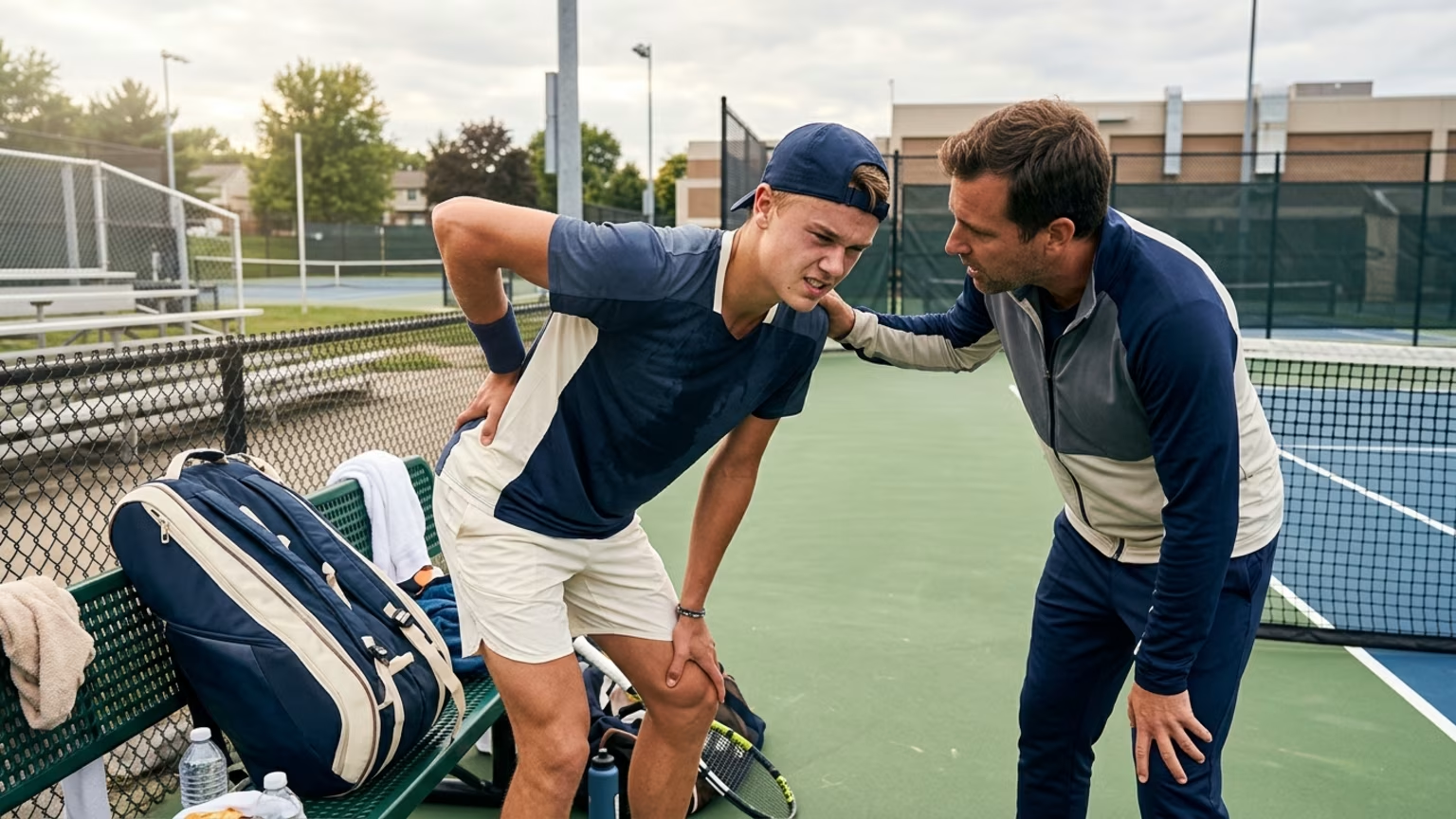
Holger Rune withdrew from the European Open with a back problem. The facts behind his decision and a grounded perspective for recreational players.

The Dink’s October 17 guide emphasizes deep returns, ball-height decisions and positioning against faster pickleball opponents.

A new report outlines padel and tennis gear trends. Learn how to assess adjustable rackets, sensor feedback and smart-court claims.
Read practical guidance for better movement, smarter preparation and a game that keeps working for you.
explore the Blog
