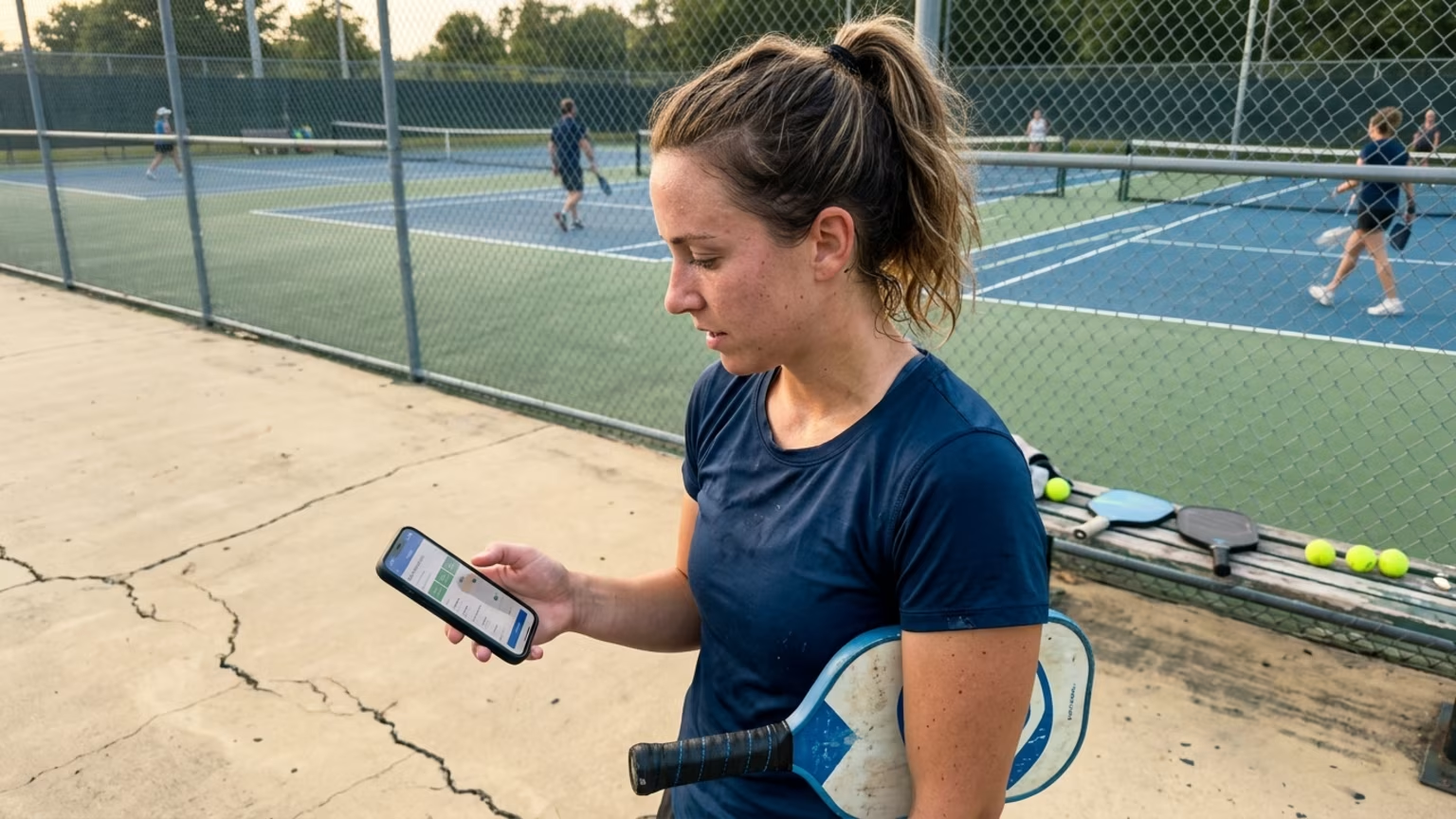

Discover how to evaluate tennis and pickleball clubs for athletic longevity, court access, and healthy aging beyond just looking at membership fees.




Pickleball participation reportedly grew from 4.2 million U.S. players in 2020 to 24.3 million in 2025, according to Sports & Fitness Industry Association data cited by industry coverage. This massive surge in players makes finding reliable court time incredibly challenging. Evaluating a modern facility requires looking past the physical nets to understand how they manage demand.
What exactly is the body enduring during these repeated explosive efforts? Every time you step onto a hard court, your joints absorb the harsh impact of rapid directional changes. You execute sudden stops, quick sprints, and continuous overhead swings during every single match. The physical toll accumulates quickly when you play multiple matches each week.
Your tendons and ligaments stretch and contract violently as you sprint for a drop shot. The constant starting and stopping creates micro-tears in muscle fibers that require adequate time to heal. Without a smart schedule, these small areas of damage can easily cascade into chronic overuse injuries. This is exactly why your environment plays a massive role in your overall physical health.
In our experience, proper preparation makes a massive difference for athletic longevity. "I remember finishing a tough two hour padel match on a cold Tuesday night and waking up the next morning feeling like my lower back was locked in concrete. For a long time, I just accepted this as the price of playing hard in my forties."
"But once I started spending just ten minutes on targeted hip mobility before heading to the club, the stiffness almost completely vanished. It taught me that we do not have to accept pain as a default state of aging." This reality highlights why choosing a supportive environment matters so much. A good facility must provide adequate stretching areas for a proper warm-up routine before you play.
The mental benefits of consistent play are highly compelling when supported by a healthy club culture. A 2025 study of 1,667 pickleball players found that playing at least three times per week and playing longer sessions were associated with higher self-reported well-being, with the strongest association among participants aged 63 to 77. Achieving this volume of play requires a facility that facilitates easy booking and clear skill matching. Without reliable access, players cannot maintain the consistent weekly routines that support overall wellness.
Social connections represent another crucial metric for recreational and competitive athletes alike. A 2025 national survey of 825 U.S. adults over age 50 found that people who had never played pickleball were about 1.5 times as likely to report loneliness as current players, while current and former players reported more social connections than never-players. A 2025 qualitative study reported that older pickleball players described the sport as contributing to autonomy, purpose, and belonging. The available summary does not provide the sample size or enough methodological detail to generalize the findings to all older players.
However, the available sources support attention to healthy aging and injury risk, but they do not establish one universal program model for every older adult. Players must seek out clubs that align closely with their specific physical needs and competitive goals. A facility that only caters to elite tournaments might lack the developmental programming required for recreational enjoyment. Finding the right cultural balance keeps you engaged and protected from mental burnout.
The most effective clubs understand that off-court interactions fuel on-court consistency. They organize mixers, round-robin leagues, and structured practice sessions that naturally introduce members to one another. When a facility proactively manages its community, new members can easily find appropriately matched playing partners. This structural support system is what keeps players returning to the court week after week.
The structural differences between tennis, pickleball, and padel create very different stressors for your muscles. Tennis requires you to cover a massive physical area, forcing long sprints that heavily tax your cardiovascular capacity. The sheer size of the court means you must generate significant power to strike the ball deeply. This constant power generation places immense stress on your shoulders and core.
Pickleball happens in a highly compressed space that demands constant short bursts and immediate reactions. Current research notes injury risk concerns involving fractures, sprains, and falls among older adults playing this faster game. The rigid surface and rapid lateral steps easily overload unprepared ankles or knees. Preparing your physical frame for these specific physical demands is absolutely essential before jumping into regular league play.
Padel creates a completely different type of fatigue due to the glass walls and extended rallies. You must constantly pivot, bend low to dig out balls, and swing overhead repeatedly. This highly dynamic style places unique rotational strain on your hips and lower back. Selecting a facility that understands these differences and offers properly designed functional strength programming helps you prepare your joints safely.
Understanding these clear distinctions helps you evaluate whether a club actually understands its athletic members. A facility offering multiple racquet sports should tailor its physical programming to the unique requirements of each game. When staff professionals acknowledge these distinct movement patterns, they can better guide you through safe learning progressions. This specialized anatomical knowledge directly supports your athletic longevity.
The numerical data clearly shows that racquet sports are experiencing unprecedented growth across the country. Maintaining a consistent playing schedule requires a highly proactive approach to facility selection. Do not simply look for the location with the most courts or the absolute cheapest monthly dues. You should choose a club that openly supports your physical recovery and offers dedicated space for movement preparation.
Prioritize local environments that provide structured match opportunities, clear skill matching, and easily accessible coaching. When a management team handles court logistics efficiently, you can focus on performing rather than fighting for a reservation. Look for crystal clear rules regarding waitlists and fair court access during peak evening hours. A transparent digital booking system significantly reduces the daily friction of trying to stay active.
The explosion of active participants from 4.2 million to 24.3 million in just five years means court time is incredibly valuable. By selecting a club that values player health as much as sheer court capacity, you help ensure your body stays resilient. We encourage you to ask current members about their actual experiences with booking courts before signing any contract. Finding the right home base helps you stay active, avoid injury, and maintain your routine for decades.
Ultimately, the goal is to build a highly sustainable habit that you genuinely look forward to continuing. When you understand the physical toll of your chosen sport, you can better select a club that mitigates those specific risks. A great facility serves as a vital partner in your journey toward lifelong physical fitness. This careful selection process is exactly how you adapt to the massive surge from 4.2 million to 24.3 million players.
Follow Evercourts for practical insights on tennis, pickleball and padel performance, movement, recovery and healthy ageing. Stay connected for new articles, research-led guidance and ideas to help you play well and keep playing for years.


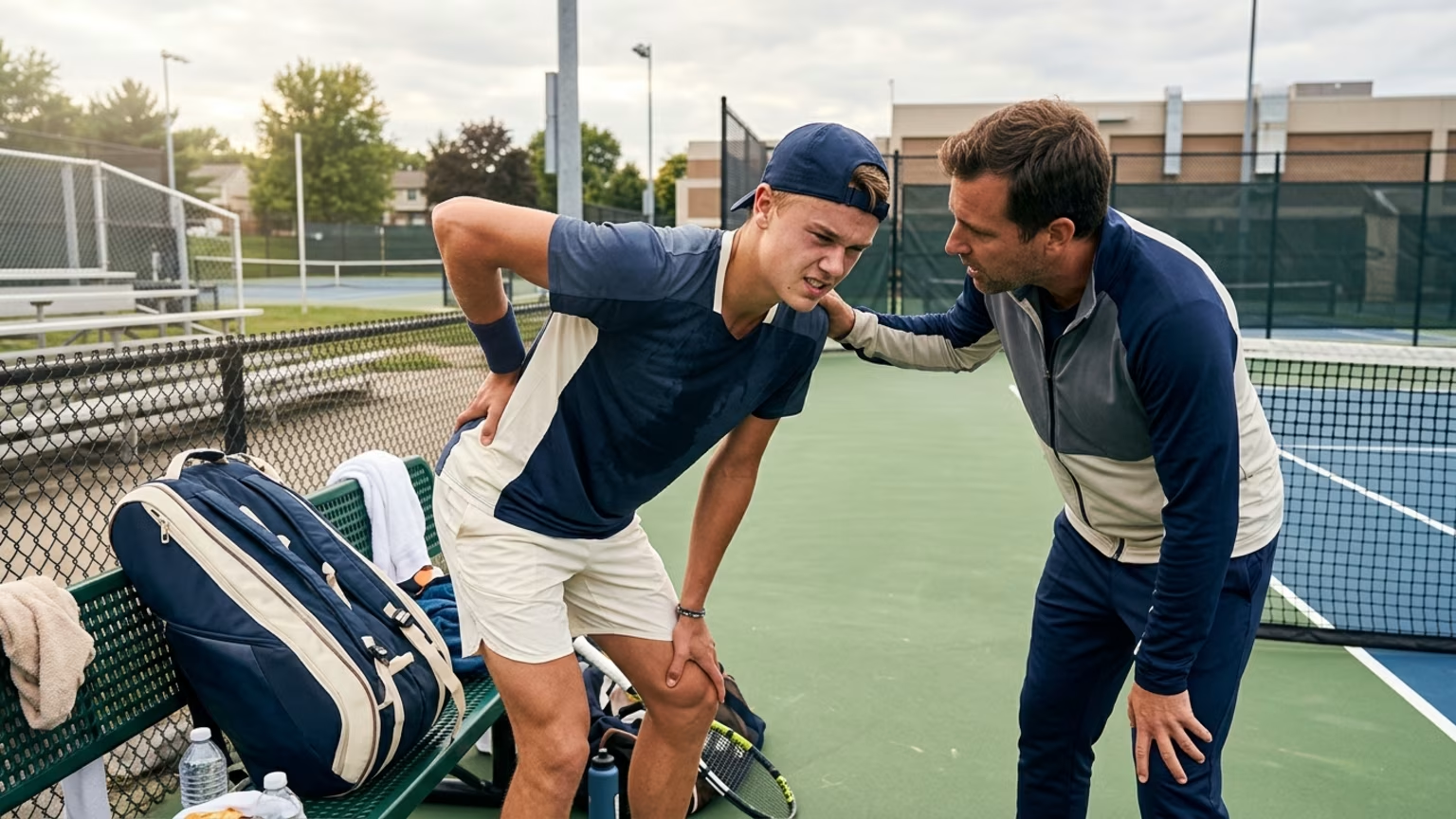
Holger Rune withdrew from the European Open with a back problem. The facts behind his decision and a grounded perspective for recreational players.

The Dink’s October 17 guide emphasizes deep returns, ball-height decisions and positioning against faster pickleball opponents.

A new report outlines padel and tennis gear trends. Learn how to assess adjustable rackets, sensor feedback and smart-court claims.
Read practical guidance for better movement, smarter preparation and a game that keeps working for you.
explore the Blog
