

Understand braking in tennis, pickleball and padel, with a gradual practice framework and clear reasons to seek qualified advice.




Braking is the ability to slow your body under control before stopping or moving in a different direction. On court, it is the settling moment between chasing the ball and preparing for the next movement.
Changing direction adds a second task: moving away again after slowing down. Getting to the ball and controlling how you arrive are related skills, but they are not the same thing. Speed gets much of the attention. Braking brings the control between those faster steps into focus.
That makes braking a useful coaching concept for adult players. The practical question is not just whether you can reach a shot. It is whether your preparation includes strength and balance alongside practice at slowing and redirecting.
Tennis, pickleball and padel challenge movement control through repeated bursts of effort and changes of direction. Accelerating toward a ball is only part of that movement. Slowing down and organizing the next action also deserve attention.
The following examples illustrate that coaching distinction rather than prescribe a particular footwork technique.
A tennis example is moving toward a shot, slowing for the stroke and then returning to position. The arrival is not the end of the movement problem. Thinking about what happens between shots keeps the next action in view rather than treating court movement as a series of separate sprints.
A pickleball example is reaching for a ball before needing to turn or move back. Here, the useful question is how the player controls the transition between movements. That is also a useful lens for understanding reaching and turning on a pickleball court, rather than judging movement only by whether the ball was reached.
Published padel strength-training guidance emphasizes short accelerations, braking and lateral direction changes. These are presented as preparation priorities for the sport. The coaching implication is straightforward: preparation should consider slowing and changing direction alongside the ability to accelerate.
Across the three sports, the shared idea is repeated transition. Players are not preparing for one isolated stop. They are preparing to move again after it.
Commercial padel-preparation guidance recommends lower-limb strength and unilateral work, meaning exercises focused on one side at a time. It also includes deceleration control and balance alongside trunk strength and upper-body work. Braking therefore appears as one component of preparation rather than a standalone solution.
A clinical guide from Nowak Orthopedics advises balance and agility practice for pickleball. Its suggested options include single-leg balance progressions and reactive changes of direction. Reactive practice means responding to a cue rather than knowing every movement in advance.
In 2024, Jones and Hammig’s analysis of emergency-room data described age-related differences in pickleball injury patterns. It also highlighted cardiovascular concerns among older players. That finding supports attention to individual health context rather than treating every adult player as having the same training needs.
The evidence has a clear boundary. These recommendations do not establish a validated braking protocol spanning tennis, pickleball and padel or prove that a specific program prevents injuries. The progression below is an editorial way to organize the guidance, not a research-tested or personalized prescription.
For athletic longevity, a useful aim is to keep several movement capacities in view. Strength matters within the preparation guidance. So do balance and the ability to organize a stop before moving elsewhere.
This broadens the training conversation beyond becoming faster. An adult player’s preparation can also give slowing and redirecting deliberate attention. The following sequence keeps those qualities connected without turning them into a fixed schedule.
The starting point in this framework is basic lower-body strength and balance. The padel guidance includes lower-limb and unilateral work. The clinical pickleball guide includes single-leg balance progressions.
Those are training categories rather than a menu that every player should copy. A qualified coach or physio can help translate them into suitable practice for someone’s conditioning and health history. The editorial priority is to include these capacities rather than assume match play addresses every preparation need.
The next element is practice at controlled stops at comfortable speeds. The focus is the slowing phase itself, not how quickly the player can complete the task. This separates braking practice from the pressure of reaching a difficult ball.
In this framework, a controlled stop is an opportunity to observe the movement. Can the player slow and settle deliberately? That question gives the practice a clear purpose without adding a universal technical rule or performance target.
Lateral or forward-backward changes can then connect slowing with the next movement. The direction is known in advance, so the practice has a clear movement pattern. This reflects the research brief’s practical progression from controlled stops toward directional changes.
The important distinction is between rehearsing a planned movement and reacting during play. Both belong in the broader conversation about court preparation. They do not need to be treated as the same task from the outset.
The final element in this illustrative sequence is faster or less predictable movement. Reactive direction-change practice appears in the clinical pickleball guidance. It brings the choice of where to move into the task as well as the movement itself.
Our broader resource on redirecting when the next movement is uncertain provides related reading. Within this framework, speed and uncertainty come later rather than defining every practice attempt.
For adult players, the practical message is to match the work to current conditioning and control. A match-winning shot and a well-controlled movement are different things to assess. Keeping both in view gives preparation a purpose beyond the next result.
Recurring aches or stiffness that change how you move are sensible reasons to speak with a qualified physio or healthcare provider. Impaired balance or difficulty controlling stops also deserves individual attention. These are reasons to seek an assessment, not conclusions about what is causing the problem.
A relevant injury history or an existing health condition should inform training choices with qualified guidance. Concerns about heart-related symptoms belong with a healthcare provider rather than being treated as a footwork issue. The cardiovascular concerns highlighted in the pickleball analysis make that distinction particularly important.
Return to that settling moment between chasing the ball and preparing to move again. It is more than a pause between the interesting parts of a rally. It is a movement skill worth understanding, with qualified help when comfort or control changes.
Follow Evercourts for practical insights on tennis, pickleball and padel performance, movement, recovery and healthy ageing. Stay connected for new articles, research-led guidance and ideas to help you play well and keep playing for years.


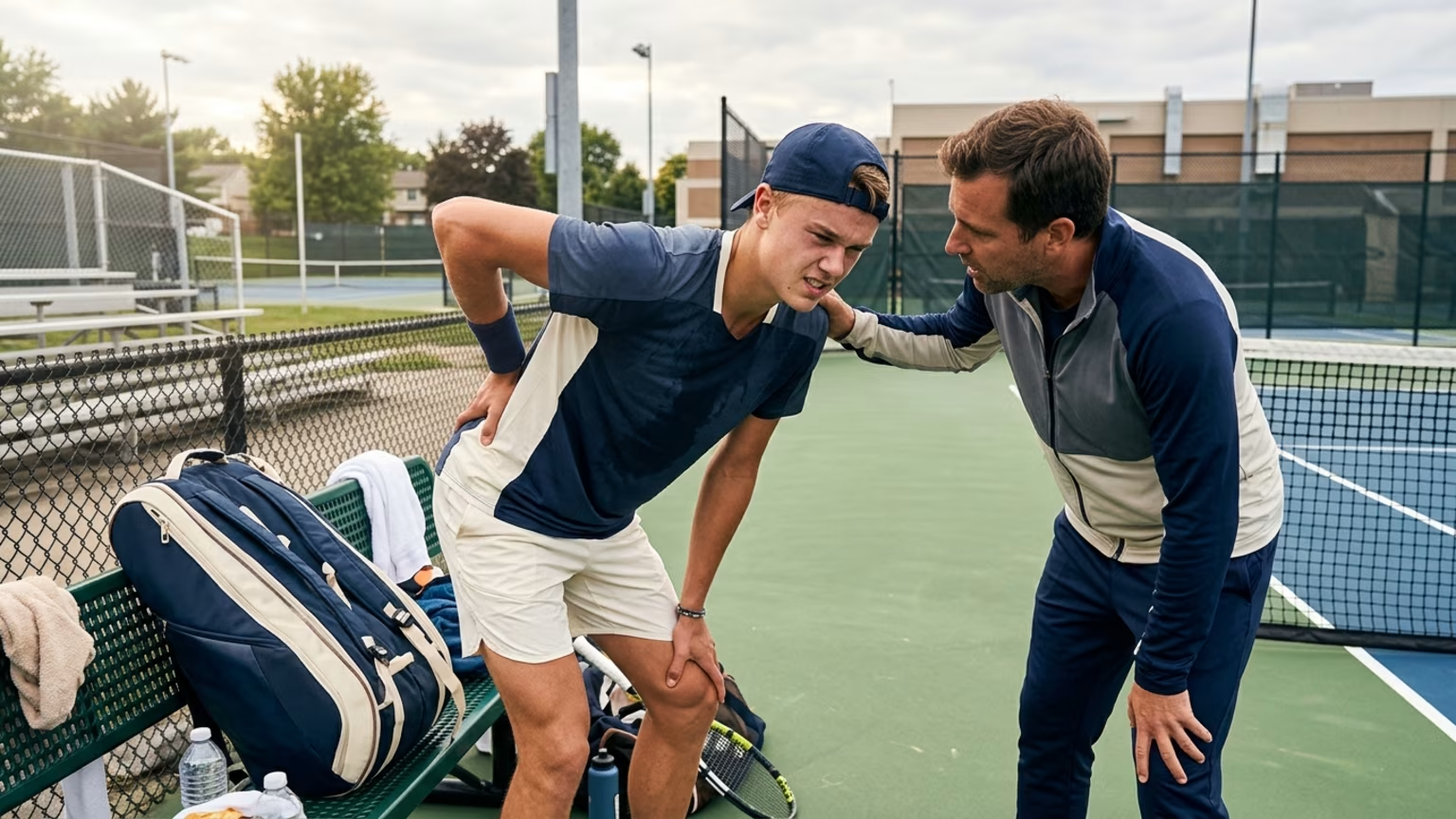
Holger Rune withdrew from the European Open with a back problem. The facts behind his decision and a grounded perspective for recreational players.

The Dink’s October 17 guide emphasizes deep returns, ball-height decisions and positioning against faster pickleball opponents.

A new report outlines padel and tennis gear trends. Learn how to assess adjustable rackets, sensor feedback and smart-court claims.
Read practical guidance for better movement, smarter preparation and a game that keeps working for you.
explore the Blog
