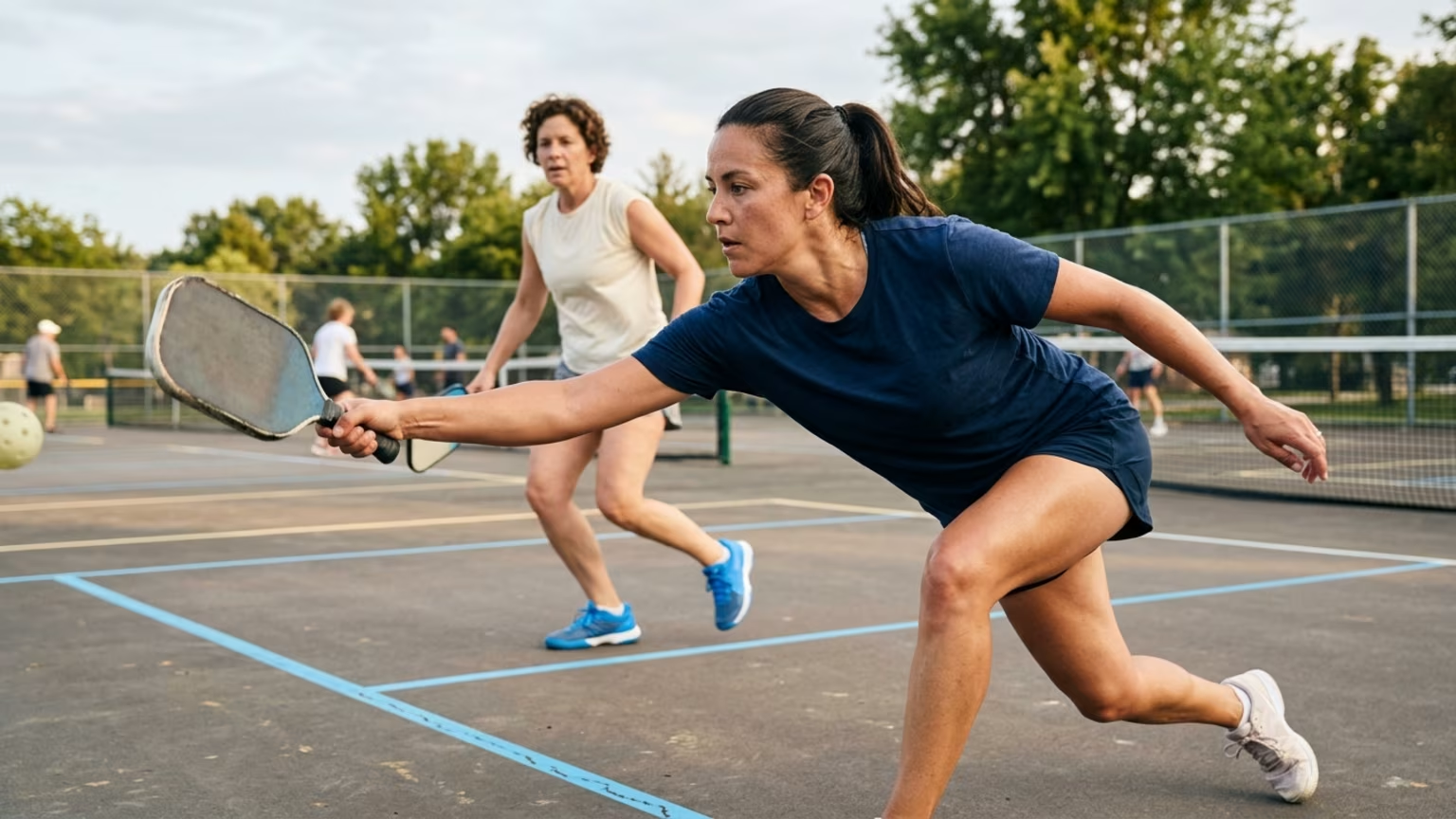

Learn how usable mobility in the ankles, hips, and shoulders helps adult pickleball players comfortably reach, turn, and change direction safely on the court.




Usable mobility is the ability to comfortably reach, turn, and change direction while maintaining physical control. Rather than aiming for extreme flexibility, players need enough range of motion to access the specific positions their sport requires. This means having the capacity to step into a lunge or rotate for a shot without forcing the movement. Having control over your joints allows you to move smoothly and recover quickly during a rally.
Pickleball requires players to handle short accelerations, sudden stops, and repeated lateral movement. Kriz Physical Therapy notes that adult players constantly manage lunges, direction changes, and backward steps. They also frequently reach outside their base of support during play. Tennis and padel share these same patterns of repeated explosive efforts and quick transitions.
These fast transitions force the ankles, hips, and shoulders to absorb force efficiently. Lancaster Orthopedic Group confirms that pickleball demands quick lateral movement, stopping, reaching, and twisting. Players also rely heavily on pivoting and lunging during a match. When a player moves backward to track a lob, their joints must accommodate that sudden shift in weight.
Tennis, pickleball, and padel all demand unique physical responses from the body. While the court sizes differ, the need to halt momentum quickly remains constant. A player might sprint forward for a drop shot, stop abruptly, and immediately backpedal. This chaotic pattern means the joints never handle the exact same angle of stress twice.
A rigid lower body makes those rapid transitions much more difficult to manage. Developing essential footwork skills relies on having enough mobility to execute the necessary steps comfortably. Without adequate range of motion, the body struggles to handle unexpected shifts in momentum. The stop-and-start nature of racquet sports taxes the lower body heavily on every single point.
Reaching wide for a volley or twisting for a defensive return requires the hips and trunk to work together. If those areas are stiff, the effort of returning the ball becomes significantly harder. Every forced reach or awkward turn places extra demand on the surrounding muscles. This is why having usable range of motion matters far more than simply being flexible.
Current evidence offers practical guidelines for court movement rather than exaggerated performance claims. Kriz Physical Therapy notes that limited ankle movement during a squat or lunge may lead the body to compensate elsewhere. The same applies to running and changing direction on the court. Lancaster Orthopedic Group adds that reduced ankle mobility is a factor that can make recovering from a backward step harder.
However, neither source claims that improving ankle mobility alone prevents all injuries. The hips also play a crucial role in racquet-sport movement and stability. Kriz Physical Therapy identifies hip mobility, balance, and coordination as relevant capacities for players. Rotational control and deceleration also play key roles for anyone playing golf, tennis, or pickleball.
Restricted hip rotation or extension might shift movement to other areas of the body. Understanding why usable joint control matters helps players focus on practical movement over static stretching. Shoulder comfort is another major factor for overhead shots and repeated reaching. The Dink reports that clinical guidance for pickleball shoulder concerns emphasizes managing workload and building rotational strength.
That same clinical guidance emphasizes developing scapular endurance rather than just focusing on shoulder mobility alone. It also mentions thoracic mobility as a helpful element for upper body function. Ultimately, the research supports a balanced approach to physical readiness over relying on isolated stretching drills. The goal is to access needed positions, rather than hitting an arbitrary flexibility target.
Maintaining comfortable movement is essential for athletic longevity in all racquet sports. Adult players who understand their physical limits can better sustain their time on the court. Instead of forcing extreme flexibility, the goal is to rehearse the specific movements used during matches. Preparing the body correctly helps players get better at stopping and changing direction safely.
A practical routine should build progressively toward court-specific actions and match intensity. Lancaster Orthopedic Group recommends preparing with several minutes of brisk walking, side-to-side movement, and easy swings. They also suggest using controlled calf raises and sit-to-stands before competitive rallies begin. They explicitly caution that static stretching alone does not prepare the body for acceleration and direction changes.
Easy shadow swings and gentle trunk turns also help prime the upper body for play. Players can perform a low-stakes check of their readiness before stepping onto the court. Taking a few slow side steps and changing direction helps gauge lower-body comfort. Making a gentle standing turn to each side provides a quick sense of trunk rotation capability.
Trying a comfortable step into a shallow lunge can reveal if ankle motion feels controlled. These informal observations help players decide if they need a longer warm-up. Building toward court-specific movement and easy hitting is the smartest way to begin a session. This practical preparation supports healthy aging and keeps players active on the court for years to come.
Pickleball injury guidance often includes shoulder circles and light hitting before full-speed rallies. Working through these gentle motions lets the joints warm up without undue stress. Players should only progress these movements as long as they feel entirely comfortable. Rushing the process defeats the purpose of the preparation.
Mobility routines serve as practical preparation rather than a medical treatment. If a player cannot perform easy side steps or controlled sit-to-stands, they should scale back their court time. Pushing through severe stiffness or a complete lack of balance often leads to worse outcomes. Consulting a qualified physical therapist is the best step when movement remains restricted.
Pain that actively changes how a player moves is a clear warning sign. Lancaster Orthopedic Group advises seeking professional attention for persistent shoulder pain that noticeably alters swing mechanics. Ignoring sharp pain during a reach or shadow swing can turn a minor issue into a prolonged absence. Proper athletic longevity comes from knowing when to rest and seek help.
Acknowledging physical limits often takes more discipline than ignoring them. The most capable players recognize that stepping away to address a restriction is just part of the process.
Follow Evercourts for practical insights on tennis, pickleball and padel performance, movement, recovery and healthy ageing. Stay connected for new articles, research-led guidance and ideas to help you play well and keep playing for years.


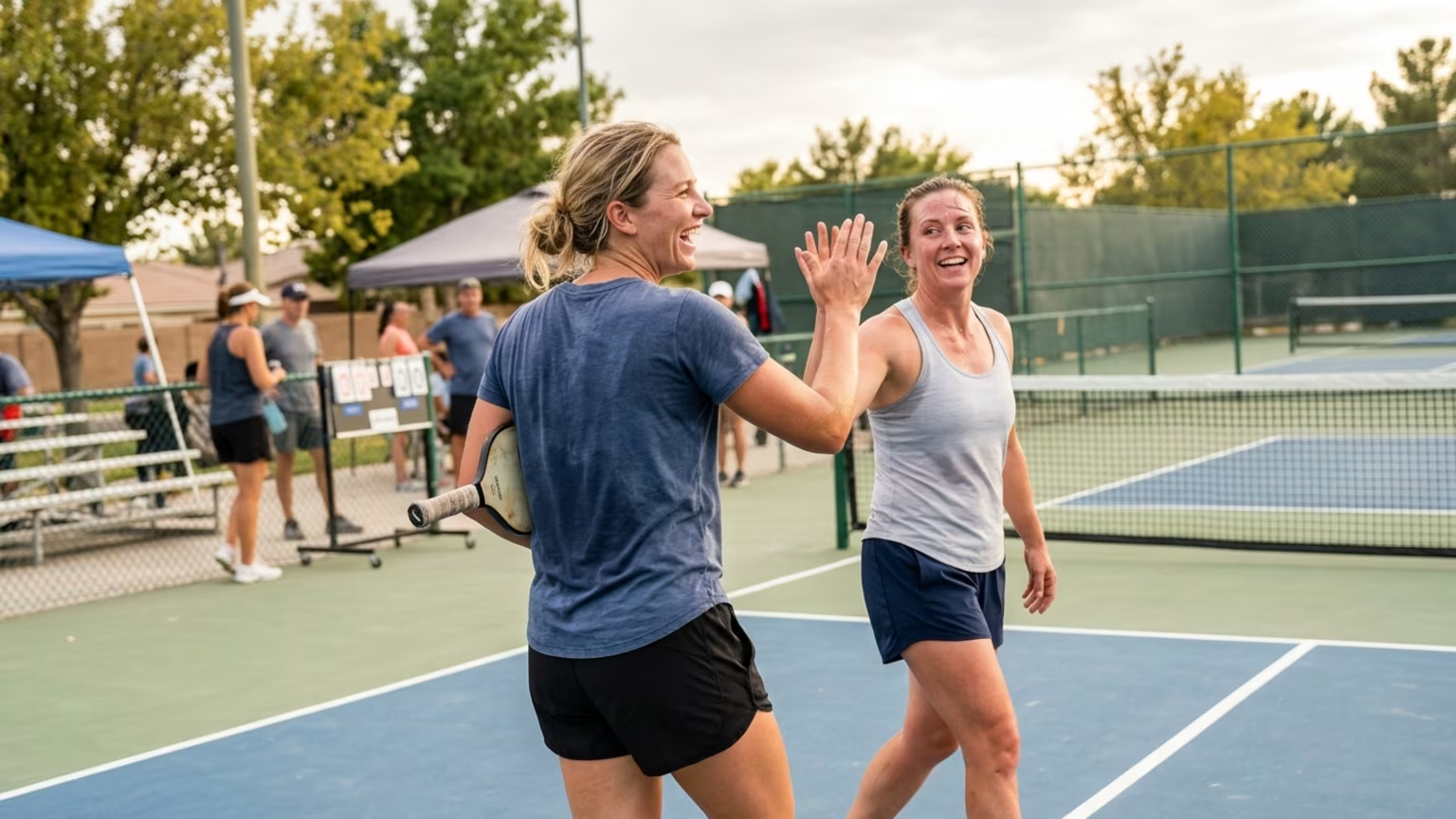
The 2026 PPA Las Vegas Open featured major upsets across singles and doubles. Read how adult recreational pickleball players should interpret these results.
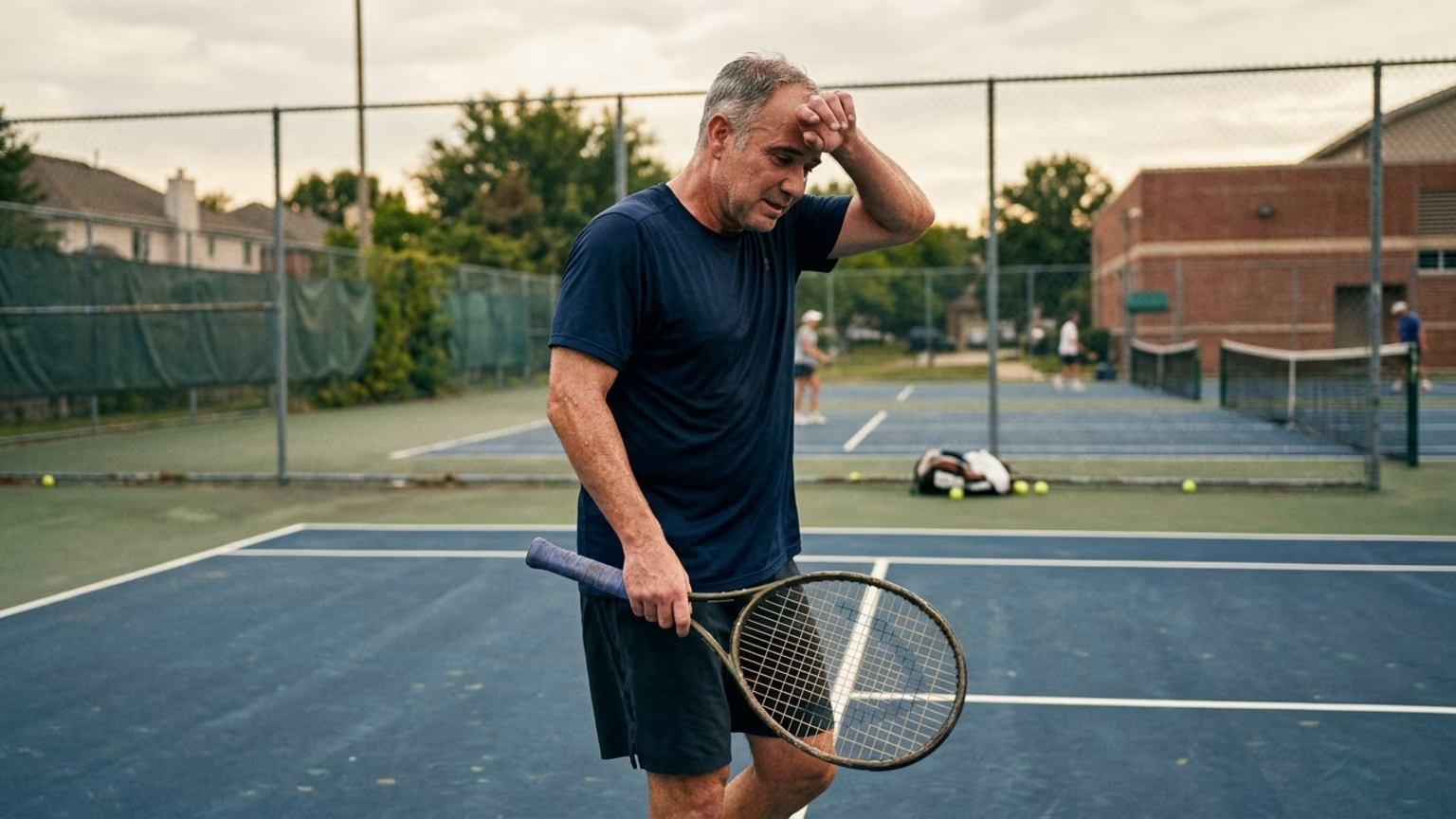
Andre Agassi called for a more secure tennis offseason. Read how the expanding calendar limits recovery time and why everyday players must plan their own rest.
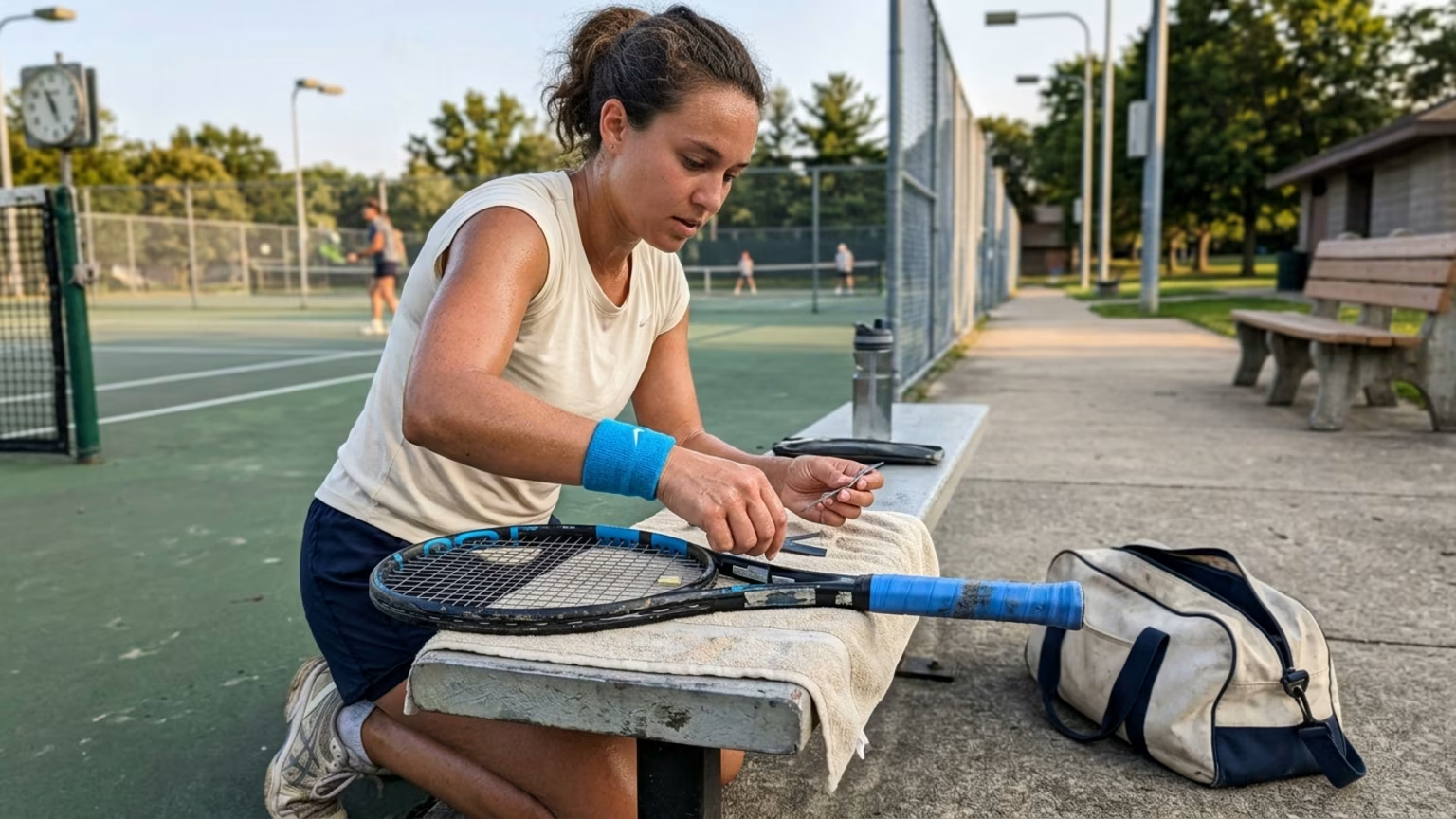
A new guide from ProfileX Tennis outlines how adult recreational players should document and systematically test racquet weight and string tension modifications.
Read practical guidance for better movement, smarter preparation and a game that keeps working for you.
explore the Blog
