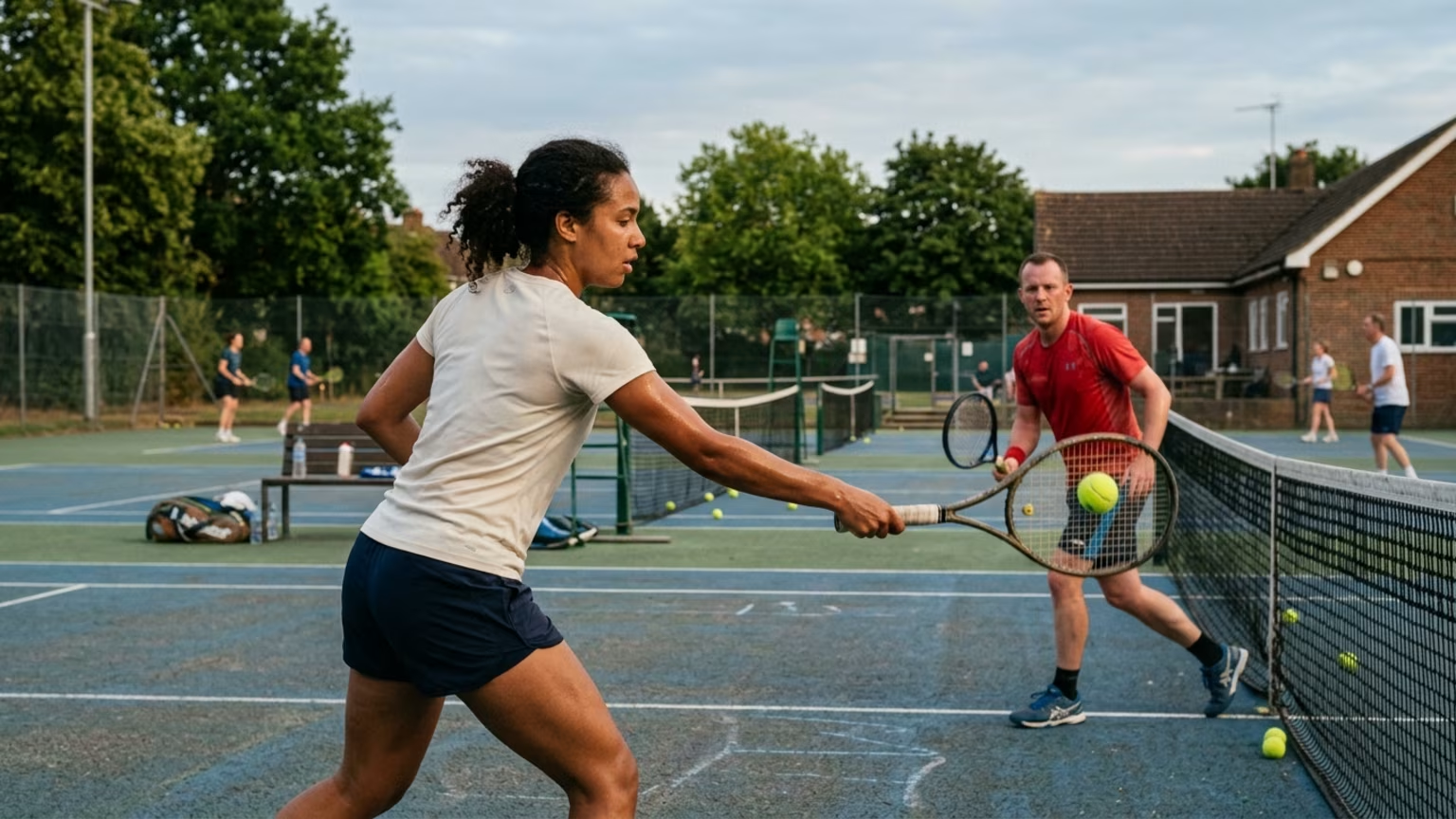

Learn the verified court-day routine that helps tennis, pickleball, and padel players arrive prepared, move better, and recover smartly after every session.




A functional court-day routine is not a superstitious ritual, but a deliberate system of reducing avoidable decisions before stepping onto the court. Many players believe they need complex warm-ups and rigid feeding schedules to perform well. The reality is that consistent preparation requires only simple logistics, progressive movement, and sensible recovery. Removing friction early in the day allows athletes to focus entirely on the match ahead.
Tennis, pickleball, and padel demand sudden accelerations and lateral braking that heavily stress the lower body. These explosive changes of direction require muscles and joints to absorb high impact forces repeatedly. A cold body cannot manage these rapid shifts safely. When players skip preparation, they force stiff tissues to handle aggressive sprints and heavy racket swings without warning.
This sharp contrast between resting and intense exertion creates significant mechanical strain. The repeated lunges to retrieve a drop shot require a primed muscular system. Padel players, for instance, constantly pivot and rotate under load. Adult players often underestimate the physical toll of a single competitive set.
Furthermore, the upper body endures substantial stress from serving and overheads. Rotational power originates from the ground up, transferring force through the hips and shoulders. An inadequate routine leaves these crucial kinetic chains vulnerable to sudden pulls. Moving well on the court depends entirely on proper tissue preparation.
Current sports medicine guidelines provide clear parameters for court preparation. The American Medical Association advises using tennis or court shoes with firm side support and good grip for lateral movement. They specifically recommend against using running shoes with softer soles. Proper footwear creates a stable base for the unpredictable shifts required during rallies.
Court safety extends beyond personal equipment. Baylor Scott & White notes that players should also inspect the court for debris, spills, or wet spots before beginning play. Slipping on a damp surface can cause sudden trauma. A simple visual sweep takes only seconds but removes immediate environmental risks.
Warm-ups should prioritize movement over static stretching. For pickleball players, the American Medical Association recommends a dynamic warm-up involving movements such as walking lunges, high knees, and arm circles. They explicitly advise against relying only on static stretching before play. The goal is to elevate the heart rate and prepare the joints for aggressive mobility.
The American Medical Association places static stretching in the cool-down rather than the pre-match warm-up. Stretching cold muscles does not improve immediate court readiness. Players should reserve those static holds for after the session. A progressive approach gets the body warm and ready for the first point.
Hydration is an active process that starts long before the match. The USTA advises beginning hydration well before competition. Their guidance suggests drinking 12 to 16 ounces of fluid on waking. Players should consume another 12 to 16 ounces 60 to 90 minutes before going on court.
Preparation continues right up to the start time. The USTA recommends drinking about eight ounces roughly 10 minutes before play. During play, its guidance gives a broad range of approximately four to eight ounces per changeover for light-to-medium sweaters. Heavy sweaters should target eight to 16 ounces, which equates to roughly 32 to 60 ounces per hour.
Players need objective ways to measure their individual fluid needs. The USTA recommends monitoring urine color and comparing body weight before and after exercise to help assess fluid loss. This prevents both dangerous dehydration and uncomfortable over-hydration. Tracking personal metrics helps refine the routine over time.
The period immediately following a match dictates how a player feels the next day. The USTA recommends beginning recovery with a carbohydrate-and-protein snack within 30 minutes of finishing exercise. This initial intake replenishes depleted energy stores quickly. A full meal containing carbohydrate, protein, and fat should follow within two hours.
Hydration remains critical after the final point. The USTA's recovery guidance emphasizes replacing fluid and electrolytes lost through sweat, along with carbohydrate and protein to support recovery. The American Medical Association recommends cooling down and using static stretches after play. This quiet period allows the nervous system to return to a resting state.
Building a repeatable process is vital for healthy aging in racquet sports. Baylor Scott & White highlights core, hip stability, and single-leg balance work for the demands of quick directional changes and repetitive arm movements. Supporting on-court play with targeted stability exercises protects joint health. A structured routine acts as a protective buffer over a long season.
Players who return from a break must respect their current physical limits. Baylor Scott & White recommends beginning with one or two sessions per week for newer or returning players before increasing duration and frequency. Managing volume carefully prevents acute overload. Learning to train hard enough to improve safely ensures players can enjoy their sport for years.
Athletic longevity relies on recognizing that preparation and play are interconnected. The actions taken before the match dictate the quality of movement on the court. Mastering a repeatable match-day routine eliminates the stress of last-minute rushing. Players who respect these practical guidelines experience fewer interruptions to their playing schedules.
Practicing faster braking skills and better recovery during a dynamic warm-up makes a measurable difference. Adult players do not need to train like professionals to see benefits. Small adjustments to fluid intake and dynamic mobility yield significant improvements in comfort. These habits form the foundation of a resilient body.
Preparation routines cannot resolve structural issues or acute injuries. Players should consult a qualified physiotherapist or sports medicine physician if they experience sharp joint pain. Persistent swelling or recurring muscle strains also warrant professional evaluation. Modifying a warm-up is not a substitute for proper medical advice.
A healthcare provider can identify the root cause of chronic discomfort and help players adjust their routines to accommodate physical limitations. Knowing when to seek help is a critical component of athletic responsibility. Pushing through severe pain often leads to prolonged absences from the sport. True readiness is found in quiet consistency, preparing the body to meet the day exactly as it arrives.
Follow Evercourts for practical insights on tennis, pickleball and padel performance, movement, recovery and healthy ageing. Stay connected for new articles, research-led guidance and ideas to help you play well and keep playing for years.


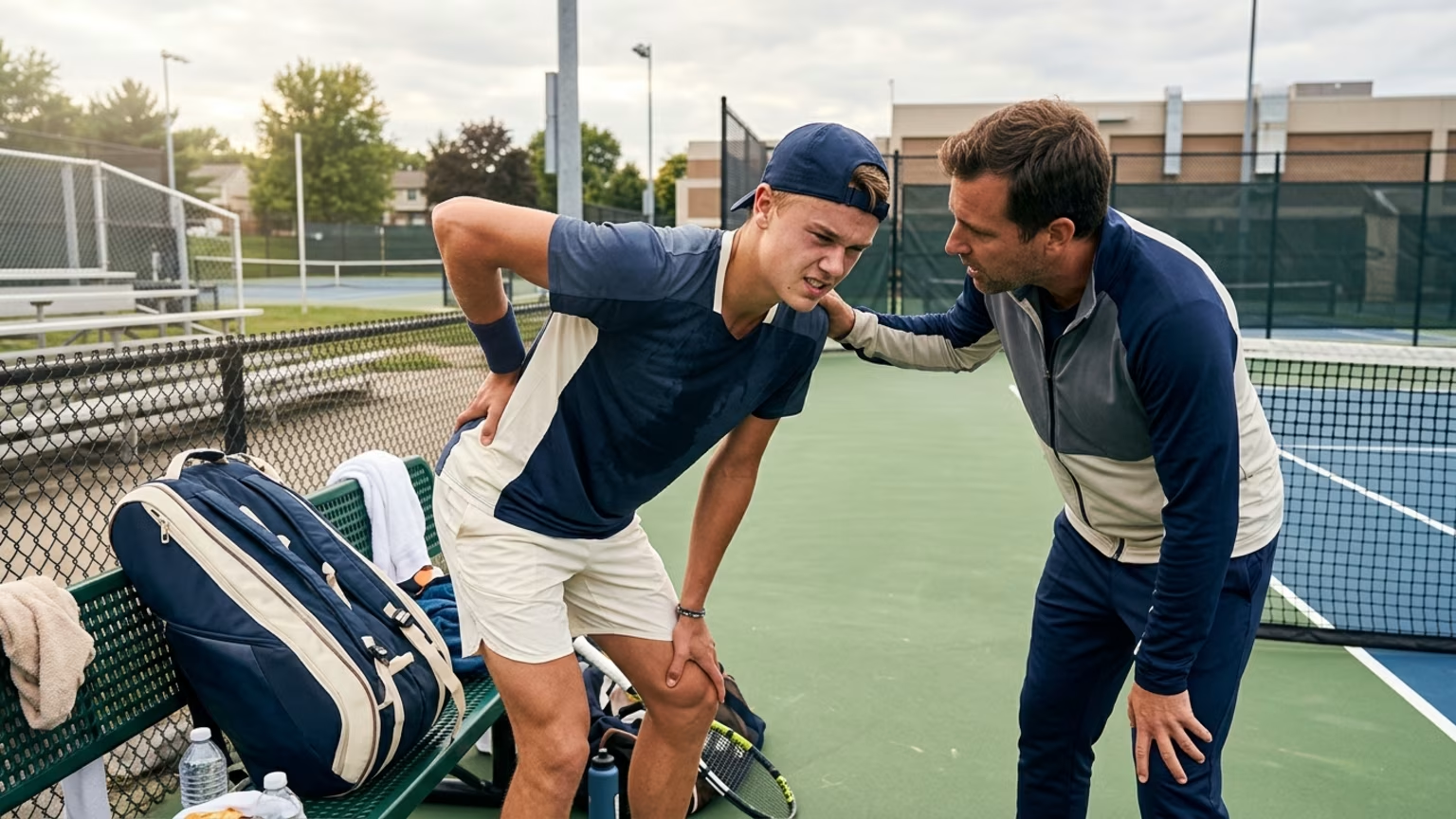
Holger Rune withdrew from the European Open with a back problem. The facts behind his decision and a grounded perspective for recreational players.

The Dink’s October 17 guide emphasizes deep returns, ball-height decisions and positioning against faster pickleball opponents.

A new report outlines padel and tennis gear trends. Learn how to assess adjustable rackets, sensor feedback and smart-court claims.
Read practical guidance for better movement, smarter preparation and a game that keeps working for you.
explore the Blog
