

A coaching-led look at starting, braking and recovering in tennis, pickleball and padel, with practice ideas and clear limits on injury claims.




Braking is slowing your movement so you can arrive in a controlled position for a shot or a change of direction. It connects the approach to the hitting position and the move that follows. A quick start is only one part of that sequence.
One tennis coaching article describes responding and accelerating toward the ball before braking into a plant. The player then balances for the strike before pushing away to recover. This gives a useful way to organise practice: start, brake, transition and recover.
This is a movement model rather than a demand for a dramatic stop before every shot. The central idea is to connect your approach with what comes next.
The challenge is not simply getting moving. Whenever a rally calls for another explosive start or a change of direction, the approach to the next shot matters too. In this coaching model, the stop and the recovery are part of the same action.
Controlling the approach means reducing the momentum already built up rather than arriving at the ball still carried by the run. Viewed through this model, practising only the first step leaves an important part of court movement unaddressed.
In tennis, the cited sequence links the response to the ball with the strike and recovery. Viewed this way, footwork practice is about joining those actions rather than treating acceleration as a separate skill.
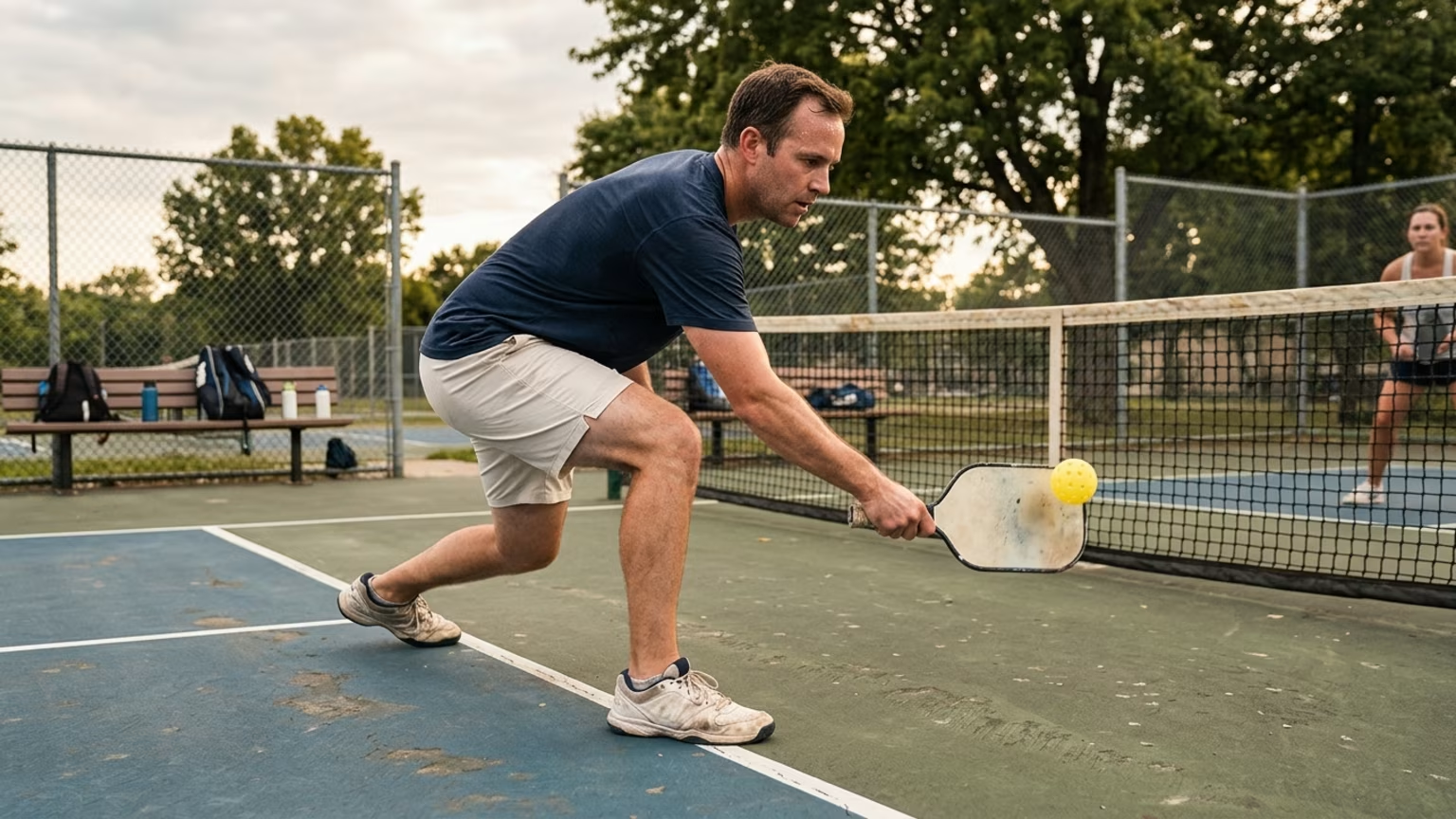
In pickleball, a coaching article recommends precise adjustment steps rather than relying only on large covering steps. It also recommends timing the split step around the opponent's contact. The practical emphasis is on organising the arrival as well as covering distance.
For padel, personal-training guidance includes controlled stopping alongside changes of direction and lateral movement. Applied to court practice, this means giving the transition between movements its own attention rather than focusing only on the initial burst.
The sports do not need to share an identical drill for that idea to be useful. A broader view of how court movements fit together keeps the shot and recovery in the picture.
These are coaching models and progression ideas, not a tested programme for preventing injuries or preserving joint health. A secondary review summary reports substantial differences in movement tasks, phases, equipment and performance measures across acceleration and deceleration research. It describes associations rather than proof that one technique causes better performance or fewer injuries.
The review summary is not a racquet-sport-specific trial. Taken together, these sources do not establish a universal stopping technique or a measured athletic-longevity benefit. The useful role of the guidance is to organise movement practice without turning it into a medical promise.
The following practice ideas translate the tennis sequence and the personal-training progression into simple court movements. Their organising principle is to establish a controlled action before adding another demand.
Useful coaching cues are “Arrive balanced”, “Shorten the approach as you near the ball” and “Push away to recover.” They direct attention to the movement rather than asking for a particular-looking foot position.
Progression is a change in the task, not simply a demand to move faster. The same approach applies when thinking about controlled stops and direction changes, with attention remaining on how the actions connect.
For adults who want to keep playing for years, this model offers a practical way to discuss movement without making age the explanation for every difficulty. A player might want a quicker first step while overlooking an approach that is difficult to settle. The coaching question becomes more specific: which part of the sequence needs attention?
The answer need not always be speed. Practice can focus on a predictable approach, a settled hitting position or a clearer recovery. Those are manageable movement goals rather than a verdict on someone's athletic future.
It also helps separate the demands within a practice task. Distance asks for more travel. Pace changes how quickly the movement unfolds. A reaction cue changes when or where the movement must begin.
Adding those demands one at a time follows the gradual progression described in the coaching material. It gives the session a clear purpose: work on the link that is currently hardest to organise. For athletic longevity, that is a grounded way to think about practice rather than a reason to chase the most difficult drill.
Pain or recurring stiffness that affects court movement is a reason to discuss the problem with a qualified physiotherapist or healthcare provider. The same applies if discomfort changes how you stop or leaves you unsure about practising a direction change.
The purpose of that conversation is individual assessment rather than finding a more forceful movement cue. Personal decisions about symptoms belong with qualified care.
Braking does not need to look dramatic to deserve attention. Sometimes the most useful part of court movement is the quiet transition that leaves you ready for what follows.
Follow Evercourts for practical insights on tennis, pickleball and padel performance, movement, recovery and healthy ageing. Stay connected for new articles, research-led guidance and ideas to help you play well and keep playing for years.


Practical answers on court shoe surfaces, fit, lateral support and wear for tennis, padel and pickleball, without injury-prevention promises.
Understand kitchen-line mobility, use a modest comfort self-check, and consider simple movement options without treating flexibility as an injury forecast.

A practical guide to padel fatigue, flexible pacing, hydration considerations and symptoms that mean stopping play and seeking care.
Read practical guidance for better movement, smarter preparation and a game that keeps working for you.
explore the Blog
