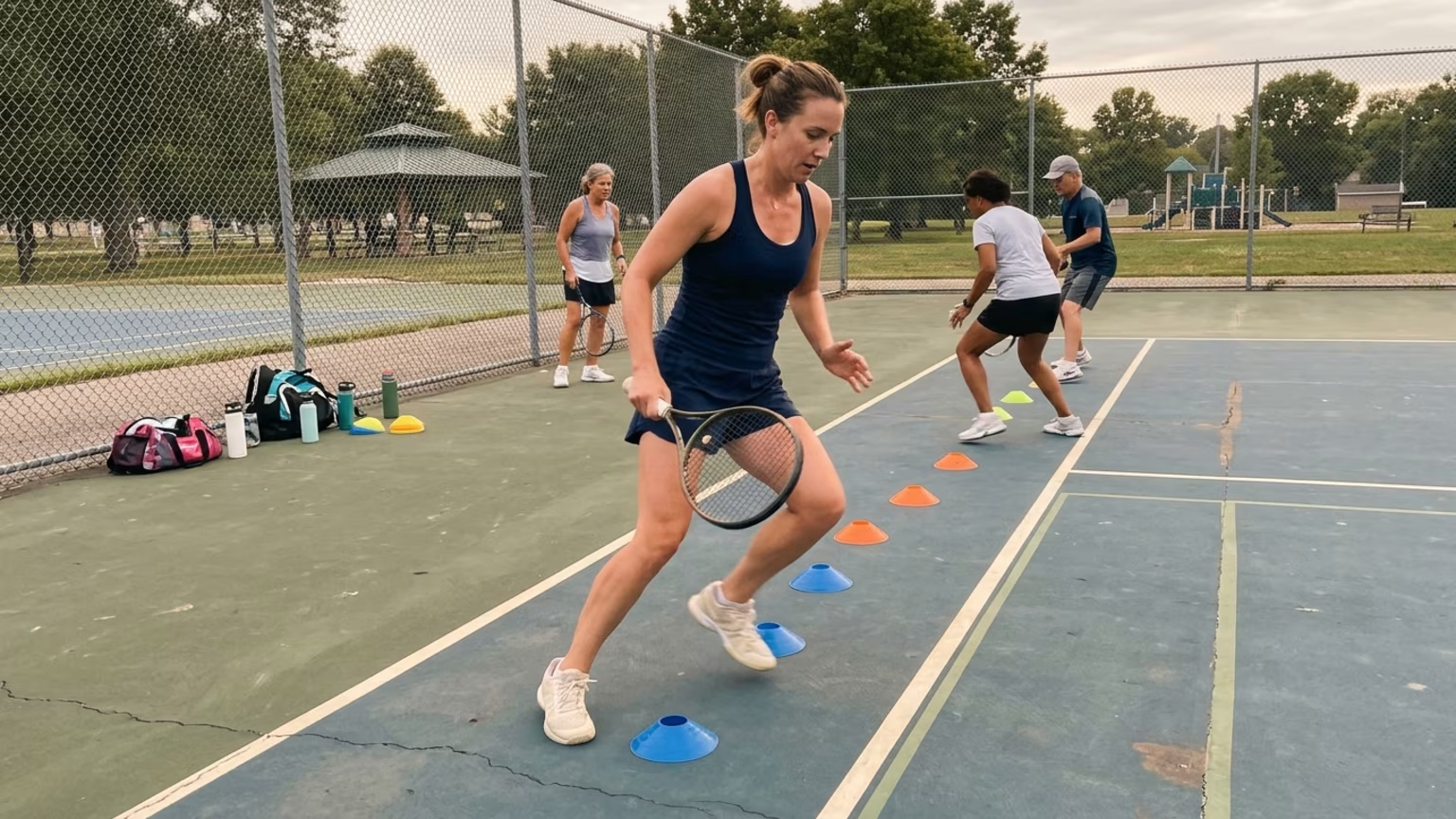

Build a warm-up from easy movement to court footwork and strokes, with clear evidence limits and guidance on when to seek professional advice.




A warm-up is a gradual shift from easy movement to the footwork and strokes you will use in play. Picture the first point: a quick start, a change of direction and a swing that needs to fit the ball. Preparation should account for that whole sequence, not only the moment of contact.
For adult racquet-sport players, this gives the warm-up a clear purpose. It is a bridge into the session rather than a separate workout. The useful question is whether the sequence connects comfortable movement with the actions that play will ask of you.
Tennis, pickleball and padel involve repeated bursts of movement and changes of direction. Players must prepare to move toward the ball and organize a stroke rather than simply swing from a stationary position. A warm-up built only around hitting leaves the movement side of that preparation largely unaddressed.
The practical emphasis can reflect the sport without requiring an entirely different preparation philosophy. For tennis, think beyond finding your first clean stroke. For pickleball, include the feet rather than focusing only on paddle contact. For padel, connect movement preparation with the game-like actions ahead.
These are ways to organize the warm-up, not claims that the sports have identical demands. The shared idea is to move from something easy and controlled toward something recognizably closer to play. That keeps the first point in view throughout the preparation.
A 2026 scoping review of warm-up research found that studies of injury reduction remain limited compared with research on immediate performance effects. It also identified gaps in injury surveillance and reporting. Immediate readiness and injury prevention are different outcomes.
The available tennis and padel routines are practical suggestions rather than controlled comparisons across all three racquet sports. The padel coaching source acknowledges a lack of controlled padel warm-up studies. This evidence does not establish an injury-prevention routine for adult pickleball or padel players, and no routine described here guarantees injury prevention.
There is still a useful preparation framework. A tennis-focused routine for recreational adults recommends easy movement followed by comfortable-range mobility and court footwork. Stroke effort then builds gradually. A padel coaching routine follows a similar broad direction from light activity through activation and joint movement toward game-like actions.
The progression below translates those recommendations into a simple framework. Its application to pickleball is practical editorial interpretation, not a finding from a pickleball trial.
The tennis routine begins with easy walking or jogging. This gives the sequence a starting point before adding more demanding footwork or strokes.
The organizing principle is straightforward: begin with movement that is comfortable rather than making the opening action resemble a hard point. There is no need to turn this stage into a fitness test. It introduces the activity that later stages will make more specific.
The next stage introduces controlled movement through comfortable ranges. The emphasis is on moving rather than trying to demonstrate the largest possible range.
In this framework, mobility is part of the transition toward play. It is not a competition with your previous session or another player. The cited routine supports comfortable-range movement without establishing a universal target that every adult player must reach.
Low-intensity lateral movement and a split-step bring the preparation closer to court activity. These appear in the tennis progression before the harder hitting begins.
This stage gives movement its own place in the warm-up. Instead of assuming that a few strokes cover everything, the sequence includes rehearsal of how you will move between those strokes. Keep the distinction clear: footwork preparation and hitting preparation are related parts of the same task.
Easy shadow swings or short rallies provide the transition into hitting. The tennis routine then builds stroke effort gradually rather than starting with the hardest shots.
This is where the earlier movement stages connect with the racquet or paddle. The progression becomes increasingly recognizable as the sport itself. Its endpoint is preparation for play, not exhaustion or proof that you can already perform at full effort.
Taken together, these stages offer an order rather than a stopwatch prescription. They move from general activity toward court movement and strokes. The available guidance supports that progression without requiring one fixed duration for every player and session.
For athletic longevity, the practical value is having a clear way to approach preparation and notice how you feel. The tennis guidance explicitly presents the warm-up as an opportunity to assess readiness. That is a more useful role than treating completion as a box to tick before every match.
The capabilities worth paying attention to are familiar: starting movement, changing direction and coordinating a stroke. Keeping those actions visible in preparation connects the warm-up with the activity you want to continue enjoying. It also makes the routine easier to understand because each stage has a purpose.
The long-term lesson is to keep preparation relevant rather than keep adding exercises. A short progression can remain focused on movement and hitting without becoming a complicated ritual. Consistency of purpose matters more here than collecting a longer list of drills.
For sport-specific context, consider the progression in tennis preparation, pickleball movement preparation or building toward padel play. Use that context to understand the sequence rather than combining several routines into one larger session.
If pain or restricted movement makes you unsure about continuing, consult a qualified physio or healthcare provider. Individual advice is also appropriate when discomfort is changing the way you move or preventing you from rehearsing the actions of play. A warm-up should not be used to diagnose the cause or settle a personal healthcare decision.
Return to the first-point image: the start, the change of direction and the stroke. If discomfort is shaping those actions, the useful next step is professional guidance rather than a more demanding warm-up. Preparation should help you approach that first point thoughtfully, not persuade you to ignore what you are feeling.
Follow Evercourts for practical insights on tennis, pickleball and padel performance, movement, recovery and healthy ageing. Stay connected for new articles, research-led guidance and ideas to help you play well and keep playing for years.


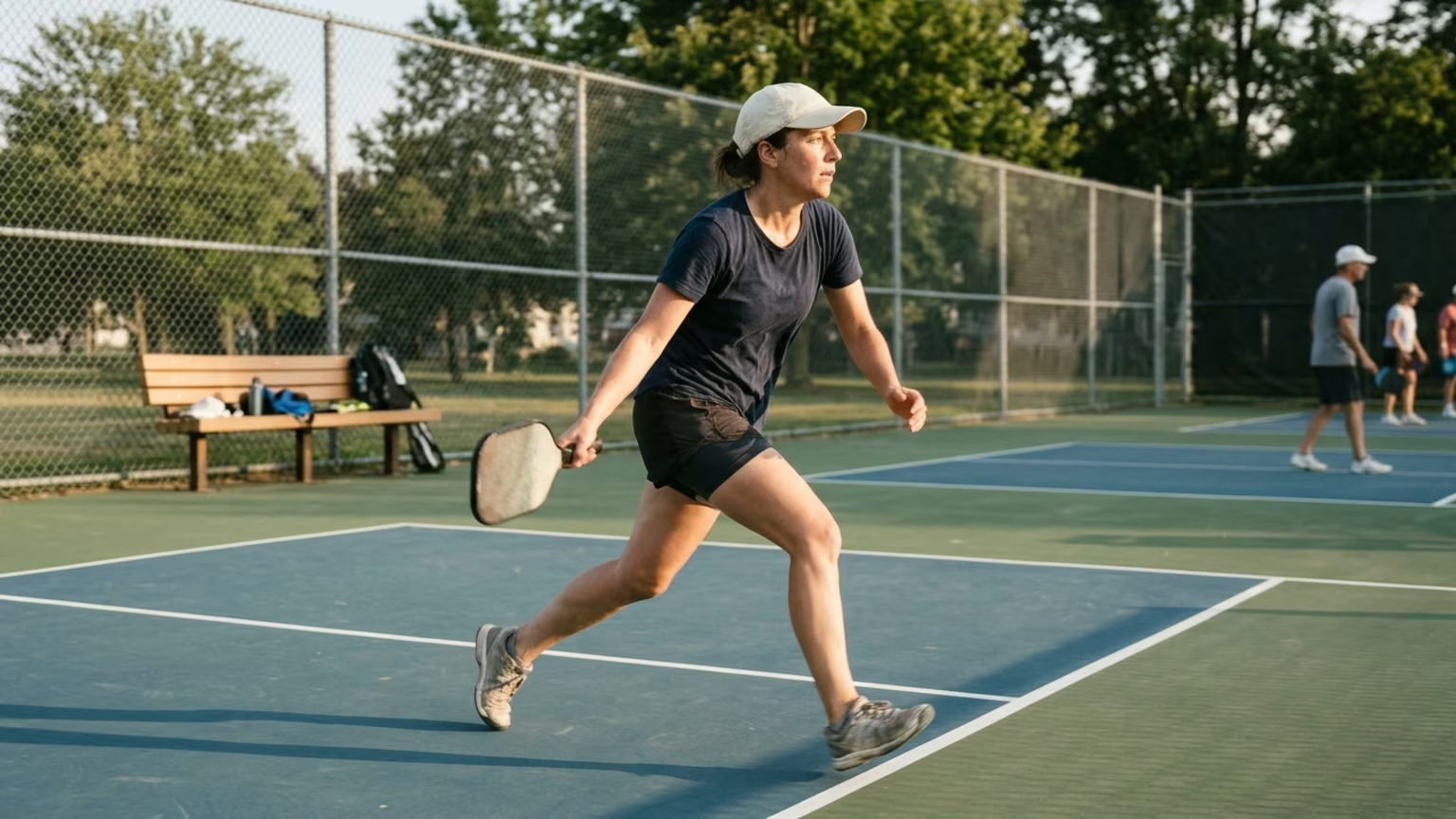
An evidence-led look at pickleball lunges, balanced recovery, movement practice and when to seek professional advice.
A practical tournament-day mailbag covering schedules, venue rules, food, fluids and flexible plans for tennis, pickleball and padel.

Understand tennis's strength, power, balance and braking demands, with a cautious framework for off-court preparation and long-term play.
Read practical guidance for better movement, smarter preparation and a game that keeps working for you.
explore the Blog
