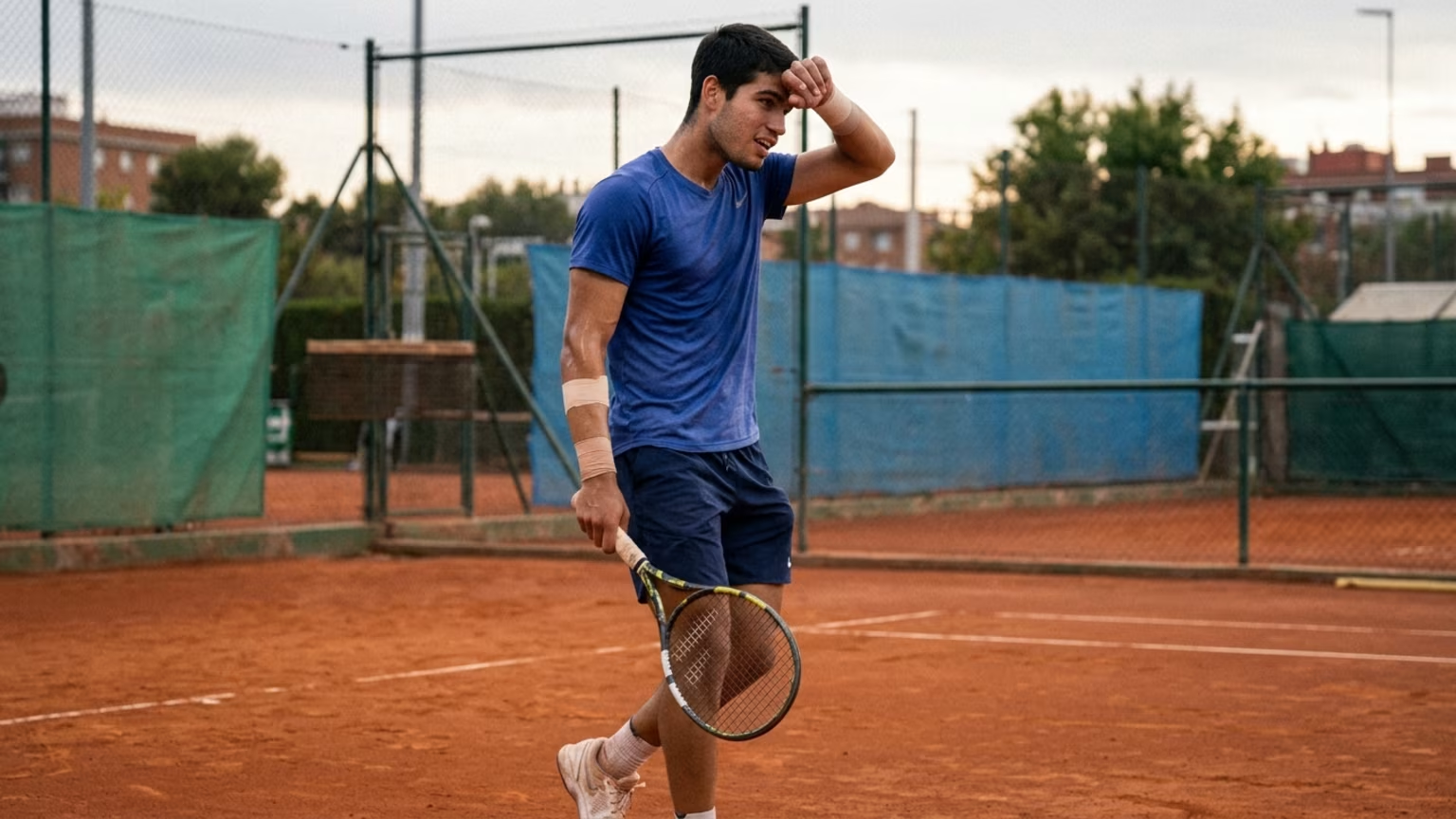

Discover how Carlos Alcaraz's return to the U.S. Open after a four-month wrist injury provides crucial recovery lessons for tennis and pickleball players.




A player grips their racquet, feeling that familiar sharp twinge near the base of the hand. The tension builds as they wonder if playing today guarantees another month of sidelined frustration. The core question we hear from sidelined players is simple: how do I safely return to the court after a wrist injury? The answer is that a successful comeback requires progressively rebuilding your tolerance to match intensity, rather than rushing back the moment resting pain disappears.
Many recreational players look to professional timelines for guidance, which makes recent headlines highly relevant. On August 20, 2026, 23-year-old Carlos Alcaraz announced his planned return to competitive tennis at the U.S. Open. He confirmed his participation in a joint social media post with football-transfer journalist Fabrizio Romano, utilizing Romano's signature phrase to declare his comeback. The defending U.S. Open champion, who won the 2025 final against Jannik Sinner, has been absent from the ATP Tour for approximately four months due to a right-wrist injury.
He last played an official match on April 14 against Otto Virtanen at the Barcelona Open before withdrawing. A roughly 138-day layoff might sound extreme for an overuse injury, but professional teams understand the risks of premature returns. The Athletic reported that Alcaraz was dealing with tenosynovitis, which involves inflammation or fluid accumulation around a tendon sheath. While this specific diagnosis is unconfirmed by a published clinical record, his team clearly prioritized caution by skipping major events like the French Open and Wimbledon.
For adult recreational players, the exact duration of a layoff will vary based on tissue damage, age, and individual recovery rates. Returning for a title defense may create competitive and psychological pressure that encourages risk-taking. Readers should not copy a professional tournament deadline as a reason to accelerate their own rehabilitation timelines. A long absence is sometimes exactly what your wrist needs to recover from repeated high-velocity loading.
If you are struggling with recurring issues, reviewing wrist and hand injury prevention strategies can help you understand the forces involved. Treat a wrist injury as a load-management problem, not simply a pain problem. Reduce any strokes, prolonged gripping, or serving activities that reproduce symptoms while seeking an appropriate clinical assessment. A reasonable progression starts with comfortable daily use and controlled strengthening. You can then move into easy hitting and longer sessions before attempting competitive play.
Being able to hit a tennis ball during a controlled practice session does not automatically mean you are prepared for tournament play. Alcaraz reportedly considered returning at the Cincinnati Open, but he ultimately allowed additional recovery time instead. His training included progressively harder sessions, including practice with Holger Rune, before his team judged the wrist ready for match play. Practice can be increased in manageable stages, but competitive matches introduce unpredictable ball contact and hurried defensive movements.
When you plan your own comeback, treat the transition from practice to competition as a completely separate phase of recovery. You should restore basic movement tolerance first, then increase sport-specific intensity, and only resume full competitive exposure afterward. The U.S. Open runs from August 30 through September 13 in New York, and entering a Grand Slam without competitive match play since April is an unusually demanding scenario. Hitting in a controlled environment limits the sudden, awkward racquet loads that often aggravate a healing tendon.
Even with high-level medical support, a return announcement does not guarantee perfect readiness. Interestingly, The Athletic noted that Alcaraz had not publicly clarified whether he would enter the singles competition at the time of publication. For your own game, follow a structured return to competition guide. Gradually increase one workload variable at a time, such as hitting duration or serve volume, and monitor how your wrist feels the following morning.
During your time away from hitting, it remains vital to maintain lower-body conditioning and general cardiovascular fitness. Doing so ensures that your eventual return does not involve simultaneously rebuilding wrist tolerance and whole-body match fitness. Working with a qualified rehabilitation professional can help you outline a realistic schedule. This separation of practice capability from match readiness is the safest way to prevent a frustrating setback.
Reintroducing the most wrist-demanding actions requires a deliberate approach that accounts for your specific sport. The physical demands placed on the wrist differ significantly depending on the court size, the racquet, and the ball. Tennis players must manage the massive forces generated during serves and high-speed forehands. Rebuilding your tolerance for these specific strokes should happen late in your recovery timeline.
In pickleball, the primary stress often comes from repeated compact swings and quick volleys. Defensive reactions at the kitchen line also contribute heavily to wrist strain. The lighter paddle still requires prolonged gripping, which can aggravate the tendon sheaths if you return to playing long sessions immediately. Padel players face a different challenge, as the heavier racquet and frequent use of slice or spin place unique demands on the wrist stabilizers. Recognizing these distinctions is a critical part of the complete injury prevention framework for court athletes.
Regardless of your sport, patient guidance on wrist overuse conditions emphasizes reducing activities that provoke symptoms. You should maintain comfortable movement where appropriate and restore activity gradually rather than abruptly returning to a high workload. If you experience worsening symptoms later that day or the next morning, you need to reduce or pause your exercise progression. The goal is to use your symptom response as a reliable feedback tool, rather than seeing it as a challenge to push through.
Taking frequent short breaks during practice is an excellent strategy for managing these early sessions. You should step off the court for a few minutes instead of waiting until the wrist is already sore. This proactive pacing allows you to accumulate necessary practice volume without overwhelming the healing tissues. Staying mindful of these sport-specific mechanics ensures a smoother, more resilient comeback.
It can be tempting to rely on supportive gear to rush a comeback, especially when high-profile players are sometimes seen wearing them. Some coverage noted the use of a compression sleeve, but you should not view this as proof that an injury is fully healed. A professional athlete’s rehabilitation resources, medical supervision, and ability to modify training are not comparable with those of most adult recreational players. More importantly, you should never use braces or ice to mask symptoms.
Anti-inflammatory medication and compression sleeves should not be used merely to continue playing through pain. These tools can provide temporary comfort, but they do not replace the need for gradual tissue adaptation. Seek medical assessment for persistent pain, swelling, and weakness. You should also consult a professional if you experience painful clicking, numbness, or joint instability. These symptoms warrant medical attention, particularly when they repeatedly return after you resume racquet activity.
Your focus should remain on rebuilding functional capacity through careful load management and appropriate strengthening exercises. The most transferable lesson from the recent news is the willingness to delay an earlier comeback and prioritize physical readiness. Returning to the court safely requires patience, honest symptom monitoring, and a steady progression of court time. Ignoring warning signs and relying heavily on a brace will only extend your recovery timeline in the end.
A successful comeback from a wrist injury is measured by how well you sustain your play over the season, not by how quickly you resume your previous schedule. Trusting the gradual process builds lasting resilience, keeping you capable, confident, and ready for countless matches ahead. Before your next practice session, write down a staggered progression plan that limits your first week back to easy, non-competitive hitting for short durations.
Follow Evercourts for practical insights on tennis, pickleball and padel performance, movement, recovery and healthy ageing. Stay connected for new articles, research-led guidance and ideas to help you play well and keep playing for years.


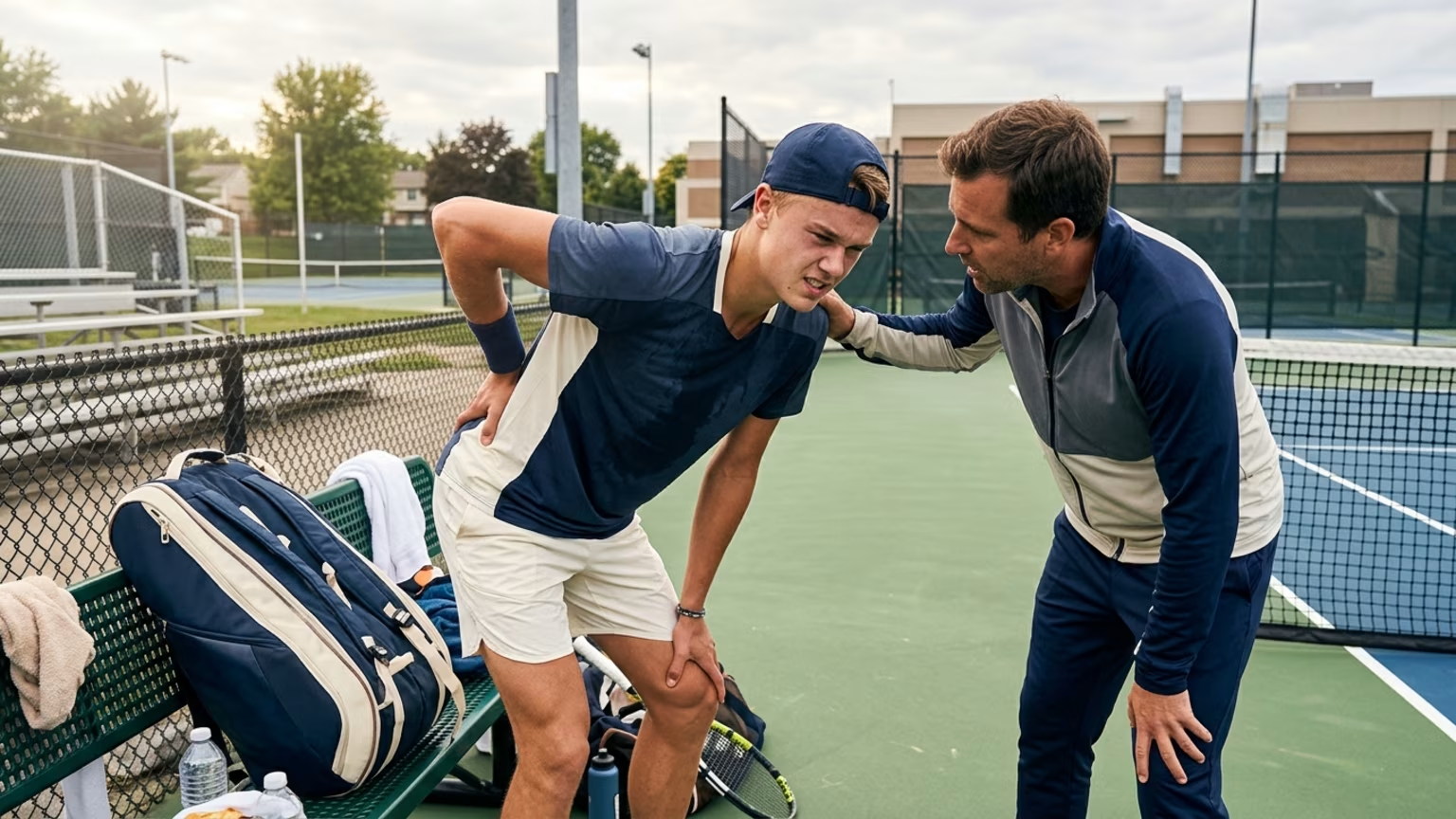
Holger Rune withdrew from the European Open with a back problem. The facts behind his decision and a grounded perspective for recreational players.

The Dink’s October 17 guide emphasizes deep returns, ball-height decisions and positioning against faster pickleball opponents.

A new report outlines padel and tennis gear trends. Learn how to assess adjustable rackets, sensor feedback and smart-court claims.
Read practical guidance for better movement, smarter preparation and a game that keeps working for you.
explore the Blog
