

A recent clinical advisory outlines safe lacrosse-ball massage practices for short-term muscle relief, emphasizing brief sessions and avoiding vulnerable areas.




On September 14, 2026, Acibadem HealthPoint published detailed clinical guidance outlining the safe use of lacrosse-ball massage for muscle discomfort and mobility. This advisory provides highly practical safety parameters for active adults seeking relief from routine stiffness. As racquet sports see massive participation growth, players frequently turn to self-administered recovery tools. This new guidance clarifies how to use these tools safely without aggravating underlying injuries or sensitizing crucial nerves.
The guidance frames lacrosse-ball massage strictly as a short-term comfort measure. It is not intended as a diagnostic tool or a cure for persistent pain. The advisory explicitly recommends beginning against a wall instead of the floor. This upright position allows users to apply gradual pressure and maintain much better control over the intensity.
Users are advised to target broad muscular areas for temporary relief. The buttocks, outer hip muscles, and calves are identified as potentially suitable regions. Other recommended spots include the soles of the feet and the upper-back muscles beside the shoulder blade. In all cases, the pressure should be manageable and applied gradually.
Acibadem HealthPoint specifically warns against applying direct pressure to vulnerable structural areas. These include the spinal column, tailbone, ribs, and joints. Users must also avoid the front of the neck, throat, abdomen, groin, and the area behind the knee. Direct pressure on arteries, veins, or any pulse point is strictly cautioned against.
The advisory outlines clear contraindications for self-massage. A lacrosse ball should not be used over open wounds, rashes, skin infections, or unexplained lumps. Individuals with severe osteoporosis, painful varicose veins, or recent surgical sites must avoid firm pressure. Anyone with fragile skin, peripheral neuropathy, or poor circulation should seek individualized medical advice before starting.
The guidance calls for extra caution for individuals taking anticoagulant or antiplatelet medications. Anyone with a history of blood clots, recent surgery, or bleeding disorders must also exercise extreme care. Those experiencing travel associated with new calf pain should avoid firm pressure entirely. In these specific scenarios, medical evaluation should precede any deep tissue work.
Users should stop immediately if they experience any concerning neurological symptoms. Electric-shock sensations, tingling, numbness, and dizziness are clear signals to halt the session. Sharp pain, burning pain, escalating discomfort, or pain spreading down a limb require prompt medical evaluation. The intended result is to feel the same or better afterward.
For the adult recreational racquet sports player, this guidance translates into a highly practical approach to physical maintenance. Professional athletes often receive regular manual therapy from licensed physiotherapists. These experts can accurately differentiate between normal muscle guarding and a sensitized nerve. Recreational players, however, usually navigate minor aches and post-match stiffness on their own.
This clinical advisory firmly pushes back against the idea that more pain equals a better recovery result. A tender point in the calf or hip is not always a trigger point requiring deep pressure. Tenderness can simply reflect recent exercise, protective muscle guarding, or an irritated joint. Pressing forcefully into these areas with a hard lacrosse ball can aggravate symptoms rather than relieve them.
Weekend players should treat self-massage as an optional mobility aid rather than a required treatment protocol. The technique can easily be paired with active recovery methods. Simple movements like walking or structured mobility routines often complement the temporary relief provided by self-massage. It should function as one small piece of a broader health management strategy.
At Evercourts, we consistently see players benefit from this measured approach to physical maintenance. Recreational players must respect next-day feedback from their bodies. If a targeted area remains tender the day after a session, players should reduce the pressure or frequency of use. Temporary comfort should never replace an accurate diagnosis for recurrent activity-related discomfort.
Recent clinical research heavily aligns with this restrained approach to self-myofascial release. A 2026 study evaluated the acute physical responses to different foam rolling protocols. The researchers observed short-term increases in range of motion that were comparable to traditional stretching in some specific analyses. However, they found no treatment-specific advantage when comparing low-volume rolling, high-volume rolling, and control conditions.
The data strongly suggests that extending the duration of self-massage does not multiply the physical benefits. The same 2026 study found no evidence that increasing rolling time from two minutes to ten minutes produced greater acute adaptations. This directly supports the clinical recommendation to keep recovery sessions brief and highly focused. Players looking to optimize their time should prioritize manageable pressure over long durations.
An expert consensus publication further reinforces the clinical limits of these recovery tools. This consensus describes myofascial release as having possible short-term functional benefits. However, the panel heavily cautions that broader and long-term effects remain highly uncertain. They recommend using self-massage strictly as an adjunct to education, active exercise, and self-management.
This evidence base confirms that hard massage tools cannot replace foundational fitness. While a lacrosse ball might temporarily relieve stiffness in the outer hip, it cannot strengthen the muscles responsible for court movement. Players switching between racquet sports should balance the varying athletic demands to build resilient joints. Recreational players should use the data to set realistic expectations for their recovery tools.
As competitive racquet sports continue to expand, expect clinical guidance to increasingly prioritize movement quality over aggressive deep-tissue interventions. The conversation around recovery will likely shift toward progressive load management. Players will need to focus more on structured warm-ups, consistent sleep habits, and fundamental movement mechanics. These foundational habits provide much stronger support for athletic longevity than isolated self-treatment.
Players who integrate brief, gentle self-massage into a comprehensive conditioning plan will see the best long-term outcomes. Relying on hard tools to simply push through acute injury will become a completely outdated approach. Over the next season, the most successful recreational athletes will treat temporary mobility aids as minor additions to robust training routines. This pragmatic approach will help players stay healthy, avoid unnecessary setbacks, and keep enjoying the court for years to come.
Follow Evercourts for practical insights on tennis, pickleball and padel performance, movement, recovery and healthy ageing. Stay connected for new articles, research-led guidance and ideas to help you play well and keep playing for years.


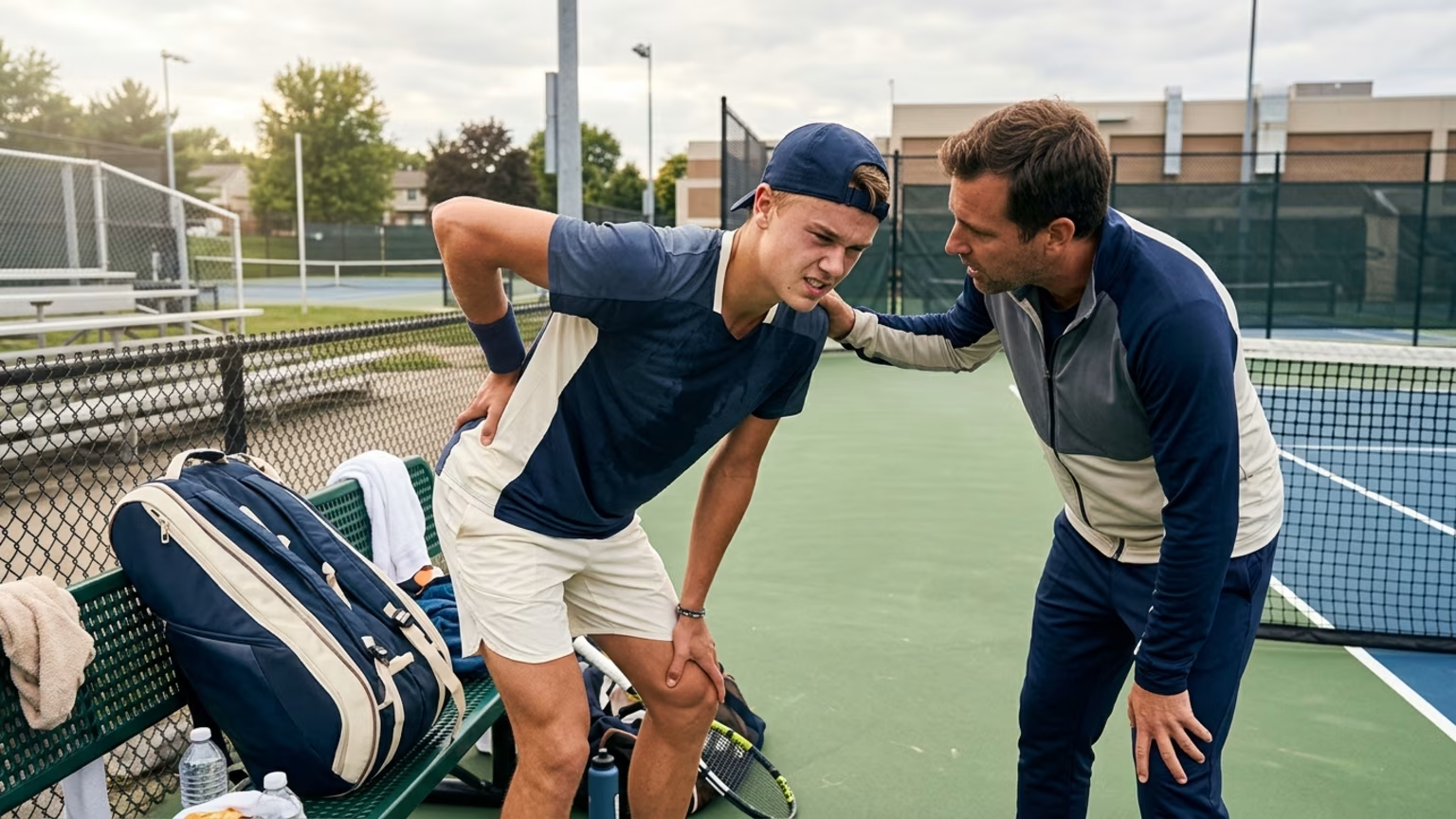
Holger Rune withdrew from the European Open with a back problem. The facts behind his decision and a grounded perspective for recreational players.

The Dink’s October 17 guide emphasizes deep returns, ball-height decisions and positioning against faster pickleball opponents.

A new report outlines padel and tennis gear trends. Learn how to assess adjustable rackets, sensor feedback and smart-court claims.
Read practical guidance for better movement, smarter preparation and a game that keeps working for you.
explore the Blog
