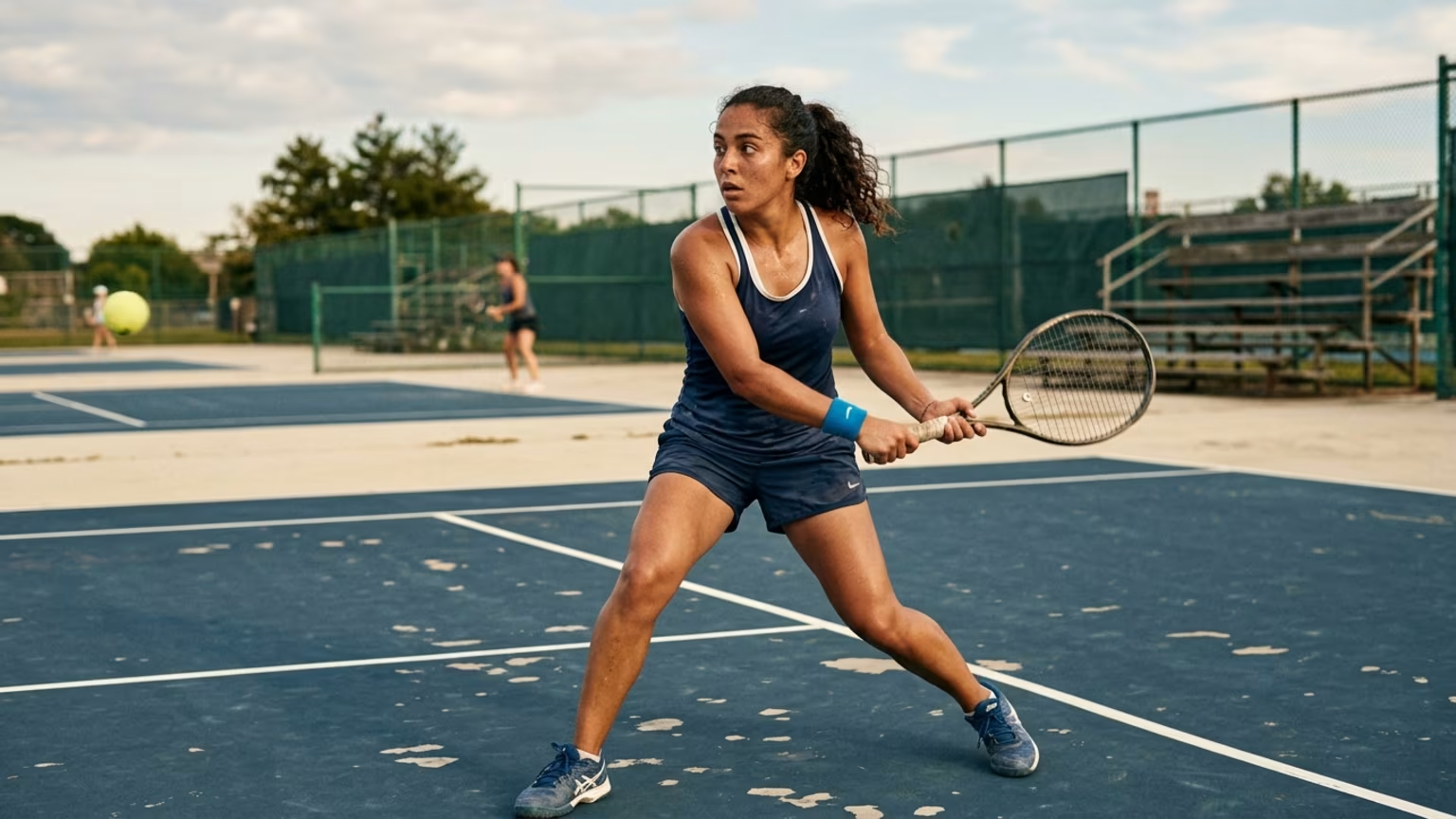

Improve your tennis, pickleball, and padel reaction speed by training anticipation and decision-making rather than just relying on raw physical reflexes.




One reported study found a 12.4% improvement in visual choice reaction time after eight weeks of combined visual and movement training in adults over 65. This finding matters because it highlights that response speed is a trainable sequence. We often mistake a slow read for a physically slow body. You have just finished a brutal three-setter, your knees are barking, and you are constantly a half-step late.
The immediate temptation is to blame your aging reflexes. But reading the court is about anticipation rather than just raw physical speed. A practical coaching description from pickleball training literature breaks this process into distinct phases. These phases include visual processing, decision making, and movement execution.
The goal of this protocol is to preserve your capabilities by training the perceptual decisions that precede physical movement. Athletic longevity requires understanding that reaction speed in racquet sports is a linked chain. If you only train your hands to move faster, you are missing the crucial anticipation phase. You must train the information that precedes movement instead of relying solely on physical quickness.
A few years ago, I realized my tennis serve speed was dropping, and my shoulder was constantly throbbing after matches. Instead of pushing through the pain, I took a month to rebuild my mechanics and focus on rotator cuff endurance.
I stopped trying to hit flat aces and developed a much heavier kick serve. My win rate actually went up, and my shoulder stopped hurting. Sometimes longevity means outsmarting your own ego on the court.
Similarly, outsmarting a loss of raw speed means learning to read the play earlier. Waiting for the ball to reveal its direction leaves less time for your movement phase. By recognizing cues early, you create the time necessary to execute a calm response.
Skilled players use information from an opponent before the ball completes its flight. Research summarized in a sport science review indicates that experts extract advanced information from opponent kinematics. This relevant information can include body orientation, trunk rotation, and court position. To build this habit, you need a progressive training plan that moves from predictable feeds to live rallies.
Begin with predictable feeds where you know the general direction and speed. The focus here is a balanced ready position, an effective split step, and efficient recovery after braking. You might use a short lateral shuffle to a cone before returning to your base. This stage prepares your posture rather than testing your reaction time.
A fast hand that is reached from a poor base may still produce an error on the court. Every reaction drill should include the ready position, a weight shift when appropriate, the first directional move, and recovery. You must train both your hands and your feet simultaneously. Isolated hand speed exercises do not directly transfer to complex court movements.
Finish each repetition with a controlled block or drive. Keep the emphasis on your first step quality and stopping under control. You want to rehearse a clean movement pattern without adding excessive cognitive load. Solidifying this physical base ensures you are ready for more complex visual reads.
Introduce a visual or verbal signal that dictates your subsequent movement. A published pickleball example used two color calls during cross court dinking. One color required a soft block, and the other color required a punch. The objective is to connect your perception to a specific physical choice.
You can progress this drill by giving the cue earlier or changing it randomly. Try requiring the player to say the decision aloud before moving. Adding a recovery movement after the shot further simulates real play. This progression prevents players from relying on automatic, mindless repetition.
Temporal occlusion involves showing an action up to a selected point and asking the player to predict the outcome. You can use video clips of an opponent preparing to strike. Pause the footage right before contact occurs. Ask yourself to predict the shot direction, depth, or type.
A correct answer based on a repeatable cue is far more valuable than a lucky guess. Mix easy and difficult clips so you cannot rely on timing alone. Identify the specific cue that informed your prediction to distinguish useful evidence from guessing. This practice makes the visual recognition process explicit.
Transition to a live partner who has only two or three permitted shot options. Your training partner might play only cross court or down the line. Progressively remove these constraints as your visual anticipation improves. You might eventually face three destinations with variable speed and height.
This structure preserves enough repetition for learning while introducing realistic uncertainty. It forces you to watch the body rather than staring exclusively at the ball. You must use these visual cues to form probabilities rather than predictions with absolute certainty.
An open stance or defensive position may make some outcomes more likely. However, skilled opponents can still disguise their shots effectively. The correct goal is to improve your first movement while retaining the ability to adjust.
Training must eventually resemble competition to ensure the skills transfer effectively. A recent review of neuromuscular training in tennis found low certainty evidence for physical improvements. The same review noted that no specific training method guarantees match transfer. Therefore, you should use conditioned points where you start from the transition zone.
Award yourself an extra point for an early, balanced read rather than merely winning the rally. Require the receiver to call out the shot depth immediately after the opponent makes contact. Add fatigue carefully by using short work periods and full quality recovery. This prevents the drill from turning into an uncontrolled conditioning test.
The mechanics of anticipation must change depending on your specific sport's court geometry and movement demands. In tennis, you have more distance to observe the incoming ball. Reading the opponent's trunk rotation and shoulder preparation becomes incredibly important. Tennis players should focus heavily on temporal occlusion drills for the serve and heavy baseline drives.
Pickleball demands much faster perceptual cycles due to the shortened court dimensions. Players should prioritize two color call drills during rapid dinking exchanges. The focus shifts to recognizing paddle face angles and exact contact height. Your decision in pickleball often comes down to choosing between a soft block or a firm reset.
Padel introduces the added complexity of the surrounding glass walls. Players must anticipate not only the initial strike but the subsequent rebound trajectory. Conditioning drills should include reading whether the opponent is shaping up for a flat drive or a lob. Proper anticipation in padel prevents you from getting trapped in poor defensive positions.
Before you step onto the court, review these steps to prime your perceptual decision making. A time efficient weekly plan can include short perceptual sessions alongside technical reaction blocks. Remember to log your errors accurately rather than labeling every mistake a slow reflex. Ask yourself what information you had before the ball arrived.
After each late response during a match, ask yourself a simple diagnostic question. Did I see the cue late, choose the wrong option, or move inefficiently? This honest diagnosis tells you whether to prioritize video anticipation, decision drills, or movement work. Identifying the specific failure point prevents you from feeling helpless against faster players.
The next time you find yourself staring down that opponent at the net, you will not feel stuck waiting for the blur. You will have already read their shoulders, shifted your weight, and prepared your response. Early anticipation allows you to act before they even finish their swing. You will replace frustration with the quiet confidence of being fully court ready.
Follow Evercourts for practical insights on tennis, pickleball and padel performance, movement, recovery and healthy ageing. Stay connected for new articles, research-led guidance and ideas to help you play well and keep playing for years.


Holger Rune withdrew from the European Open with a back problem. The facts behind his decision and a grounded perspective for recreational players.

The Dink’s October 17 guide emphasizes deep returns, ball-height decisions and positioning against faster pickleball opponents.

A new report outlines padel and tennis gear trends. Learn how to assess adjustable rackets, sensor feedback and smart-court claims.
Read practical guidance for better movement, smarter preparation and a game that keeps working for you.
explore the Blog
