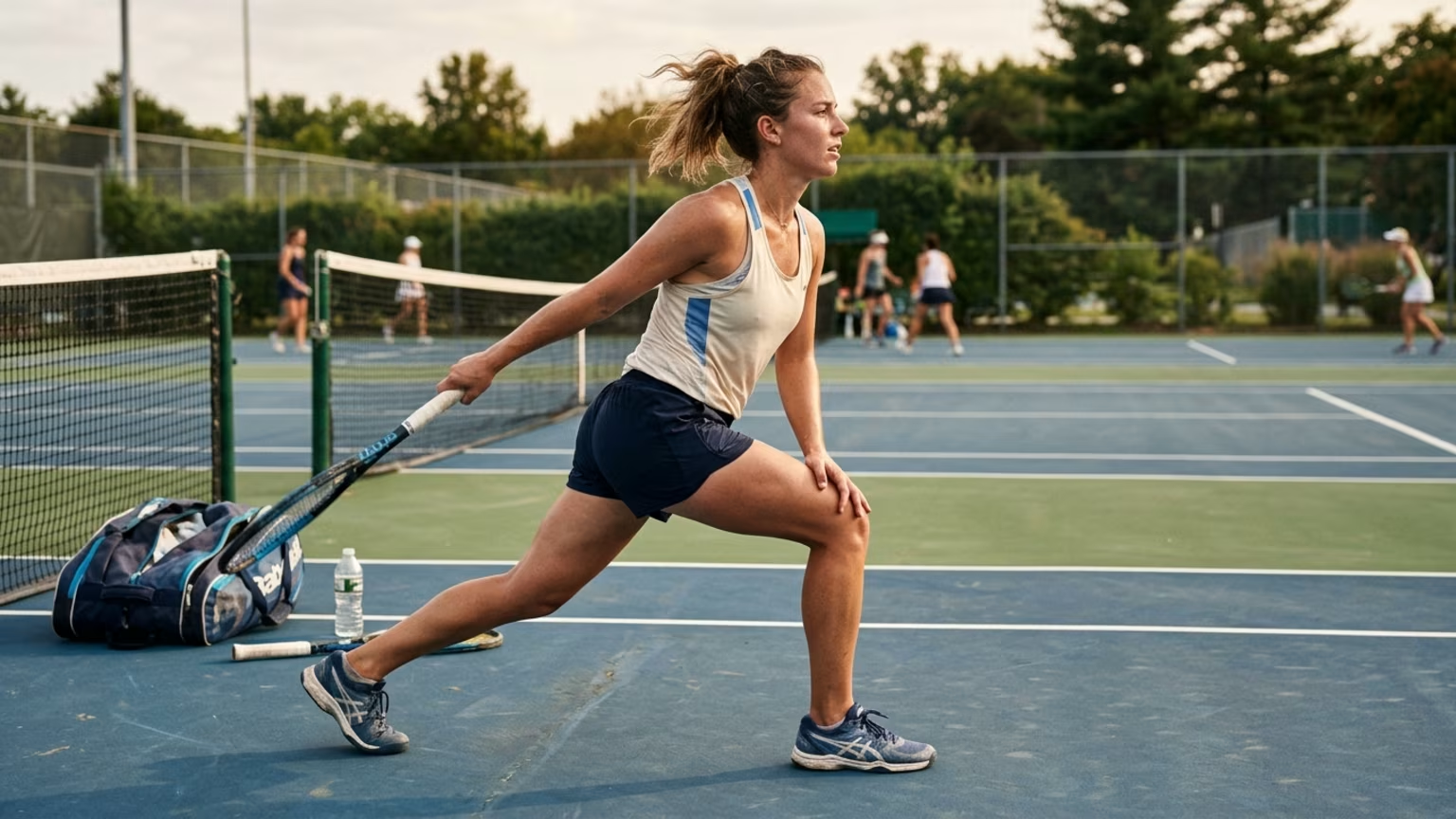

Learn why a 10-minute dynamic warm-up outperforms static stretching for tennis, pickleball, and padel. Discover practical routines for racquet sports.




Research published in PubMed notes that dynamic stretching yields an approximate 0.5% performance benefit over control conditions. That number is small, but it highlights a critical shift in how we prepare for physical exertion.
You have heard it a million times: you must hold long, passive stretches before hitting the court. Here is why that is outdated.
Static stretching remains highly useful for improving your overall range of motion over time. However, dynamic movement is generally better suited to preparing your body for immediate, explosive performance. Racquet sports require rapid acceleration and force production on unpredictable surfaces. This means your warm-up must closely match those physical demands.
Most adult players learned how to warm up in high school gym classes. Coaches would instruct everyone to sit in a circle, pull their heels together, and hold a stretch for a full minute. It is easy to see why players still trust this method today.
Long static holds create a deep stretching sensation that feels like meaningful preparation. When your lower back aches before a match, pulling your knee to your chest feels like a highly logical fix. Players understandably rely on these familiar routines to calm their pre-match anxiety.
Unfortunately, this approach treats the pre-game window as a flexibility test instead of a movement rehearsal. Passive holds do not raise your core temperature or prepare your nervous system for fast decisions. Trusting an outdated gym class routine leaves your joints completely unprepared for the intense lateral movements of modern racquet sports.
The evidence shows that static stretching can temporarily reduce performance when athletes need immediate power. A complete warm-up must progressively prepare the specific joints and movement patterns that racquet players actually use. This means loading the ankles for braking, stabilizing the hips for split steps, and rotating the trunk for strokes.
Neuromuscular preparation is far more critical than simply loosening resting muscles. A 2026 review found that neuromuscular training programs are associated with better dynamic ankle function and a lower risk of ankle injuries. Integrating single-leg balance and controlled lateral steps trains your nervous system to handle sudden changes in direction. This is why a well structured 10-minute court-ready warm-up ensures you prepare your body for the very first ball.
Every time you plant your foot to return a serve, your body relies on complex neuromuscular communication. If your warm-up only consists of passive stretching, your nervous system remains essentially asleep. A dynamic routine wakes up these neural pathways, allowing your muscles to contract and stabilize your joints instantly.
Your brain also requires specific preparation before you step onto the court. A pooled analysis reported small positive effects of aerobic exercise on executive functions like working memory and cognitive flexibility. Research published in ScienceDaily notes that morning exercise can influence decision-making across the entire day.
However, you must balance this effort with external environmental conditions. Professor Girard of the University of Western Australia warns that heat stress and poor work-to-rest ratios can severely impair decision-making. In hot conditions, players should keep the warm-up progressive and controlled rather than exhausting themselves before the match even begins.
Coaching and sports medicine sources commonly recommend progressing from easy movement to dynamic mobility and sport-specific drills. You can accomplish this with a structured 10-minute routine that builds intensity without causing fatigue.
Begin with an easy jog, a brisk walk, or gentle court shuffles to raise your body temperature. This first phase should last roughly ninety seconds and increase your general readiness without causing breathlessness. Follow this with ankle circles, calf raises, and low two-foot pogo hops to prepare your foot mechanics.
These specific ankle exercises build the stiffness and landing control required for sudden stops. Building this capacity is crucial for better controlled braking on the court.
Move into walking knee hugs, lateral lunges, and low lateral shuffles to prepare your lower body for split steps. These movements specifically challenge your hips to accept lateral forces smoothly. Next, perform controlled standing trunk rotations to rehearse the crucial separation between your pelvis and your upper body.
This core rotation is the foundation of every powerful forehand and backhand stroke. Proper trunk preparation prevents you from overusing your arms during long rallies. These movements provide an excellent foundation for sustainable strength training strategies you might use throughout your training week.
Finish the physical preparation block with arm circles, cross-body swings, and easy shadow swings. This prepares the shoulder and scapular system before you start hitting hard overheads. Next, challenge your balance with single-leg reaches or controlled crossover steps to refine your braking control.
Finally, add simple decision-making drills to link your perception with your footwork. Have a partner point left or right, and react immediately with a quick split step and shadow stroke.
For tennis players, this routine translates directly into better court coverage. The progressive shadow serves and short acceleration patterns mimic the exact forces of a grueling baseline rally. The focus on shoulder and trunk rotation protects against the repetitive strain of serving.
Pickleball requires a slightly different approach due to the smaller court dimensions. Pickleball players should emphasize compact split steps, low athletic positions, and controlled shoulder preparation for drives. The fast-paced nature of the kitchen line demands rapid reactions rather than long sprints.
Padel introduces the unique element of the surrounding walls. Padel players must include lateral shuffles, crossover steps, and shadow movements that reflect volleys and lobs. Reacting to a ball rebounding off the glass requires excellent spatial awareness and flexible hip positioning.
The New Golden Rule is simple: warm up the specific movements you will actually use on the court, rather than passively holding stretches. Treat your preparation as a progressive rehearsal of the acceleration, rotation, and decision-making required by your sport.
Use static stretching primarily in a separate flexibility session after play, when your objective is strictly range of motion. During those ten minutes before a match, focus entirely on neuromuscular readiness and controlled joint mobility.
When you align your preparation with the actual demands of the sport, the game feels less like a sudden shock to the system. The transition from walking onto the court to striking the first ball becomes seamless. True physical readiness simply feels like stepping into a rhythm you have already established.
Follow Evercourts for practical insights on tennis, pickleball and padel performance, movement, recovery and healthy ageing. Stay connected for new articles, research-led guidance and ideas to help you play well and keep playing for years.


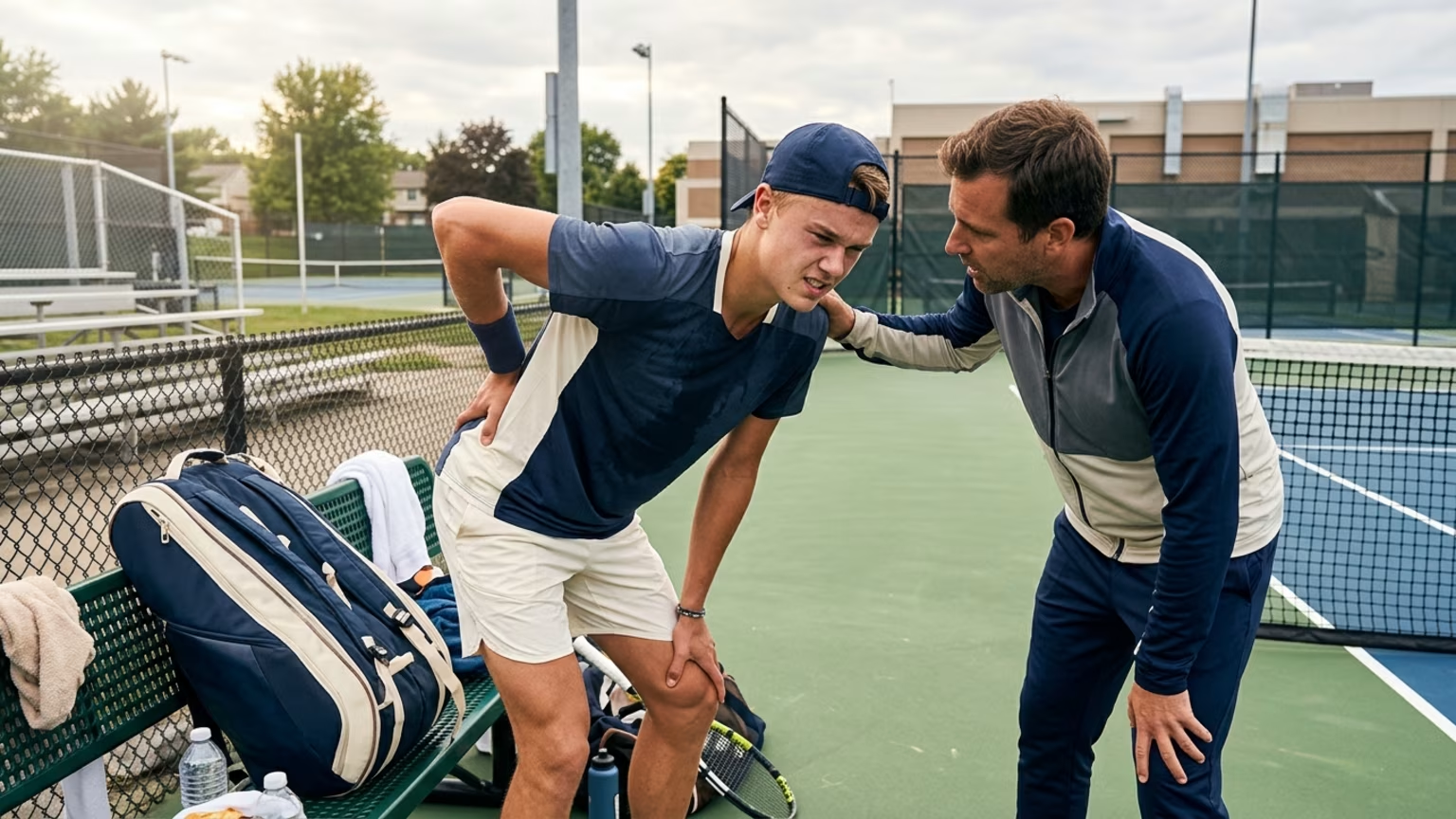
Holger Rune withdrew from the European Open with a back problem. The facts behind his decision and a grounded perspective for recreational players.

The Dink’s October 17 guide emphasizes deep returns, ball-height decisions and positioning against faster pickleball opponents.

A new report outlines padel and tennis gear trends. Learn how to assess adjustable rackets, sensor feedback and smart-court claims.
Read practical guidance for better movement, smarter preparation and a game that keeps working for you.
explore the Blog
