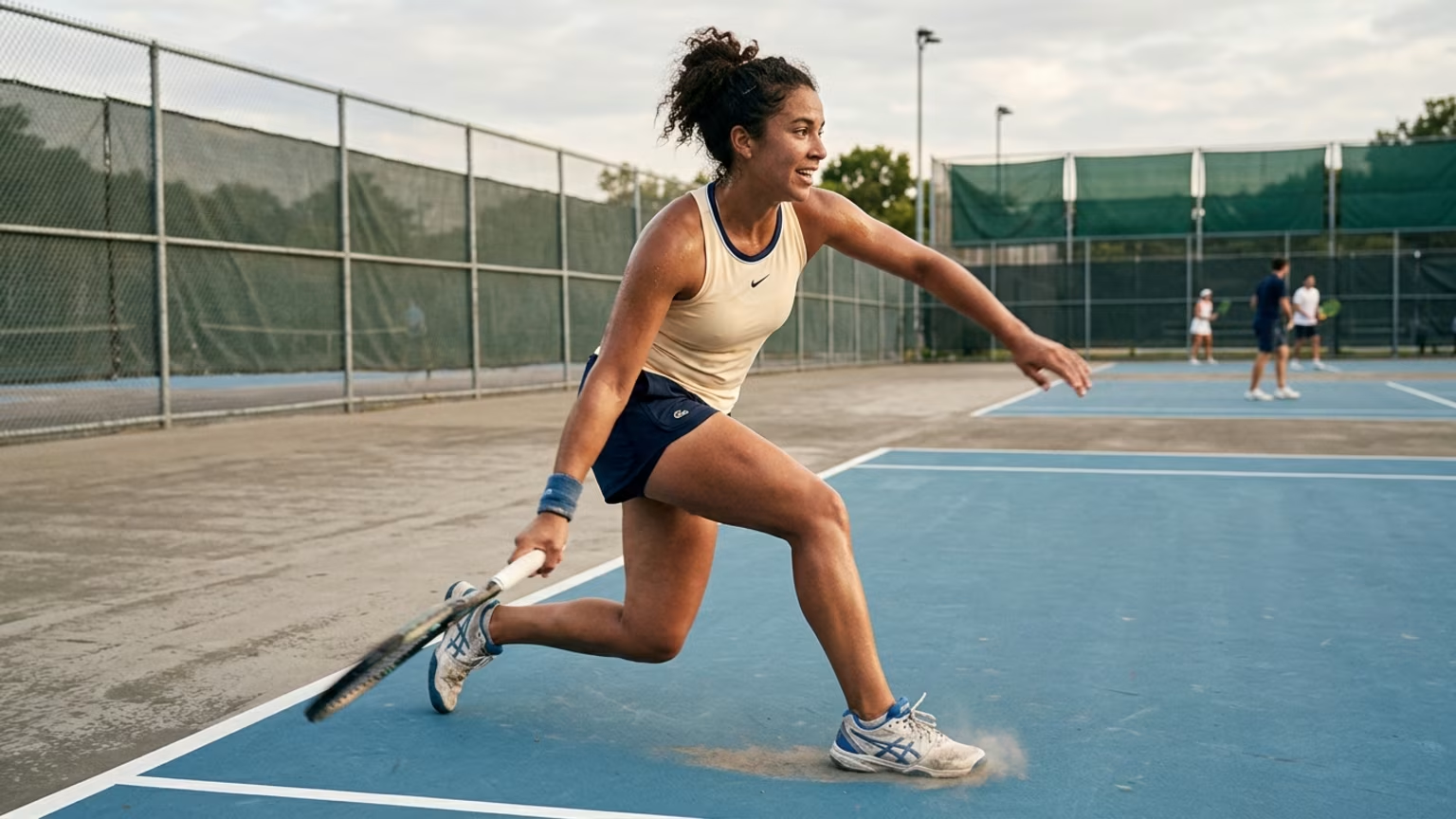

Learn why braking and deceleration matter more than pure sprint speed in tennis, pickleball and padel, with practical court drills for athletic longevity.




Pure speed focuses strictly on reaching the ball as quickly as possible. This aggressive acceleration is a natural response during competitive play, especially when facing a wide angle. However, a faster first step is useful only if the player can dissipate momentum before reaching the ball. Without a clear stopping strategy, running fast often creates larger functional problems upon arrival.
When players run at maximum capacity without planning their stop, they often arrive completely out of control. Arriving too fast means you must reach, hit awkwardly or take extra steps to regain balance. This turns a theoretical speed advantage into a positioning and accuracy problem. The extra recovery steps required to slow down often leave the opposite side of the court entirely exposed.
Speed alone cannot secure a point if the body is totally off-balance during the strike. The focus on top-end sprinting speed often overlooks the critical moments right before the shot. While acceleration gets you to the ball, it does not guarantee a quality return. True court coverage requires a balance of quick starts and controlled stops.
A change of direction is not one isolated plant step. It is better understood as a sequence involving initiation, preparation, execution and follow-through. The penultimate foot contact is particularly important during sharper turns. This second-to-last step begins the braking process and helps reduce the load that the final plant must handle.
The player’s task is to redirect the body’s center of mass toward a new path. Lowering the center of mass by flexing at the hips, knees and ankles can help the player create a stable position from which to absorb force and push in the new direction. The final plant should be viewed as a transition between force absorption and propulsion. This approach ensures players can redirect force and begin the next movement smoothly.
A 2025 review of change-of-direction biomechanics identified several important movement factors. These include braking forces, propulsive forces, center-of-mass height and lower-limb power. By focusing on these specific mechanics, players can execute difficult shots while maintaining a clean recovery path. Adding targeted deceleration training helps adult players handle these complex physical sequences safely.
To develop these skills safely, adult players should focus on positions, timing and accuracy.
Tennis. Tennis requires repeated acceleration, deceleration, changes of direction and stroke execution. Match-analysis research shows that change-of-direction actions occur frequently during professional play. Players must navigate a large court area while maintaining enough balance to execute technically demanding groundstrokes. A 2026 systematic review of tennis neuromuscular-training studies included 18 studies and 670 participants; its pooled results favored training for agility time, with Hedges’ g of −0.89, although the authors rated the certainty of evidence as very low for several outcomes.
Pickleball. The compact court creates frequent short stop-start movements. A sports-physiotherapy guide highlights compact-court lateral loading as a demand on the ankle and Achilles. One report says U.S. emergency-room estimates rose from 8,304 cases in 2018 to 32,960 in 2024, but it also notes that the available data do not show whether the injury rate per player or per hour increased because participation grew substantially during the same period. Mastering precise stops near the non-volley zone is crucial for staying in the point safely.
Padel. Padel combines short accelerations with lateral movement and recovery around the service box. Players must arrive in a position that permits a balanced shot and an immediate recovery route. The presence of walls requires constant adjustments to ball trajectories and unexpected rebound angles. A tennis-footwork coaching source specifically identifies crossover or cross-behind steps as options when greater recovery distance is required. Learning how to properly manage knee loads during these multidirectional rallies is highly beneficial.
When it comes to staying on court for life, controlled braking easily outperforms pure sprint speed. A player who brakes effectively can use the final contact to redirect force, stabilize the trunk and begin the next movement. This efficiency prevents you from spending several steps recovering from an uncontrolled arrival. Being able to stop safely protects your body and sets up sustainable movement habits.
Prioritizing arrival quality over maximum speed minimizes unnecessary joint stress and helps maintain tactical positioning. Focusing on the penultimate step and balanced center of mass transforms chaotic scrambles into smooth, controlled actions. A measured approach ensures you are training the exact mechanisms your body uses during actual match play. Understanding these elements fits perfectly with smart post-match recovery strategies for adult players.
Speed may get you to the ball today, but braking ensures you can safely hit it again tomorrow. The best racquet athletes earn their speed through flawless deceleration rather than raw sprinting power. By mastering the art of stopping, you give yourself the best chance at a long and healthy playing career. evercourts remains dedicated to helping you move efficiently and play smarter for years to come.
Follow Evercourts for practical insights on tennis, pickleball and padel performance, movement, recovery and healthy ageing. Stay connected for new articles, research-led guidance and ideas to help you play well and keep playing for years.


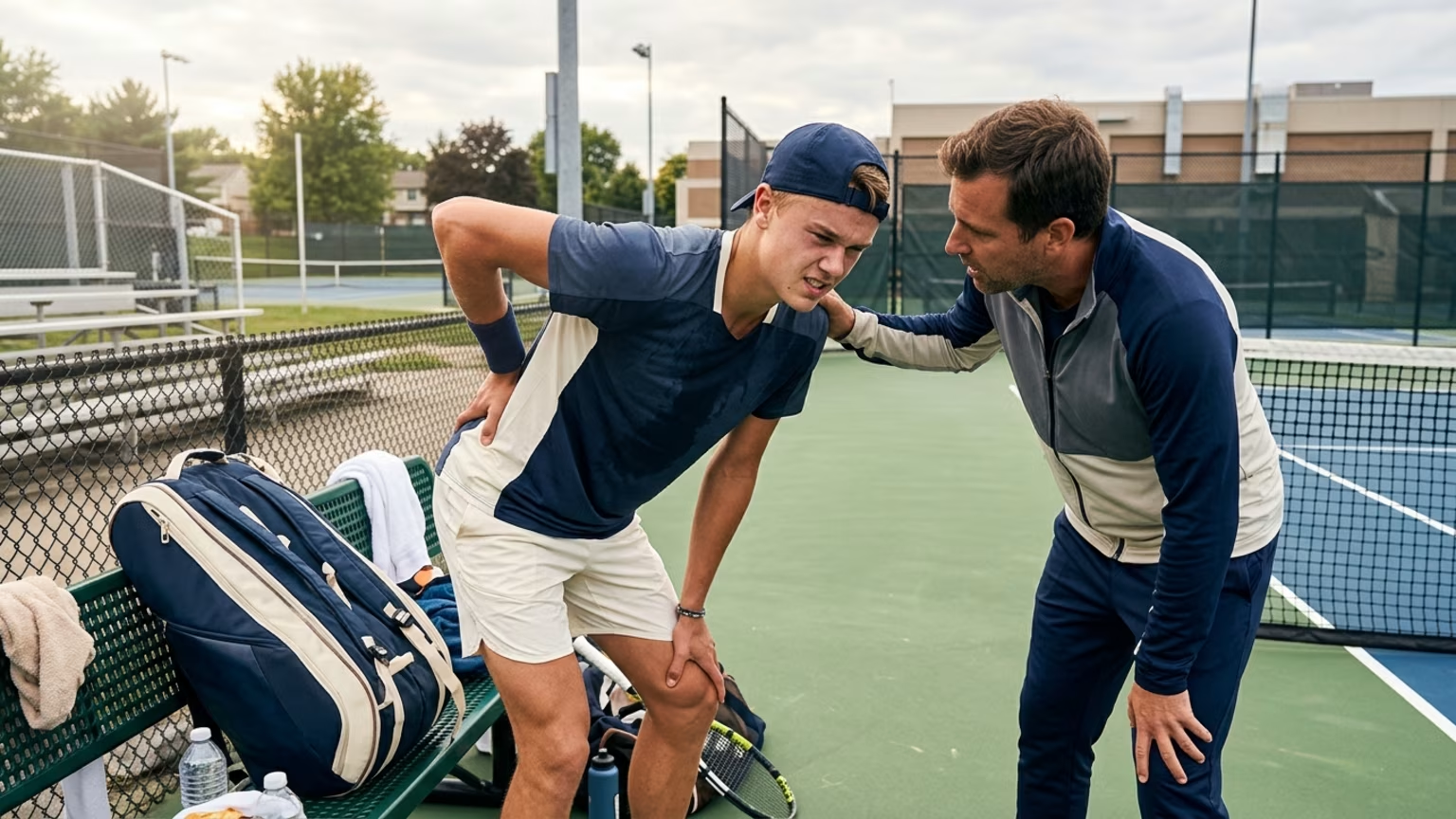
Holger Rune withdrew from the European Open with a back problem. The facts behind his decision and a grounded perspective for recreational players.

The Dink’s October 17 guide emphasizes deep returns, ball-height decisions and positioning against faster pickleball opponents.

A new report outlines padel and tennis gear trends. Learn how to assess adjustable rackets, sensor feedback and smart-court claims.
Read practical guidance for better movement, smarter preparation and a game that keeps working for you.
explore the Blog
