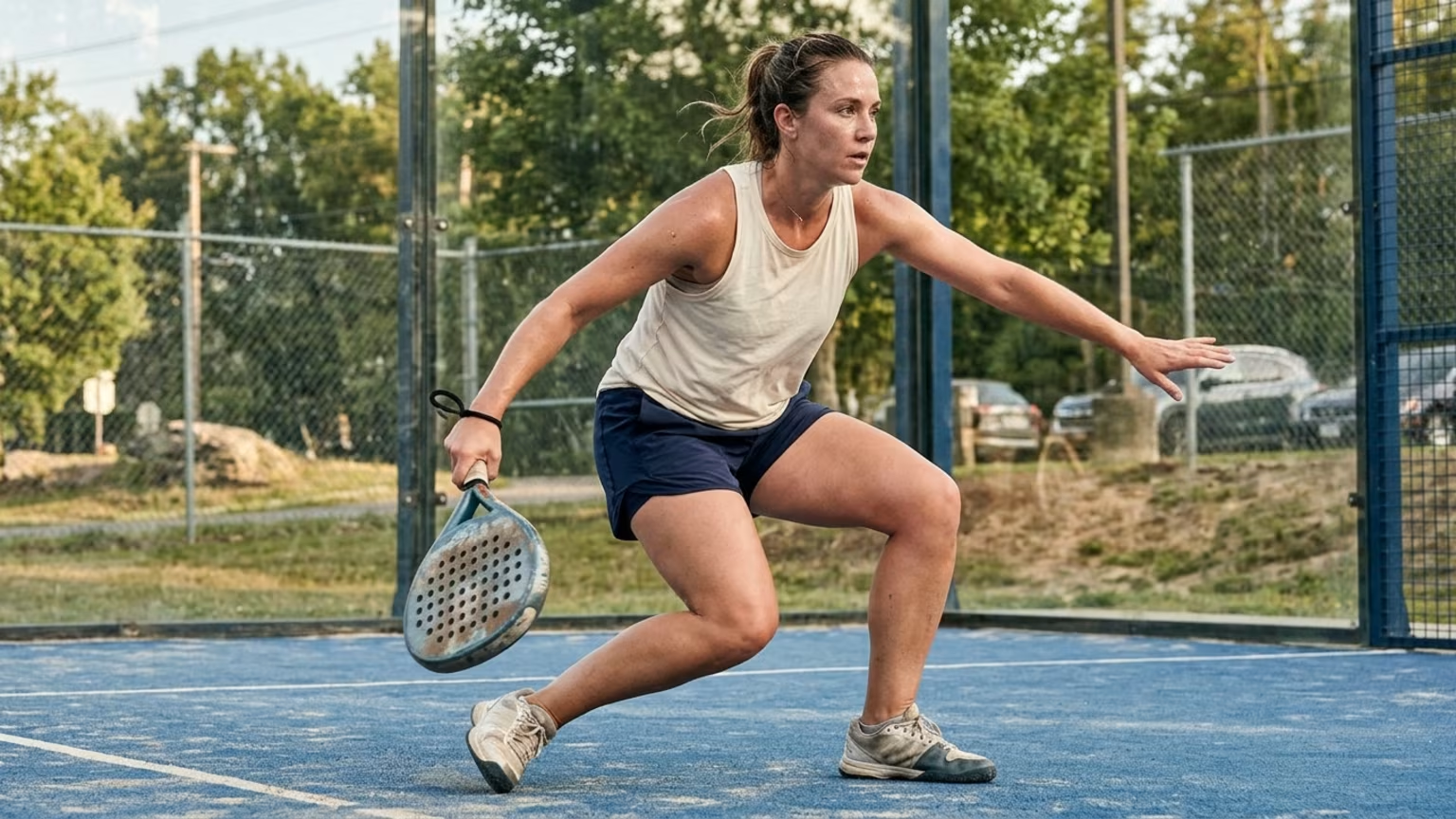

A practical padel strength and balance framework built around controlled movement, supported options and gradual returns after a break.




Strength and balance training means practising leg movements and steady positions at a level you can control.
That gives adult padel players a useful way to think about off-court work. The starting question is not how demanding a drill looks, but whether its demands are manageable. The framework below centres on controlled leg work, supported balance and gradual changes in difficulty.
For padel players preparing for repeated bursts, lateral steps and quick turns, training is about more than completing a hard session. A useful aim is to distinguish movement that can be controlled from movement that is simply fast.
One padel-focused coaching resource recommends substituting steady marching or supported movement for hops and quick direction changes when needed. The substitution keeps movement practice in the framework without making speed or impact a requirement.
Tennis and pickleball players can frame their own repeated bursts and changes of direction around the same question: what level of movement remains manageable? This article keeps the exercise discussion focused on padel rather than treating the sports as interchangeable.
Our guide to preparing for braking and redirection considers that movement-control question in more detail.
The recommendations here come from coaching and practitioner pages, not padel-specific training trials. They offer a practical framework but do not establish that a particular exercise sequence prevents injury. They also do not provide an age-specific prescription or a tested return-to-padel timetable.
A padel-focused prevention resource recommends controllable strength, balance and flexibility work. Its progression advice is specific: change one demand at a time and use supported options where appropriate. A separate padel fitness article cautions that playing is not a balanced strength programme and suggests resistance work away from matches.
Taken together, these recommendations support organising off-court preparation around three ideas.
Controllable leg work comes before chasing a harder variation. The practical starting point is a comfortable range of movement and steady repetitions. The aim is to choose a version whose demands remain manageable rather than assume that the most difficult option is the most useful.
That describes how to select a starting level. It is not an exercise menu or an individual assessment. Evercourts’ guide to building a lower-body training foundation offers related reading on strength and balance.
The coaching resource lists tandem stance, heel-to-toe walking and supported single-leg standing. These are examples of balance work with manageable options, not a compulsory sequence.
In this framework, stable support belongs nearby and progression depends on maintaining control. Supported practice is part of the approach rather than a stage to hurry through.
Repetitions, resistance, reach and speed are examples of demands that can be adjusted. The coaching advice is to change one at a time.
Those variables describe different kinds of change. Adding repetitions changes how much work is repeated. More resistance changes the load, while a longer reach or greater speed changes another part of the task. The framework keeps those choices separate rather than treating every form of progression as interchangeable.
That also gives players a clearer way to discuss training with a coach or clinician: name the demand being adjusted rather than describe the whole session as harder. It keeps the conversation specific without turning a general article into a personal programme.
For a player who is not ready for hops or quick direction changes, the same resource offers steady marching or supported movement instead. The useful progression question is therefore about control, not whether an exercise looks more athletic.
Athletic longevity is a useful lens for these decisions: off-court work should serve continued participation rather than become a separate contest. The framework leaves room to make a task simpler when needed and more demanding when control is maintained. There is no need to attach those choices to an age label.
An adult player adapting training over time can consider the same options described above: supported balance, manageable leg work and a single changing demand. The goal is a training approach that respects present capacity instead of treating past fitness as a current training target.
For a return after a break, a sports-medicine clinic advises building match frequency steadily and avoiding long tournament days until accustomed to playing. That advice keeps the return focused on gradual exposure rather than immediately recreating the old playing schedule.
Keep the decisions about court exposure and resistance work distinct. The fitness source’s recommendation for separate strength work is a useful reminder that adding matches and developing an off-court routine are not the same decision. Both belong in the overall conversation about what is manageable.
Evercourts’ article on building off-court habits around continued play provides broader context for that conversation.
If recurring aches, stiffness or concerns about balance are driving changes to play, take those questions to a qualified physiotherapist or healthcare provider. The same applies when returning after a break involves uncertainty about what movements are appropriate for your situation.
Use the framework to describe what you are trying to do and where control feels uncertain. Decisions shaped by symptoms or an existing health concern belong in an individual conversation rather than being settled by a generic exercise progression.
Keep the next step controlled and the longer view in sight.
Follow Evercourts for practical insights on tennis, pickleball and padel performance, movement, recovery and healthy ageing. Stay connected for new articles, research-led guidance and ideas to help you play well and keep playing for years.


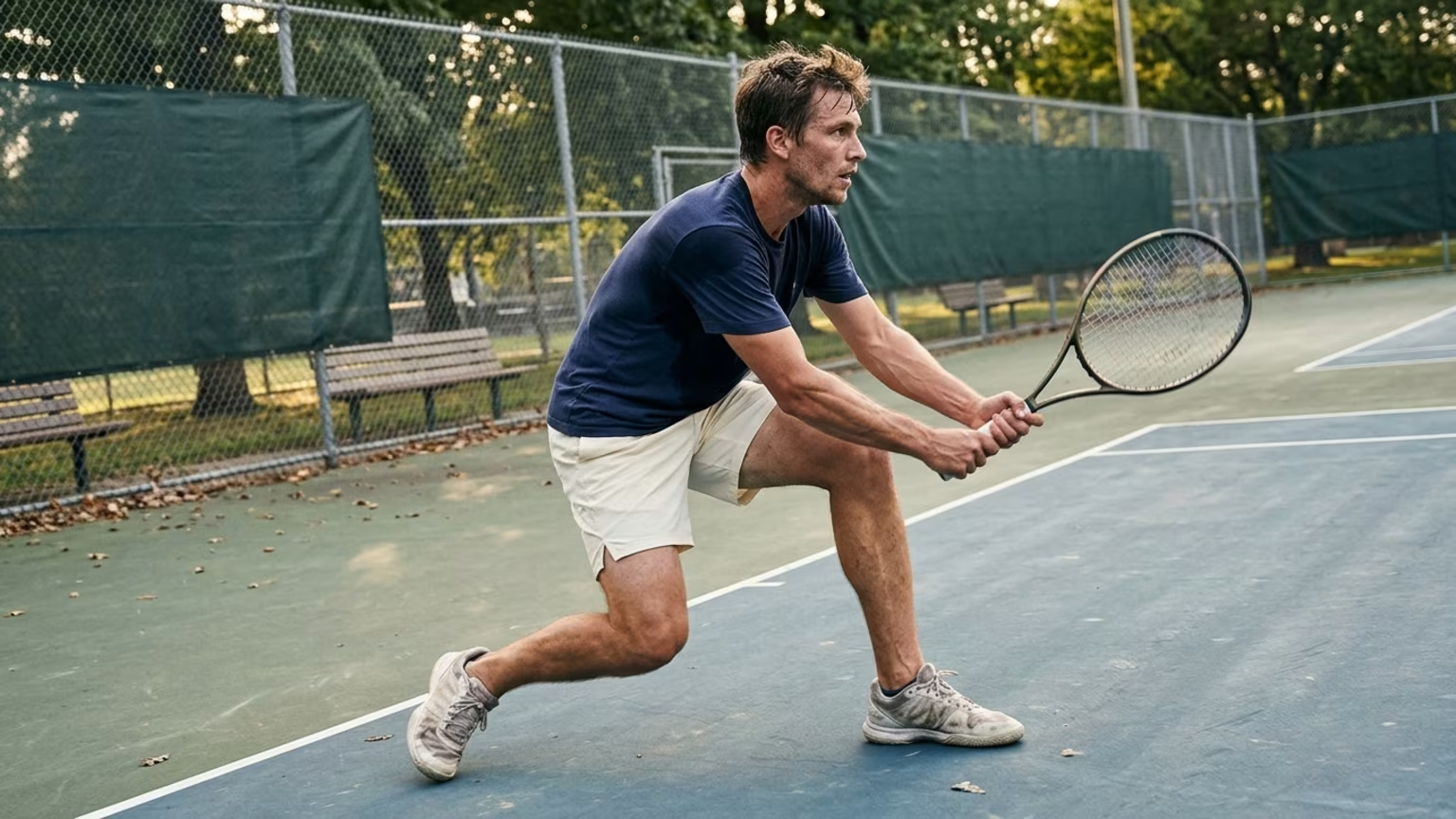
Understand deceleration in tennis, the research on braking strength, and how controlled movement practice fits long-term court preparation.
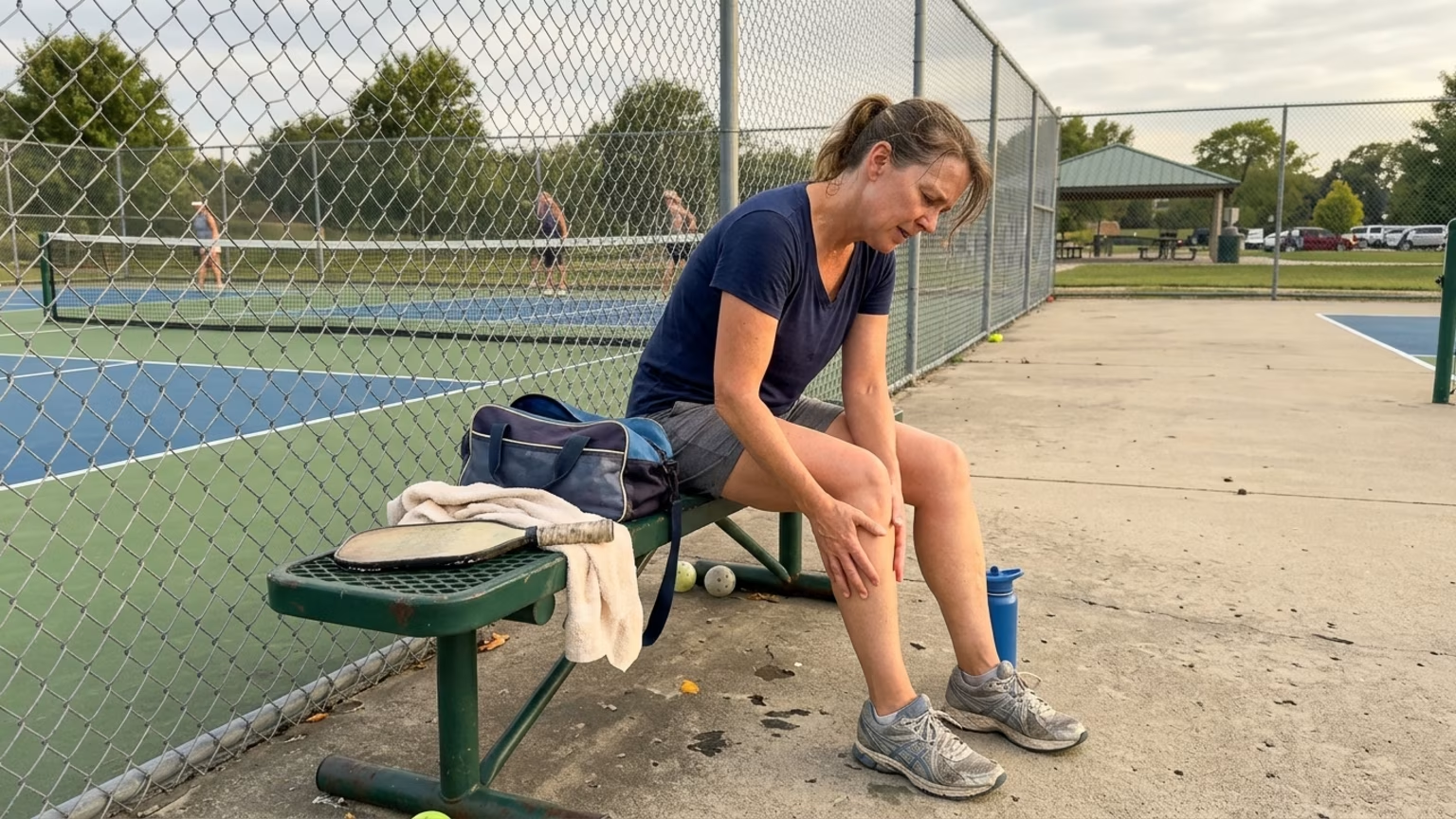
Four practical answers on post-play soreness, warm-up decisions, recurring pain and warning signs for tennis, padel and pickleball players.

Agassi and Graf’s company has proposed a pickleball and padel club network. Here is what traveling players should watch before changing memberships.
Read practical guidance for better movement, smarter preparation and a game that keeps working for you.
explore the Blog
