
Organize racquet-sport strength work around lunges, lateral movement, rotation and shoulder work, with exercise options and clear evidence limits.




Movement-pattern strength training means organizing exercises around actions such as lunging, moving sideways, turning your trunk and using your shoulders. For racquet-sport players, it connects exercise choices to the movements they repeat on court.
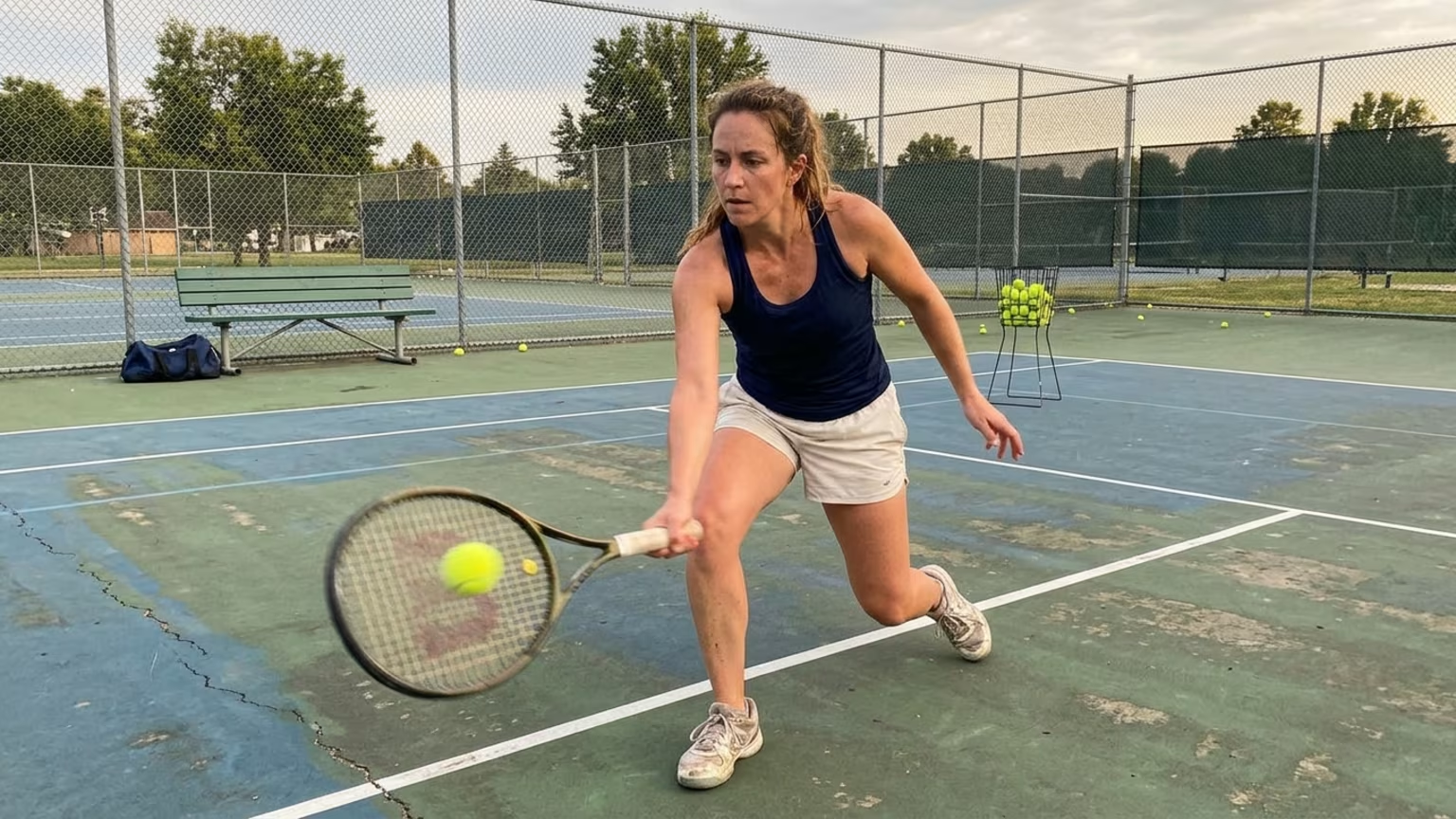
The starting point is the action, not the exercise name. A lunge belongs in a discussion about reaching into a shot. A rotational exercise belongs in a discussion about managing trunk movement. This gives a strength plan a clear purpose without making every gym exercise imitate a rally.
That distinction matters: a movement map is a way to organize training, while exercise selection still needs to reflect the player. The useful question is which court movement a training option is intended to support.
Repeated explosive efforts and changes of direction make movement patterns a useful lens for court preparation. Instead of treating every rally as the same physical task, separate reaching, lateral movement and rotation when discussing off-court work.
A tennis coaching guide groups squat variations, single-leg exercises, rotational woodchops and shoulder-focused band work among its recommended options. Another tennis training guide includes lunges and short lateral shuffles. Those examples give tennis players a vocabulary for discussing the bursts of movement and changes of position that strength work is meant to support.
A pickleball fitness article describes forward and backward movement alongside reaching, rotation and lateral shuffling. It also says pace and playing format matter when considering exercise suitability for older adults. That makes the actual game being played more informative than the label “pickleball” alone.
For padel players, the practical interpretation is to use these categories to discuss the bursts, reaches and direction changes in their own matches. The starting question is which movements need attention, rather than whether a tennis exercise list should be copied unchanged.
A sensible reading of the evidence separates exercise examples from evidence about health outcomes. The pickleball article reports that a scoping review of 27 research articles described the sport as a promising exercise intervention and noted health and fitness benefits among older players.
The Dink reports that a fitness expert recommends full-body muscle-strengthening exercise two days per week, separate from aerobic activity. That puts strength work into the wider exercise conversation rather than treating court time as the entire plan.
The exercise examples are coaching guidance, not a controlled trial of one routine across tennis, pickleball and padel. The reported review does not provide its methods or individual effects, so it does not establish a particular strength-training effect. These sources do not define exact loads, repetition targets or a progression schedule. The frequency recommendation is expert guidance rather than a sport-specific ideal.
With those distinctions clear, the exercise options fit into several useful categories.
Both tennis guides include single-leg work. The examples include a lunge, a split squat and a rear-foot-supported split squat. In this movement map, they sit beside the question of how a player approaches a reach into a shot.
Squats and squat variations also appear in the coaching guide. They can sit alongside single-leg work in the plan rather than being treated as competing choices.
The tennis training guide lists short lateral shuffles. The pickleball article describes lateral shuffling during play, giving this category a direct connection to the source material. Keep the purpose visible: this part of the map concerns side-to-side movement rather than simply another leg exercise.
The tennis coaching guide includes rotational woodchops. The other training guide lists medicine-ball throws as a power option. For planning purposes, distinguish turning the trunk from resisting unwanted turning, often called anti-rotation.
The practical aim is to identify which trunk action is being considered. A throw and a controlled rotational exercise need not occupy the same role merely because both involve trunk movement.
Band external rotations appear in the tennis coaching guidance as rotator-cuff work. This gives shoulder training its own place in the map rather than leaving upper-body exercise choices unrelated to court movement.
Understanding the map gives adult players a more useful long-term training question: which movements do they want to keep available? Reaching, moving laterally and managing rotation provide concrete subjects for that conversation. Athletic longevity becomes a matter of purpose rather than choosing the hardest-looking exercise.
An editorial way to scale the listed options is to change the challenge while keeping movement control central. Possible choices include:
These are choices to discuss, not a required order. More load and more speed are different decisions. The purpose of a variation should stay visible even when its difficulty changes.
That movement-first perspective also helps organize a broader training conversation. Evercourts' guide to strength that relates to court actions offers related reading. Pickleball players can connect this framework with conditioning for lateral net movement, while balancing court time with off-court work addresses the planning side.
Over time, keep the questions specific: which movement is being addressed, what is the chosen exercise meant to contribute and does the current variation still serve that purpose? This is a clearer foundation for discussing a routine than judging it by how exhausting it looks.
Recurring aches or stiffness are reasons to take the conversation to a qualified physiotherapist or healthcare provider. If discomfort is changing how you lunge, move sideways or reach, seek individual advice rather than using an exercise list to make a health decision.
Bring the movements that concern you into that discussion, along with the exercise variations you are considering. A provider can address personal health questions that sit outside a general movement framework. This article offers an organizing idea, not a diagnosis or treatment plan.
Keep future court time in view.
Follow Evercourts for practical insights on tennis, pickleball and padel performance, movement, recovery and healthy ageing. Stay connected for new articles, research-led guidance and ideas to help you play well and keep playing for years.



Holger Rune withdrew from the European Open with a back problem. The facts behind his decision and a grounded perspective for recreational players.

The Dink’s October 17 guide emphasizes deep returns, ball-height decisions and positioning against faster pickleball opponents.

A new report outlines padel and tennis gear trends. Learn how to assess adjustable rackets, sensor feedback and smart-court claims.
Read practical guidance for better movement, smarter preparation and a game that keeps working for you.
explore the Blog
