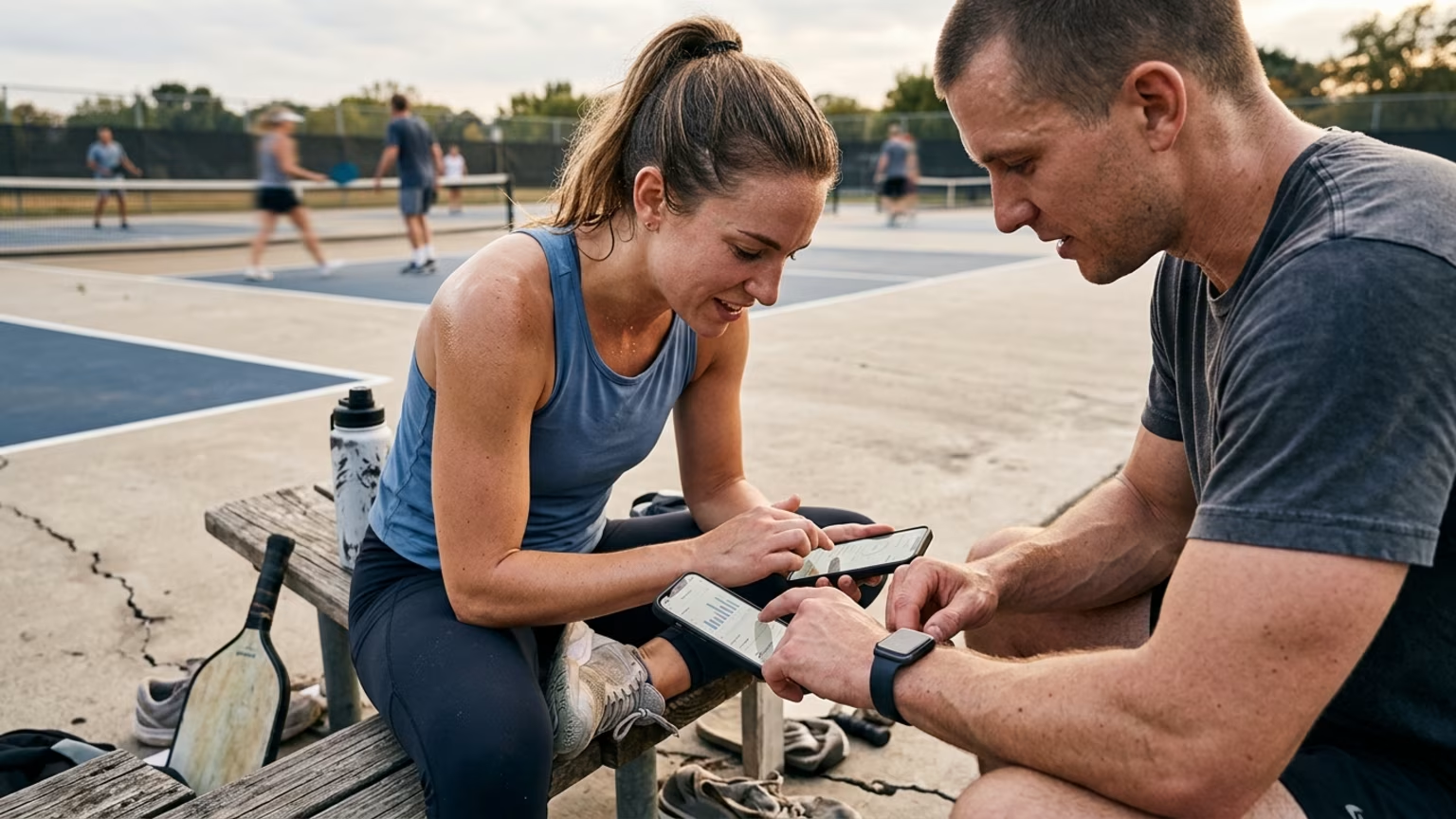

Discover how datamaxxers use general AI chatbots and specialized machine-learning systems for athletic longevity, and why human intuition still wins on court.




An August 2026 profile in The Wall Street Journal highlights datamaxxers who connect their workout, sleep and biometric data to AI systems. These individuals seek highly personalized coaching from generative models. For example, the publication notes that software engineer and competitive runner Julian Flieller uses Anthropic's Claude to analyze his fitness tracker data. He feeds sleep patterns, workout logs and other biometric measurements into the system to receive suggested modifications to his training regimen.
Large language models like Claude and GPT-4 excel at broad, conversational tasks. A 2026 review in Frontiers in Public Health notes that these systems offer significant accessibility and conversational breadth for athletes. You can easily ask them to adjust a session if you slept poorly or request lower-intensity workout options. The researchers found that GPT-4 outputs were broadly consistent with established strength and conditioning guidelines.
However, these chatbots have distinct limitations regarding human physical capabilities. The same Frontiers review points out that they lack specific progression algorithms and real-time physiological integration. They cannot dynamically account for your individual tolerance or adjust seamlessly to sudden physical feedback. A general-purpose chatbot might provide a sensible workout template, but it cannot know if your knee feels stiff today.
For recreational players, relying solely on a chatbot can create dangerous blind spots. The models operate without any direct physical awareness of your body. They process text inputs well, but they cannot assess biomechanical realities. Players should treat these conversational tools as helpful planners rather than definitive medical or athletic authorities.
In contrast to conversational chatbots, specialized machine-learning systems are built for narrow, explicit parameters. These platforms typically connect directly to wearable biosensors that provide continuous physiological, biomechanical and biochemical data. Rather than chatting with you about your schedule, they process raw numbers to deliver targeted outputs. The Frontiers review states that these adaptive platforms are generally better suited for explicitly validated tasks like recovery prediction.
These purpose-built systems translate your daily data into specific recovery readiness scores and fatigue indicators. They aim to provide individualized training recommendations based on actual physical strain. If your heart rate stays elevated overnight, a specialized system might automatically suggest a rest day. It focuses purely on the objective metrics gathered by your wearable device.
Despite their precision, these specialized tools still fall short of full contextual awareness. They measure what they can track, but they cannot measure how you actually feel. A specialized algorithm might output a high readiness score while you are dealing with localized joint pain. Players must remember that a recovery score is just a data point, not a complete picture of your health.
Specialized machine-learning models also lack the conversational flexibility of general AI. They excel at processing continuous physiological data, but they cannot easily explain the nuanced reasoning behind a specific readiness score. The focus remains heavily on tracking fatigue indicators rather than engaging in a dialogue about your overall physical state. This creates a rigid framework that sometimes ignores the messy reality of recreational sports.
When applying these technologies to racquet sports, the distinction between general and specialized systems becomes critical. The explosive demands of tennis require sudden accelerations that algorithms often struggle to quantify accurately. Specialized wearable platforms might capture your cardiovascular load, but they miss the exact biomechanical toll of heavy baseline slides. A generic algorithm simply does not know what it feels like to stretch for a wide forehand.
Pickleball presents its own unique challenges with its stop-start nature and rapid changes of direction. The human element of physical preparation remains far more important than any daily readiness score. As we often discuss here at evercourts, practical experience trumps generic advice. Taking the time to properly warmup to prevent court stiffness matters far more than a fatigue indicator on a screen.
"When I first started playing pickleball, I noticed how many people skipped warming up entirely. They would jump straight out of their cars and right up to the kitchen line. I tried doing that and immediately pulled a calf muscle."
"Pickleball requires just as much explosive lateral movement as tennis, just in a tighter space. Since then, I always spend five minutes doing dynamic lunges and ankle rolls. It changes everything about how confident I feel pushing off the baseline."
This physical reality completely bypasses what an AI chatbot can predict.
Padel players face similar demands with intense multidirectional movement and frequent rotational strikes. A general-purpose AI might suggest a standard warmup, but it does not understand the specific surface mechanics of a padel court. A specialized system might track your total step count, but it cannot evaluate your striking technique or help you adjust movement work to your readiness. Ultimately, neither AI modality can replace the localized feeling of your joints and muscles responding to actual, unpredictable gameplay.
When deciding which modality best supports staying on court for life, specialized machine-learning systems edge out general chatbots. The Frontiers review emphasizes that purpose-built platforms are better suited for adaptive load management and fatigue tracking. They provide narrow, data-backed guardrails that help prevent players from drastically overtraining. By relying on continuous physiological data, they offer a more objective view of your internal recovery state.
However, the true path to healthy aging relies on supervised integration. Both reviews caution that AI should act as a decision-support resource rather than a standalone coach. An intelligent approach uses specialized readiness scores as baseline information while using chatbots to help organize weekly health and longevity strategies. Players must maintain their own subjective awareness of soreness, fatigue and joint pain.
Racquet sports require an ongoing dialogue between your objective metrics and your physical intuition. No machine-learning system can fully diagnose preparation and movement mistakes without human oversight. Using AI to augment your routine makes sense, but turning over complete control to an algorithm invites unnecessary risk. The smartest players use these tools to inform their choices rather than dictate them.
In the end, all the biometric data in the world is just noise if you ignore your own body. The most advanced computational models remain entirely blind to the quiet wisdom of lived experience.
Follow Evercourts for practical insights on tennis, pickleball and padel performance, movement, recovery and healthy ageing. Stay connected for new articles, research-led guidance and ideas to help you play well and keep playing for years.


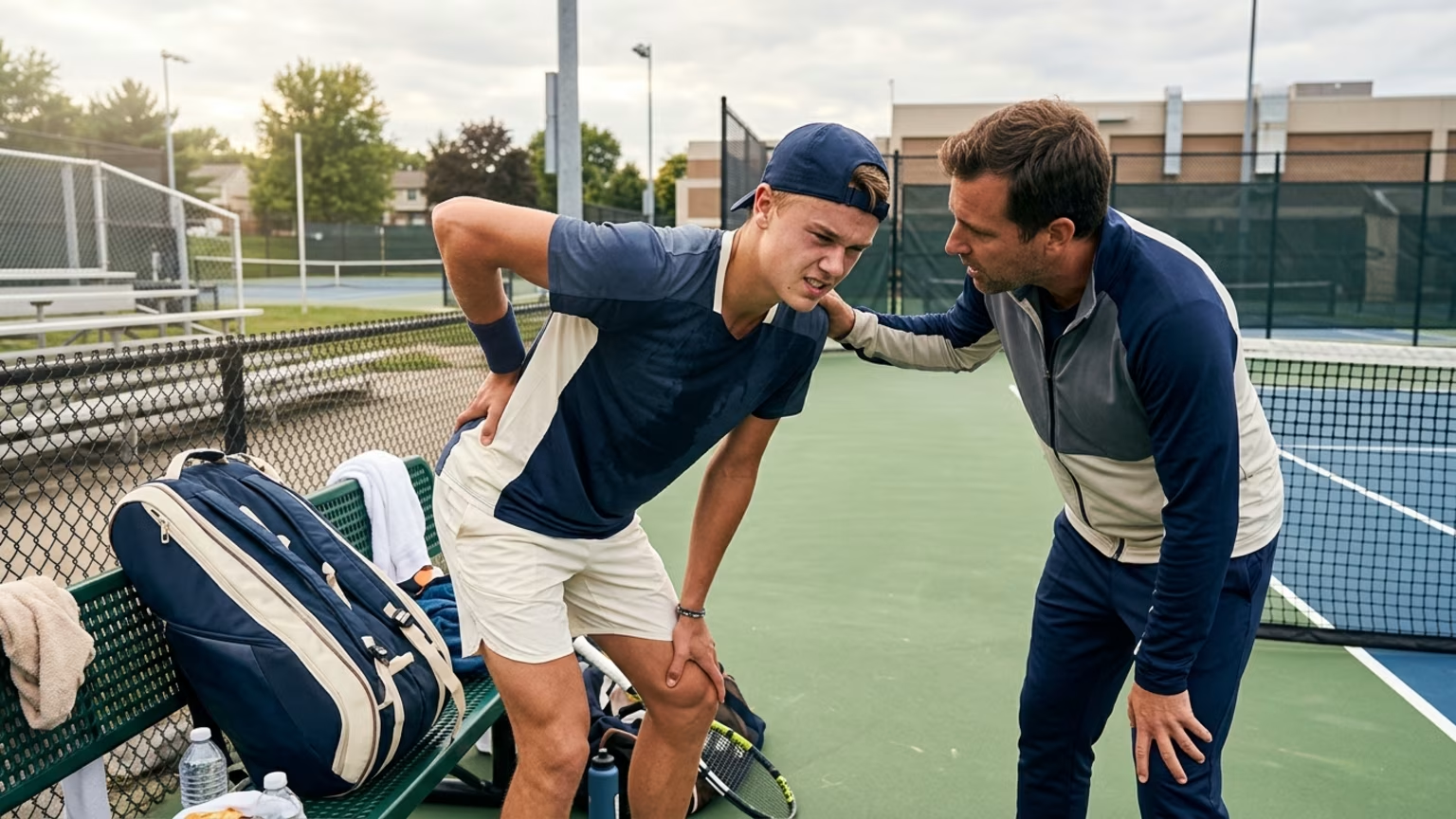
Holger Rune withdrew from the European Open with a back problem. The facts behind his decision and a grounded perspective for recreational players.

The Dink’s October 17 guide emphasizes deep returns, ball-height decisions and positioning against faster pickleball opponents.

A new report outlines padel and tennis gear trends. Learn how to assess adjustable rackets, sensor feedback and smart-court claims.
Read practical guidance for better movement, smarter preparation and a game that keeps working for you.
explore the Blog
