

Discover how tactical restraint and smarter decision-making in tennis, pickleball, and padel can protect your joints and support athletic longevity.




The fitness industry wants you to believe that athletic longevity is something you buy in a bottle or achieve through agonizing workout routines. The truth is far simpler and much less profitable for influencers. True healthy aging in racquet sports begins the moment you step onto the court and decide how to swing. It is a matter of tactical discipline rather than sheer physical endurance.
Many players believe that running down every impossible ball is the ultimate sign of fitness and dedication. The reality is that tactical restraint protects your joints far better than any recovery gadget on the market. A few years ago, I realized my tennis serve speed was dropping, and my shoulder was constantly throbbing after matches. Instead of pushing through the pain, I took a month to rebuild my mechanics and focus on rotator cuff endurance. I stopped trying to hit flat aces and developed a much heavier kick serve. My win rate actually went up, and my shoulder stopped hurting. Sometimes longevity means outsmarting your own ego on the court.
Marketing campaigns often target adult players with fear-based messaging about declining physical abilities. They push complex nutritional supplements and brutal gym schedules as the only ways to stay competitive against younger opponents. This constant stream of performance marketing suggests that you must push your physical limits to earn your time on the court. The reality for adult recreational players is much more grounded and far less exhausting.
You do not need to leap for every overhead or hit maximum-pace winners from the baseline to enjoy a long playing career. The secret to healthy aging in these sports is learning to manage court geometry and minimize physical emergencies. Poor tactical decisions lead to desperate lunges, off-balance swings, and unnecessary wear on your lower body. Building a repeatable decision system helps you choose safety when you are stretched or pulled wide out of position.
Many players let their competitive drive override their physical reality during tight, highly contested matches. They attempt low-percentage shots that require explosive movements from highly unstable and compromised positions. A smarter tactical framework eliminates these chaotic moments and replaces them with calculated, energy-saving responses. Recognizing a poor setup early allows you to diffuse the tension rather than escalating a rally you cannot comfortably win.
Verified sports principles show that intelligent shot selection is essentially a reliable form of load management. Pickleball instruction similarly emphasizes that the ball’s height, the player’s space, and the opponent’s position should be assessed together before speeding up. Taking a massive swing at a compromised height puts immense stress on your body and rarely yields a positive result. This conditional approach to speeding up protects players from overextending themselves during rapid, high-pressure exchanges.
According to recent guidance, a pickleball ball below net height is generally a reset or dink opportunity, while a ball above net height can be attacked if the player is balanced and has space. You must also analyze your opponent before committing to an aggressive physical response on the court. An opponent with a paddle down, a body moving laterally, or a recovery still in progress may be less prepared to counter than an opponent who is stable and organized.
However, if the opponent is stable with the paddle in front and the ball stays low, you must adjust your strategy. In this scenario, players should continue dinking when the ball remains below the opponent’s comfortable attack height. A speed-up should therefore be treated as a conditional decision: attack when the ball is high, the opponent is vulnerable, and the shot can be made without overextension. Understanding these cues ensures that every burst of intense effort is actually justified by the tactical situation. Managing your emotional responses is a key part of staying disciplined during long matches.
Instead of relying on sheer athleticism to bail you out of bad positions, you can adopt sensible tactical habits. These practical alternatives lower the physical tax of every match while keeping you highly competitive and structurally sound.
Before you decide to strike a forceful blow, take a fraction of a second to evaluate your physical stability. A grounded stance allows you to transfer energy efficiently from your legs through your core and into your swing. If you are leaning backward or reaching awkwardly, your joints bear the brunt of the physical force. Choosing to hit a softer, higher-margin ball when you are out of balance is the cornerstone of playing intelligently.
You can build a mental checklist that triggers automatically before you attempt to drive the ball past your opponent. Ask yourself if your feet are set firmly and if you have adequate room to complete your follow-through safely. If the answer is no, you must resist the temptation to accelerate and instead focus on extending the point safely. This small shift in mindset dramatically reduces the microscopic tissue damage that accumulates over a grueling two-hour match.
A soft reset is one of the most effective tools for preserving your energy and your court positioning. In pickleball, the reset is usually a soft ball that drops into the kitchen, particularly when the player is in the transition zone or receiving a ball below net height. You should reset softly into the kitchen rather than driving from a compromised contact height. This simple choice neutralizes the pace of the rally and buys you critical time to recover your footing.
Patience is a deliberate tactic, and a single reset may not instantly fix a highly disadvantaged position during a match. A reset may require several repetitions before the player reaches the non-volley zone, so patience is part of the tactic rather than evidence that the shot has failed. Treating the reset as a necessary bridge prevents the rushed, off-balance swings that often lead to acute joint strain. Learning to manage your physical efforts over the course of a long point is essential for regulating your weekly physical exertion effectively as you age.
Racquet sports are inherently dynamic, but erratic movement patterns create dangerous gaps and force sudden, taxing sprints. In pickleball, both partners should advance or retreat together and avoid being separated at different depths. You should prioritize restoring synchronized positioning rather than forcing an attack and leaving an unprotected gap. Pickleball doubles players are advised to move to and from the kitchen together.
Moving as a connected unit helps you avoid the vulnerable spaces created when partners occupy entirely different depths on the court. In doubles, recover as a pair: avoid the gap created when partners occupy different depths. This coordinated footwork reduces the amount of ground each player has to cover in an unexpected emergency. It is a highly practical way to protect your physical capabilities and support your long-term structural health across decades of continuous play.
Athletic longevity is ultimately built on the quiet discipline of choosing the right shot at the right time.
Follow Evercourts for practical insights on tennis, pickleball and padel performance, movement, recovery and healthy ageing. Stay connected for new articles, research-led guidance and ideas to help you play well and keep playing for years.


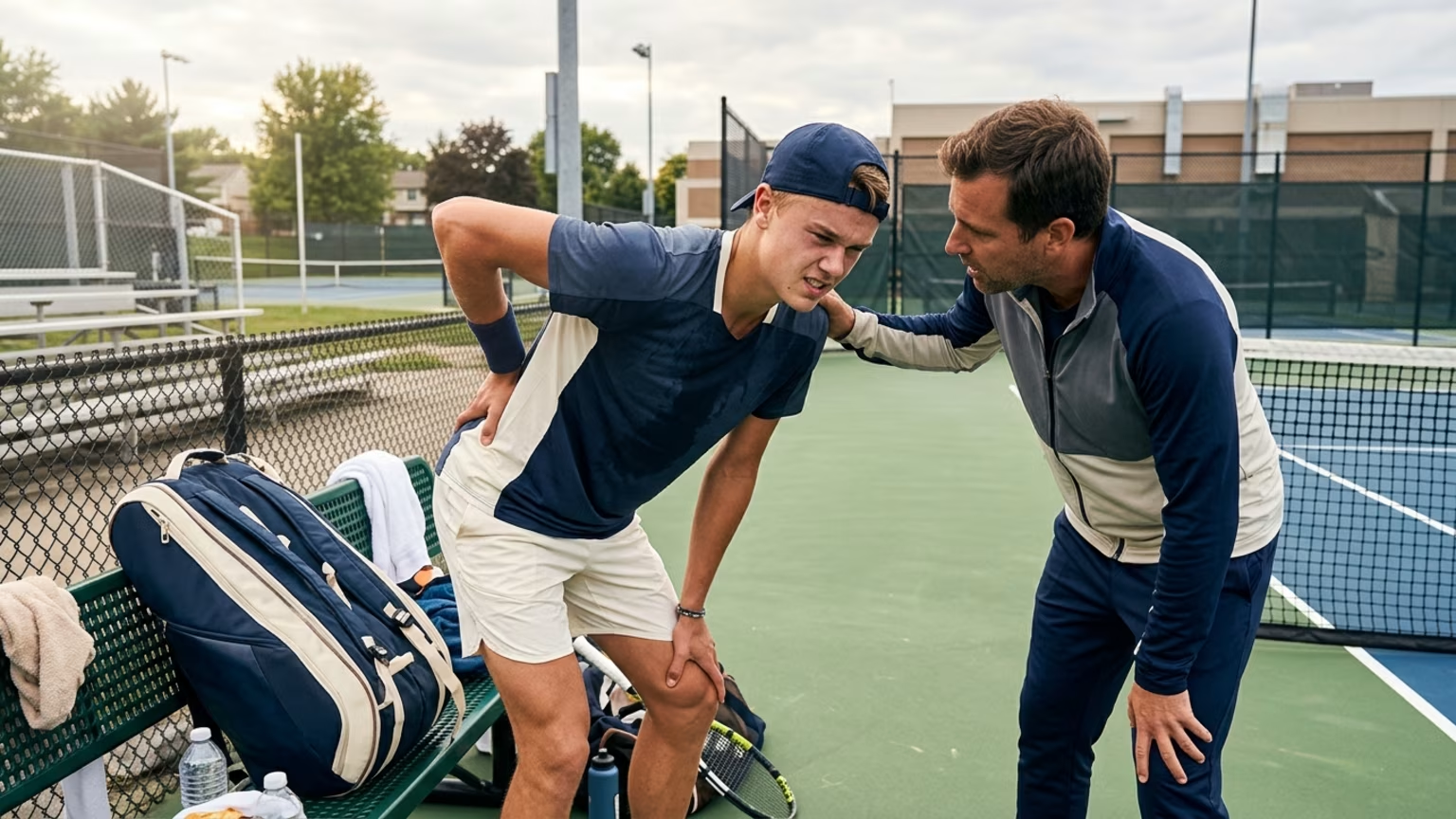
Holger Rune withdrew from the European Open with a back problem. The facts behind his decision and a grounded perspective for recreational players.

The Dink’s October 17 guide emphasizes deep returns, ball-height decisions and positioning against faster pickleball opponents.

A new report outlines padel and tennis gear trends. Learn how to assess adjustable rackets, sensor feedback and smart-court claims.
Read practical guidance for better movement, smarter preparation and a game that keeps working for you.
explore the Blog
